DOMINICAN REPUBLIC VS. COSTA RICA FOR A SURF HOLIDAY DESTINATION

We get this question a lot. Someone lands in our inbox — often a first-timer thinking seriously about booking a surf holiday — and somewhere in their message is a version of: “We were also looking at Costa Rica. How do you compare?”
By the Swell Surf Camp team, Cabarete
DOMINICAN REPUBLIC VS. COSTA RICA FOR A SURF HOLIDAY DESTINATION
It’s a fair question. Costa Rica has been the default answer to “surf holiday in the tropics” for a long time. It’s well-marketed, well-known, and has genuinely great waves. We’re not going to pretend otherwise. But after more than a decade of hosting guests at Swell, we’ve also heard — repeatedly — from people who went to Costa Rica first and then came to us. And the comparison they make is almost always more nuanced than the brochures suggest.
So here it is: an honest, side-by-side look at both destinations. We’ll cover waves, travel logistics, weather, cost, lifestyle, and the overall experience. We’ll be upfront about where Costa Rica wins, and equally upfront about where we think the Dominican Republic — and Cabarete specifically — has a real edge.
GETTING THERE: THE JOURNEY MATTERS
Let’s start with something that doesn’t get enough attention: the journey to the surf destinations itself.
For most of Swell’s guests, who are coming from the US East Coast, Canada, or Europe, the Dominican Republic is significantly easier to reach than Costa Rica.

From New York or Boston, it’s roughly a 4-hour direct flight to Puerto Plata (airport code: POP) with JetBlue or United. From Toronto or Montreal, it’s around 3.5 to 4 hours. And once you land? You’re at Swell in 25 minutes. That’s it. No internal flight, no 3-hour taxi crawl through mountain roads, no white-knuckle transfers in the dark.
Costa Rica is a different story. San José (SJO) is the main entry point, and if you’re heading to the Pacific surf breaks — Tamarindo, Nosara, Santa Teresa, Dominical — you’re looking at anywhere from 3 to 6 hours of ground transfer after landing, depending on your destination. If you’re going somewhere like Santa Teresa on the Nicoya Peninsula, you’re often adding a ferry crossing and a rough dirt road on top of that. Some people fly into Liberia (LIR) to shave time, but you’re still looking at long transfers for most surf spots.
For working professionals with limited holiday time, those extra hours in transit add up. When you’re flying out on a Friday night and need to be back at your desk Monday week, those lost hours genuinely matter.
Winner: Dominican Republic — by a significant margin for East Coast North Americans and Europeans transiting through US hubs.
THE WAVES: WHAT ARE YOU ACTUALLY GETTING?
This is where we need to be careful, because wave quality is personal. What’s perfect for one surfer is all wrong for another.
Costa Rica has world-class surf. Full stop. Spots like Pavones (one of the longest left-hand waves in the world), Witches Rock, Ollie’s Point — these are bucket-list breaks for intermediate and advanced surfers. If you’re an experienced surfer chasing specific, high-performance waves, Costa Rica has spots that are hard to beat globally.

But here’s what those glossy surf destination brochures tend to leave out: those spots are not beginner-friendly, and they’re not always accessible. Witches Rock and Ollie’s Point require boat trips. Many of Costa Rica’s best breaks are crowded, powerful, and can be unforgiving for anyone still working on their pop-up or figuring out how to read a lineup.
Cabarete, Dominican Republic — specifically Playa Encuentro, where Swell takes all its guests — is something different. Encuentro is widely considered one of the best beginner and intermediate surf breaks in the Caribbean. It’s consistent, it has multiple peaks, the wave shape is forgiving enough to learn on but interesting enough to keep you progressing, and it very rarely gets dangerously big. The bottom is sand. The instructors can stand nearby and coach you in real-time.
On top of that, Cabarete is the watersports capital of the Caribbean. After your morning surf, the trade winds kick in every afternoon, and you have world-class kitesurfing, wingfoiling, and windsurfing right on your doorstep. No other single destination in the Caribbean — or arguably anywhere — lets you tick surf, kite, and wing in a single day, every day.
Winner: Depends on level. Costa Rica for experienced surfers seeking high-performance breaks. Dominican Republic for beginners, intermediates, and anyone who wants variety across multiple watersports.
WEATHER AND SEASONALITY: WHEN CAN YOU GO?
This is a big one, and again, Costa Rica’s marketing tends to smooth over some important details.
Costa Rica has a genuine rainy season. From May through November — roughly half the year — the Pacific coast gets heavy, sustained rainfall. This isn’t a quick afternoon shower; it can rain solidly for days at a time during peak wet season (September–October). The roads get bad, some camps close, and the overall experience takes a hit.
The Dominican Republic doesn’t have a rainy season in the same sense. Yes, it rains — this is the tropics. But rain tends to come as sharp, fast downpours that clear quickly, usually at night, and the sun comes straight back out. We’ve hosted guests every single month of the year, and we’d be hard pressed to point to a month where the experience was significantly worse than another. The trade winds keep temperatures pleasant year-round, and Cabarete’s north-facing coast is actually sheltered from the worst of the Atlantic storm season.
If you’re planning around the calendar and want flexibility, the Dominican Republic as a surf destination wins on weather reliability — especially for anyone trying to book shoulder-season travel.
Winner: Dominican Republic for year-round reliability. Costa Rica has a stunning dry season (December–April) but its wet season is a genuine drawback.

COST: WHAT DOES YOUR MONEY GET YOU?
Let’s talk honestly about value.
Costa Rica has become an expensive surf destination. The combination of tourism demand, US-dollar pricing in most tourist areas, long transfers, internal flights, and pricey accommodation means that a week’s surf holiday there — done properly — costs significantly more than most people expect. A decent surf camp in Nosara or Santa Teresa, with lessons and accommodation, will often run $3,500–6,000+ per person before flights.
The Dominican Republic is notably better value. You get more for your money across the board — accommodation, food, lessons, and activities are all priced more competitively. At Swell, our packages include accommodation, daily breakfast, several dinners, airport transfers, surf lessons, and board rental. The all-in nature of the package means there are far fewer nasty surprises when you get here.
Beyond the camp itself, eating and drinking in Cabarete is affordable. The local food scene has improved enormously in recent years, with excellent restaurants at every price point within easy walking distance of Swell.
Winner: Dominican Republic — better value without sacrificing quality.
THE LIFESTYLE AND VIBE: WHAT ARE YOU ACTUALLY DOING ALL WEEK?
Here’s where things get interesting, and where the comparison gets a bit more personal.
Costa Rica’s surf scene — especially the popular spots — has a well-worn, almost formulaic quality to it these days. Tamarindo in particular feels like a resort town that happens to have a surf beach attached. It’s busy, it’s full of surf tourists, and while that can be fun, it can also feel like you’ve traded your city routine for a different kind of routine somewhere hotter.
Cabarete is a genuine surf town. It’s been built around watersports for 30+ years, but it hasn’t lost its Caribbean character in the process. The food, the music, the people — it still feels like the Dominican Republic, not a theme park version of it. You can walk to excellent local restaurants, buy fresh fruit from the market, and have a beer watching the kiteboarders come in off the water at sunset.

For our guests specifically — mostly working professionals, many travelling solo, aged roughly 35 to 60 — the social side of a surf holiday matters enormously. Costa Rica’s camps are often more fragmented; you stay in a bungalow, you show up for lessons, you go your separate ways. At Swell, the communal setup — shared meals, shared space, a small enough group that you actually get to know people — creates something that guests describe again and again in their reviews as the unexpected highlight of their trip. About 70% of our guests travel solo, and they leave having made genuine friends.

Winner: Personal preference — but if the social experience and authentic local flavour matter to you, Cabarete has a real edge.
SAFETY AND PRACTICALITIES
Both destinations are safe for tourists when you take sensible precautions. Costa Rica has a strong reputation for safety in the surf zones, and the Dominican Republic — specifically Cabarete — is a well-established, friendly tourist town where the surf community has been welcoming visitors for decades.
A few practical notes in favour of the DR:
- No special vaccinations required for either destination, but the Dominican Republic’s proximity to US hubs means your travel insurance premiums and medical evacuation costs (if it ever came to that) are typically lower.
- English is widely spoken in Cabarete’s surf and tourism scene, so communication is never a problem.
- Cabarete’s hospital in nearby Sosúa is a 10-minute drive and has English-speaking doctors — important context for anyone travelling solo or with health considerations.

THE HONEST SUMMARY
We started by saying we’d be fair, so here’s the honest version:
CHOOSE SURFING COSTA RICA IF:
- You’re an experienced or advanced surfer specifically chasing world-class Pacific swells and iconic breaks
- You’re happy with longer travel and transfer times
- You’re travelling December–April and can avoid the wet season
- You have more budget to spend
CHOOSE THE DOMINICAN REPUBLIC (AND CABARETE) IF:
- You’re a beginner or intermediate surfer wanting quality coaching in ideal conditions
- You want to combine surf with kitesurfing, wingfoiling, or windsurfing in the same trip
- You’re coming from the East Coast of North America or Europe and want minimal transit time
- You want better value for money without compromising on comfort
- You’re travelling solo and want a genuinely social experience
- You want year-round reliability without weather gambles

For our guests — and we know them well after hosting more than 9,000 people over the years — the Dominican Republic wins more often than not. Not because Costa Rica isn’t great, but because what Swell offers: structured progression, a boutique setup, incredible watersport variety, and a warm community of like-minded adults — doesn’t really exist there in the same way.
If you’ve been going back and forth between the two, we’d genuinely love to talk it through. Drop us a message, tell us what you’re looking for, and we’ll give you an honest answer — even if that answer sometimes turns out to be Costa Rica.
FAQ
No results!
-
HOW DOES THE COST OF A SURF CAMP IN THE DOMINICAN REPUBLIC COMPARE TO COSTA RICA OR BALI?
The Dominican Republic offers significantly better value than both Costa Rica and Bali once you factor in total trip cost. Costa Rica surf camps in popular spots like Santa Teresa or Nosara typically run $3,500–$5,500+ per person per week before flights, and often require expensive internal transfers or domestic flights on top. Bali is cheaper on the ground but involves a much longer and more expensive flight from North America or Europe. At Swell, our all-inclusive packages — accommodation, meals, lessons, board rental, and airport transfers — are competitively priced, and the flight from the US East Coast is a 4-hour direct. The total cost of a week's surf holiday with us is typically lower than either alternative.
-
DO I NEED ANY SURFING EXPERIENCE BEFORE BOOKING A SURF CAMP IN THE DOMINICAN REPUBLIC?
No experience is needed at all — in fact, most of our guests at Swell have never surfed before. Playa Encuentro in Cabarete is one of the most beginner-friendly surf breaks in the Caribbean: consistent, sand-bottomed, and shaped in a way that lets complete novices catch real waves from day one. Our instructors teach in small groups with a low ratio, so you get genuine one-on-one feedback rather than being left to figure things out on your own. By the end of a week, the vast majority of our guests are riding waves unassisted.
-
IS THE DOMINICAN REPUBLIC SAFE FOR A SOLO SURF HOLIDAY?
Yes — Cabarete is one of the most established watersports towns in the Caribbean, with a welcoming international community built up over 30+ years. About 70% of our Swell guests arrive solo every week. The town is walkable, English is widely spoken, and our camp operates a guests-only policy so your belongings and personal space are always secure. For any medical needs, the CMC hospital in nearby Sosúa is a 10-minute drive with English-speaking doctors on staff.
-
WHAT'S THE BEST TIME OF YEAR TO GO ON A SURF HOLIDAY IN THE DOMINICAN REPUBLIC?
Unlike Costa Rica, which has a genuine rainy season from May to November, the Dominican Republic can be visited year-round. Cabarete's north-facing coast benefits from consistent Atlantic swells and trade winds throughout the year. December through April tends to be the most popular period, but we host guests every single month and wouldn't point to any month as significantly worse than another. If you're flexible, March–May offers a sweet spot of good waves, smaller crowds, and slightly lower flight prices.
-
CAN I LEARN TO KITESURF OR WINGFOIL AT THE SAME TIME AS LEARNING TO SURF IN CABARETE?
Yes, and this is one of the things that makes Cabarete genuinely unique as a destination. The morning trade winds are light, making surf conditions ideal at Playa Encuentro from early morning until around noon. In the afternoon, the winds build strongly and consistently — creating perfect conditions for kitesurfing and wingfoiling right in front of town. At Swell we offer combination packages that let you surf in the mornings and take kite or wingfoil lessons in the afternoons. No other destination in the Caribbean — and very few in the world — lets you do all three in a single trip with world-class instruction for each.
-
HOW DOES THE COST OF A SURF CAMP IN THE DOMINICAN REPUBLIC COMPARE TO COSTA RICA OR BALI?
The Dominican Republic offers significantly better value than both Costa Rica and Bali once you factor in total trip cost. Costa Rica surf camps in popular spots like Santa Teresa or Nosara typically run $3,500–$5,500+ per person per week before flights, and often require expensive internal transfers or domestic flights on top. Bali is cheaper on the ground but involves a much longer and more expensive flight from North America or Europe. At Swell, our all-inclusive packages — accommodation, meals, lessons, board rental, and airport transfers — are competitively priced, and the flight from the US East Coast is a 4-hour direct. The total cost of a week's surf holiday with us is typically lower than either alternative. -
DO I NEED ANY SURFING EXPERIENCE BEFORE BOOKING A SURF CAMP IN THE DOMINICAN REPUBLIC?
No experience is needed at all — in fact, most of our guests at Swell have never surfed before. Playa Encuentro in Cabarete is one of the most beginner-friendly surf breaks in the Caribbean: consistent, sand-bottomed, and shaped in a way that lets complete novices catch real waves from day one. Our instructors teach in small groups with a low ratio, so you get genuine one-on-one feedback rather than being left to figure things out on your own. By the end of a week, the vast majority of our guests are riding waves unassisted.
-
IS THE DOMINICAN REPUBLIC SAFE FOR A SOLO SURF HOLIDAY?
Yes — Cabarete is one of the most established watersports towns in the Caribbean, with a welcoming international community built up over 30+ years. About 70% of our Swell guests arrive solo every week. The town is walkable, English is widely spoken, and our camp operates a guests-only policy so your belongings and personal space are always secure. For any medical needs, the CMC hospital in nearby Sosúa is a 10-minute drive with English-speaking doctors on staff.
-
WHAT'S THE BEST TIME OF YEAR TO GO ON A SURF HOLIDAY IN THE DOMINICAN REPUBLIC?
Unlike Costa Rica, which has a genuine rainy season from May to November, the Dominican Republic can be visited year-round. Cabarete's north-facing coast benefits from consistent Atlantic swells and trade winds throughout the year. December through April tends to be the most popular period, but we host guests every single month and wouldn't point to any month as significantly worse than another. If you're flexible, March–May offers a sweet spot of good waves, smaller crowds, and slightly lower flight prices.
-
CAN I LEARN TO KITESURF OR WINGFOIL AT THE SAME TIME AS LEARNING TO SURF IN CABARETE?
Yes, and this is one of the things that makes Cabarete genuinely unique as a destination. The morning trade winds are light, making surf conditions ideal at Playa Encuentro from early morning until around noon. In the afternoon, the winds build strongly and consistently — creating perfect conditions for kitesurfing and wingfoiling right in front of town. At Swell we offer combination packages that let you surf in the mornings and take kite or wingfoil lessons in the afternoons. No other destination in the Caribbean — and very few in the world — lets you do all three in a single trip with world-class instruction for each.
| Factor | 🇩🇴 Dominican Republic | 🇨🇷 Costa Rica |
|---|---|---|
| Waves & Surf | ||
| 🏄Wave Quality | Draw ★★★★★ Consistent beach breaks and reef breaks. Playa Encuentro is world-class in it’s consistency — reliable barrels great for all levels. |
Draw ★★★★★ Diverse waves across both coasts. Pavones (one of the world’s longest lefts), Santa Teresa, Tamarindo — legendary spots. |
| 📅Best Season | Both Great Nov – Apr is prime. North coast picks up Atlantic swells reliably throughout winter. |
Both Great Dec – Apr (Pacific) and Jun – Oct (Caribbean). Two coasts = two seasons. |
| 📊Consistency | Edge: DR Very consistent — 350+ of surfable days per year. |
Varies by region. Pacific coast can go flat; Caribbean can be inconsistent. |
| 🎓Surf Lessons | Both Great Cabarete is one of the world’s best beginner surf towns. Loads of quality schools and surf camps. |
Both Great Good options in Santa Teresa and Tamarindo but more crowded and pricier. |
| Travel & Logistics | ||
| ✈️Flights | Edge: DR Very well connected: several different international airports to choose from |
Good connections from the USA but fewer direct European routes. San José + Liberia airports. |
| 💸Cost | Winner 💰💰 Budget-friendly. Accommodation, food, and activities are very affordable. All-inclusive options available. |
More expensive 💰💰💰💰 One of the more expensive Central American countries. Eco-tourism has driven prices up considerably. |
| 🚗Getting Around | Draw Easy. Surf zone is compact around Cabarete — walk or take a moto. Taxis affordable. |
Draw Easier to road trip between surf spots. Renting a 4WD recommended. |
| 🛡️Safety | Both Fine Tourist zones are safe. Use common sense; avoid isolated areas at night. |
Both Fine Generally very safe. Well-established tourism infrastructure. |
| Lifestyle & Experience | ||
| 🎉Nightlife & Vibe | Winner Cabarete has a legendary party scene. Beach bars, live music, and a great mix of expats and locals. |
More laid-back eco-conscious vibe. Good bars in Santa Teresa but fewer big nights out. |
| 🌿Nature & Adventure | Great beaches, mountains, waterfalls. Whale watching (Jan–Mar) is incredible. | Winner Unrivalled biodiversity. Rainforests, volcanoes, wildlife — a nature lover’s paradise. |
| 🍽️Food & Drink | Edge: DR Amazing local food. Mangú, fresh fish, rice & beans. Lots of variety in Cabarete. |
Good food but simpler local cuisine. Eating well costs more. |
| 🌡️Climate | Both Warm Warm year-round (27–32°C). Trade winds keep Cabarete comfortable. |
Warm but can be very wet in rainy season. Humidity varies by region. |
| 👨👩👧Who It Suits | Beginners & Intermediates Perfect for surf camps, first-timers, those who want lessons + social scene. |
Intermediate–Advanced Better for experienced surfers seeking epic spots and nature-heavy travel. |
Dominican Republic
You want consistent, affordable surf with a social scene. The DR wins on value, accessibility, and beginner-friendliness. Cabarete is the perfect surf camp hub — waves every day, beach bars every night.
Costa Rica
You’re an experienced surfer chasing legendary spots and want to combine world-class waves with rainforest adventures. Be prepared to spend more for the privilege.
Ready to surf the Dominican Republic?
Join Swell Surf Camp in Cabarete — the Caribbean’s best surf destination.
Swell Surf Camp is located in Cabarete, on the north coast of the Dominican Republic. We offer weekly surf, kitesurf, and wingfoil packages for adults of all levels. Get in touch or view our packages to find out more.
-
WHERE IS SWELL LOCATED?
Swell Surf camp is located on the North coast of the Dominican Republic, right in the center of the cool surfer town of Cabarete. With 3 international airports to choose from it's also one of the easiest places to get to for a quick surf getaway. Puerto Plata Airport is only 25 minutes away from Swell. On the' getting here' page you'll find the different options of getting to us.
-
ABOUT SWELL SURF CAMP
Founded in the winter of 2009, Swell Surf Camp emerged from Jeroen and Clare Mutsaars vision. They lived in the Dominican Republic for eight years and spotted a gap in the surf camp market for higher quality accommodations combined with an engaging social atmosphere. Their extensive travel and stay experiences across different countries like Costa Rica, Nicaragua, Peru, Hawaii, Indonesia and various European nations fueled their passion to elevate the surfing retreat experience.
Swell Surf Camp is renowned as the world’s first luxury surf camp tailored specifically for beginners. The founders collaborated with a notable Swiss architect to design facilities that blend comfort with style. This innovative approach ensures every guest enjoys superior lodging and amenities. Since its inception, Swell has taught over 9,000 people how to surf with an emphasis on safety, fun, and structure.
Our achievements speak volumes. Swell has collected numerous accolades and maintains hundreds of stellar reviews from guests globally. Recognized repeatedly as the leading destination for luxury surf vacations, our commitment to excellence keeps us at the forefront of the industry.
Beyond surfing, Swell offers a diverse range of activities including kitesurfing, wingfoiling, and yoga classes. Guests can also enjoy horse riding both on scenic beaches and mountain trails—plus exciting adventure-filled excursions like canyoning.
A crucial element of any vacation is food, and here at Swell we excel. We provide delicious home-cooked meals daily. For evenings out, guests find themselves just minutes away from an array of dining options that promise satisfying culinary adventures.
For those who prioritize upscale amenities and wellness in a unique setting built around learning surf skills amid profound natural beauty, Swell should be on the top of your surf destination list
-
WHAT TO EXPECT FROM A 1 WEEK LEARN TO SURF HOLIDAY
Dreaming of catching your first wave but wondering if surf lessons are really for you? At Swell Surf Camp, our lessons are designed specifically for beginners, and we mean absolute beginners, particularly those between 40 and 55 from cities like New York, Boston, or Toronto. You’ll never feel rushed, lost, or out of place. Our expert instructors genuinely love teaching, and their approach is as much about encouragement as it is about skill-building. Every instructor carefully tunes each lesson to fit one person, you, so you always get personalized support, whether you’re working on basic paddling, learning to pop up, or building confidence in the water.
The journey at Swell Surf Camp is about progression, not perfection. You’ll start with the very basics, practicing on the sand before moving into gentle ocean waves with your instructor right beside you. Throughout every lesson, our focus is on clear communication, safety, and keeping things fun. As you progress, our instructors give you feedback in real-time, helping you celebrate small wins and guiding your next steps. You’ll learn solid surfing foundations, water safety, and even the unwritten rules of surf culture. By the end of your stay, you’ll be amazed at your own growth and how natural surfing feels. Don’t wait to discover how transformative a single lesson can be, book your surf adventure at Swell Surf Camp and let your surfing journey begin!
-
WHAT SPORTS DOES SWELL OFFER?
It's not only surfing that's on offer at Swell, we also offer learn to wingfoil and learn to kitesurf packages.
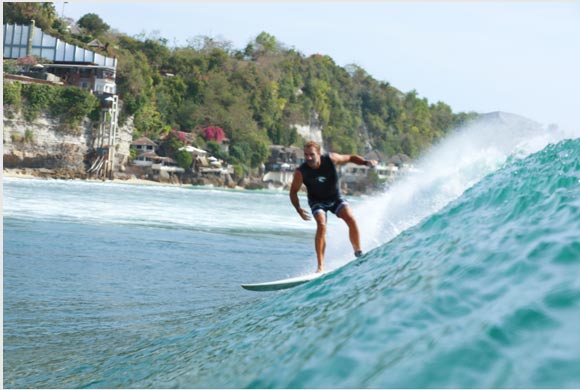

“Think of Swell as the anti-surf camp. There’s plenty of surfing, of course, but the similarities to other surf camps end there. For starters, the rooms are stylish — more boutique surf retreat than reggae-loving surfer digs. Then there are the legendary breakfasts (omelets, pancakes and crepes, fresh-squeezed orange juice, and fruit bowls). Structured surf lessons take place each morning. An instructor alongside you and the head surf coach watching from shallow water, ready to offer learn to surf tips between riding waves. If you are serious about learning to surf, then Swell should be on top of your destination list. Highly recommended! ”
Reference Source:
[Frommer’s Travel Guides]



Designed with the discerning surfer in mind, Swell is far from a crash pad. The spare clean lines, plush bedding, modern photographs and funky furniture say ‘boutique surf retreat’. The pool, ping-pong and foosball tables and social vibe suggest otherwise. A huge wood communal table is the center of the hanging-out action, after all the surfing is done. Highly recommended!
Reference Source:
[Lonely Planet]