We have run a beginner surf camp in the Dominican Republic since 2009, and before we laid a single foundation stone we spent 25 years and more than 20 countries working out where a complete beginner actually has the best week. This is our honest, first-hand ranking of the best places to learn to surf in 2026, scored for the things that genuinely matter when you have never stood on a board: gentle waves, warm water, easy access and value for money.
Full disclosure: we run a beginner camp in the Dominican Republic, so we are not a neutral referee, and you should read our verdict on our own back yard with that in mind. What we can promise is honesty. No affiliate lists, no places we have not surfed ourselves, and we will tell you plainly when another destination is the better choice for you. Where we give an opinion, it is because we have been there, taught there, or seriously considered building there.
What makes a great beginner surf destination?
A great beginner surf destination gives you small, consistent whitewater waves, warm water you can stand up in, no dangerous rips or reef, and a short trip from the airport to the beach. Get those four right and most people are riding waves inside a week.
When we scouted locations, these were the boxes a destination had to tick before we would send a nervous first-timer there:
- Consistency of surf. You need surfable waves at least 300 days a year, or you risk flying across the world for a flat week.
- Waves for every level. Mellow inside whitewater for beginners, plus something for intermediates and experts, ideally at the same beach.
- No hidden dangers. No strong rips or currents, no shallow reef, no sharks or crocodiles.
- Warm water. Warm water means no wetsuit, longer sessions and a far gentler learning curve.
- Easy access. A short, simple transfer from an international airport. Hours of extra road travel ruin a one-week trip.
The best places to learn to surf, ranked
We have scored the eight destinations we know best purely on beginner-friendliness: waves, water temperature, safety and how easily you reach them, not on scenery or nightlife. On those measures our home base, the Dominican Republic, scores well, though you should weigh that against the fact that it is our home base. Here is how they compare at a glance.
| Destination | For beginners | Water temp | Wetsuit? | Getting there (US / Canada) | Price vs DR | Best months |
|---|---|---|---|---|---|---|
| Dominican Republic (Cabarete) |
Ideal | 26–28°C 79–82°F |
No | ~3h45 nonstop from NY + 25 min transfer | Baseline | Year-round (Nov–Apr biggest) |
| Hawaii (Oahu) | Very good | 24–27°C 75–81°F |
No | 5–11h+ from the mainland | 2–3× more | Year-round (south shore) |
| Costa Rica | Good | 26–29°C 79–84°F |
No | 5h+ flight + 4–8h road transfer | 40–70% more | Dec–Apr (dry season) |
| Nicaragua | Fair | 25–28°C 77–82°F |
Springsuit | Connections + long transfers | ~30–40% less than CR | Year-round (offshore) |
| Portugal | Good | 15–19°C 59–66°F |
Yes | Short-haul (Europe only) | Low | Late spring–autumn |
| Canary Islands | Fair | 18–23°C 64–73°F |
Yes | Short-haul (Europe only) | Low | Nov–Apr |
| Sayulita, Mexico | Fair | 23–29°C 73–84°F |
No | Via Puerto Vallarta | Mid–high | Winter |
| Sri Lanka | Good | 27–29°C 81–84°F |
No | Very long-haul | Low | Coast-dependent |
Water is warm enough for a rashguard or boardshorts almost everywhere. Nicaragua’s seasonal upwelling can make a springsuit welcome, and Portugal and the Canary Islands need a full wetsuit all year.
The rest of this guide is our first-hand take on each, starting with our own back yard.
Dominican Republic (Cabarete) — where we chose to build
The Dominican Republic, and specifically Playa Encuentro in Cabarete, is where we chose to build our camp after scouting the alternatives, and in our experience it is genuinely hard to have a bad first week here. It delivers 340+ surfable days a year, 27°C (81°F) water with no wetsuit, mellow chest-deep whitewater, no rips or reef hazards, and it sits just 25 minutes from an international airport. We would say all that, of course, so weigh the specifics below rather than the label.
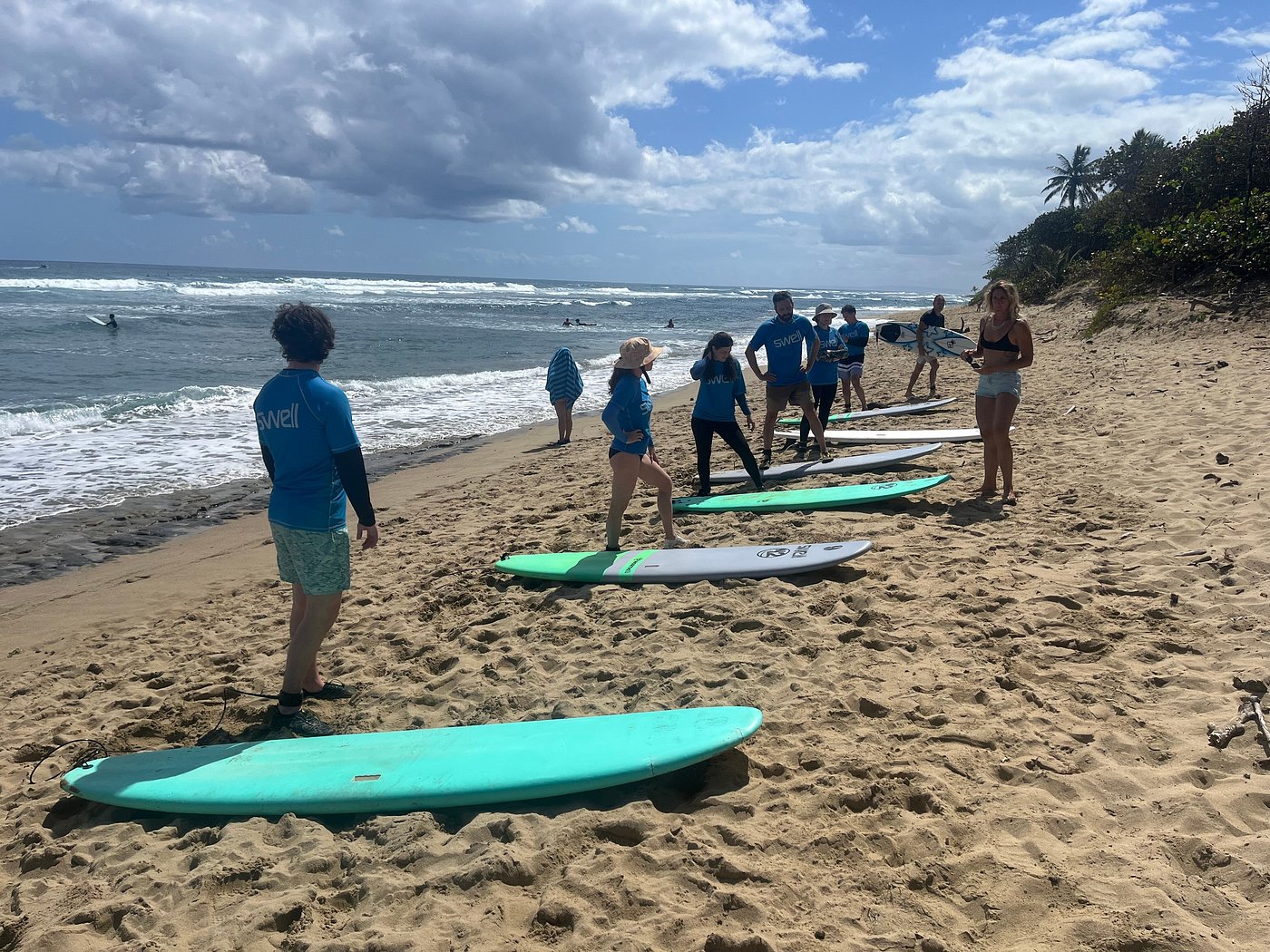
Everyone starts as a beginner, but a great destination also has to keep you going as you improve. Encuentro does: several peaks sit within a short walk of each other, from soft inside waves for your first pop-up to punchy reef waves for experts, so you never outgrow the beach. We teach in the gentle inside section where the water is roughly chest-deep and you can simply stand up between waves. There are no strong rips or currents to drag you out, no shallow reef to worry about, and none of the sharks or crocodiles you will find at some river-mouth spots elsewhere. You can read more about the break and our coaching on our surfing page.
Access is the quiet advantage. It is about 3 hours 45 minutes nonstop from New York to Puerto Plata (airport code POP), then a 25-minute drive to us, so you can leave home in the morning and surf the same afternoon. Compare that to the door-to-water time for most Costa Rica surf trips and it is not close. If you want the full travel breakdown, see getting to Swell, and for month-by-month conditions, when to visit Cabarete.
- 340+ surfable days a year
- Warm 27°C (81°F) water, no wetsuit
- Mellow, chest-deep beginner whitewater
- No rips, reef or dangerous sea life
- Waves for every level at one beach
- 25 min from the airport, ~3h45 from New York
- A real surf town, not a manicured resort strip
- The biggest, cleanest waves come Nov–Apr (still beginner-friendly year-round)
- Nightlife is relaxed rather than wild
We compare the two head-to-head in detail in Dominican Republic vs Costa Rica for a surf holiday.
Costa Rica
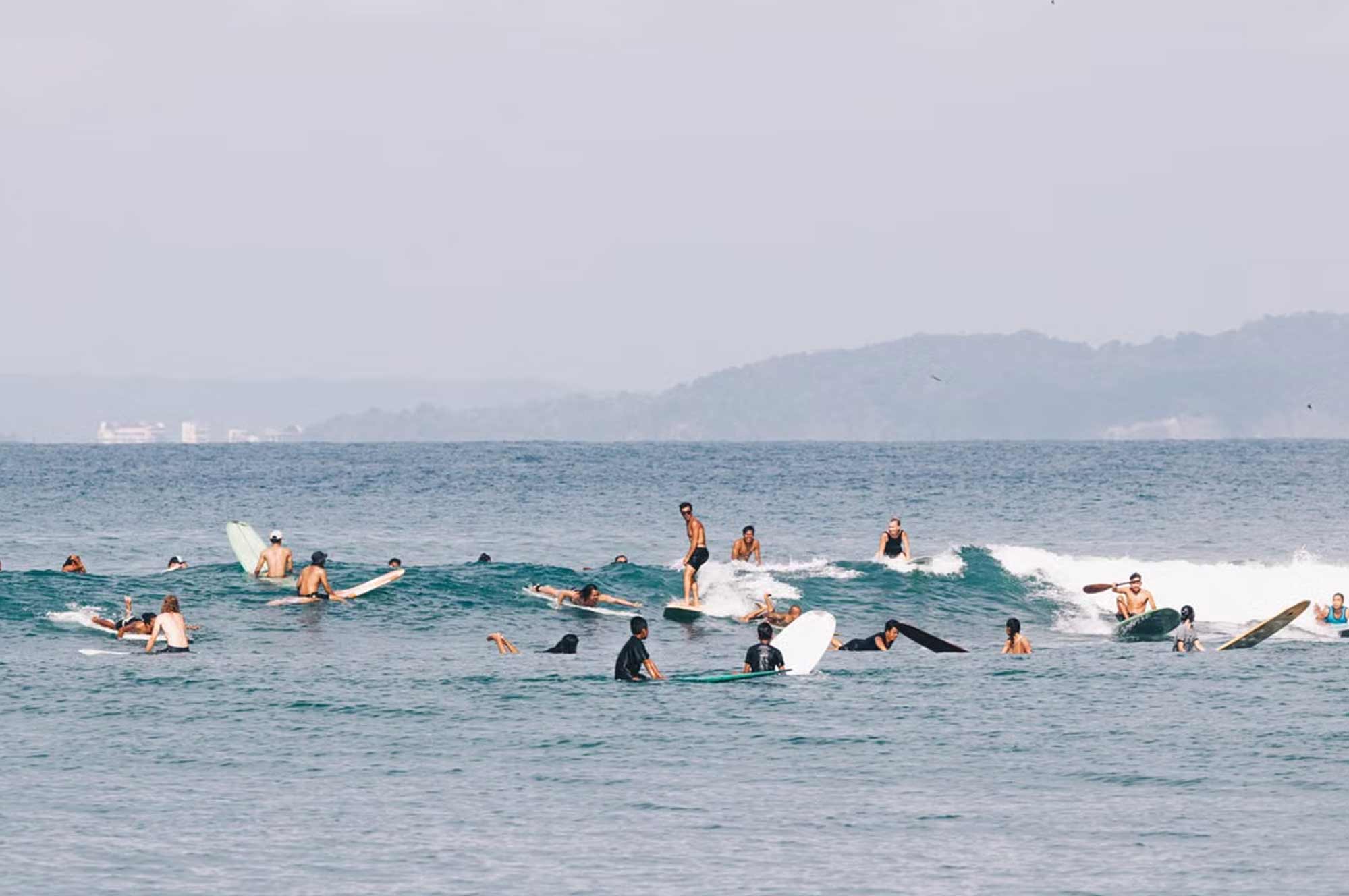
Costa Rica is a beautiful, politically stable country with real surf and some excellent camps, but it has quietly become the expensive option. In our experience it runs 40 to 70% pricier than a comparable trip, San José is 5+ hours from the US East Coast, and the best waves are often another 4 to 8 hours by road once you land.
- Stunning nature and wildlife
- Genuinely good surf and camps
- Politically safe and well-connected
- Warm water, no wetsuit
- 40–70% more expensive in our experience
- 4–8h road transfers to many surf areas
- Crowded line-ups
- Crocodiles at some river-mouth spots
- Thin food options in remote surf towns
Nicaragua
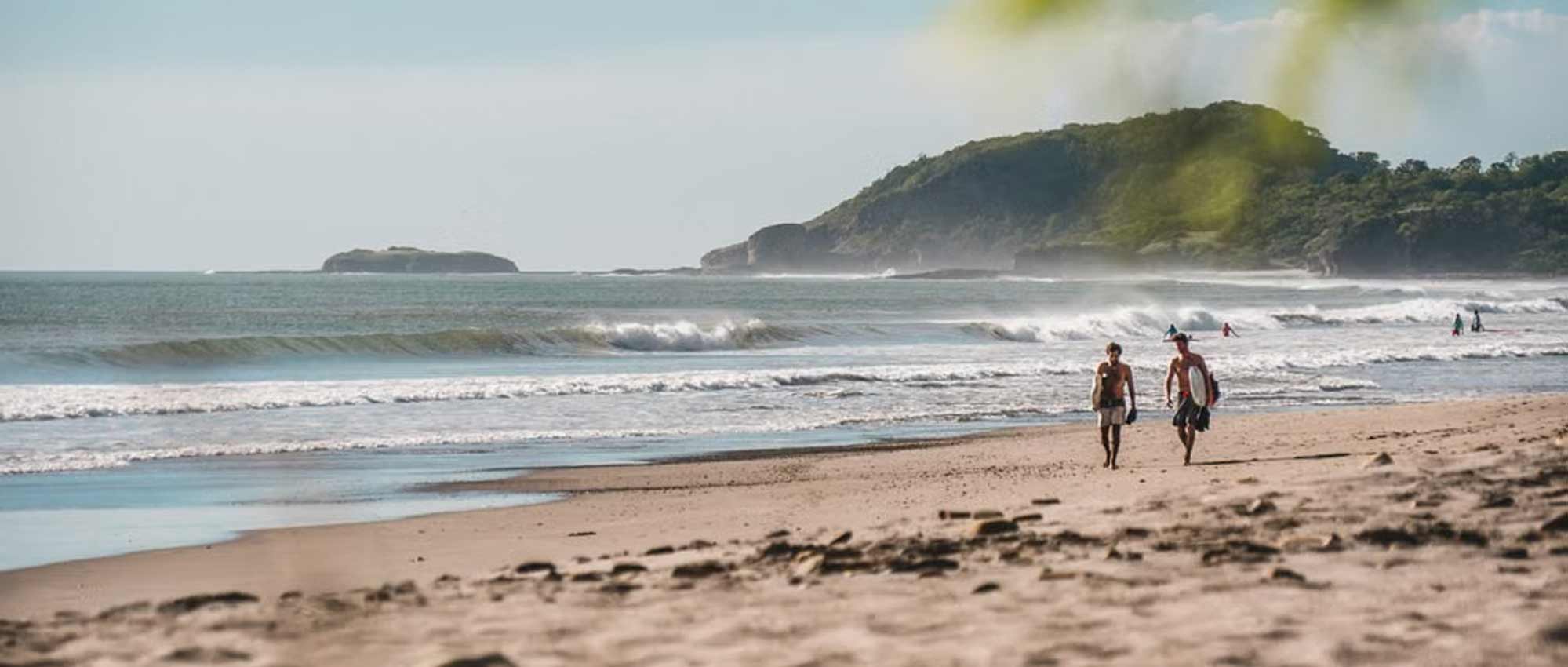
Nicaragua is Costa Rica’s quieter, cheaper neighbor, roughly 30 to 40% less, with clean waves groomed by reliable offshore winds. The trade-offs are long drives between spots, limited variety for genuine beginners, and recurring political instability that is worth checking before you book.
- 30–40% cheaper than Costa Rica
- Offshore winds create clean conditions
- Uncrowded
- Few dedicated beginner spots
- Long drives between breaks
- Limited dining
- Recurring political instability
Portugal

Reading about it is one thing. Doing it is another.
Progress your surfing
Small groups, patient coaches, and boards for every level.
Explore surfing
Take up wingfoiling
A new & easy to learn sport — we’ll get you flying.
Explore wingfoilingYour 'home' base
Ensuite rooms • social vibes • tasty food & large community hub.
See the retreat
If you are based in Europe, Portugal is the obvious short-haul choice, with beach breaks for every level and surf-plus-city life near Lisbon. Just pack a wetsuit year-round, and know that the cheapest camps often teach in very large groups, sometimes 20 students to one coach.
- Short-haul and cheap from Europe
- Waves for every level
- Surf, culture and city life near Lisbon
- Cold water year-round, wetsuit essential
- Hundreds of schools, often huge groups
- Cold air Nov–Apr
- Best suited to an 18–25 crowd
Sayulita, Mexico
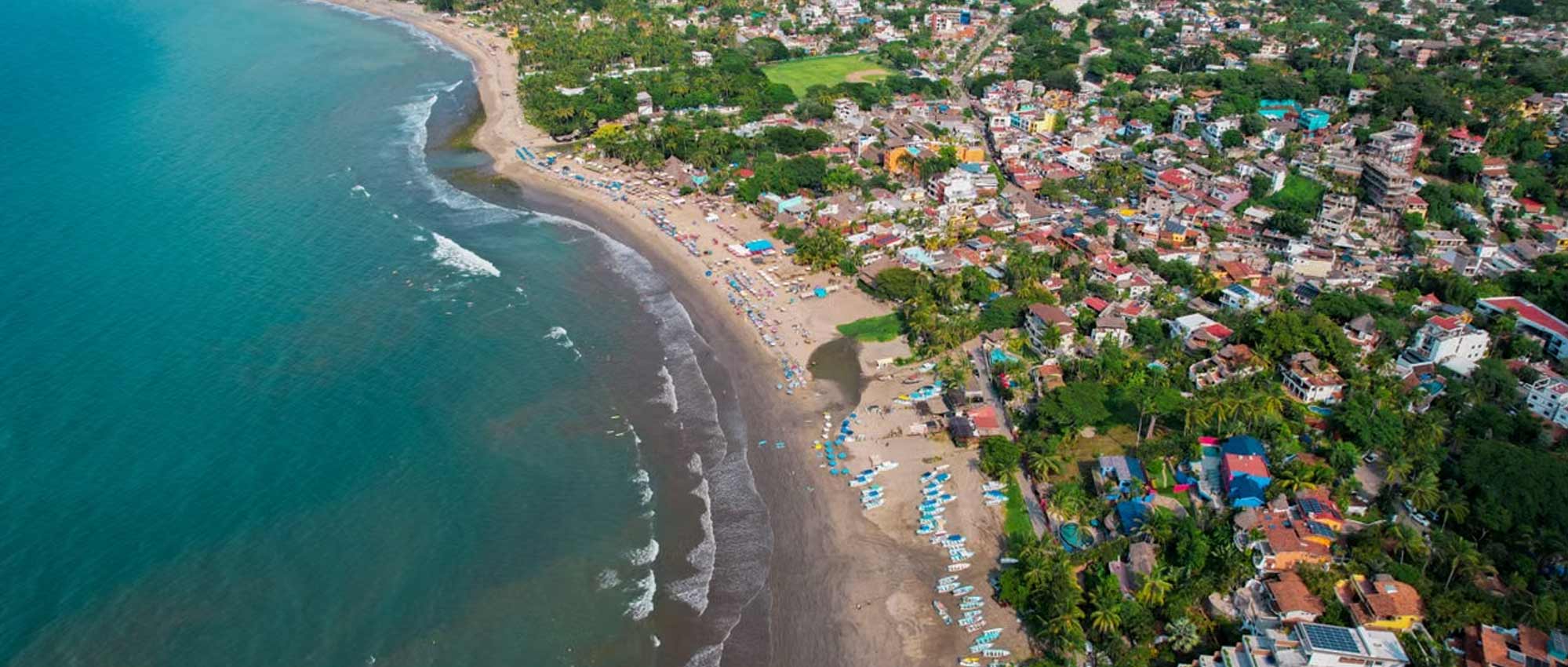
Sayulita is one of the prettiest surf towns we have ever seen, and we lived there for ten months scouting it as a possible Swell location. The food and atmosphere are superb. We passed only because the surf is too inconsistent to promise a beginner a good week, though when it is on, it is great fun.
- Beautiful town, fun waves out front
- Incredible food
- Varied spots within a short drive
- Inconsistent surf
- Gets busy in season
- Cartel reputation over the region (we felt safe)
- Bay water can get dirty
Canary Islands, Spain
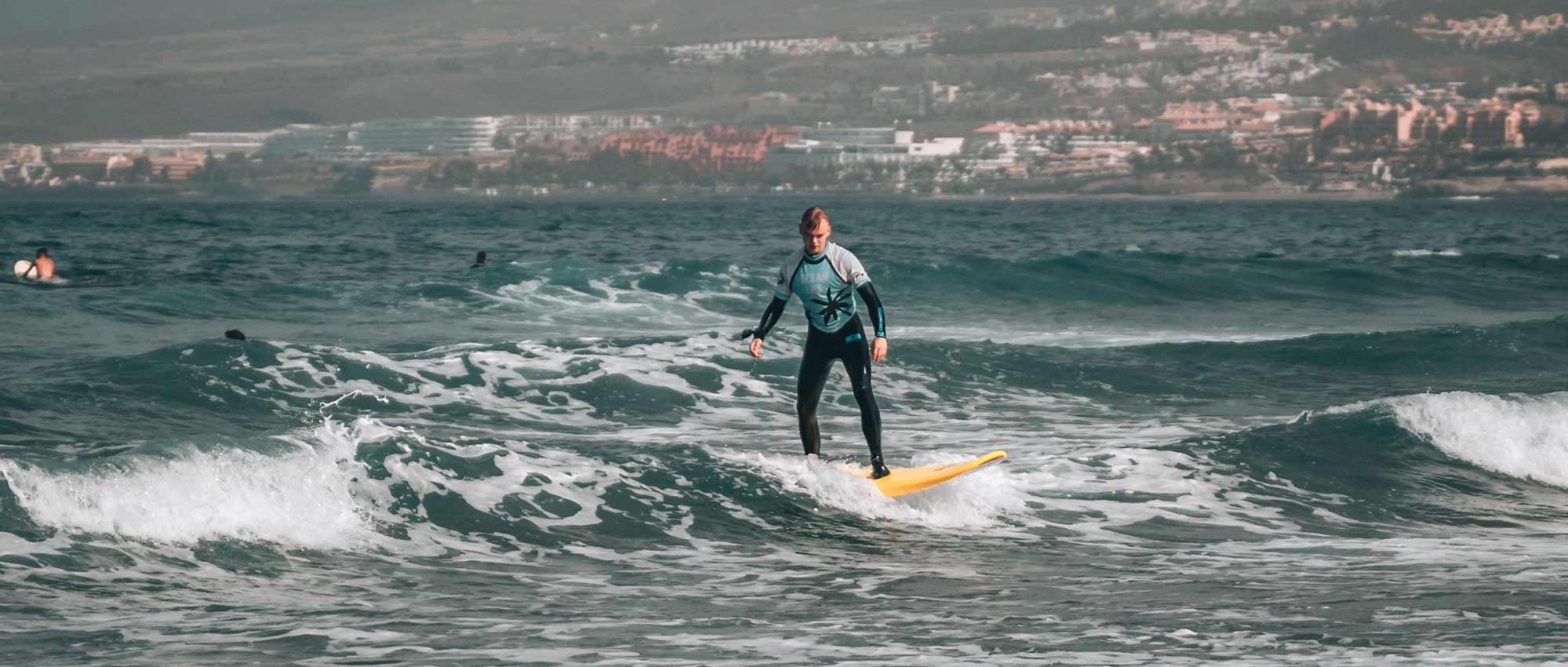
The Canaries give Europeans warm winter sunshine and plenty of spots across Lanzarote, Tenerife and Fuerteventura. The catch is wind: many breaks blow out by mid-morning, and the water stays cool enough that you will want a wetsuit year-round.
- Easy and cheap from Europe
- Lots of spots across the islands
- Good winter climate
- Very windy, spots blow out by mid-morning
- Cool water, wetsuit needed
- Limited comfort or luxury options
Sri Lanka
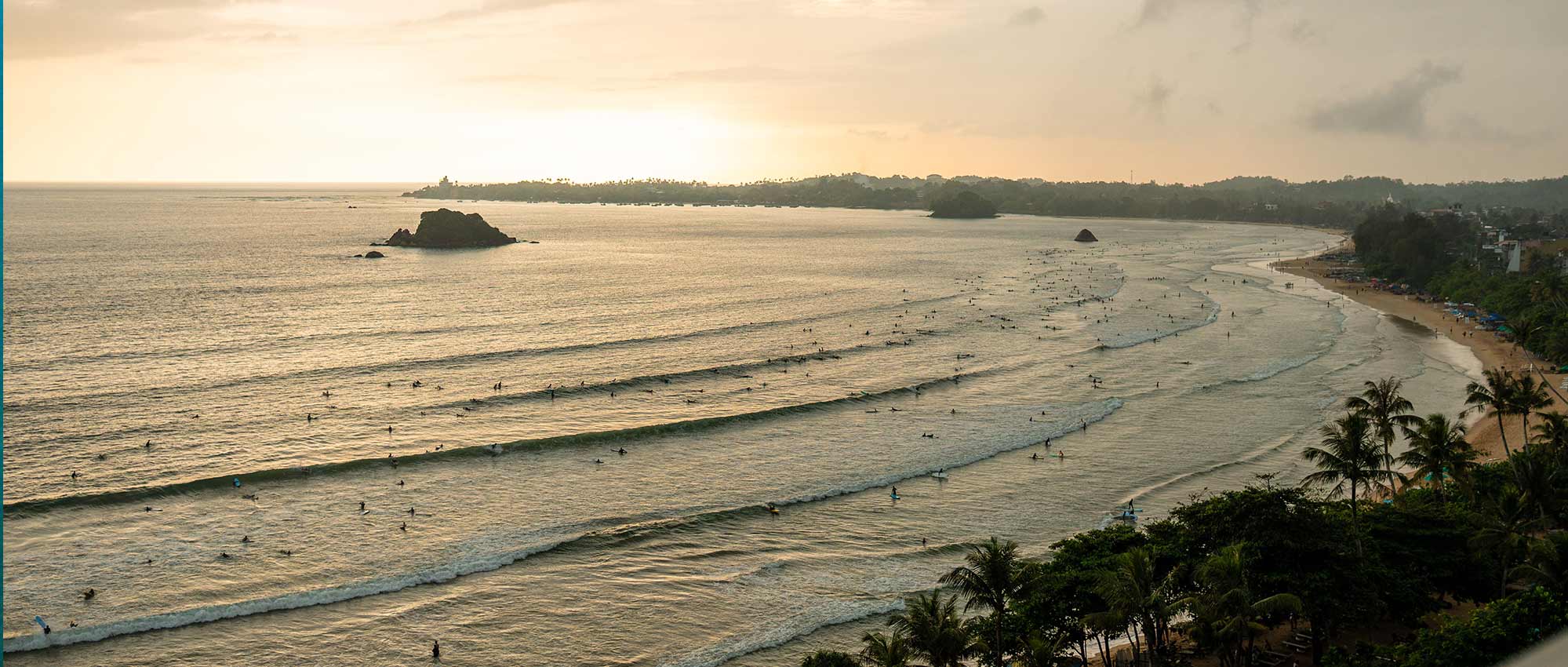
Sri Lanka offers warm water, friendly waves and excellent value, with two coasts that swap seasons, so timing is everything. The main downsides are the monsoon, crowds in high season, and long transfers between surf spots.
- Warm water
- Friendly, fun waves
- Great local food
- Very good value
- Strong monsoon seasons
- Crowded in high season
- Long distances between spots
- Variable line-up etiquette
Hawaii
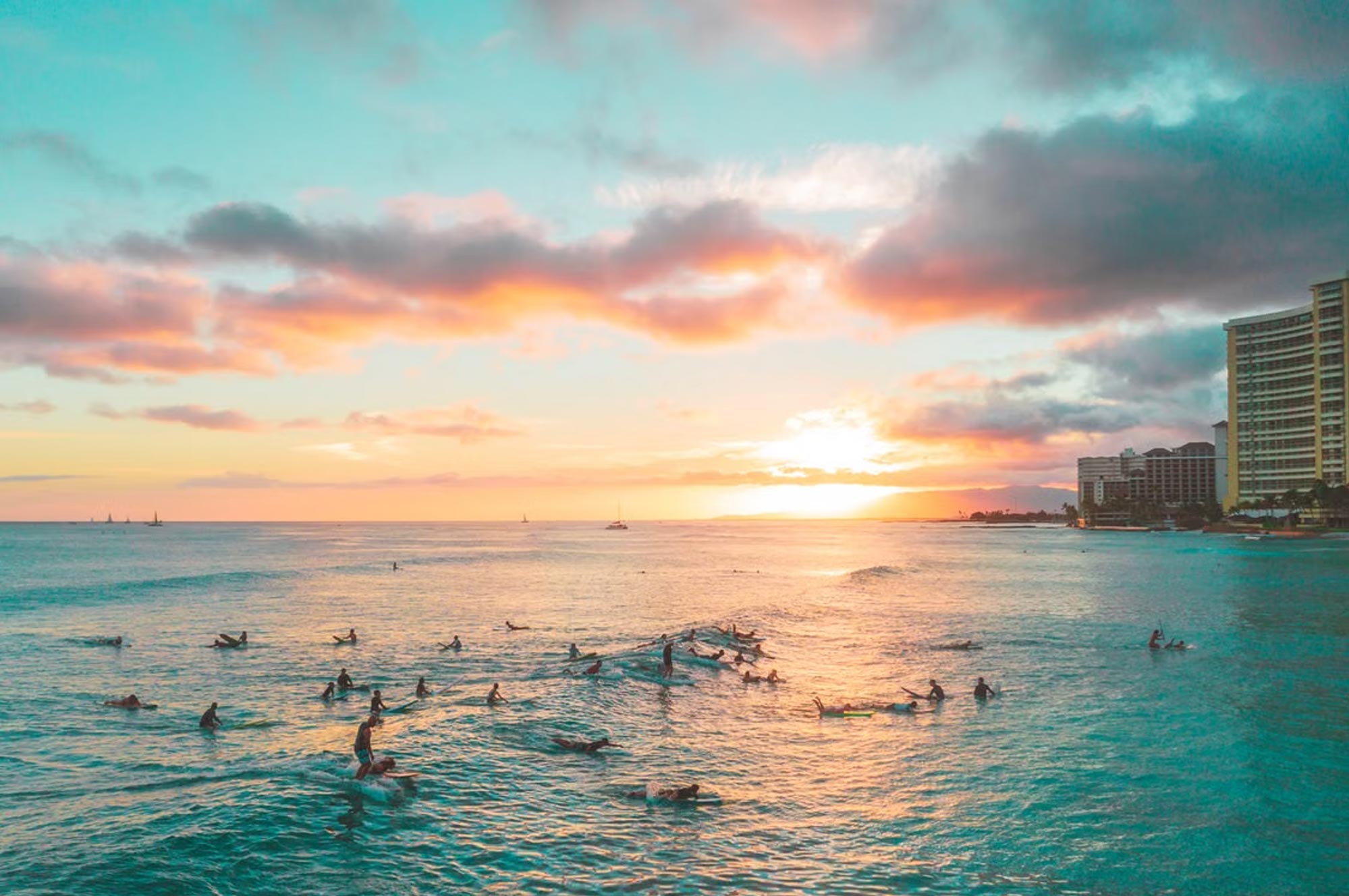
Hawaii is the birthplace of surfing, and the gentle south-shore rollers off Waikiki are a lovely place to catch a first wave in warm water. Be ready for the cost, often two to three times the Dominican Republic, and for crowds that can come with real localism.
- The birthplace of surfing
- Gentle south-shore beginner waves
- Warm year-round
- Plenty to do off the water
- Expensive, often 2–3× the DR
- Very crowded line-ups
- Localism can be real
What a week of learning to surf actually costs
Price is the thing most surf-camp sites hide, so here is an honest comparison. The figures below are indicative 2026 rates per person for roughly a week, taken from real camps in each region; they move with season, room type and group size. The number that matters is not the sticker price but what sits inside it, because a dorm bed with 20-to-1 group lessons is a very different holiday to a boutique week with small-group coaching.
Our own Dominican Republic price is fixed and fully inclusive: from US$2,236 per person solo, or US$1,615 per person as a couple, for 7 nights with airport transfers, daily coaching, all equipment, beach transport, breakfasts, three dinners and three yoga sessions. You can see the live package on our pricing page.
| Destination | Typical week (per person) | vs Swell (DR) | What you get at that price |
|---|---|---|---|
| Dominican Republic (Swell) |
From $2,236 solo · $1,615pp couple | — | Private ensuite, transfers, daily small-group coaching, all gear, breakfasts + 3 dinners, 3 yoga, 16-guest cap |
| Costa Rica | $1,600–4,000+ | ~40–70% more (like-for-like) | Boutique adult camps sit above the DR; budget dorms exist from ~$450 but mean big groups and long transfers |
| Nicaragua | $850–2,500 | Cheaper, but… | Fewer true beginner spots, long drives between breaks, limited boutique options |
| Portugal | $350–1,100 | Much less | Often 20-to-1 group lessons, cold water and a wetsuit, dorm rooms common |
| Canary Islands | $350–1,400 | Much less | Small-group options exist; windy, wetsuit needed, frequently self-catering |
| Sri Lanka | $450–1,200 | Much less | Excellent warm-water value; long-haul flights, best coast changes with the season |
| Sayulita, Mexico | $700–2,800 | Similar–higher | Great town and food; surf is inconsistent, usually sold as lessons rather than a full program |
| Hawaii | $3,000–6,000+ | 2–3× the DR | Few genuine camps; mostly lodging plus paid lessons booked separately, crowded line-ups |
Cheaper is not always better value. Budget camps reach a low headline price with dorms, self-catering and large group lessons. Compare what is included, not just the number.
Indicative per-person rates for ~7 nights, from public 2026 camp pricing. Actual prices vary by season, room and group size.
When to go: the best time of year for beginners
Warm water and gentle waves are not on offer everywhere all year. This matrix rates each destination month by month for a complete beginner. The Dominican Republic is the standout: our home break works year-round, so almost any week suits a first-timer, which is why we welcome guests every week of the year.
| Destination | Jan | Feb | Mar | Apr | May | Jun | Jul | Aug | Sep | Oct | Nov | Dec |
|---|---|---|---|---|---|---|---|---|---|---|---|---|
| Dominican Republic | P | P | P | P | G | G | G | G | G | G | G | P |
| Costa Rica | P | P | P | P | G | G | G | G | M | M | G | P |
| Nicaragua | P | P | P | G | G | G | G | G | G | G | G | P |
| Portugal | – | – | – | M | G | P | P | P | P | G | M | – |
| Canary Islands | M | M | M | G | G | G | G | G | G | G | M | M |
| Sayulita, Mexico | G | G | G | M | M | M | M | M | M | M | G | G |
| Sri Lanka | P | P | P | P | G | G | G | G | G | M | P | P |
| Hawaii (Oahu) | G | G | G | P | P | P | P | P | P | P | G | G |
Two notes: Sri Lanka has two coasts that swap seasons, so the south-west (the beginner coast) is best Nov–Apr and the east best May–Sep. Portugal and the Canaries are surfable in winter, but the water is cold and the waves get big, so we have rated them for warm-weather beginner conditions.
Which beginner surf destination is right for you?
The best destination depends on where you are traveling from and what you want out of the week. Here is the short version.
Why learn to surf with us
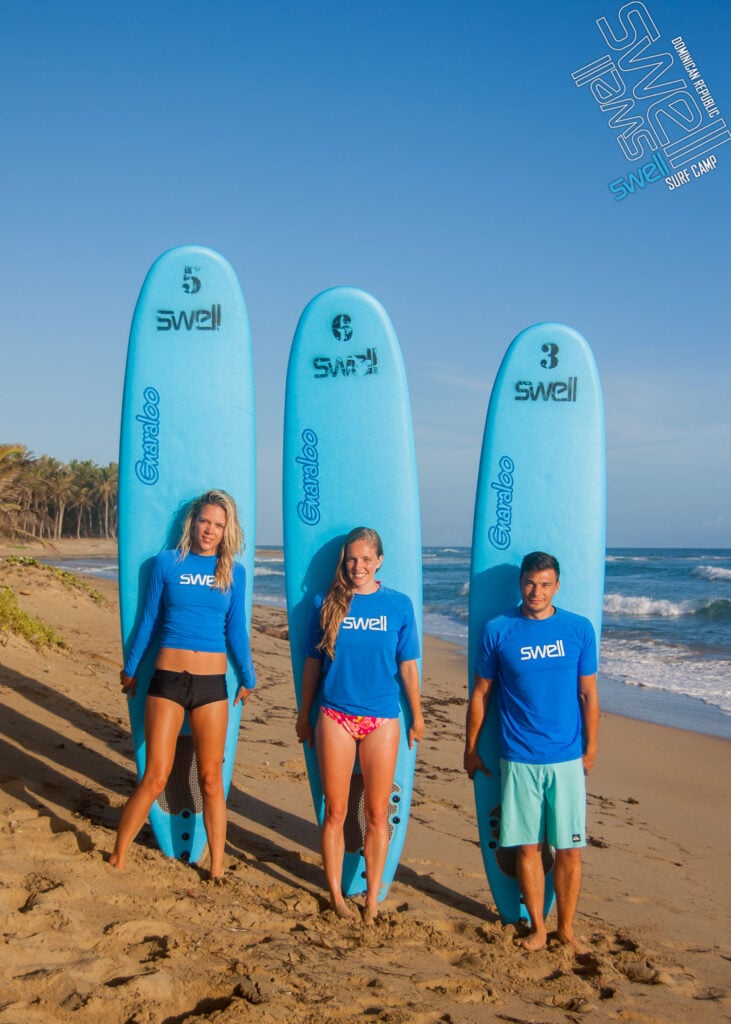
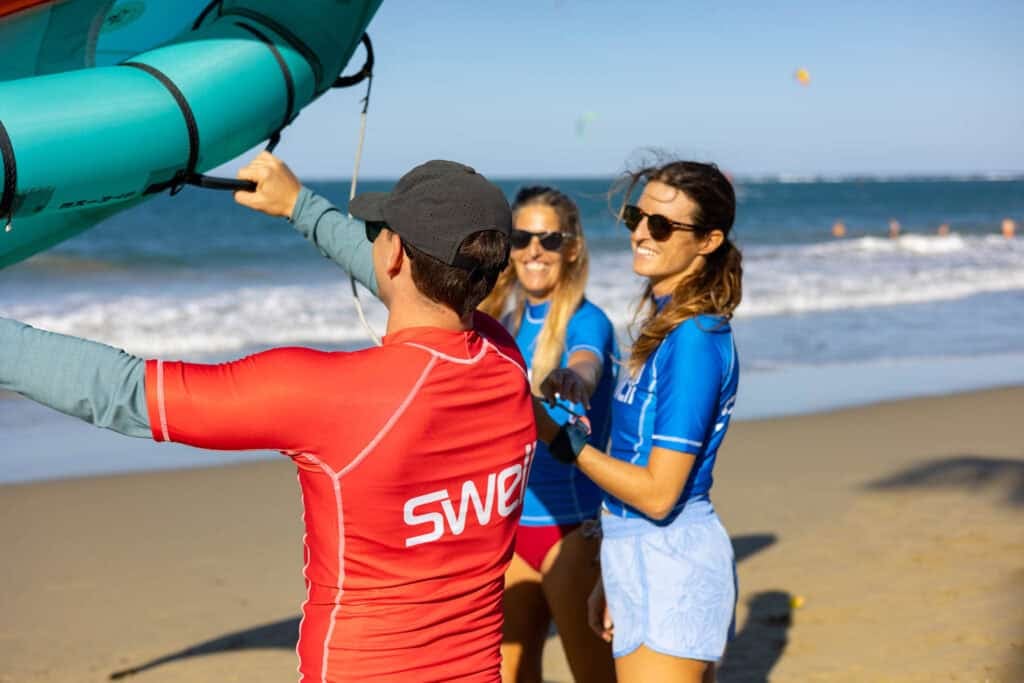
We built Swell specifically for adult beginners. Since 2009 we have taught thousands of first-timers, our average guest is 39, in small groups matched by ability, with boutique rooms and daily coaching a short walk from Playa Encuentro. If you have never surfed and only have a week, that combination of warm water, gentle waves and patient coaching is exactly what gets you standing up.
You can see the rooms and what a week looks like on our retreat page.
Wherever you decide to go, pick the spot that fits the surfer you are today, not the one you hope to be in five years. Warm water, gentle waves and a good coach will get you further in a week than any bucket-list break. If you have questions about a destination, send us a message; chances are we have been there and can tell you honestly if it suits you.
Frequently asked questions
Where is the best place to learn to surf as a complete beginner?
We are biased, since we run a camp there, so weigh this accordingly: for most adult beginners the Dominican Republic is hard to beat. Playa Encuentro in Cabarete has gentle, chest-deep whitewater, 27°C (81°F) water with no wetsuit, no dangerous rips or reef, and it is only 25 minutes from the airport, so you spend your week surfing rather than traveling. If you want world-class waves and will travel further, Costa Rica or Hawaii are better bets.
Where can I learn to surf in warm water without a wetsuit?
The Dominican Republic, Hawaii, Costa Rica, Sri Lanka and mainland Mexico all have warm water year-round, so no wetsuit is needed. Portugal and the Canary Islands are the opposite: the water stays cool enough that you will want a wetsuit whenever you visit.
Is Costa Rica or the Dominican Republic better for beginners?
For beginners, and with the caveat that the DR is our home base, we would point to it for access, value and safety: shorter travel, no crocodiles or heavy reef, and 40 to 70% cheaper in our experience. Costa Rica shines for scenery and more advanced Pacific waves. We break it down fully, bias and all, in our Dominican Republic vs Costa Rica guide.
What is the best time of year to learn to surf in the Dominican Republic?
You can learn year-round on the north coast. November to April brings the biggest, cleanest waves, while the European summer months are smaller but very consistent, which many beginners actually prefer. Water sits around 27°C (81°F) all year.
How long does it take to learn to surf? Is a week enough?
A week is plenty to get started. With daily coaching in gentle waves, most of our first-time guests go from never having stood on a board to catching unbroken green waves by the end of the week. Progress is faster in warm, forgiving conditions, which is exactly why destination choice matters.