The short answer
About 95% of our adult beginners stand up on a broken wave in their first session. But standing up is not the same as surfing. How long it really takes comes down to two things almost nobody mentions: how many hours you actually spend in the water, and what the ocean decides to do during your week. Here is the honest version, after 17 years of watching it happen.
How long does it take to learn to surf?
Most adult beginners stand up on a broken wave within their first two-hour lesson. At Swell that figure sits at roughly 95%, with a coach pushing them into the wave. Riding an unbroken green wave under your own power takes longer, and depends far more on conditions than on you.
That gap between the two numbers is where almost every article on this subject goes wrong. Search this question and you will find answers ranging from “two hours” to “two years.” Both are true. They are simply describing different milestones, and neither writer bothers to say which one they mean.
We have been teaching complete beginners at Playa Encuentro since 2009. Over 6,000 guests have come through, almost all of them adults with no watersports background, most of them between 35 and 60, and the majority arriving with exactly one week of holiday to spend. So this is not a theoretical question for us. It is the question we answer on the phone every day.
95%
stand up in their first session
~17 hrs
average water time in one week
6,000+
beginners taught since 2009
Standing up is not surfing: the three milestones people confuse
When somebody asks how long it takes to learn to surf, they usually have a picture in their head of gliding along the face of a clean wave. That is not the first milestone. It is the third.
Separating these three stages is the single most useful thing you can do before booking any trip, because the honest timeline for each one is wildly different.
| Milestone | What it means | Realistic timeline |
|---|---|---|
| 1. Standing on whitewater | A coach pushes you into a broken wave. You get to your feet and ride it straight to the beach. | First session. Around 95% of our guests. |
| 2. Riding whitewater unassisted | You paddle for the broken wave yourself, catch it, stand and control the ride. Nobody pushing. | Day two to day four for most adults. |
| 3. Catching an unbroken green wave | You sit outside, read the set, paddle into the wave before it breaks, and turn along the face. | Depends almost entirely on conditions. Some guests inside a week, others on a second trip. |
The “surfing takes two years” claim you see repeated online is really describing something beyond even milestone three: reading a lineup fluently, picking waves without help, holding your own at a busy break. That is a genuinely long apprenticeship. It has very little to do with whether you will enjoy yourself, or stand up, in your first week.
Confusing the two is what stops people booking. They read a timeline written for milestone four and quietly decide they are too late, too old or too unfit to bother. They are not.
Why no honest surf camp will promise you green waves in your first week
We cannot tell you what percentage of guests ride an unbroken wave by the end of their week, and any camp that quotes you a confident figure is guessing. Some weeks the conditions simply do not allow beginners past the whitewater. That is not a failure of teaching. It is the ocean.
This is the part of the answer that gets left out of every brochure, so let us be specific about it.
Playa Encuentro has a series of graduated peaks. The inside section, where beginners learn, stays workable almost year-round. That is why it suits first-timers so well. But whether the outside offers clean, catchable, unbroken waves at a size a beginner can safely paddle into is a different question, and it changes week to week.
Summer here tends to produce smaller, more consistent surf. It is the friendlier window for a complete beginner hoping to progress past whitewater, and the groups are quieter. Winter brings bigger, more powerful swell, which is excellent if you already surf and less useful if you are trying to catch your first green wave. There is a fuller breakdown of how the seasons behave on our learn to surf holiday page.
The honest framing: the month you book does not decide whether a beginner can surf. It decides which level of surfer gets the best week. A first-timer can come any time of year and stand up. Whether that same person also rides a green wave depends on which seven days the ocean hands them.
We would rather tell you this before you book than have you arrive expecting a guarantee nobody can make. In practice, most guests who get a run of friendly conditions do make it onto unbroken waves. Guests who get a big, messy week spend it getting genuinely good at whitewater instead, which is exactly the right foundation and considerably more fun than it sounds.
The number that actually answers the question: water hours
Time is the wrong unit. Hours in the water is the right one. A guest at Swell averages around 17 hours of water time across a week, roughly half of it coached instruction and half free surfing to practise what they have just been taught. That is the number that explains everything else.
Compare that to how most people try to learn at home.
| How you learn | Water time | Time to reach ~17 hours |
|---|---|---|
| One week at Swell | ~17 hours (half coached, half free surfing) | 6 days |
| Fortnightly two-hour lesson at home | 2 hours per fortnight | Around 4 months |
| Occasional weekend surf trip | 4–6 hours per trip | 3–4 separate trips, spread over a year |
The difference is not only the total. It is the spacing. Learning to surf is a motor skill, and motor skills consolidate through repetition close together. When you paddle out twice a day for six days, your body still remembers yesterday. When you surf once a fortnight, you spend the first half of every session rebuilding what you lost.
This is the real reason a dedicated week outperforms months of casual lessons, and it is why we structure the days the way we do. The coached session gives you the correction. The free surf immediately afterwards is where the correction actually sticks. Drop either half and the week works considerably less well.
If you have limited annual leave and want to genuinely learn rather than dabble, this is the maths that matters. One focused week is worth more than a year of good intentions.
Does your age change how long it takes to learn to surf?
No. Across 17 years and thousands of adult beginners, we have not seen a meaningful difference in how quickly guests in their fifties progress compared to guests in their thirties. Age is simply not the variable people assume it is.
This surprises almost everyone who asks, so it is worth saying plainly. Our average guest is 39. We regularly teach people in their fifties and sixties. They stand up in the first session at the same sort of rate as everybody else, and they reach unassisted whitewater riding on a similar timeline.
What does vary between individuals has nothing to do with birth year:
- Comfort in the ocean. Someone who swims regularly and is relaxed in moving water progresses faster than someone who is quietly nervous, regardless of age.
- Board-sport background. Snowboarders, skateboarders and surf-skaters already understand what a board does underfoot.
- Willingness to fall over repeatedly without getting frustrated. This is by far the biggest predictor, and if anything it improves with age.
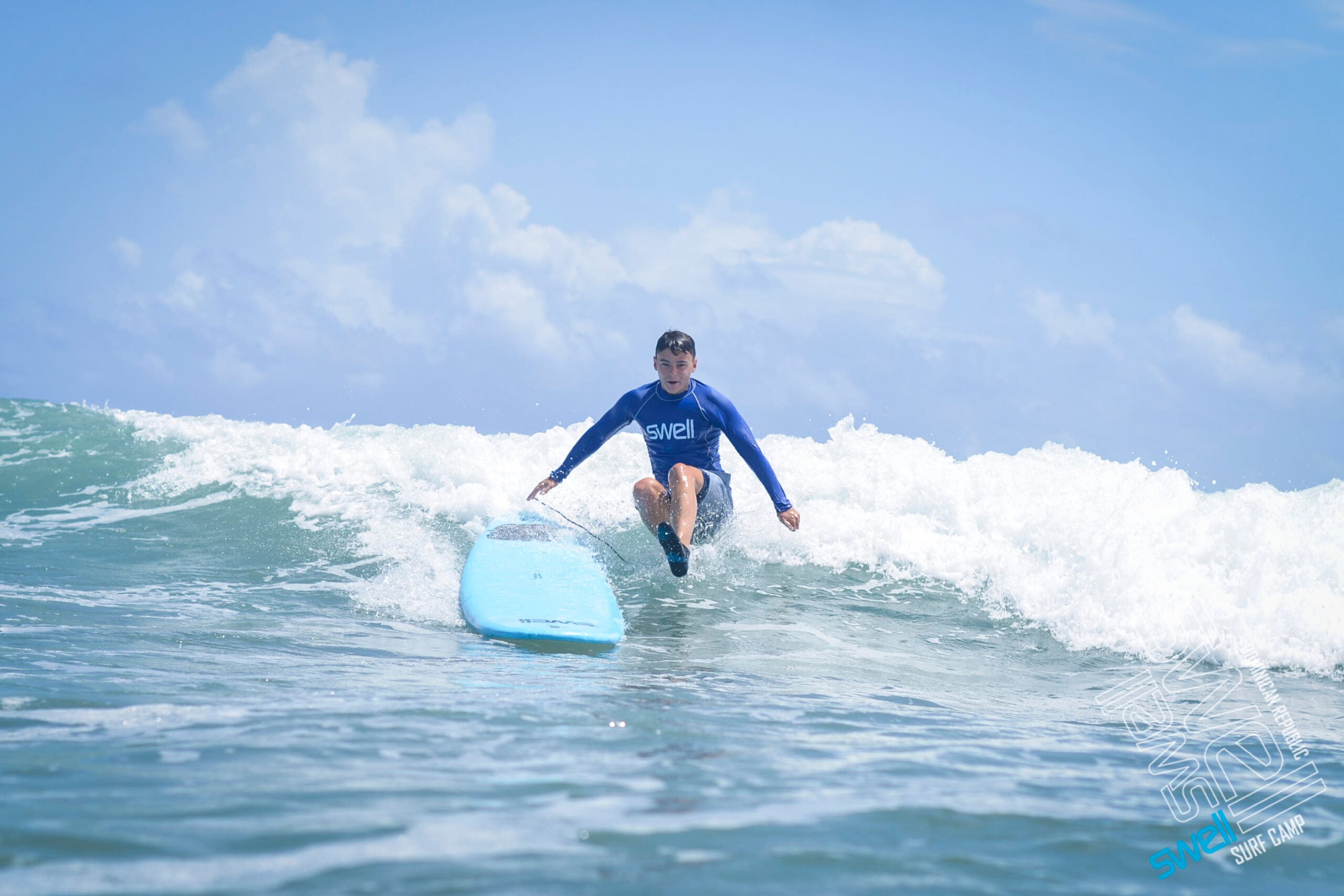
Ready when you are
Reading about it is one thing. Doing it is another.
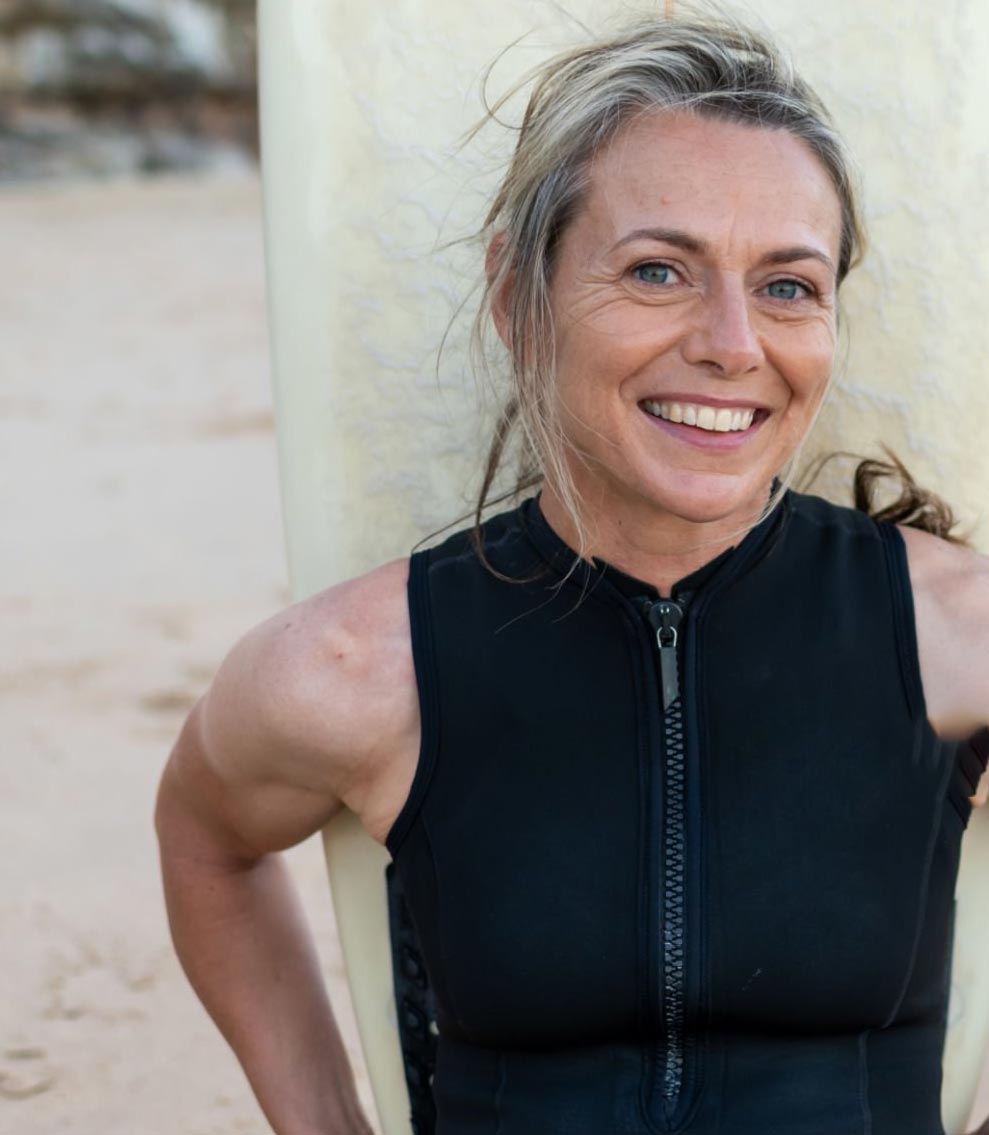
Coaching
Progress your surfing
Small groups, patient coaches, and boards for every level.
Explore surfing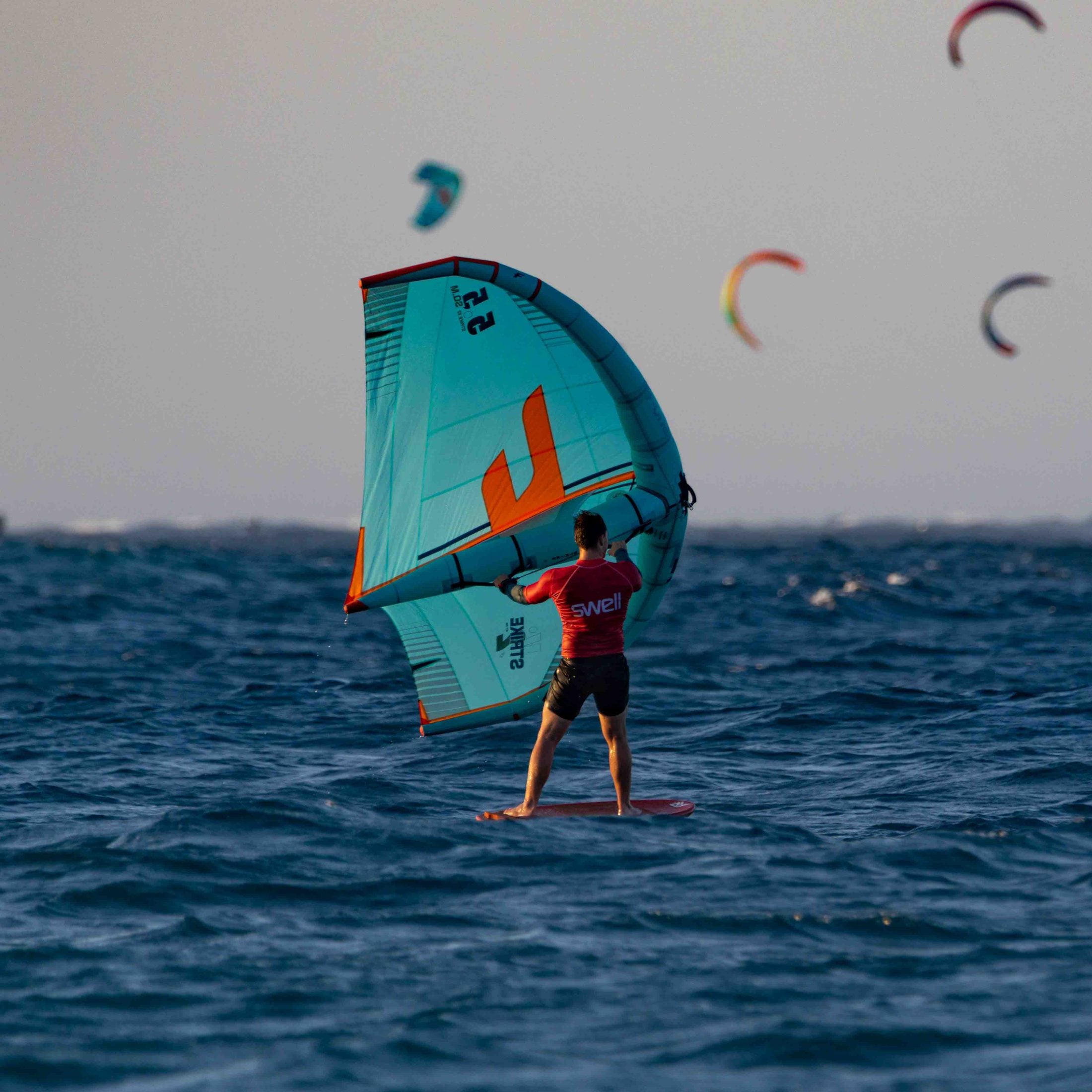
On the water
Take up wingfoiling
A new & easy to learn sport — we’ll get you flying.
Explore wingfoilingThe stay
Your 'home' base
Ensuite rooms • social vibes • tasty food & large community hub.
See the retreat

If the age question is what brought you here, we have written about it at length in learning to surf after 40, which covers what actually changes and what does not.
Is one week enough to learn to surf?
Yes, if you define “learn to surf” as reaching milestones one and two: standing confidently, catching broken waves under your own power, and understanding what you are doing well enough to keep improving. That is a realistic and genuinely satisfying outcome for a single week.
What one week will not do is turn you into a surfer who can rock up at any break in the world and hold their own. Nothing does that in a week. Anyone selling you that is selling you something else.
Here is what a typical week looks like in practice. Day one is the shock of how much paddling is involved, plus the first stand-up. Days two and three are where most of the real learning happens and where people are usually the most tired. By day four something clicks and the pop-up stops being a conscious sequence of movements. Days five and six are where guests either start reaching for green waves or spend the time getting genuinely good at what they have already learned.
The reason a week works at all is the small group. We cap the retreat at 16 guests, which keeps coaching ratios low enough that you are corrected in the water rather than told about it afterwards. You can see how the week is structured on our learn to surf holiday page.
What actually slows people down
Almost nobody is held back by talent. In our experience, four things account for most of the difference between a fast week and a slow one, and three of them are fixable before you arrive.
Paddling fitness. This is the honest one. Surfing is mostly paddling, and it uses shoulder and upper-back muscles that desk work does nothing for. Guests who did even a little preparation get noticeably more waves, simply because they can stay out longer. Our surf fitness guide covers what is worth doing in the weeks beforehand.
Getting onto a smaller board too soon. Volume is what catches waves. Beginners who stay on a big, stable board for the full week catch several times more waves than those who drop down early because a smaller board looks better. More waves means faster learning. There is more on this in choosing the right surfboard.
Fear of the wipeout. Perfectly normal, and it resolves quickly once you have fallen off a few dozen times and discovered that nothing bad happens. The beginner section at Encuentro is forgiving, which helps enormously.
Where you choose to learn. The one thing you cannot fix once you are there. A beach with inconsistent, dumping or crowded waves will hold you back no matter how good the coaching is. We compare the options across the region in our Caribbean surf guide and more broadly in beginner surf destinations.
What happens after your first week
Most people want to know what the arc looks like beyond the trip, so here is the honest shape of it.
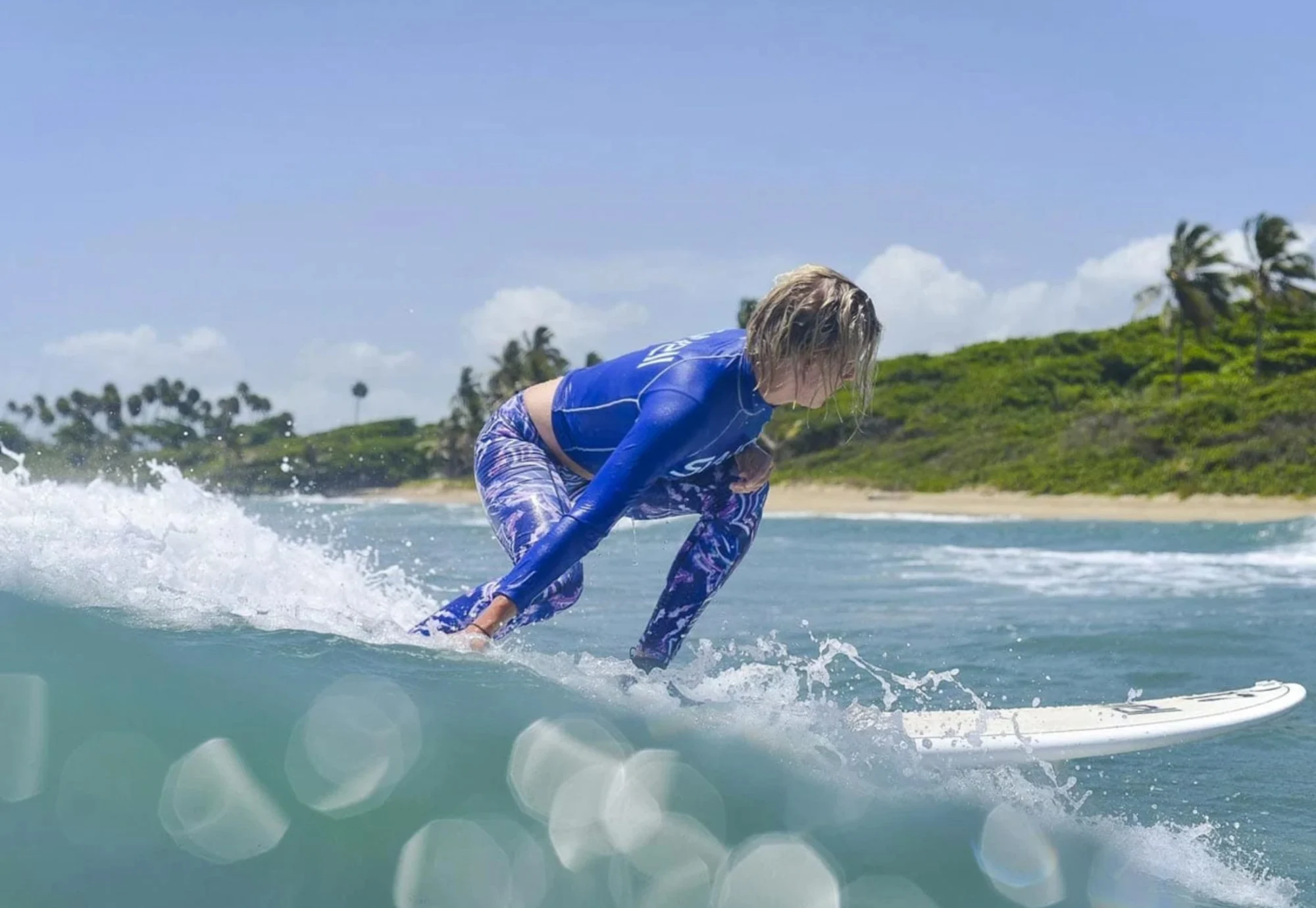
After one focused week you will be able to catch broken waves reliably and you will know what good technique feels like, which is what lets you practise usefully on your own. If you then surf occasionally at home, expect that progress to hold rather than accelerate. Surfing is unusually unforgiving of long gaps.
Guests who come back for a second week almost always arrive at a noticeably higher level than they left at, and they tend to spend that week working on green waves rather than fundamentals. That is the pattern we see most often: the first trip builds the foundation, the second one is where the surfing people imagined actually starts.
There is no shortcut around water time. There is only choosing to concentrate it rather than scatter it.
The short version
Around 95% of adult beginners stand up in their first session. Riding broken waves unassisted takes most people two to four days. Green waves depend on the conditions of the week you happen to get, and no honest operator will promise them.
Age is not the obstacle you think it is. Water hours are the variable that decides everything, and roughly 17 concentrated hours in six days does more than four months of fortnightly lessons.
Thinking about a week?
Tell us your dates and your level and we will send you a price and availability quote, usually within the hour. Adults only, maximum 16 guests, Cabarete, Dominican Republic.
Frequently asked questions
How long does it take to stand up on a surfboard for the first time?
For most adult beginners, the first stand-up happens inside the first two-hour lesson. At Swell around 95% of guests stand on a broken wave in their opening session, with a coach pushing them into it. The pop-up itself is a simple movement; what takes longer is doing it under your own power, without a push, which most people manage somewhere between day two and day four.
Can you really learn to surf in one week?
You can reach a genuinely useful level in one week: standing confidently, catching broken waves unassisted, and understanding the technique well enough to keep improving on your own. You will not become an independent surfer able to handle any break in the world, because nobody does that in a week. The reason a week works is concentration of practice. Roughly 17 hours in the water across six days consolidates a motor skill far better than the same hours spread across a year.
Is it harder to learn to surf after 40 or 50?
In our experience, no. Across 6,000-plus guests since 2009 we have not seen a meaningful difference in progression between guests in their fifties and guests in their thirties. Our average guest is 39 and we teach people in their sixties regularly. What genuinely varies is comfort in the ocean, any previous board-sport background, and patience with falling off repeatedly. None of those track neatly with age, and the last one often improves with it.
How many surf lessons do you need to learn to surf?
Counting lessons is less useful than counting hours in the water, because a lesson can be anything from 45 minutes to three hours. A better benchmark is around 15 to 20 hours of combined coaching and practice to move from complete beginner to riding broken waves unassisted. Crucially, that practice needs to be close together. Fifteen hours across one week produces a substantially better result than fifteen hours spread across a year.
Will I be riding proper unbroken waves by the end of the week?
Possibly, but nobody can promise it and we will not pretend otherwise. Whether a beginner gets onto green waves depends heavily on the conditions during your particular week. Some weeks the surf simply does not allow beginners past the whitewater safely. Playa Encuentro has graduated peaks, so the inside beginner section works nearly year-round, but the outside changes constantly. Summer generally offers smaller, more consistent waves that suit a first-timer trying to progress; winter brings bigger swell better suited to surfers who already have the basics.
Do I need to be fit to learn to surf?
You do not need to be an athlete, but paddling fitness makes a real difference to how many waves you catch. Surfing is mostly paddling, using shoulder and upper-back muscles that office work does nothing to maintain. Guests who do some preparation beforehand stay in the water longer, catch more waves and therefore learn faster. Being comfortable swimming in open water matters more than raw strength. A few weeks of light shoulder and core work before you travel is enough to notice the difference.
What is the best time of year to learn to surf in the Dominican Republic?
Complete beginners can come at any time of year, because the inside section at Playa Encuentro stays workable almost year-round. The month you choose changes which level of surfer gets the best week rather than whether a beginner can surf at all. Summer produces smaller, more consistent waves and quieter groups, which suits first-timers hoping to progress onto unbroken waves. Winter brings larger, more powerful swell that favours surfers who already have the fundamentals.