Best surf camps for beginners (2026): the 6-point checklist
“Surf camp” covers everything from a hostel with a board-rental desk to a boutique surf retreat with daily small-group coaching. Pick the type first, then score the camp against the six things that actually predict whether a first-time surfer learns to surf on their surf vacation. Here’s how.
The 6-point checklist for choosing a beginner surf camp
Every surf camp website looks the same: palm trees, a sunset, a “book now” button. None of it tells you whether you’ll stand up by day three. These six things do. Each card gives you the benchmark and the exact question to ask the camp, in writing, before you pay a deposit.
Coach-to-student ratio
The single biggest predictor of progress. At 1:5 or better a coach corrects your pop-up wave by wave. At 1:10+ you wait your turn and self-correct.
Ask: “What’s your ratio on a typical week, not your quietest?”
Wave type and consistency
Soft, chest-deep whitewater on a sand bottom, separate from the experienced lineup. Under 250 surfable days a year and you’re gambling on a flat week.
Ask: “How many surfable days a year, and is the beginner zone separate?”
Room type
Dorm bunk, shared twin or private ensuite. This is why two “similar” weeks can differ in price by five times.
Ask: “Which room is this price for, and do I share a bathroom?”
What’s really included
Low headline prices grow with add-ons: boards, transfers, meals, even individual surf lessons.
Ask: “Send me the full itemised inclusion list.”
Who you’ll be with
An 18–25 party camp and a 35–60 adult surf camp use identical words: social, fun, small groups. They are different holidays.
Ask: “What’s the average guest age this time of year?”
Reviews you can verify
Testimonials on the camp’s site are curated. Check Tripadvisor or Google, and weigh the count as much as the score.
Ask: “Where can I see your reviews from the last three months?”
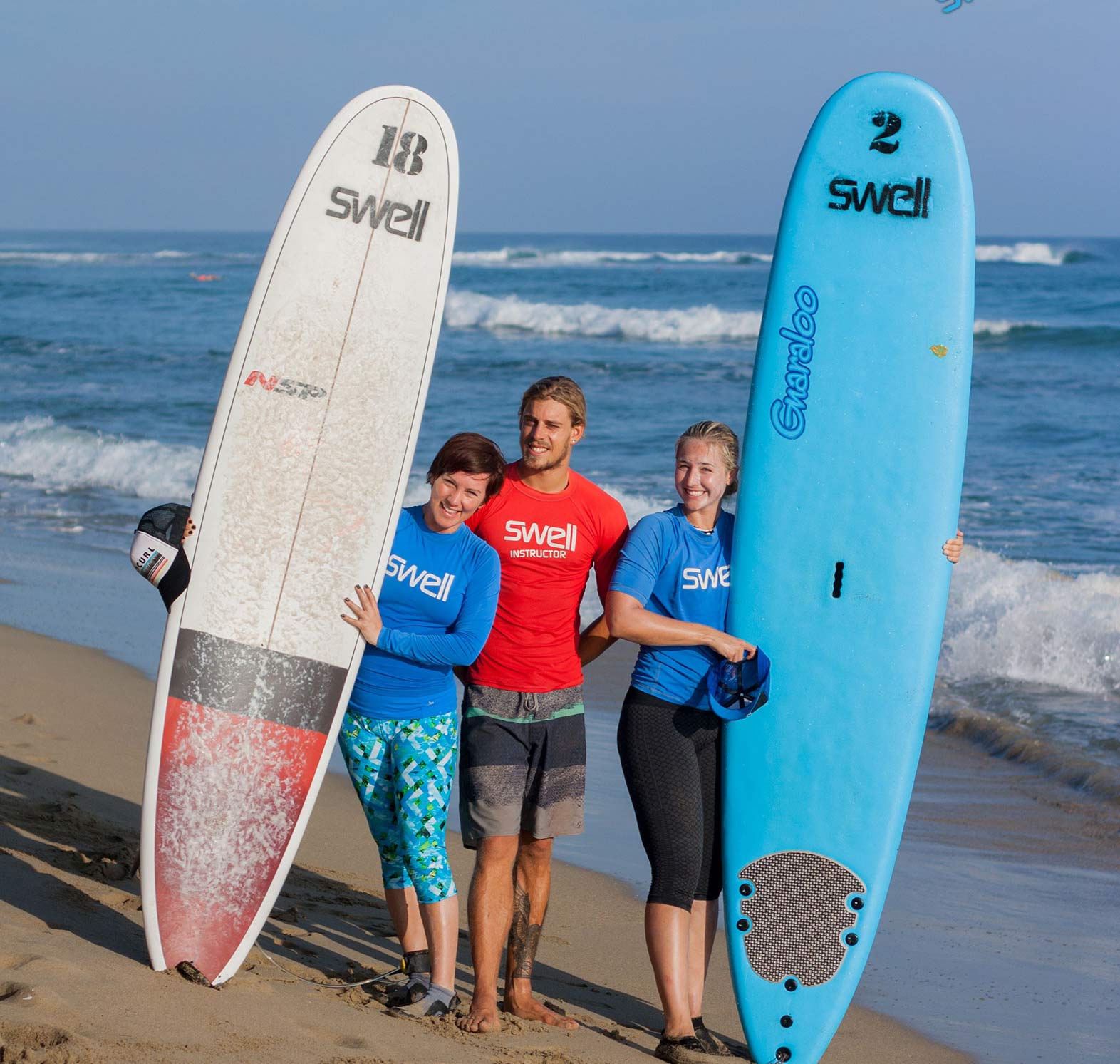
Want to skip the research? Tell us your dates and we’ll show how our camp scores on all six, with a price.
Types of surf camp for beginners, compared
Four types exist, and the price gap between them is mostly room type and coach ratio, not wave quality. Decide which row you want to be in before comparing two headline prices.
| Camp type | Price / week | Coach ratio | Room | Usually included | Best for |
|---|---|---|---|---|---|
| Budget hostel-style | $350–800 | 1:10–1:20 | Dorm bunk or shared twin | Group lessonsBoards & transfers often extra | Tight budget, happy with a party crowd |
| Boutique private-room | $1,600–2,800 | 1:3–1:5 | Private ensuite | Small-group coaching, boards, transfer, most mealsAll-in pricing | Adults who want real coaching and rest |
| Resort surf hotel | $2,000–6,000+ | Varies, often loose | Full resort room | Resort amenitiesLessons priced separately | Surfing as one activity among several |
| Day camp, no stay | $50–150 / lesson | Varies | None | Lesson and board only | Already travelling, just need instruction |
Budget hostel-style surf camps
Lowest entry price, dorm rooms, shared bathrooms, and ratios that run 1:10 to 1:20 in peak weeks. Fine if budget decides and you like a hostel vibe. Don’t expect the per-wave attention a smaller camp gives you.
Boutique private-room surf camps
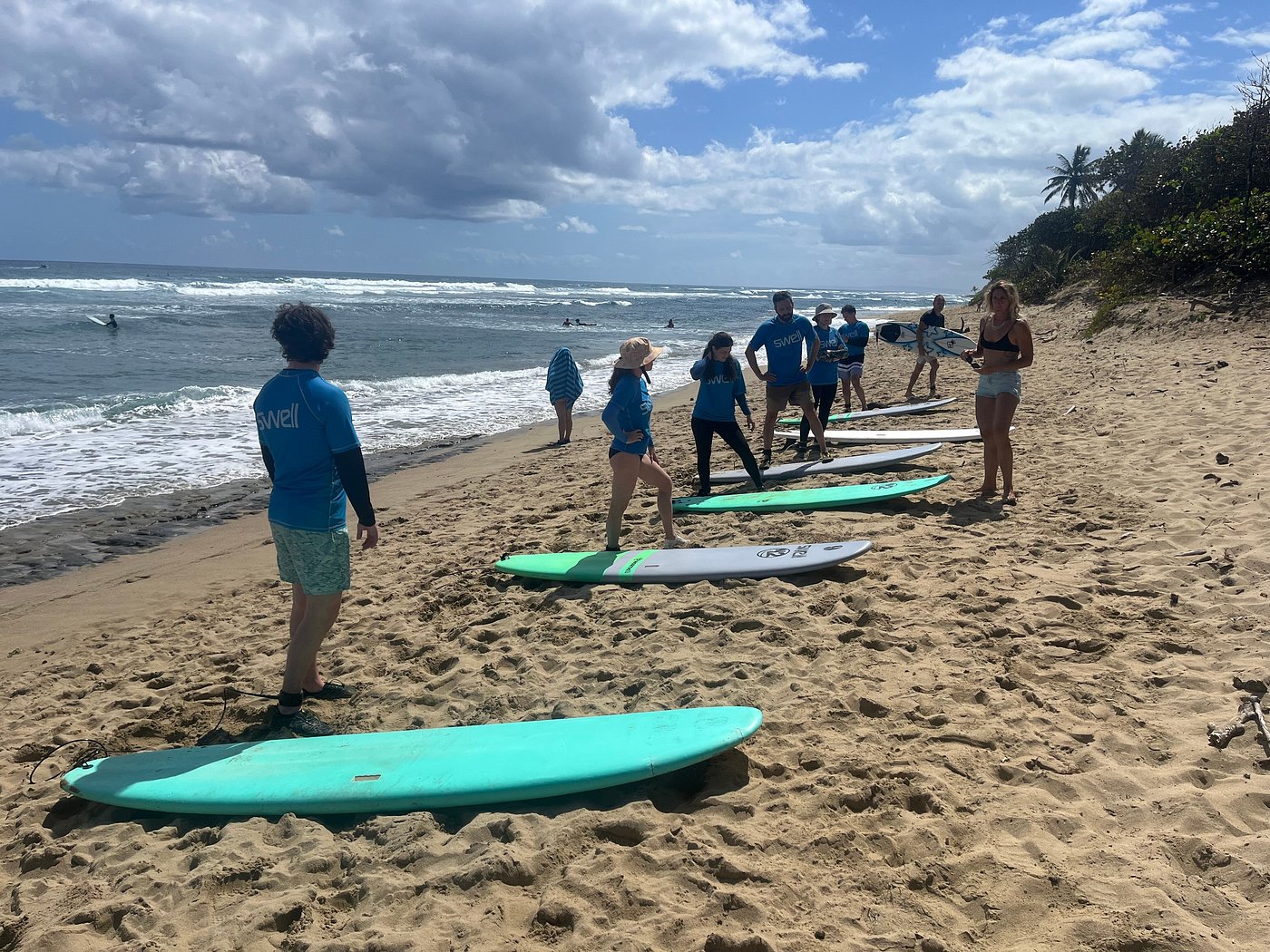
Private ensuite, small-group coaching, breakfast and some dinners included. Costs more per night, but the ratio is what gets a nervous first-time surfer standing by day three or four instead of day six. Here’s what a week at a beginner surf retreat looks like session by session.
Resort-style surf hotels
Pools, spa, several restaurants, with surfing as an add-on. Coaching structure is looser and your instructor can change daily.
Day camps with no accommodation
Lessons only, priced per session. Works if you’re already somewhere with gentle waves and just need structure.
Best places for a beginner surf camp, and what they really cost
Type decides the holiday; region decides travel time, water temperature, season and how much of your budget goes on getting there rather than surfing. The headline camp price is only part of it: a cheap-looking week can turn expensive once you add an internal flight, a four-hour shuttle and a wetsuit. Eight destinations are scored month by month in our guide to the best places to learn to surf.
| Destination | Camp cost | Getting there | Water | Watch out for |
|---|---|---|---|---|
| Dominican Republic, Cabarete | Baseline | Nonstop flights from the US east coast, 25 min taxi from Puerto Plata airport | Warm, no wetsuit | Book early for Dec–Mar peak weeks |
| Costa Rica, Nosara / Guiones | +50% or more | Fly to Liberia or San José, then a long road transfer on partly unpaved roads, or an internal flight plus a drive | Warm | Highest prices in the region; transfers add half a day each way |
| Nicaragua, Pacific coast | +30% | Fly to Managua, then a multi-hour drive; fewer direct flights | Warm | Fewer true beginner breaks; periodic political instability |
| Portugal, Ericeira / Peniche | Varies widely | Short-haul from Europe, under an hour from Lisbon | Cold, full wetsuit | Cheapest camps run 1:20; summer crowds |
| Sri Lanka, Weligama | Low to mid | Long-haul to Colombo, then a few hours by road | Warm | Two coasts swap seasons; pick the right one |
| Bali, Canggu | Low to mid | Long-haul from the Americas; heavy traffic from the airport | Warm | Crowded beginner lineups in high season |
| Hawaii, Waikiki | 2–3× Caribbean | Direct from the US west coast; few true camps, mostly lessons plus hotel | Warm | Cost, and real localism outside the beginner zones |
Camp cost is relative to a comparable boutique week in the Dominican Republic. Transfer times depend on your arrival airport and season.
Caribbean and Central America
Warm water year-round and the shortest trip from North America, but the three main options are not interchangeable. Costa Rica has excellent camps, yet a comparable week in Nosara or Guiones runs at least 50% more than the Dominican Republic, and most guests lose the better part of a day each way on shuttles or an internal flight. Nicaragua is around 30% more expensive, has fewer gentle beginner breaks, and depends on a long drive from Managua. The Dominican Republic’s north coast is the outlier: nonstop flights, a 25-minute airport transfer and 300+ surfable days of chest-deep whitewater, which is why we built our camp there.
Europe
The practical short-haul choice if you already live there. Portugal has waves for every level within an hour of Lisbon. The trade-off is water temperature: a full wetsuit, year-round, and peak-season camps that put 20 students with one coach.
Asia and the Pacific
Sri Lanka and Bali offer warm water and strong value once you’re there, but the flight from the Americas is 20+ hours and the airport-to-camp transfer is several hours more. Hawaii is the birthplace of surfing and Waikiki’s rollers are genuinely gentle, but expect to pay two to three times a Caribbean equivalent for a hotel plus lessons rather than a true camp.
Rule of thumb: count the transfers, not just the flights. One taxi from the airport means your first surf session is the afternoon you land; two buses and an internal flight means it’s the day after tomorrow.
What a good beginner surf camp includes in a week
A well-run boutique camp should hand you a list like this before you book. If a quote doesn’t break down this cleanly, ask for it in writing.
- Daily surf coaching: two structured sessions a day, small groups, matched to ability
- Accommodation: a private ensuite room, not a dorm bunk
- Food: breakfast every day plus a set number of dinners
- Equipment: board and everything else provided, nothing to rent
- Airport transfer: one pickup point and time, no hidden transport line
- Extras: yoga or excursions, marked included or separate before arrival
See our full surf coaching structure and the accommodation itself.
How much a beginner surf camp costs
Budget dorm camps run $350–800 a week, boutique private-room camps $1,600–2,800, and resort hotels $2,000–6,000+ with lessons often extra. Cheaper isn’t automatically worse and expensive isn’t automatically better; the number means nothing until you know what’s inside it.
Our current package starts from $1,899 per person for 7 nights: daily surf coaching, airport transfers, all equipment, breakfasts, three dinners and three yoga sessions. See live pricing and availability.
How Swell Surf Camp scores on the six points
We built Swell in 2009 as an adult surf camp for beginners, after scouting more than 20 countries. Here is our scorecard, stated plainly so you can hold it against any other surf camp for beginners you’re considering.
| Checklist point | Benchmark | Swell |
|---|---|---|
| 1. Coach ratio | 1:5 or better | Maximum 1:5, ISA-certified coaches trained in first aid and CPR |
| 2. Wave type | 250+ surfable days, separate beginner zone | 340+ surfable days at Playa Encuentro; beginners surf the inside whitewater |
| 3. Room type | Know what you’re paying for | Private ensuite rooms with AC and ceiling fan, no dorms |
| 4. Inclusions | Itemised list in writing | Coaching, transfers, equipment, breakfasts, 3 dinners, 3 yoga sessions |
| 5. Guest profile | Your stage of life | Average age 39, most guests 30–65, about 65% travel solo |
| 6. Reviews | Verified, off-site, high count | 4.9/5 across 367+ Tripadvisor and Google reviews |
Mistakes first-time surfers make when choosing a surf camp
Booking on price alone. The cheapest result is rarely cheapest once you add the rental gear, the transfer and the wetsuit nobody mentioned.
Assuming “camp” means the same coaching everywhere. Identical words about “expert instructors” can hide a 1:5 ratio or a 1:15 one. Ask for the number, then ask to see what a first week looks like day by day.
Ignoring the room until arrival. A bunk with five roommates and a shared bathroom lands differently on day five than it read on the booking page.
Underestimating the journey. A camp that is “only” a few hours from the airport can mean an internal flight, a shuttle and a dirt road. Count the transfers before you compare prices.
Not checking the season. A spot that’s perfect in December can be flat or blown out in July. Check month by month, not the general climate.
Reading about it is the easy part
Tell us your dates and who’s coming, and we’ll send a custom price and availability quote almost instantly.
Frequently asked questions about beginner surf camps
Are surf camps worth it for beginners?
Yes, for most people. Structured daily coaching with corrections between waves gets you riding green waves far faster than renting a board and guessing. The value comes from coach ratio and wave consistency, which is why those matter more than price.
What’s the difference between a surf camp and a surf school?
A surf school sells single lessons with no accommodation. A surf camp bundles several days of coaching with a place to stay, meals and often yoga or excursions, usually better value if you’re travelling specifically to learn to surf.
Are surf camps good for solo travellers?
Often the best option. Shared meals and group sessions put you around other travellers without effort, and well-run beginner camps often have a majority of solo guests. Check average age and group size with the camp directly.
Do I need surf experience before booking a beginner camp?
No. A genuine beginner surf camp is built for people who have never stood on a board. What matters is that coaching is structured around complete beginners rather than mixed-level classes.
Which is cheaper for a surf camp: Costa Rica, Nicaragua or the Dominican Republic?
For a comparable boutique week, Costa Rica’s Nosara and Guiones run at least 50% more than the Dominican Republic and Nicaragua around 30% more, before adding the longer transfers both require. The Dominican Republic’s north coast combines the lowest cost with the shortest airport-to-camp journey.
How do I know if a surf camp’s reviews are trustworthy?
Check the count alongside the score, on a platform the camp doesn’t control such as Tripadvisor or Google. A high score from very few reviews, or reviews that all sound alike, deserve caution.