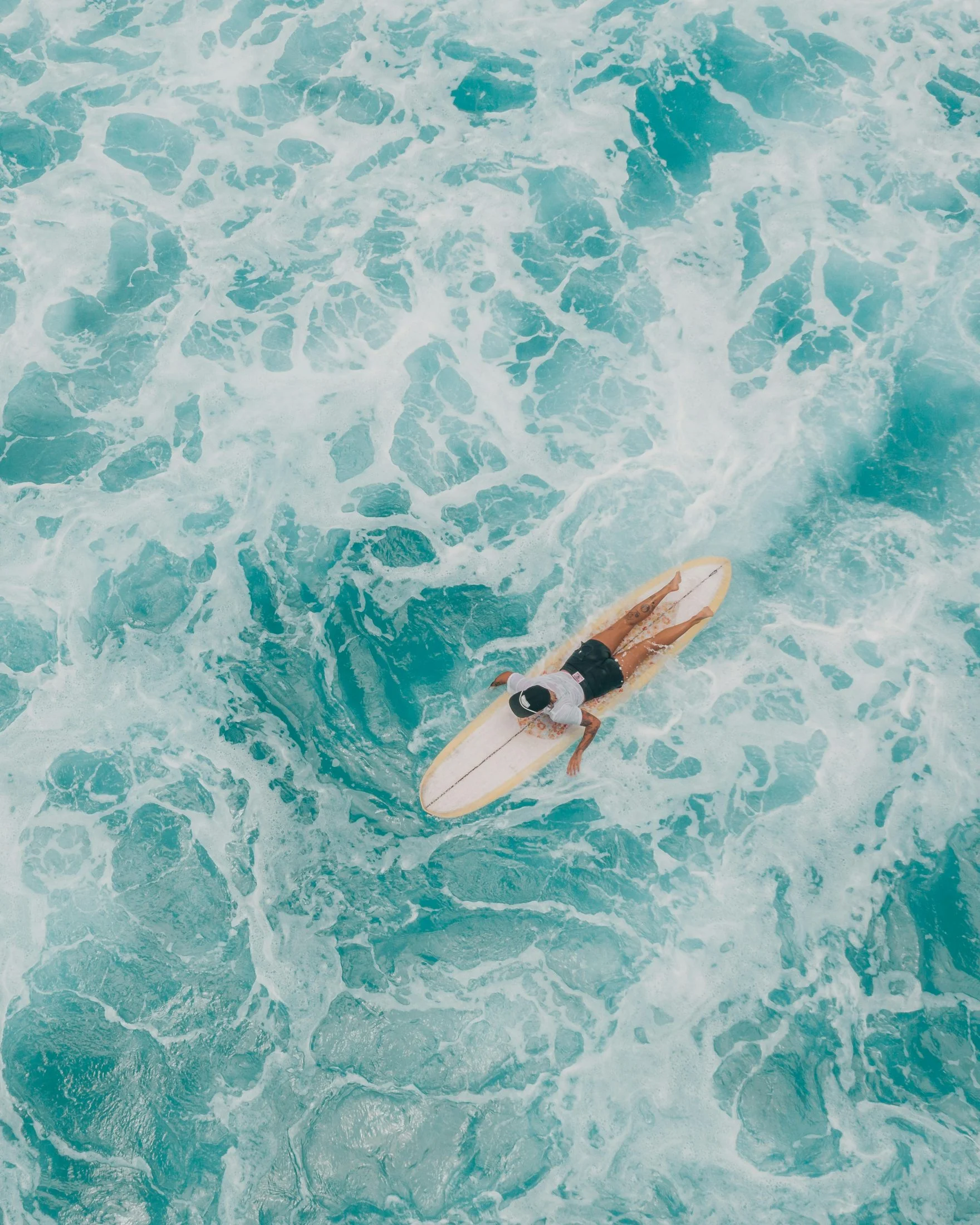
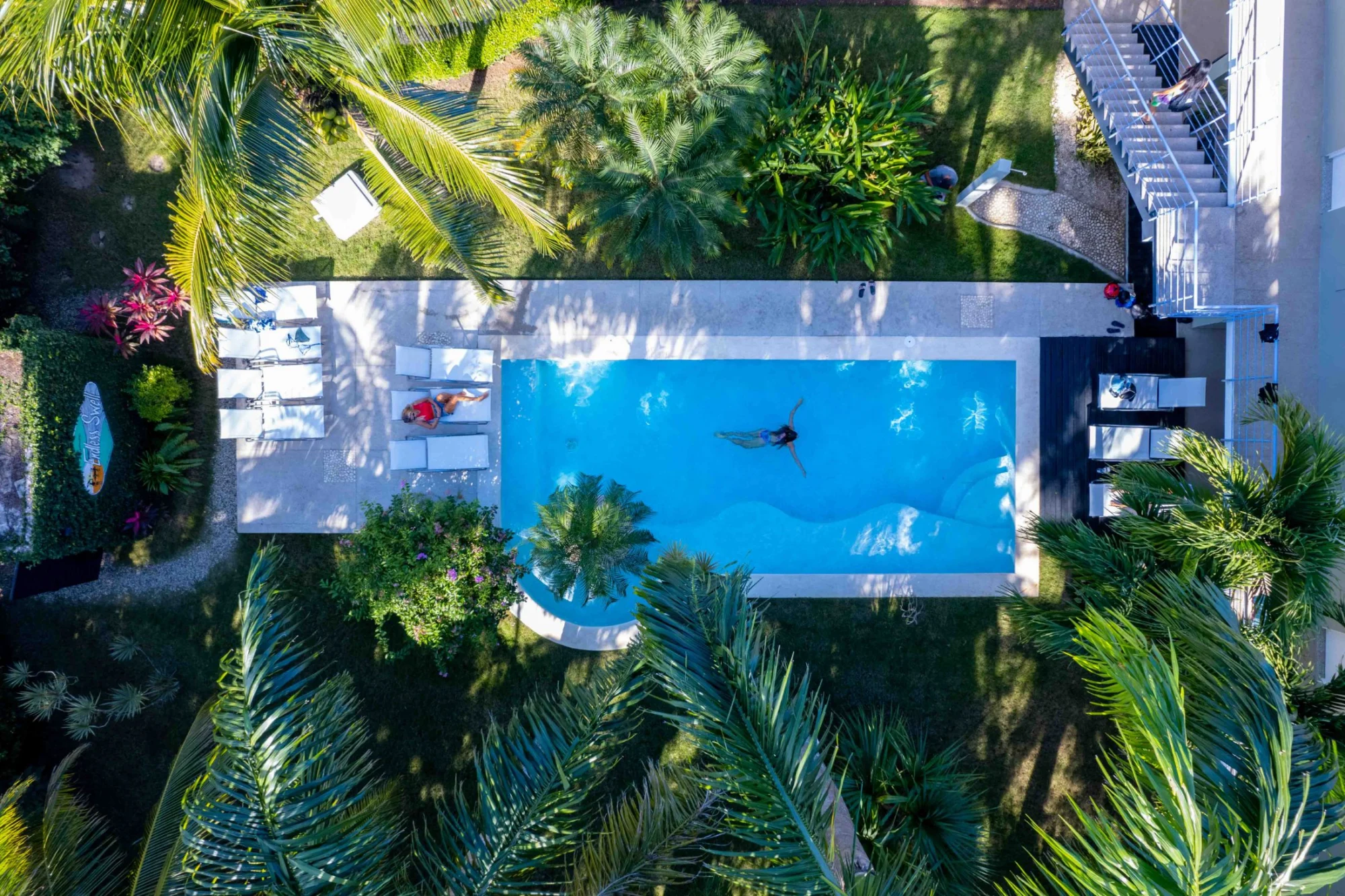
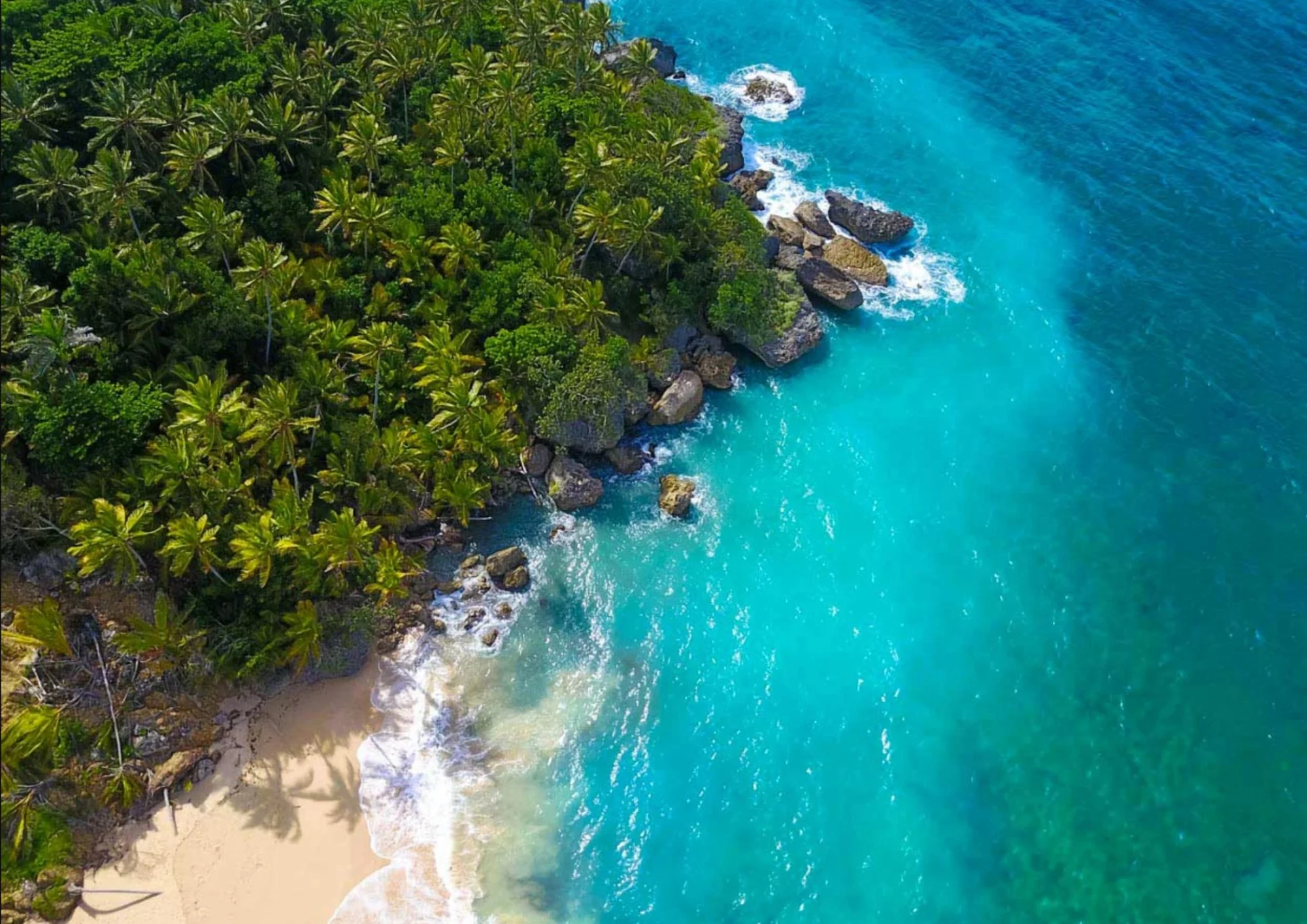
There’s a particular kind of magic in catching your first wave. One moment you’re paddling, slightly breathless, slightly unsure; the next you feel the ocean lift you and carry you forward, and something clicks into place. For most beginners, that moment arrives far sooner — and far more enjoyably — at a dedicated retreat than it ever would going it alone. If you’ve been daydreaming about a surf holiday for beginners but worried you’ll be out of your depth, this guide walks you through exactly what learning to surf at a beginner surf retreat looks like, what to expect, and how to give yourself the best possible start.
Why Choose a Surf Retreat to Learn the Basics
Teaching yourself to surf is possible, but it’s slow, frustrating, and often a little discouraging. You spend most of your time guessing: which board to use, where to sit in the line-up, how to read the waves, why you keep falling off. A learn to surf retreat removes that guesswork entirely. Everything is structured around helping you progress as quickly and safely as possible.
The biggest advantage is feedback. When a qualified coach watches every wave you take, they spot the small adjustments that make a huge difference — the timing of your pop-up, where your weight sits, the angle of your paddle. These are things you simply can’t see yourself. That’s why surf retreats for beginners tend to compress weeks of trial and error into a handful of focused days.
There’s also the community side of things. Learning alongside other first-timers takes the pressure off. Everyone is wiping out, laughing, and cheering each other on. That shared experience builds confidence in a way solo practice never can, and it’s a big reason people leave a beginner surf retreat hooked for life.
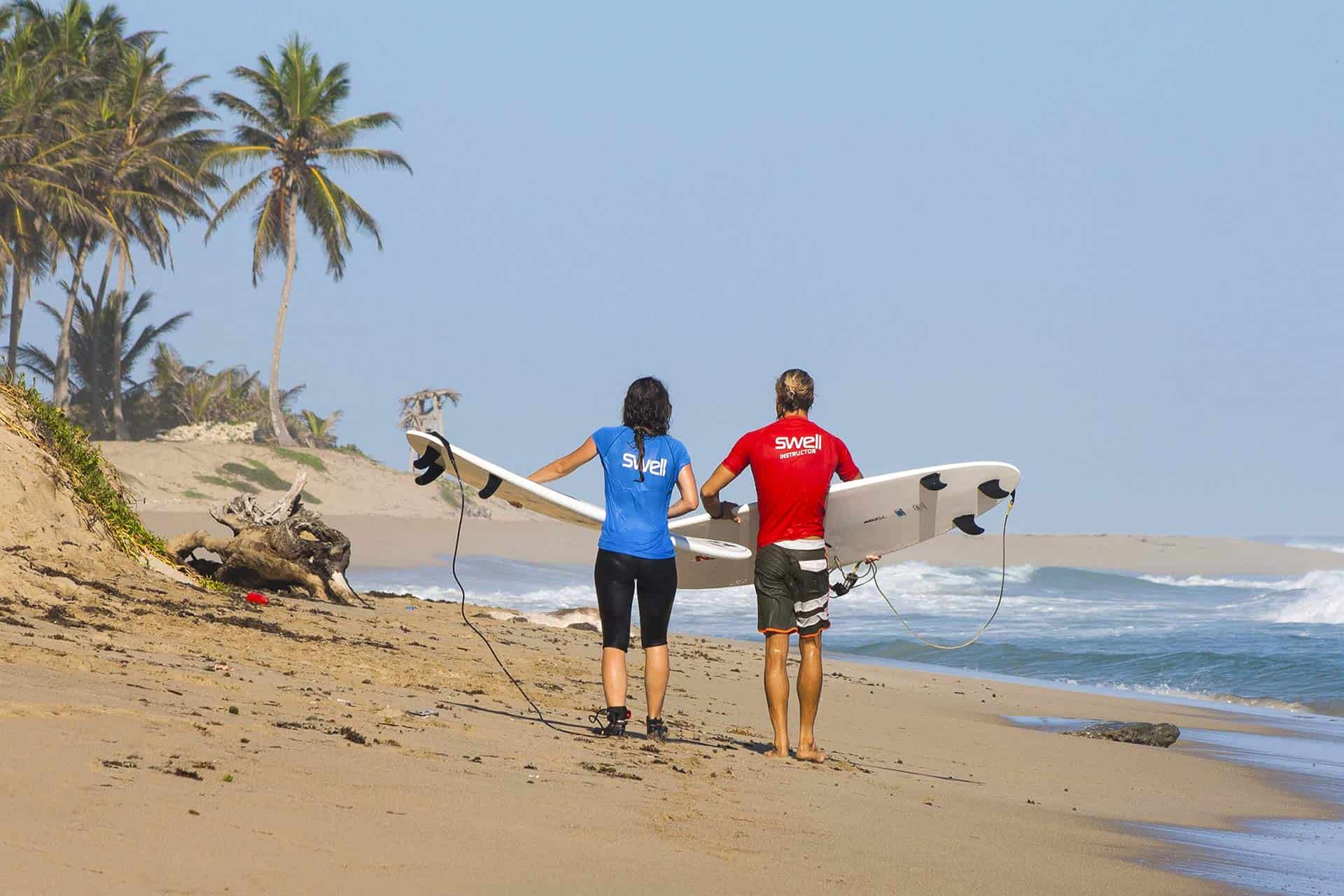
What a Beginner Surf Retreat Actually Looks Like
If you’ve never been on a surf holiday, the day-to-day rhythm might be a mystery. In reality, a beginner-focused day is well-paced, with plenty of energy in the water and time to rest and recover between sessions.
A Typical Day
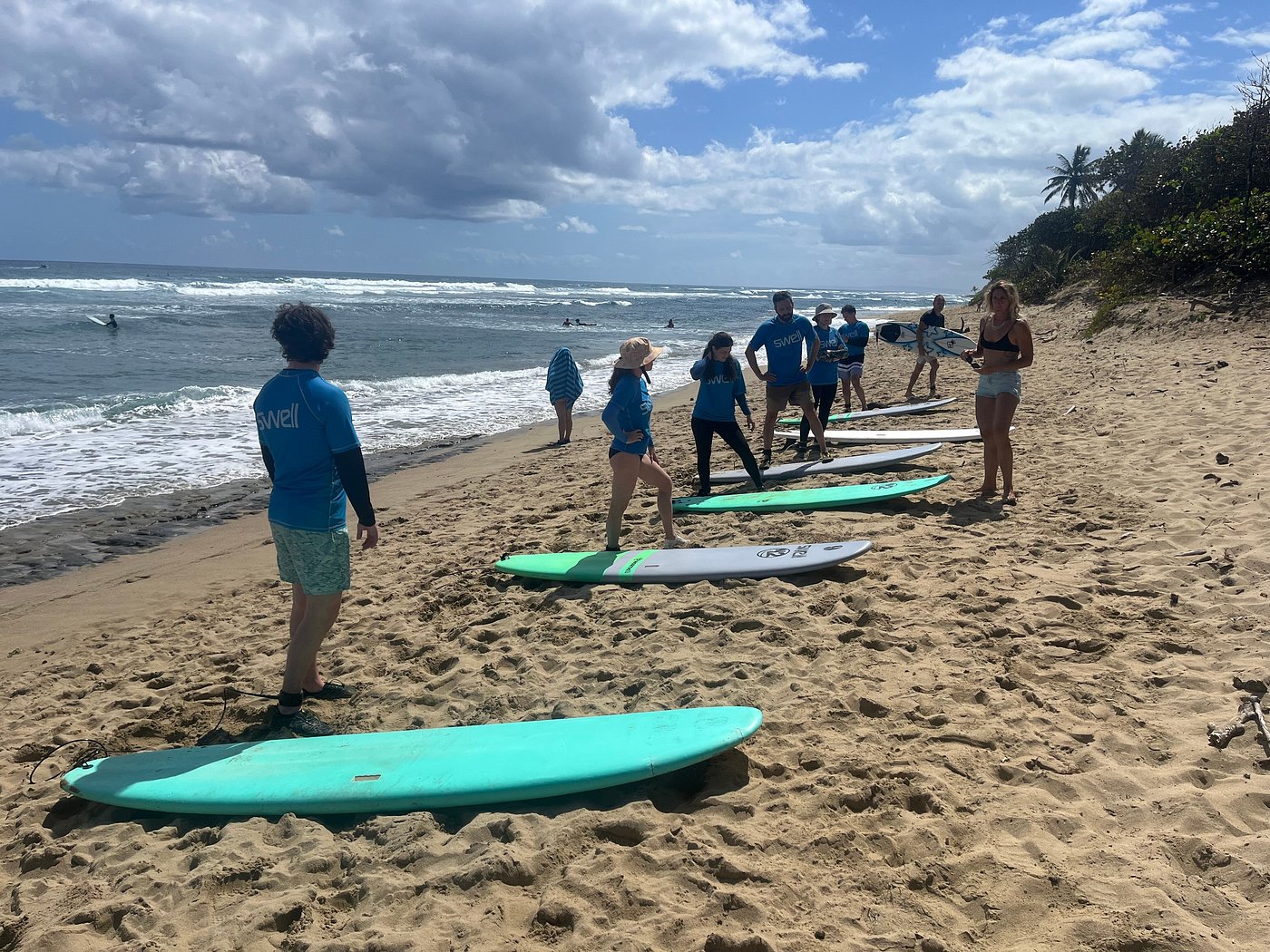
- Morning theory and briefing: Before you touch the water, your coach explains the plan — what you’ll work on, how to read the conditions that day, and key safety points.
- Warm-up: A short mobility and movement routine on the beach to prepare your body and rehearse the pop-up on dry land.
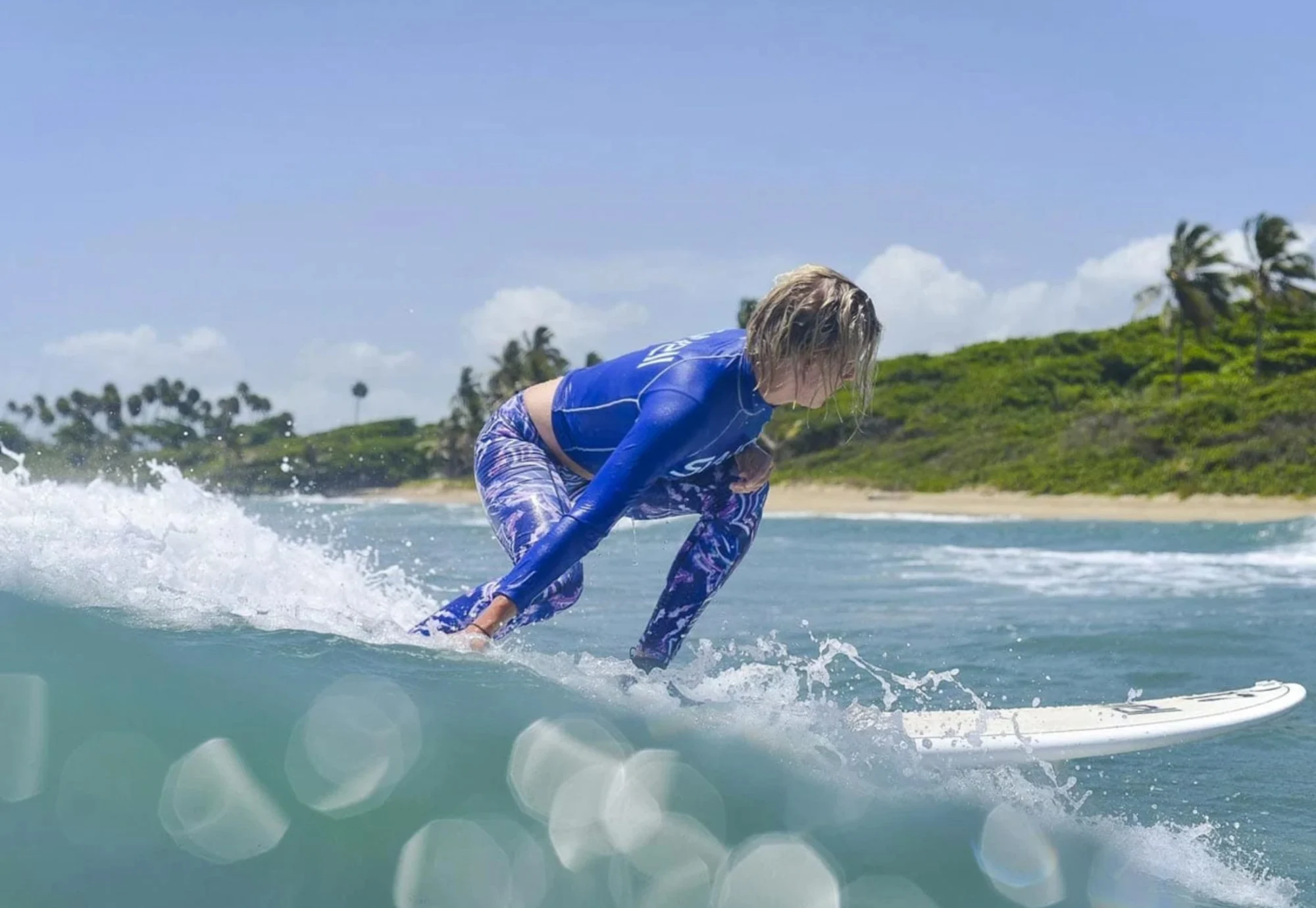
- Water time: The main event. You’ll head out for beginner surf lessons in waist-to-chest-deep water, practising the skills you just covered.
- Rest and refuel: Surfing is tiring, especially at first, so breaks are built in. You’ll have time to eat, hydrate, and recover.
Curious about the bigger picture beyond a single day? Here’s what to expect in one week at Swell, from your first whitewater wave to the friendships you’ll make along the way.
Your First Wave: How the Coaching Works
Good surf coaching for beginners is built on a clear, logical progression. You don’t paddle straight out into big waves and hope for the best. Instead, you build each skill on the last until standing up feels natural.
Step One: Whitewater Waves
You’ll start in the broken, foamy whitewater closer to shore. These waves have already broken, so they’re gentle, predictable, and forgiving. They give you plenty of forward push, which is exactly what you need while you’re learning to find your balance and stand on a moving board.
Step Two: The Pop-Up
The pop-up — going from lying down to standing in one smooth motion — is the heart of surfing. You’ll rehearse it on the sand until the movement becomes second nature, then bring it into the water. Your coach breaks it into manageable steps so it never feels overwhelming.
Step Three: Your First Green Wave
Once you’re popping up confidently in the whitewater, you’ll progress toward catching unbroken, green waves — the smooth, sloping faces that experienced surfers ride. The day you catch your first green wave is unforgettable. It’s the moment surfing truly opens up, and it’s a milestone most beginners reach faster than they expect with the right guidance.
Want a fuller breakdown of how the progression works? Take a look at our surfing programme to see how each session is structured.
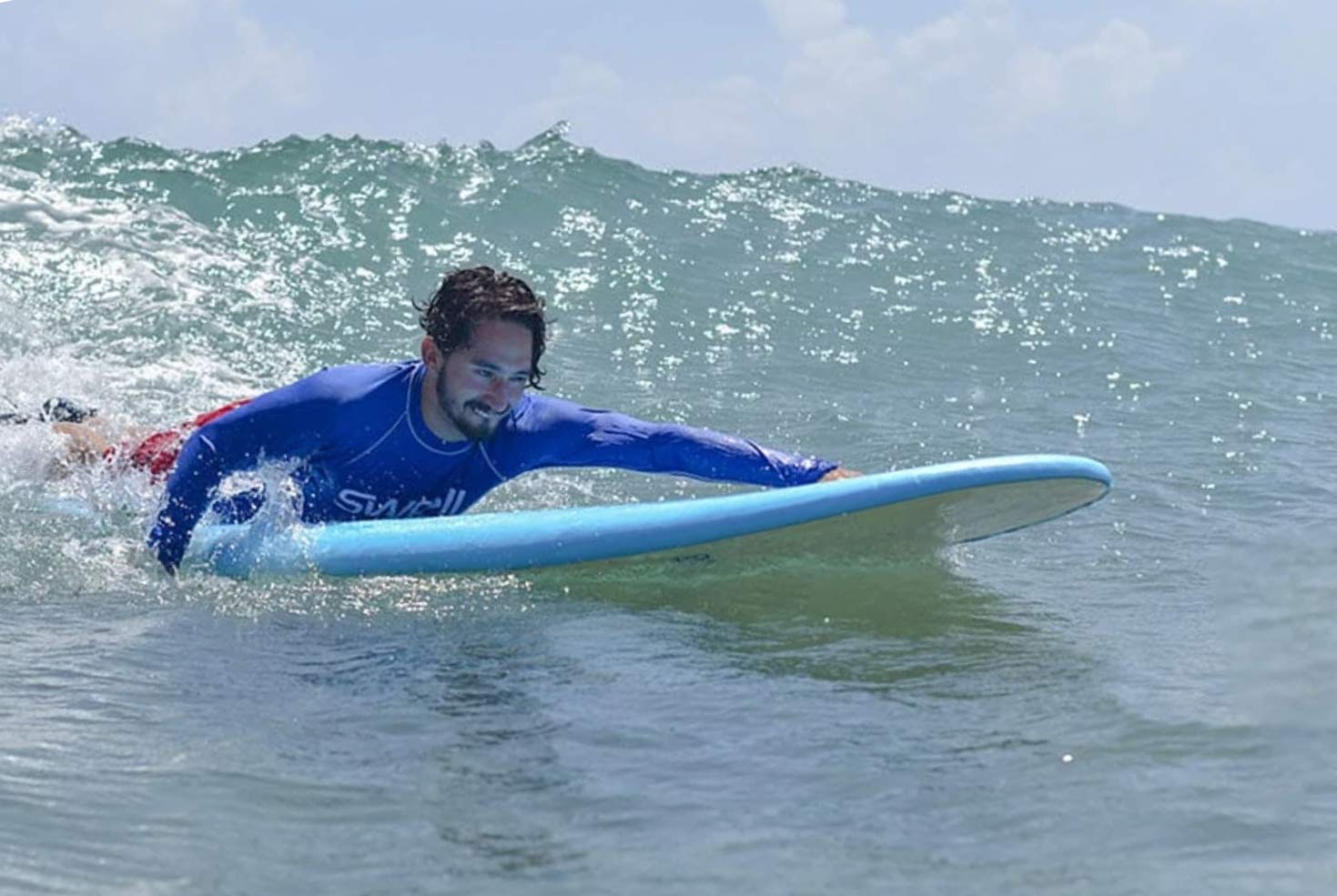
Will I Stand Up on Day One? Honest Expectations
Let’s be honest, because honesty serves you better than hype. Many first-time surfers do stand up on their very first day, even if only briefly in the whitewater. Others take a little longer, and that’s completely normal. Your starting fitness, balance, and how relaxed you feel all play a part.
The truth about how hard it really is to learn surfing is that it’s challenging but absolutely achievable — and the challenge is part of the fun. Surfing rewards patience more than raw athleticism. Some of the most satisfying breakthroughs come on day three or four, when something that felt impossible suddenly clicks.
It also helps to let go of the pressure to be instantly good. There are plenty of surfing myths beginners should drop — like the idea that you need to be young, super-fit, or naturally gifted. Drop those expectations, focus on enjoying the process, and progress tends to follow.
Why Cabarete Is Ideal for Learning
Location matters enormously when you’re starting out, and Cabarete on the north coast of the Dominican Republic is one of the friendliest places in the world to learn. Here’s why Cabarete surfing suits beginners so well:
- Warm water year-round: No thick wetsuits, no shivering. Warm water means you can spend longer in the sea, practising more without getting cold and tired.
- Consistent, gentle waves: The beach breaks offer reliable, manageable waves that are perfect for first time surfing — enough push to learn on, without the intimidation of big surf.
- Forgiving sandy bottoms: Falling onto sand is far less daunting than reef, which lets you relax and focus on learning.
- A welcoming surf culture: Cabarete is a laid-back watersports town used to visitors of every level, so beginners never feel out of place.
All of this makes Dominican Republic surf a brilliant choice for anyone planning their first surf trip. The conditions do a lot of the hard work for you, so you can concentrate on enjoying yourself.
Reading about it is one thing. Doing it is another.
Progress your surfing
Small groups, patient coaches, and boards for every level.
Explore surfing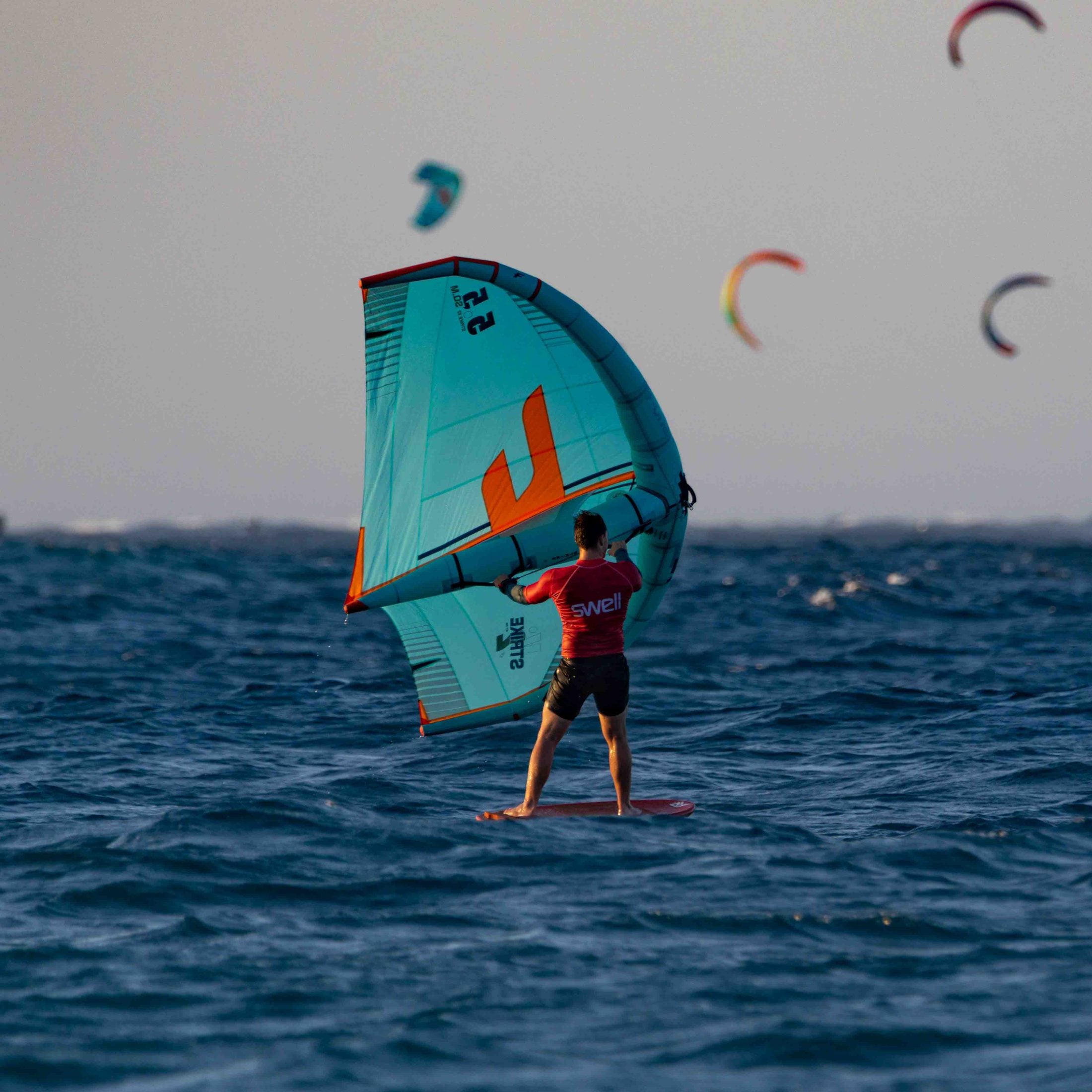
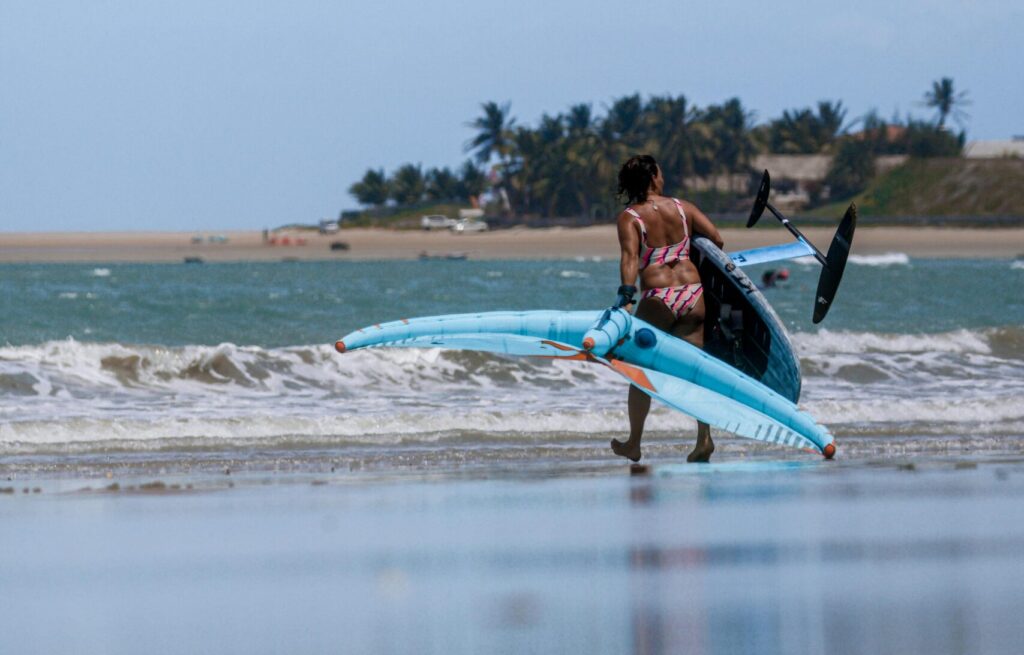
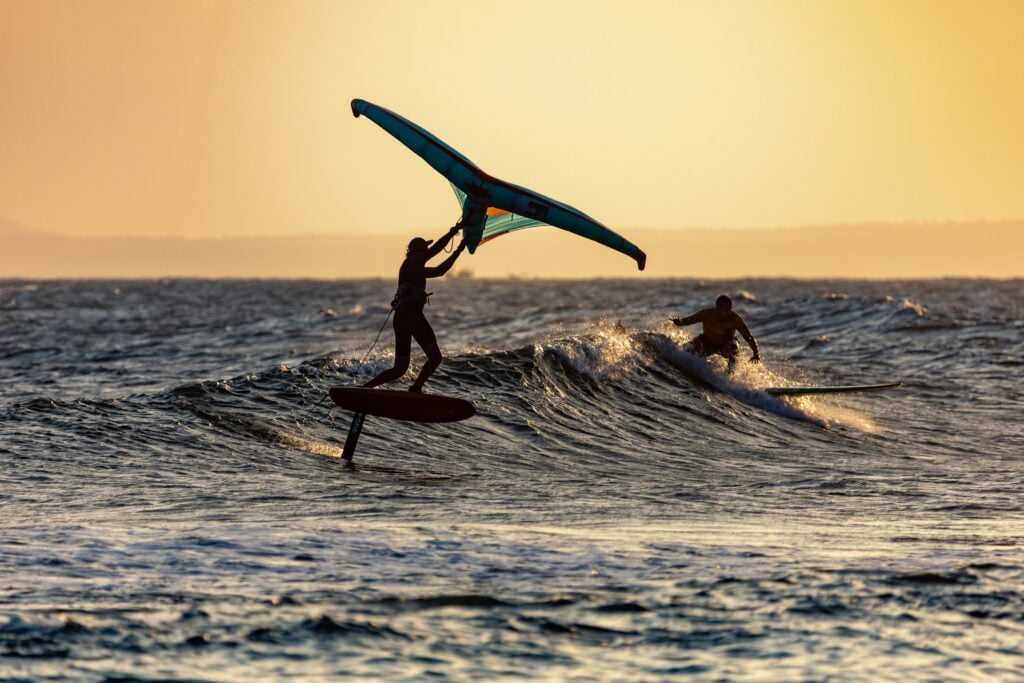
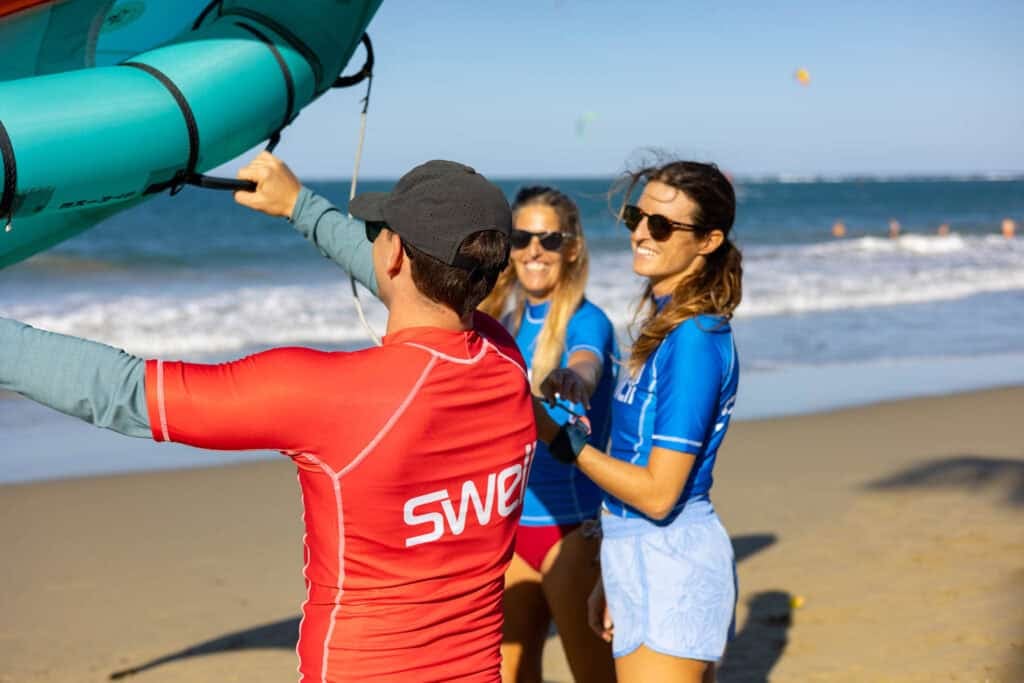
Take up wingfoiling
A new & easy to learn sport — we’ll get you flying.
Explore wingfoilingYour 'home' base
Ensuite rooms • social vibes • tasty food & large community hub.
See the retreat
The Right Equipment for Beginners
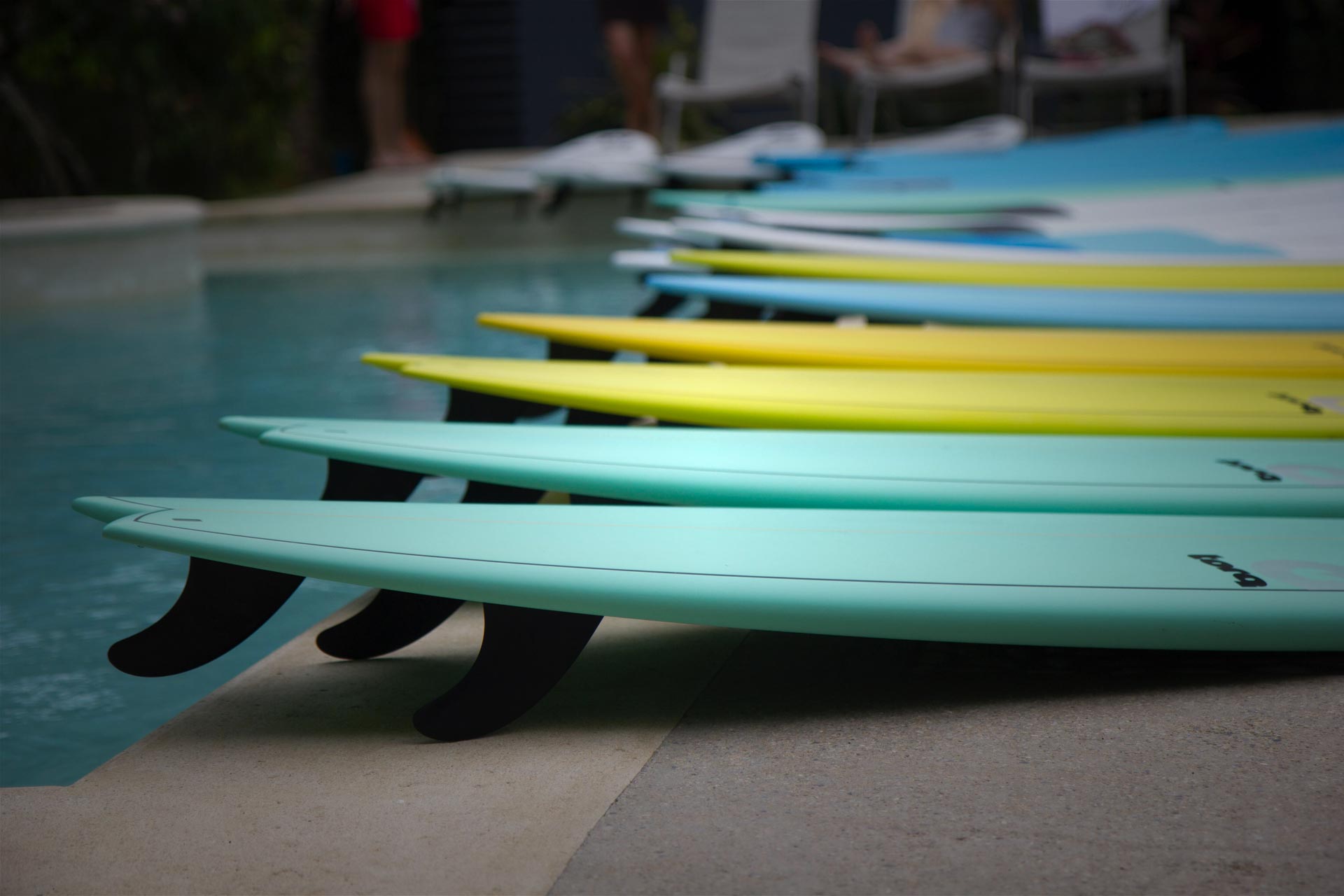
The board you learn on has a huge impact on how quickly you improve. This is where many self-taught surfers go wrong — they choose a board that’s too small and too advanced, then wonder why nothing works.
Beginners do best on soft-top boards that are large, wide, and buoyant. Here’s why:
- Stability: A bigger board floats better and gives you a more stable platform, making it easier to balance and pop up.
- Easier paddling: More volume means you catch waves more easily, so you spend more time riding and less time struggling.
- Safety: Soft-tops are gentle if they bump into you, which matters a lot while you’re still learning to control the board.
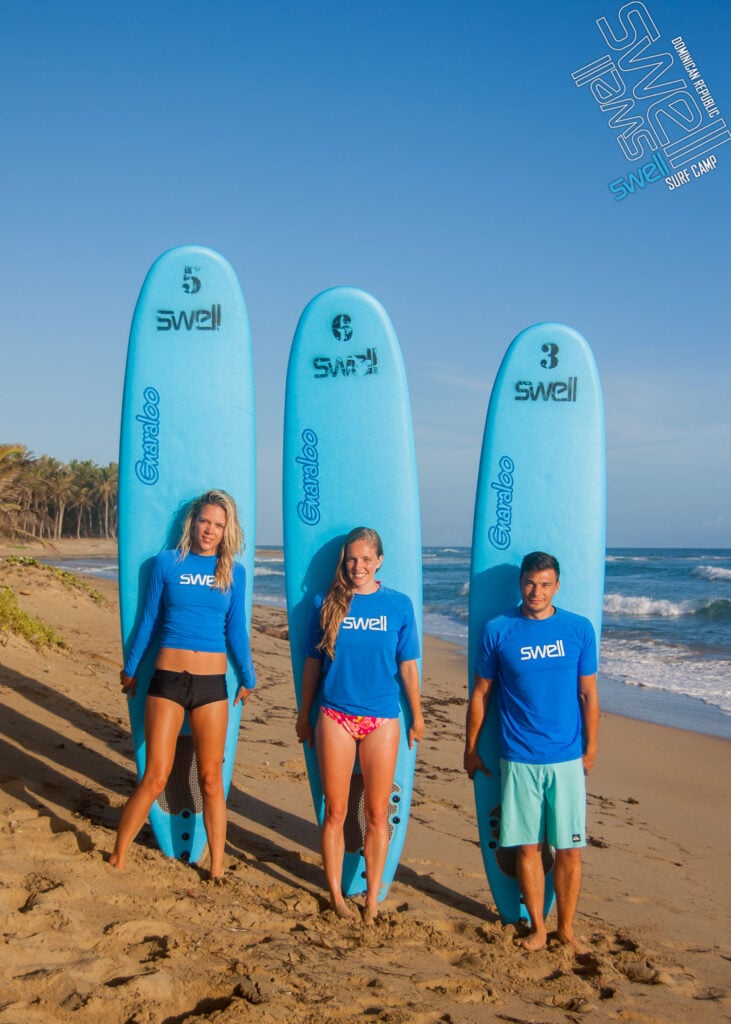
At a good retreat, all this gear is provided and matched to your size and ability, so you’re always on the right board for where you are. If you want to understand the thinking behind it, this guide to choosing a beginner surfboard explains what to look for and why it speeds up your learning.
Overcoming Nerves About the Ocean
It’s completely normal to feel a little nervous about the sea, especially if you didn’t grow up near the coast. The good news is that beginner surf retreats are designed with exactly these worries in mind.
You’ll always start in shallow, manageable water where you can stand up and feel in control. Small groups mean your coach can keep a close eye on everyone, and qualified instructors are trained to keep you safe while gently building your confidence. Nobody is going to push you beyond your comfort zone.
Choosing where to learn matters more than most people realise. Warm water, gentle waves, no rips or reef and a short transfer from the airport can be the difference between standing up by the end of the week and spending your holiday fighting the ocean. Not every “surf destination” is built for a complete beginner, and the cheapest headline price often hides big group lessons, cold water and long drives between spots.
We spent 25 years and more than 20 countries working out where a first-timer actually has the best week before we built our own camp. If you’re still deciding, read our honest, first-hand guide to the best places to learn to surf for beginners — ranked on warm water, safe waves, easy access and real cost, with the trade-offs of each spot laid out plainly (yes, including our own).
Understanding the ocean also helps fear fade fast. Once your coach teaches you how waves work, how to handle whitewater, and how to read conditions, the sea feels far less unpredictable. Most nervous beginners are amazed at how quickly they relax once they have a little knowledge and a supportive group around them.
How to Prepare Before You Arrive
You don’t need to arrive in peak condition, but a little preparation makes your week more enjoyable and helps you progress faster. A few simple things to focus on:
- General fitness: Light cardio like swimming, jogging, or cycling builds the stamina you’ll use for paddling.
- Upper-body and core strength: Press-ups and core exercises help with paddling and popping up. Even a few weeks of practice makes a difference.
- Mobility: Gentle stretching for your hips, shoulders, and back makes the pop-up smoother and reduces stiffness.
- Comfort in the water: If you’re not a confident swimmer, a few sessions in the pool beforehand will boost your confidence.
- The right mindset: Arrive curious and patient, ready to laugh off wipeouts. Your attitude matters as much as your fitness.
Who Beginner Surf Retreats Are For

One of the loveliest things about a beginner surf retreat is how varied the guests are. Surfing genuinely is for everyone, and you’ll find all sorts of people taking their first waves together.
- Solo travellers: Surfing is a brilliant way to travel alone without feeling alone. The shared experience builds fast friendships.
- Couples: Learning something new together is a wonderful bonding experience, with plenty of laughs guaranteed.
- Families: With the right conditions and coaching, surfing becomes a holiday the whole family can share.
- Over-40s: It’s never too late to start. If you’re wondering about learning to surf after 40, plenty of guests prove that age is no barrier — patience, consistency, and good coaching matter far more.
Whatever your age or background, a learn to surf retreat meets you where you are and helps you grow from there.
FAQ
Do I need to be fit to learn to surf?
No. A reasonable level of general fitness helps you enjoy longer sessions, but you don’t need to be an athlete. Surfing uses muscles you may not be used to, so you’ll likely feel it the next day — but coaching is paced to suit your ability, and your fitness will improve naturally as the week goes on.
Will I actually stand up in my first week?
Almost certainly, yes. Many beginners stand up on day one in the whitewater, and most are riding waves confidently within a few days. Progress varies from person to person, but with structured beginner surf lessons and the gentle waves of Cabarete, standing up within your first week is a realistic goal.
Do I need to bring my own surfboard?
No. All the equipment you need is provided, including beginner-friendly soft-top boards matched to your size and ability. Learning on the right board is one of the biggest factors in fast progress, so you’ll always be set up with gear that suits where you are in your journey.
Am I too old to start surfing?
Not at all. People of all ages learn to surf successfully, including plenty of beginners in their forties, fifties, and beyond. Surfing rewards patience and consistency far more than youth, and with the right coaching and forgiving conditions, age is rarely a barrier to catching waves.
What if I’m nervous about the ocean?
That’s completely normal, and it’s something coaches handle all the time. You’ll start in shallow, manageable water where you can stand, learn how waves work, and build confidence gradually in a small, supportive group. Most nervous beginners are surprised by how quickly they relax and start enjoying themselves.
About Swell
Swell is a relaxed surf and wingfoil retreat in Cabarete on the warm north coast of the Dominican Republic, built for people who want an active beach holiday without the hassle of organising everything themselves. With small-group coaching, friendly, qualified instructors, quality equipment, and a welcoming community of guests from all over the world, Swell makes learning genuinely enjoyable — whether you’re a complete beginner chasing your first wave or returning to refine your skills. What makes Swell special is the balance of focused coaching and easygoing holiday atmosphere, set against some of the most beginner-friendly waves anywhere. If you’re ready to take the plunge, explore our surfing programme to see how your week in the water could unfold.