Solo female surf travel: safety, single rooms and what a week alone really looks like
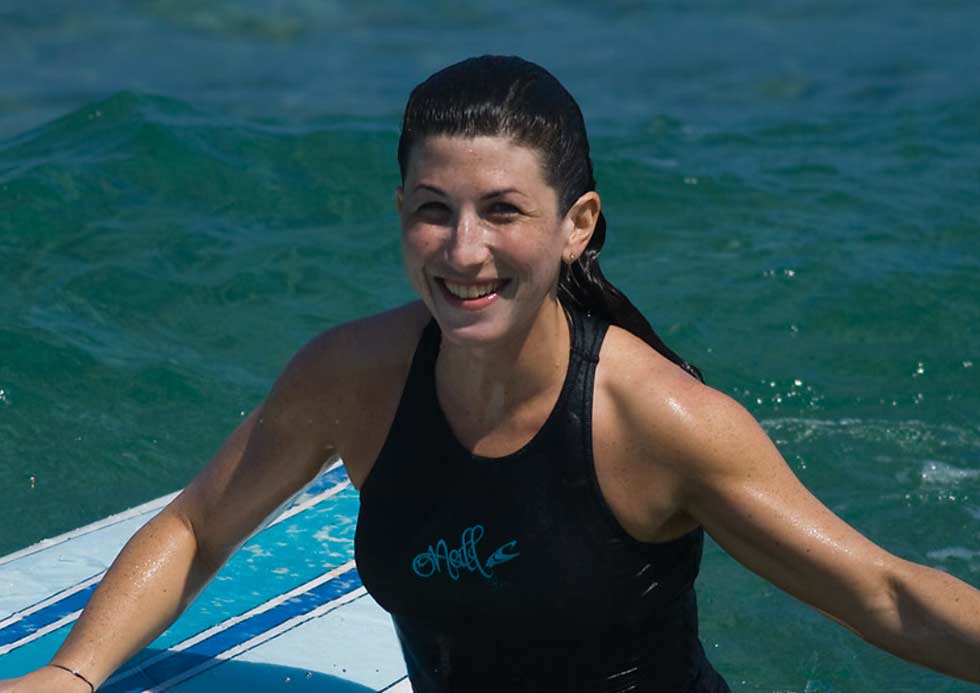
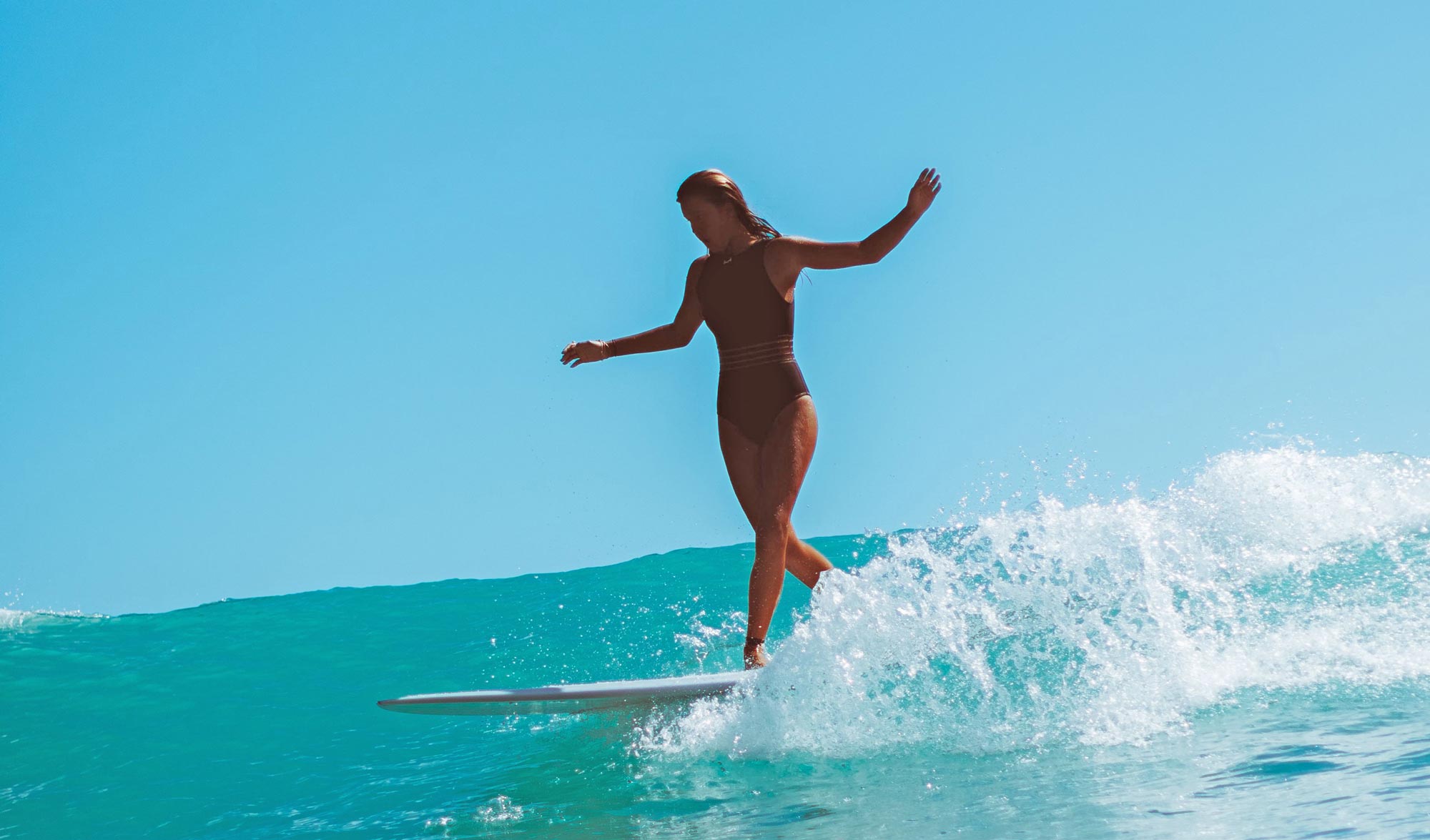
You’ve had the page open before. A sun-bleached beach, a woman mid-wave, arms wide like she owns the ocean. You thought maybe — and then you closed the tab, because going alone felt complicated. Possibly a little frightening.
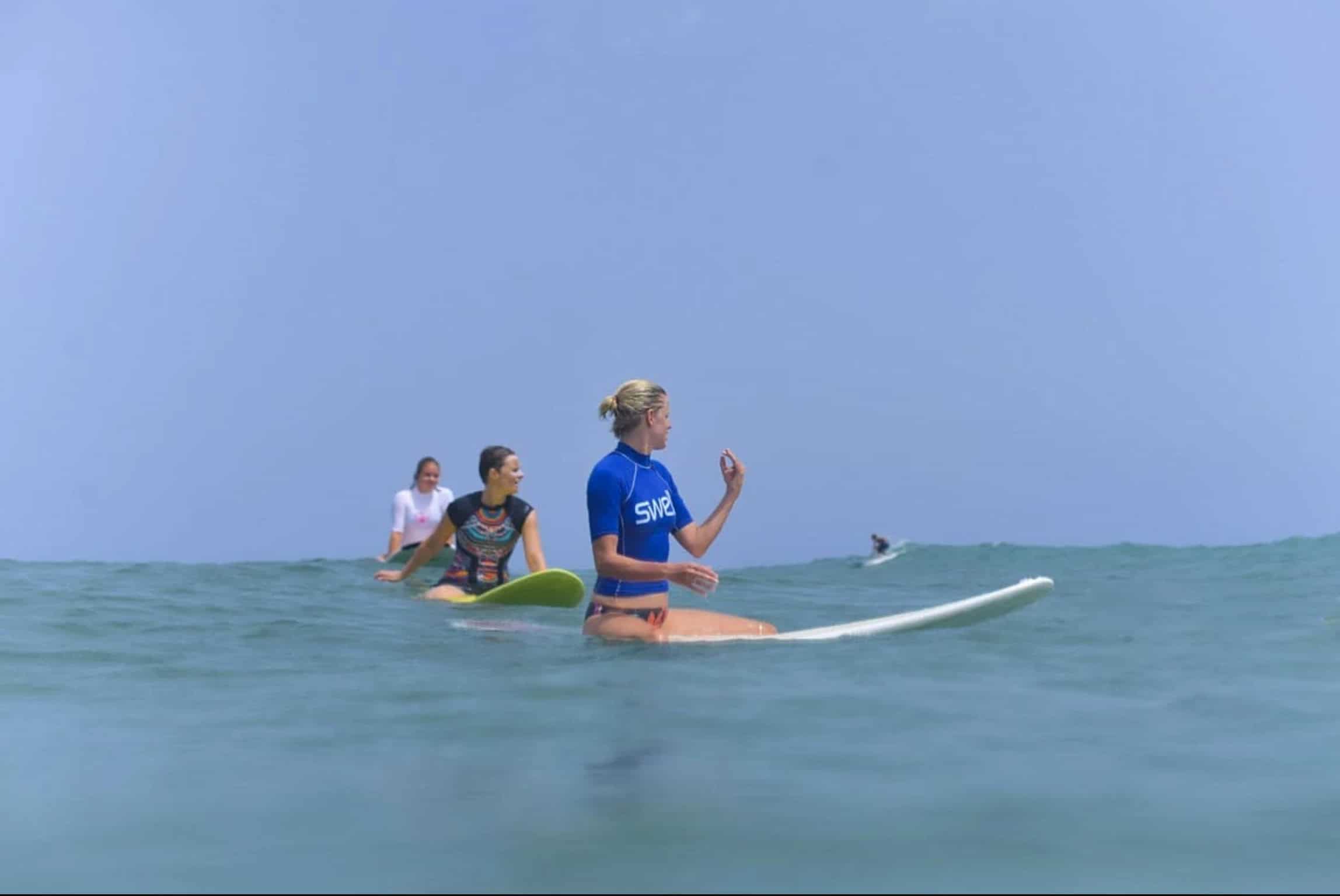
This guide answers the questions you actually have, not the ones a brochure wants you to have. Is Cabarete safe for a woman on her own? Will you eat dinner alone? Do you pay extra for a single room? What happens on day one if you have never stood on a board?
We have hosted solo travellers at Swell Surf Camp in the Dominican Republic since 2009. Around 65% of our guests arrive by themselves. Here is the honest version.
The short version
Cabarete is one of the safest beach towns on the Dominican north coast, and Swell is built for people arriving alone — around 65% of guests do. Solo travellers get their own private room, airport transfer is included, and staff are on site 24 hours a day. Swell is a mixed camp, not a women-only retreat. Most guests are working professionals aged 35 to 60, and most have never surfed before.
Is Cabarete safe for solo female travellers?
Yes. Cabarete is widely considered one of the safest beach towns on the north coast of the Dominican Republic, and it is a very different place from the resort towns that shape the country’s reputation. It is a small, walkable watersports town with a large, long-established international community. Violent crime against visitors is rare. Petty theft, as anywhere, is not.
That said, “it’s safe” is not a useful answer on its own. Here is what actually matters when you are on your own.
What the town is really like
Cabarete is one main street running along the beach, about a kilometre end to end. Restaurants and bars open directly onto the sand. It has been an international kitesurfing and windsurfing destination since the 1980s, which means the town is used to foreign visitors, English and German are widely spoken, and a woman walking on her own is completely unremarkable.
The main strip is busy and well lit until late. Walking it in the evening is normal and comfortable. Where we would tell you to take a taxi rather than walk is the unlit stretches away from the beach road after dark — the same advice we would give a male guest, and the same advice you would follow at home.
Cabarete is not Sosúa
This distinction matters and most guides skip it. Sosúa, twenty minutes west, has a very different nightlife scene with a long-standing reputation attached to it. The town in daylight is fine. The nightlife is not somewhere we would suggest a solo female guest go without knowing exactly what she is walking into. Cabarete does not have that scene, and the two towns get confused constantly online.
The attention question, answered honestly
Dominican culture is direct. You will get compliments from men on the street. It is usually good-natured and it is almost never persistent, but it is more frequent than most North American or Northern European women are used to, and it can feel like a lot in the first day or two.
A short, clear “no thank you” without a smile ends it. You do not owe anyone politeness. Our long-term guests describe it as mildly tiring rather than threatening — and it drops away almost entirely once you are moving around as part of the Swell group.
Practical safety facts worth knowing before you book
- Tap water. Do not drink it anywhere in the country. Swell provides filtered drinking water at camp.
- Transport. Use arranged transfers or known taxis rather than motoconchos (motorbike taxis). Helmets are rare and the roads are unforgiving.
- Hurricane season. June to November. Direct hits on the north coast are uncommon, but check that your travel insurance covers weather disruption if you travel in September or October.
- Money. Card is accepted widely in Cabarete. Carry small amounts of cash and leave anything valuable in your room safe.
- The “sanky panky” thing. A local term for men in tourist towns who target visiting women with relationships that eventually turn financial. Charming, attentive, and a request for help with a family emergency appears within a couple of weeks. Now you know the name for it.
What Swell does specifically for solo arrivals
Airport transfer from Puerto Plata (POP) is included in every package — a 25-minute drive, arranged before you land, with a driver holding your name. There is on-site staff 24 hours a day. Haudy, who manages the camp and has lived in Cabarete for over 20 years, gives every solo guest her personal number on arrival.
You are never working out logistics on your own in an unfamiliar country unless you actively choose to. Here is exactly how getting to Swell works.
What a week at Swell actually looks like
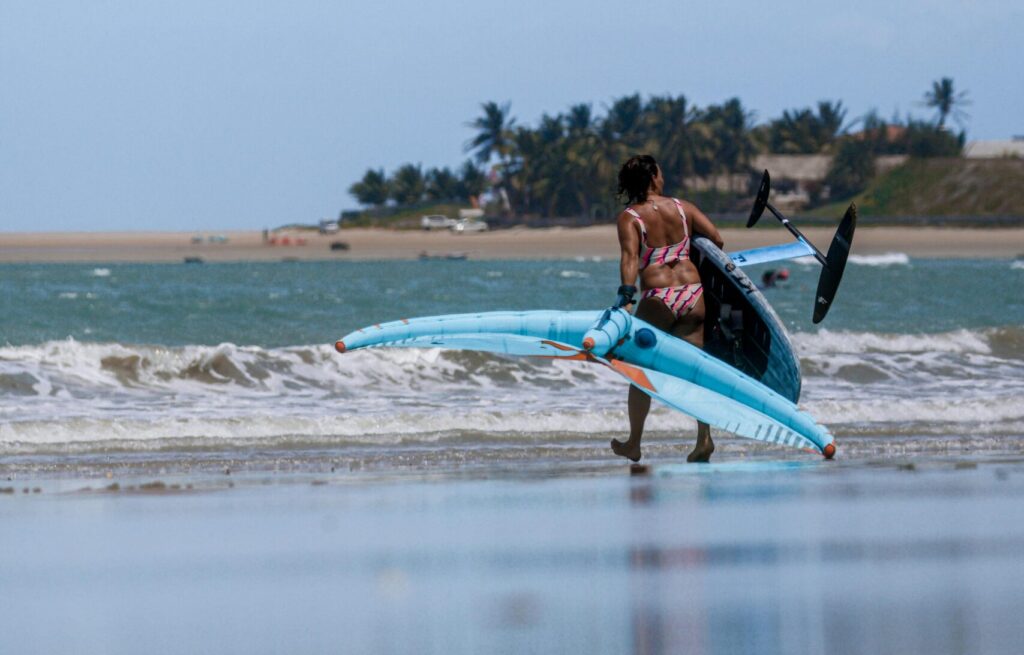
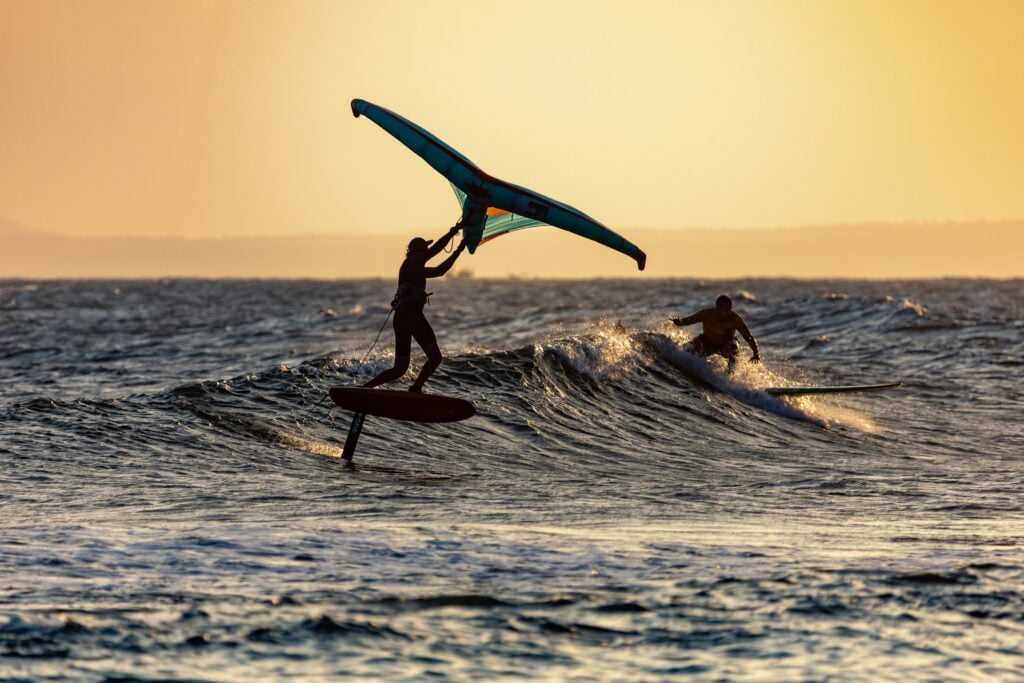
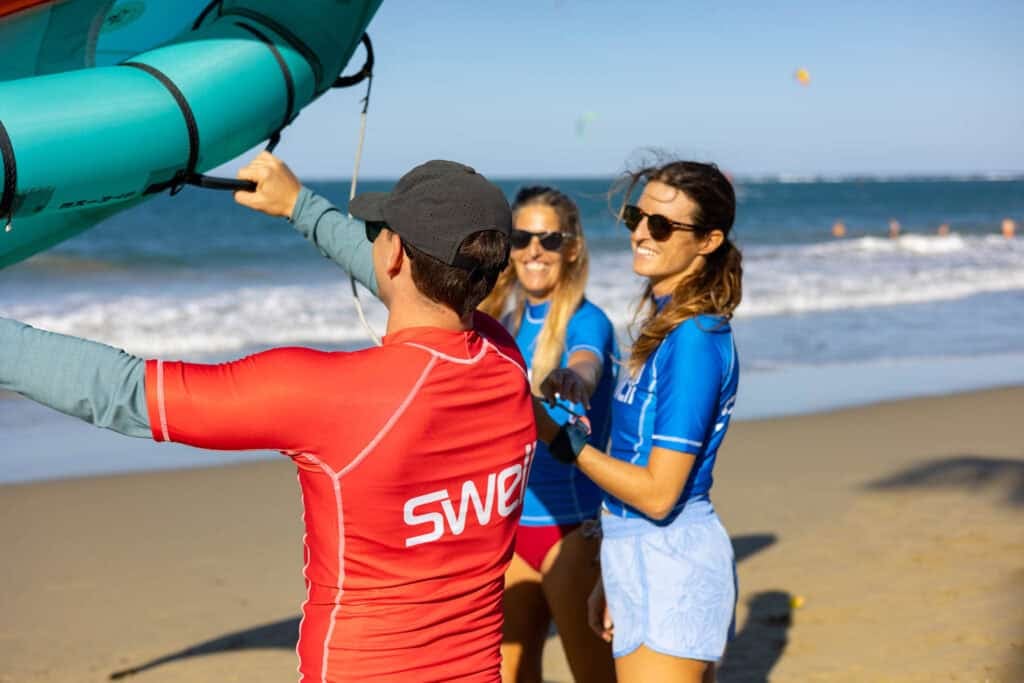
Your day starts with a surf session before the wind comes up, then breakfast at a communal table, then whatever you want. Afternoons bring the trade winds, so it is wingfoiling, kitesurfing, yoga or nothing at all. Dinner is at the big table three nights a week. Nothing is compulsory except the surfing you signed up for.
A typical day at Swell
Most guests stay seven nights. The minimum is five. Current packages and prices are here.
\
Going to a surf camp alone as a woman: the practical answers
You get your own private room, not a dorm bed. You will not be the only person on your own — around 65% of guests arrive solo. Meals are communal, so dinner alone is not a thing that happens unless you want it to. And Swell is a mixed camp, not a women-only retreat.
Will I be the only one here on my own?
No. Around 65% of Swell guests arrive by themselves. On a typical week the majority of the people at the breakfast table booked exactly the way you are considering — independently, slightly nervously, and glad they did. Around 80% are working professionals. They come from New York, Los Angeles, Toronto, Melbourne, Munich and Amsterdam.
Do I have to pay a single supplement?
Solo travellers at Swell book their own private room. There are no shared dormitories and nobody is placed with a stranger. Room types and single-occupancy rates vary by season, and they are listed on the pricing page — no need to enquire to find out whether you can afford it.
Reading about it is one thing. Doing it is another.
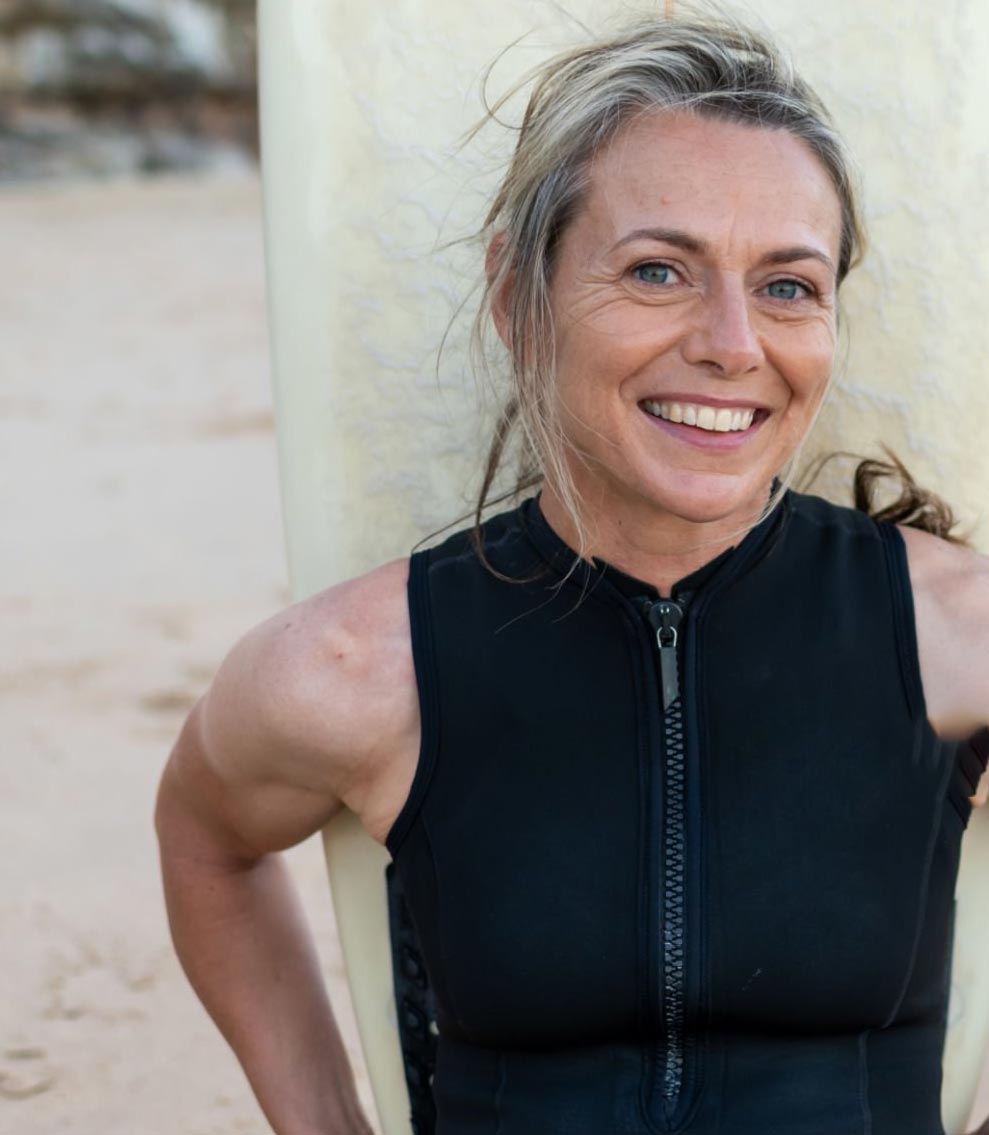
Progress your surfing
Small groups, patient coaches, and boards for every level.
Explore surfing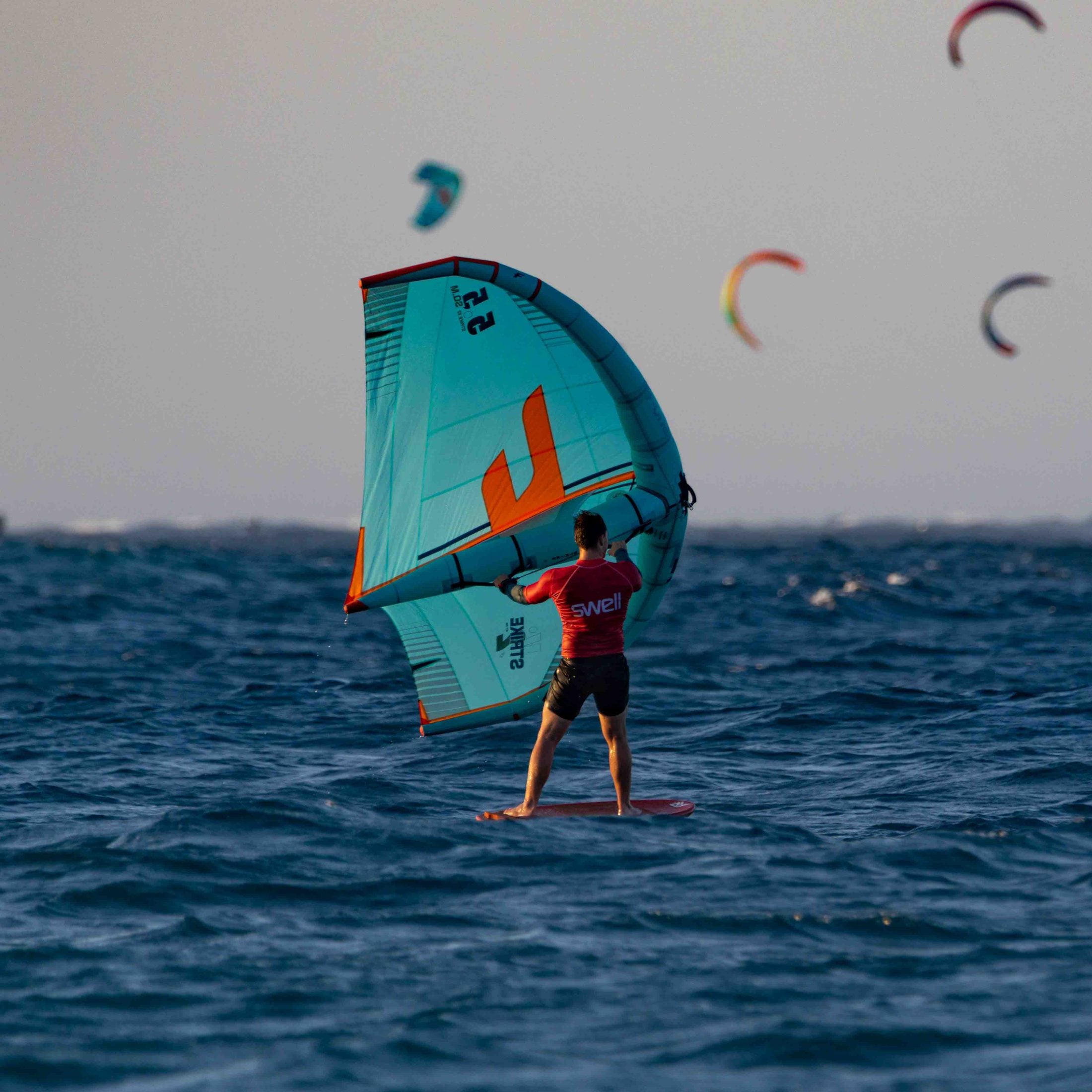
Take up wingfoiling
A new & easy to learn sport — we’ll get you flying.
Explore wingfoilingYour 'home' base
Ensuite rooms • social vibes • tasty food & large community hub.
See the retreat
Will I have to eat dinner on my own?
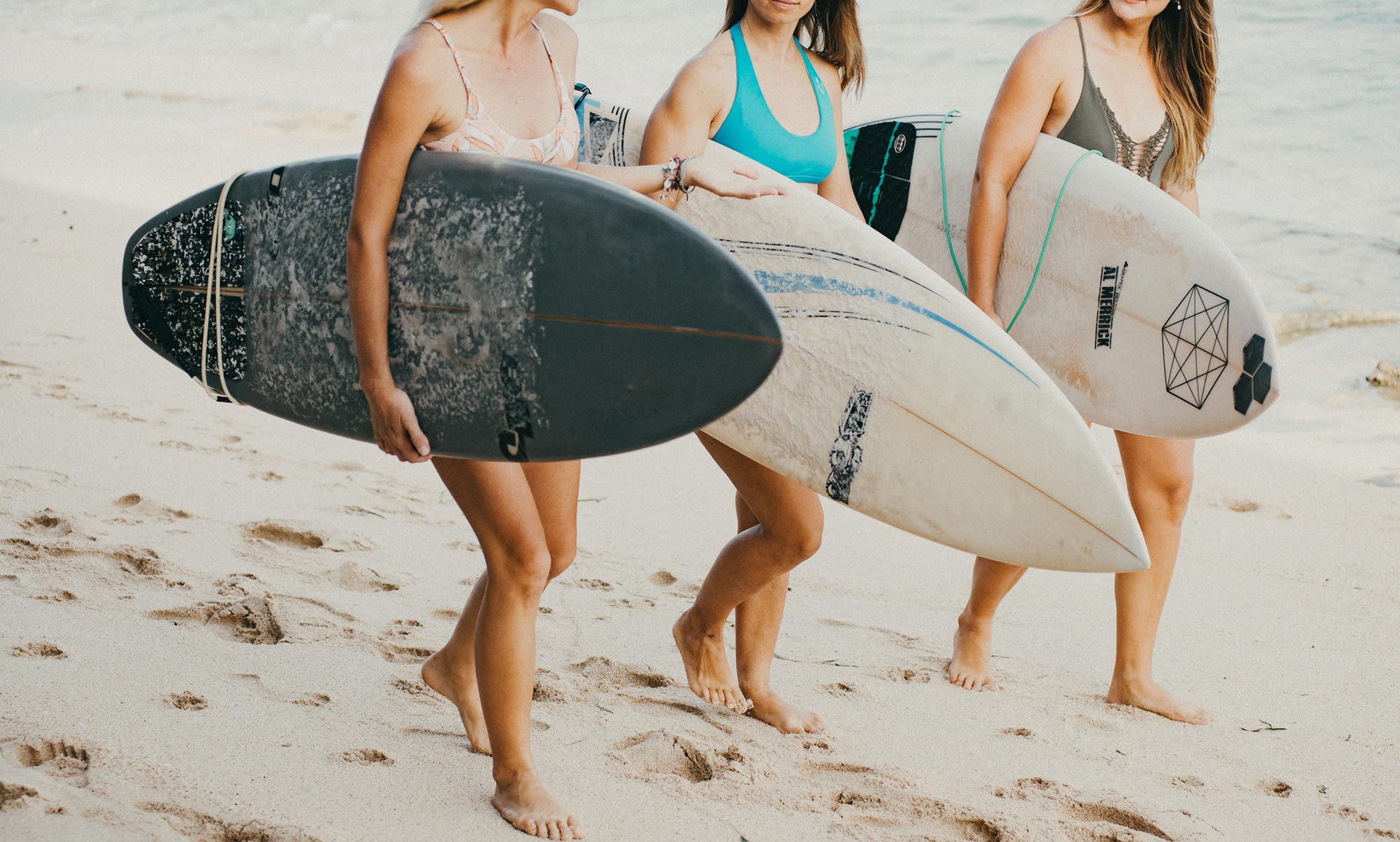
Three dinners a week are cooked at camp and eaten at one long table. Breakfast is communal every morning after the first surf session. On the other evenings, the group tends to head into Cabarete together without anyone organising it. If you would rather eat alone with a book, that is completely normal here too.
Is Swell a women-only surf camp?
No, and we want to be clear about it before you book. Swell is a mixed camp of adults, mostly aged 35 to 60. If you are specifically looking for a women-only retreat, this is not that, and there are camps that specialise in it.

What we do offer is a place where a woman arriving on her own is completely ordinary — with a private room, an arranged transfer, staff on site around the clock, and a group that absorbs new arrivals within a morning. In practice that is what most solo female guests are actually looking for.
What if I want time to myself?
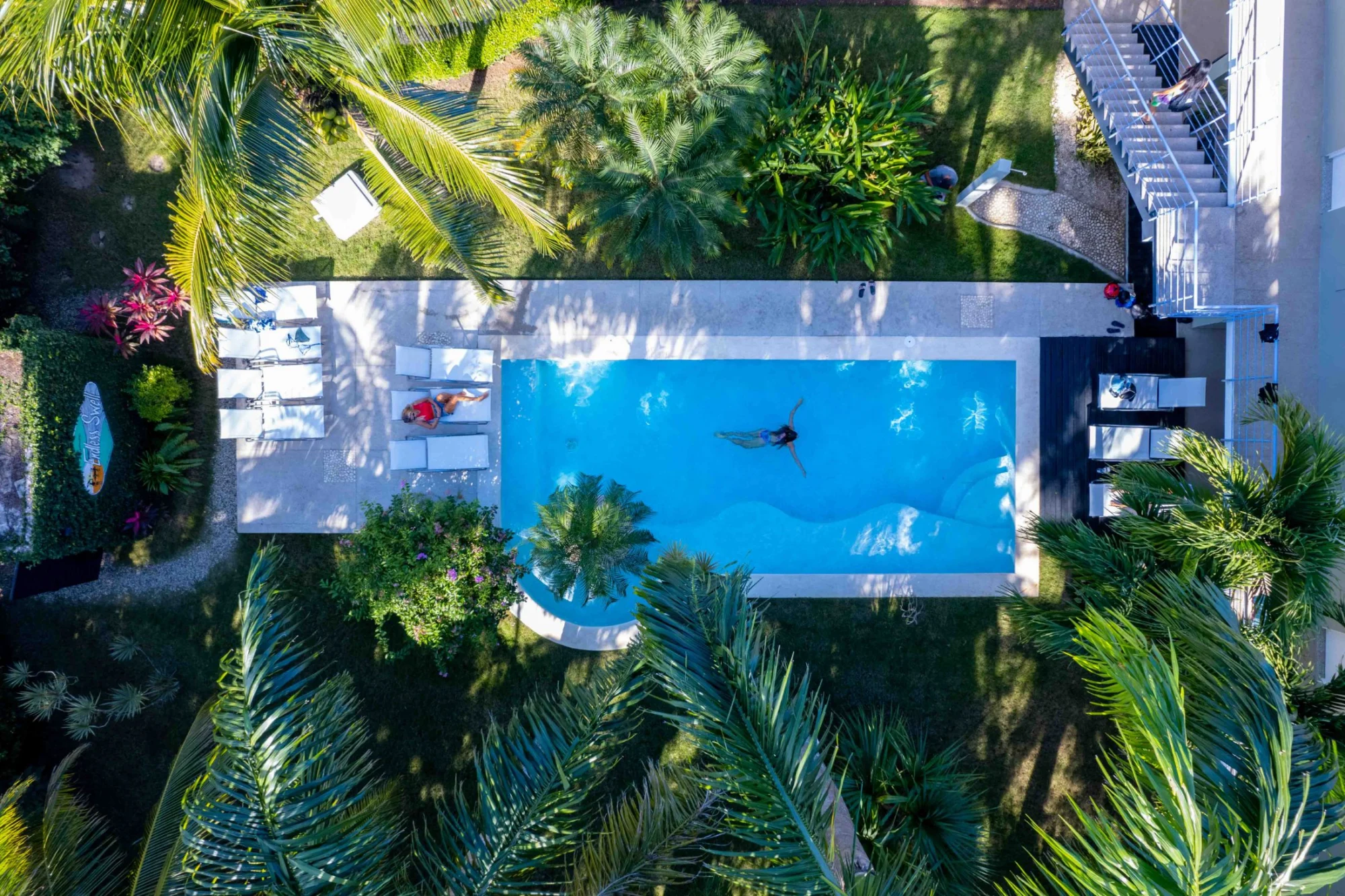
Everything is available. Nothing is compulsory. Plenty of guests take quiet afternoons by the pool, explore town independently, or skip the group dinner. The camp is social, not a mandatory-fun operation.
Your first surf trip: what actually happens on day one
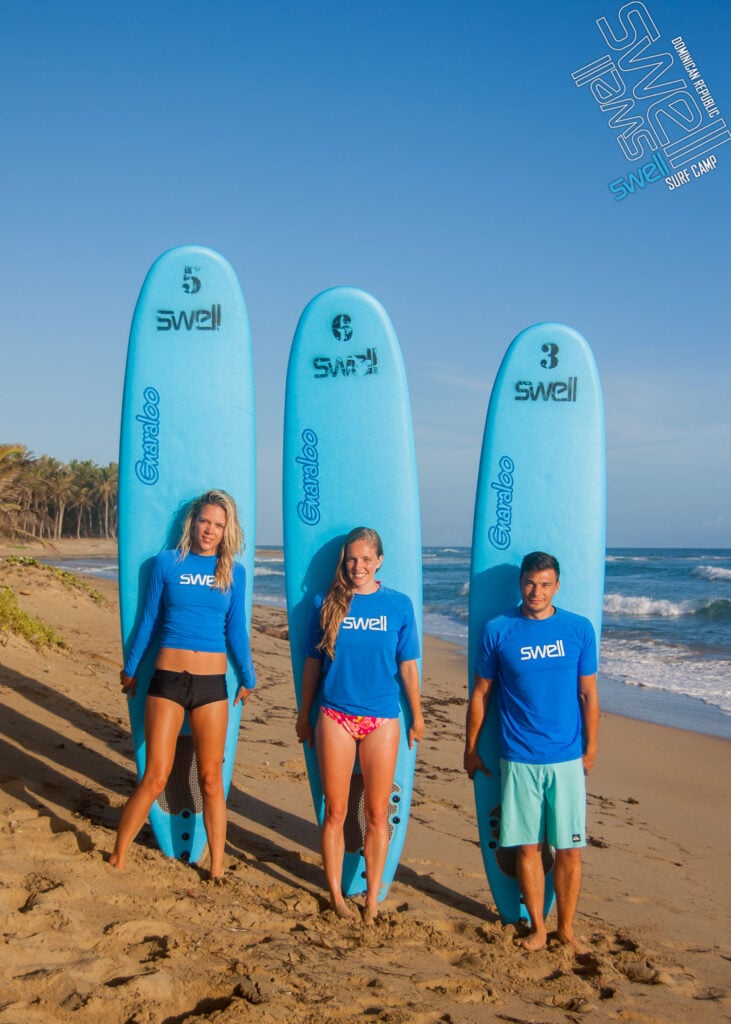
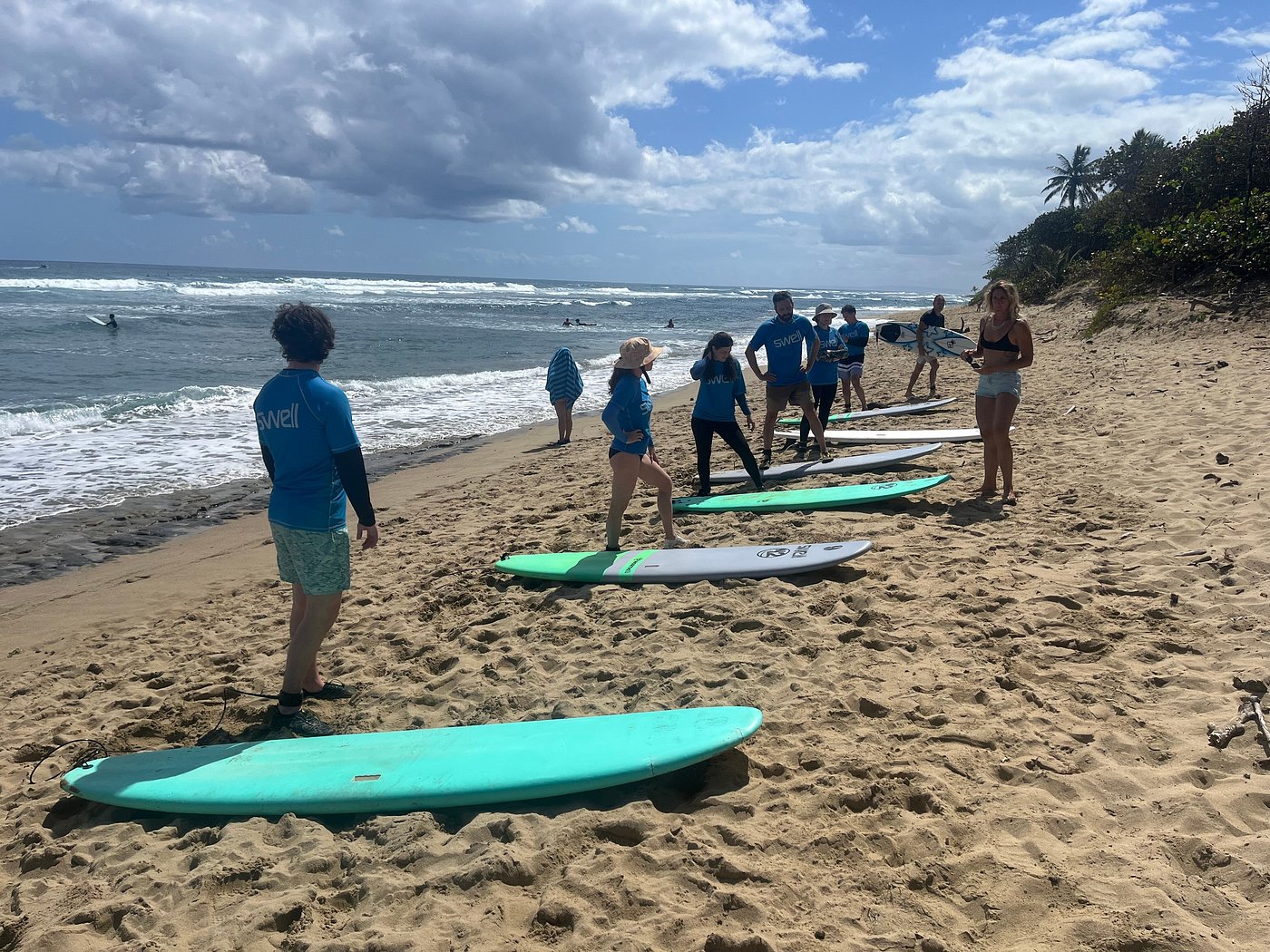
You practise the pop-up on the sand before you go near a wave. Then you go into water shallow enough to stand in, with an instructor beside you and a head coach watching from the beach. Boards, leashes, booties and lycras are provided. Most first-timers stand up on day one.
Do I need to be able to surf already?
No. Swell was founded as a beginner camp and most guests have never surfed. Cabarete’s north coast breaks were chosen specifically because they are consistent, small, sand-bottomed and forgiving — no reef, no surprise overhead sets. You can read more about how the surf lessons work here.
How fit do I need to be?
You need to be comfortable in water slightly deeper than you can stand in. That is the requirement. Surfing uses muscles you did not know about and everyone feels it on day two — the instructors adjust each session to what you have got that morning. Some swimming in the weeks before you travel helps with confidence in open water more than with fitness.
What do I pack for a first surf trip?
- Provided by Swell: surfboards, leashes, booties, Swell lycras for lessons. Warm Caribbean water means no wetsuit.
- Bring: reef-safe sun protection (far more than you think), a rash guard if you prefer your own, swimwear that stays on in whitewater, and a light layer for the evening.
- Do not bother with: a wetsuit, your own board, or anything expensive.
Do I need travel insurance?
Yes, and check that it covers surfing specifically. Many standard policies classify watersports as excluded activities. Read the small print or call the insurer before you book.
Solo surf travel over 40, 50 and beyond
The typical Swell guest is between 35 and 60. We have taught guests in their seventies to surf for the first time. You will not be the oldest person at the camp, and you will not be sharing a dorm with twenty-two-year-olds.
This is the fear that stops most people booking, and it is misplaced here. Swell is a boutique operation — proper rooms, cooked food, qualified instructors — built for working professionals who chose an experience over a resort. The crowd is well travelled and interesting, and the age spread is wide enough that nobody is counting.
If you are weighing up whether to start at all rather than where to go, we have written separately about learning to surf after 40.
Who comes to Swell
Why the Dominican Republic for a solo surf trip?
It is the closest reliable beginner surf destination to the North American east coast — around four hours door to beach from New York, against nine or more for Costa Rica. Warm water year round, sand-bottom breaks, no wetsuit, and a walkable town with real infrastructure.
Before Swell opened, we spent years looking at Costa Rica, Panama, Nicaragua and Mexico. The north coast of the Dominican Republic won on one thing that matters enormously when your holiday is a week rather than a month: you are in the water the same day you leave home.
Door to surf beach — total travel time
Costa Rica and Nicaragua figures include the internal flight or 3–6 hour ground transfer to the surf coast.
| Departing from | Swell (DR) | Costa Rica | Nicaragua |
|---|---|---|---|
| New York (JFK) | ~4 hrs | ~9 hrs+ | ~10 hrs+ |
| Boston (BOS) | ~4.5 hrs | ~9 hrs+ | ~10 hrs+ |
| Miami (MIA) | ~3 hrs | ~7 hrs+ | ~8 hrs+ |
| Toronto (YYZ) | ~5 hrs | ~9 hrs+ | ~10 hrs+ |
| London (LHR) | ~9 hrs | ~14 hrs+ | ~15 hrs+ |
| Frankfurt (FRA) | ~10 hrs | ~15 hrs+ | ~16 hrs+ |
Airport transfer included in all packages — 25 minutes from Puerto Plata (POP).
For a solo traveller the short journey matters more than it sounds. A shorter flight means arriving in daylight, which is the single most useful safety habit there is.
What if I arrive and nobody talks to me?
The structure of the week makes this close to impossible. You surf with the same small group before breakfast, then eat with them. By day two the people at the table have watched you stand up on a board and made a lot of noise about it.
This is the quiet fear underneath all the practical questions, and it deserves a direct answer rather than reassurance.
Nobody has to engineer conversation at Swell, because you have already been in the water together before anyone has had coffee. Existing guests are usually the first to greet a new arrival — they were the new arrival last week. You sit on the same bean bags, watch each other wipe out, and by the second morning the group has re-formed around whoever is new.
WhatsApp groups form. People plan return trips. Guests who came alone come back the next year and recognise faces. The social atmosphere is the thing our reviews mention most often, ahead of the waves, the food and the rooms.
Frommer’s once called Swell “the anti-surf camp” — boutique rooms and cooked meals rather than bunks and self-catering. The communal areas exist for exactly this reason.
Solo female surf travel: frequently asked questions
Is the Dominican Republic safe for solo female travellers?
Broadly yes, but it depends heavily on where you go. Cabarete and the north coast are established watersports towns with strong tourist infrastructure and are considered among the safer parts of the country. The advice that matters is practical: arrive in daylight, use arranged transfers rather than motorbike taxis, do not drink tap water, and avoid unlit streets after dark.
Is Cabarete safe to walk around at night as a woman?
The main beach strip is busy, well lit and comfortable to walk in the evening. Away from that strip, take a taxi after dark. Swell guests routinely walk into town together and the camp will arrange transport whenever you would rather not walk.
Do solo travellers pay a single supplement at Swell?
Solo guests book their own private room — there are no dorms and you are never placed with a stranger. Single-occupancy rates vary by season and are published on the pricing page, so you can check before enquiring.
Will I be the only person travelling alone?
Very unlikely. Around 65% of Swell guests arrive on their own, so on most weeks solo travellers are the majority at the breakfast table rather than the exception.
Is Swell a women-only surf camp?
No. Swell is a mixed camp for adults, typically aged 35 to 60, with around 65% arriving solo. If you specifically want a women-only retreat, this is not one — but if you want a normal camp where arriving alone as a woman is entirely unremarkable, that is exactly what this is.
How do I get from Puerto Plata airport to Cabarete?
Round-trip transfers from Puerto Plata (POP) are included in every Swell package. It is a 25-minute drive. You complete an arrivals form after booking and a driver meets you at the airport. You will have the camp manager’s personal number in case of delays. Full arrival details here.
What if I have never surfed before?
You are the typical guest. Swell was founded as a beginner camp and Cabarete’s sand-bottom breaks were chosen because they suit people learning as adults. You practise on the beach first and stay in water shallow enough to stand in.
You’re more ready than you think
You now know what actually happens. Around 65% of the people at that breakfast table booked exactly the way you would. The transfer is arranged. The room is yours. The waves were chosen for people who have never surfed.
You do not need to be a certain kind of adventurous. You just need to be someone who, underneath all the logistics and the what-ifs, genuinely wants this.
See surf and yoga packages and current prices, or read exactly how getting here works.