Almost every article about choosing a beginner surf camp is really an article about choosing a country. Warm water, nice beach, cheap flights. All of that matters, but none of it is what separates a week where you learn to surf from a week where you get sunburnt in a queue.
Before we built our own place in the Dominican Republic in 2009, we ran a surf travel agency. That meant visiting roughly twenty surf destinations, staying in other people’s camps, and watching how they actually taught. Some were superb. A lot were selling accommodation with a surfboard leaning against it.
This is what we learned to look for, including the questions we would ask if we were booking somewhere we had never been. It applies to us as much as anyone, so use it on us too.
What separates a good beginner surf camp from a bad one
A good beginner surf camp is defined by three things: a low number of students per coach, instructors with current certification and water-safety training, and a price that genuinely includes the lessons, equipment and transport you will need. Everything else is decoration.
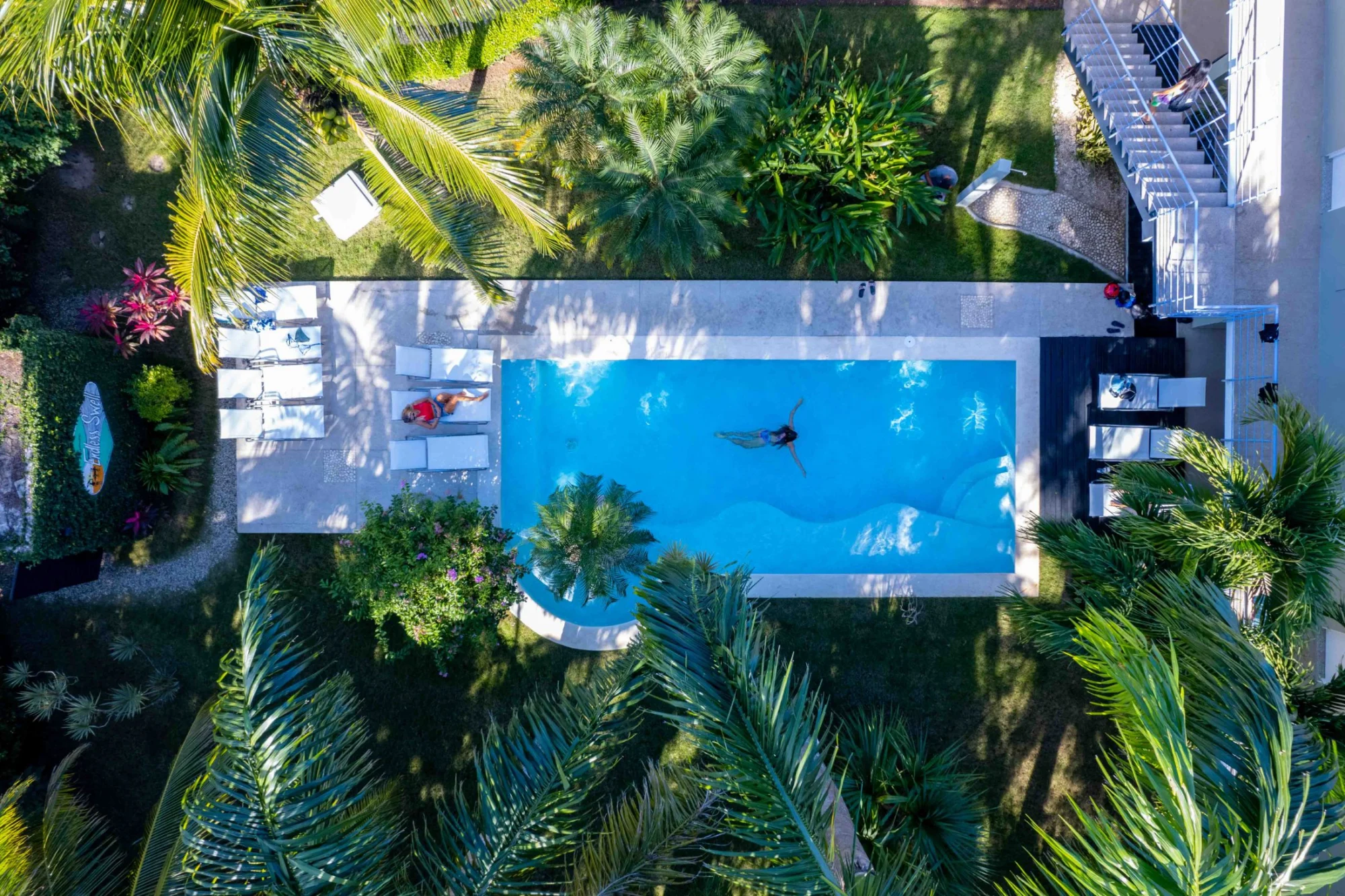
Camps compete on the things that photograph well. Pools, hammocks, sunsets, smoothie bowls. Those are real and they matter to your holiday, but they have nothing to do with whether you can surf by Friday.
The variables that actually decide that outcome are unglamorous, and two of them are usually buried somewhere below the booking button. The good news is that all three are easy to check before you pay, provided you know to ask.
Coach ratio: the number that matters most
The student-to-coach ratio is the single strongest predictor of how much you improve in a week. At fifteen or twenty students per coach you are being supervised rather than taught. At four to six, a coach can watch each wave you catch and tell you what to change on the next one.
This is the number most camps do not put on the page, and the one you should ask for first. It is also the main reason two camps in the same town, on the same wave, can produce completely different weeks.
| Students per coach | Where you find it | What it feels like in the water |
|---|---|---|
| 15 to 20 | Hostel-style camps and high-volume surf schools, usually the cheapest headline price | You queue. A coach pushes you into a wave, then turns to the next person. Nobody is watching what you did wrong, so you repeat it all week. |
| 8 to 10 | Mid-range surf retreats for beginners and many all-inclusive packages | Group instruction on the sand, some individual feedback in the water. Workable, but you will get a handful of corrections rather than continuous coaching. |
| 4 to 6 | Small-group and boutique camps, including ours | The coach knows your name and your specific problem. Feedback comes wave by wave, which is how a habit actually gets changed. |
Typical ranges based on camps we have visited and worked alongside. Ask any camp directly, and be wary if they will not answer.
Certification, and the part almost nobody checks
The recognised standard for beginner instruction is ISA Level 1, awarded by the International Surfing Association, the sport’s world governing body. It requires water-safety qualification and documented teaching hours, and it has to be renewed. A camp saying its coaches are “experienced” is not the same thing.
The ISA coaching programme has certified more than 13,500 instructors across 80 countries, and Level 1 is specifically designed for teaching beginners and early intermediates. Being a brilliant surfer is not a qualification to teach. They are separate skills, and one does not imply the other.
Here is the part that is worth knowing, because it separates a camp that got certified once from a camp that takes it seriously. ISA certification requires a current lifeguard or water-safety award alongside the teaching qualification, and instructors are expected to re-register. So the useful question is not “are your instructors certified?” It is “are they currently registered, and do they hold current water-safety and first-aid qualifications?”
In unregulated destinations, and there are many, anyone with a van and a stack of foam boards can call themselves a surf school. That was one of the things that concerned us most in Bali.
What “all inclusive” actually covers
Surf camp pricing is rarely comparable between camps, because the same word covers very different packages. The costs that most often sit outside the headline price are airport transfers, daily transport to the beach, dinners, and any coaching beyond one session a day.
The cheapest advertised week is frequently not the cheapest week. Work out the real total before you compare two camps, particularly in destinations where the breaks are spread out and you will be paying for transport every day.
| What you are paying for | Usually included? | What to check |
|---|---|---|
| Accommodation | Yes | Whether the price is for a shared room, and what a private or single room adds |
| Surf coaching | Yes | How many sessions per day, how long each one is, and the ratio |
| Boards and equipment | Yes | Whether you move to a smaller board as you improve, or stay on a foamie all week |
| Wetsuit | Varies | Often an extra in cold-water destinations. Not needed at all in warm ones |
| Daily beach transport | Varies | A significant hidden cost where the camp is not near the teaching break |
| Airport transfer | Often not | Ask the transfer time as well as the price. Some are several hours |
| Breakfast | Usually | Whether it is cooked or a basket of bread |
| Dinners | Often not | How many, and what eating out costs locally on the other nights |
| Yoga | Varies | Included sessions versus a per-class fee |
| Video analysis | Rarely | Worth asking for. Seeing your own pop-up changes it faster than being told about it |
The questions to ask before you book
Send these to any camp you are considering. The answers matter, but so does whether they answer plainly. A camp that responds with specifics is telling you something about how it runs.
Red flags
None of these are automatically disqualifying. All of them are worth a follow-up question before you pay a deposit.
- No group size stated anywhere on the site, and no straight answer when you ask
- Photography that only shows the beach, the pool and the sunset, never the teaching water
- “Experienced instructors” with no named certification
- An itinerary that says “surf lessons” without saying how many, or how long
- A price that looks unusually low for the region, with a vague inclusions list
- Reviews that are all on the camp’s own website and nowhere independent
- A destination famous for waves that are nothing like the ones a beginner needs
That last one is worth its own article, and it has one. We wrote about why world-class surf spots are usually the wrong place to learn, using our own experience of running a retreat next to one.
Where the good beginner camps are
Choose the camp before the country. That said, the destination sets the ceiling: warm water, gentle waves, a floor you can fall onto safely and a short transfer make every camp in that region better than it would otherwise be.
We have ranked the destinations we know first-hand, with water temperatures, seasons, realistic costs and the trade-offs of each, in our guide to the best places to learn to surf. Our own back yard is in it, and so are the places we would send you instead in certain circumstances.
If you are not sure whether you count as a beginner at all, our guide to what level of surfer you are will settle it in a couple of minutes.
The one we tried, and stopped
A short and relevant story, because it is the clearest example we have of how a camp can look right on paper and not work in practice.
In 2020 we opened a second retreat in the Bingin and Uluwatu area of Bali. World-famous waves, warm water, an established visitor economy, close to an international airport. On paper it ticked most of the boxes on this page.
Covid closed it. We reopened when the island did and ran it for a further six months, and in that time the water changed beyond recognition. Sixty to a hundred surfers on a single peak on an ordinary morning, six to eight surf schools working the same stretch, and more than forty operating across the Bukit. Many of them unregulated. Getting our guests to a beach a beginner could actually use meant a road journey that had stretched to an hour each way, for a distance of about two kilometres.

We were not comfortable putting our guests in that water, so in 2023 we closed the Bali retreat for good. We mention it because the checklist above is not theoretical for us. We failed several items on it ourselves, and the honest response was to stop.
How we built ours, and what to check us on
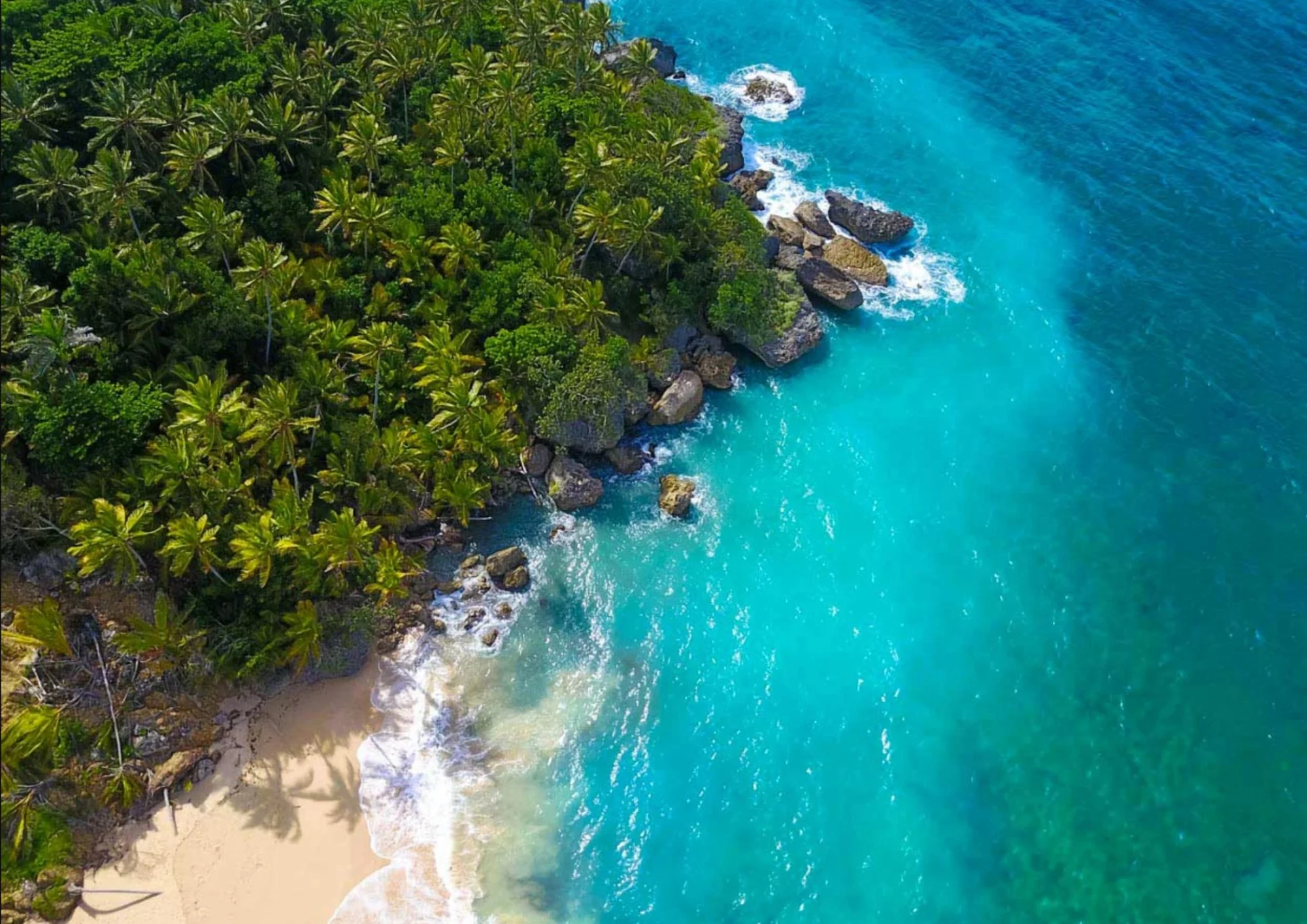
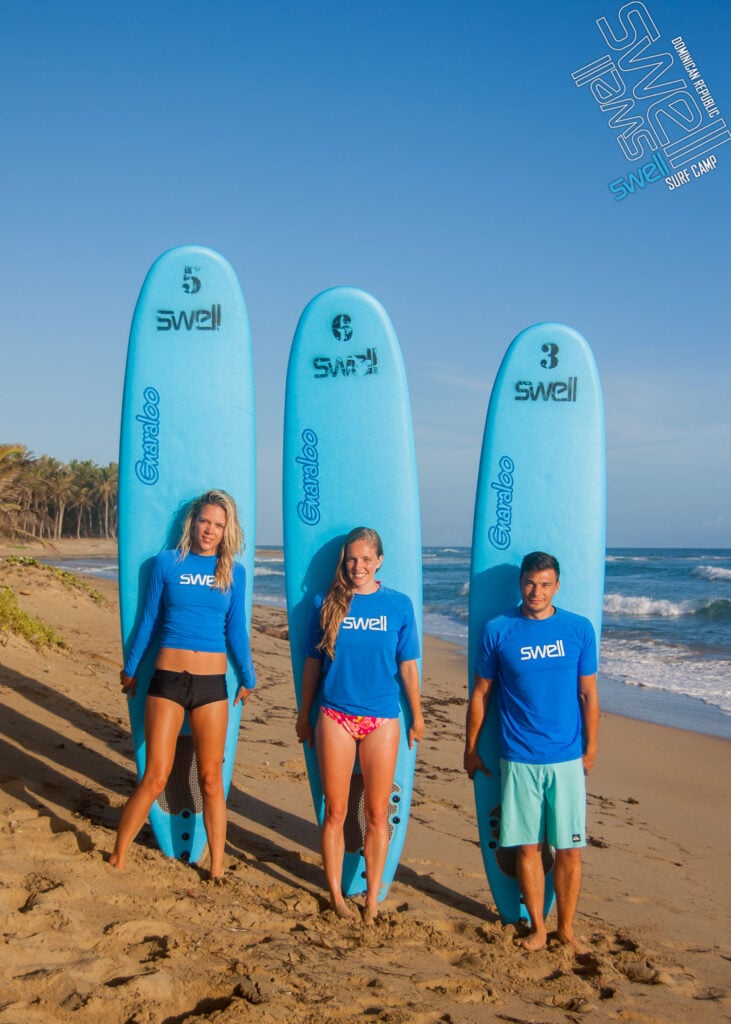
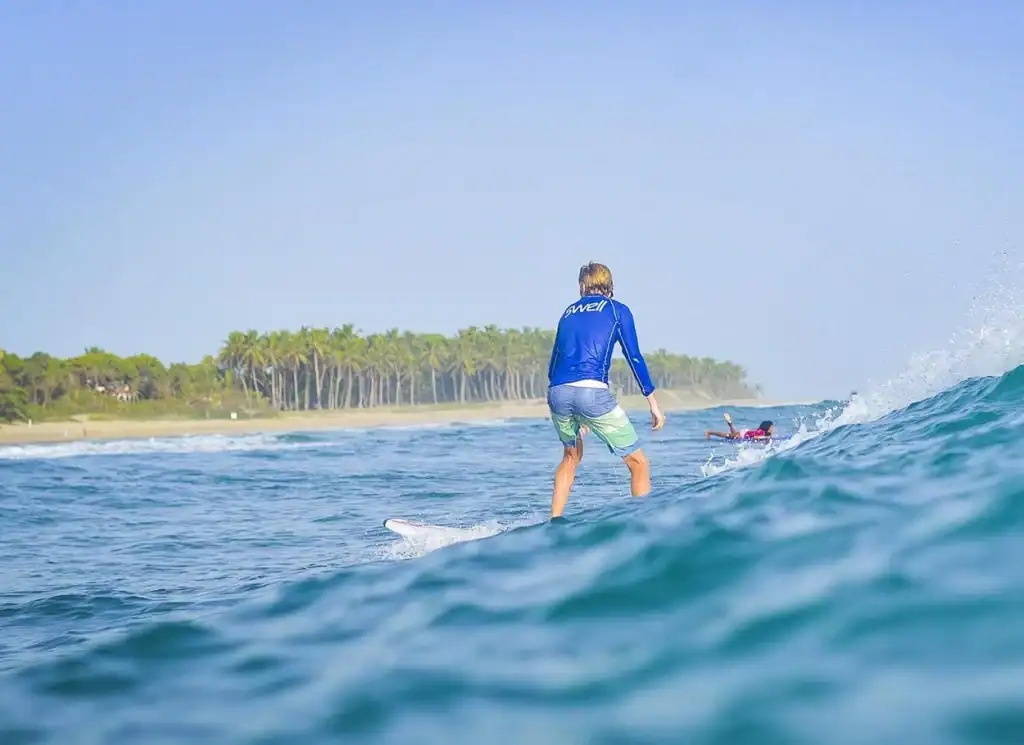
We teach at Playa Encuentro on the north coast of the Dominican Republic. The inside section is roughly chest deep with flat limestone under sand rather than sharp coral, there are no dangerous rips, currents or sea life, and it works around 350 days a year. The beach is a short drive from the house, and the house is 25 minutes from Puerto Plata airport.
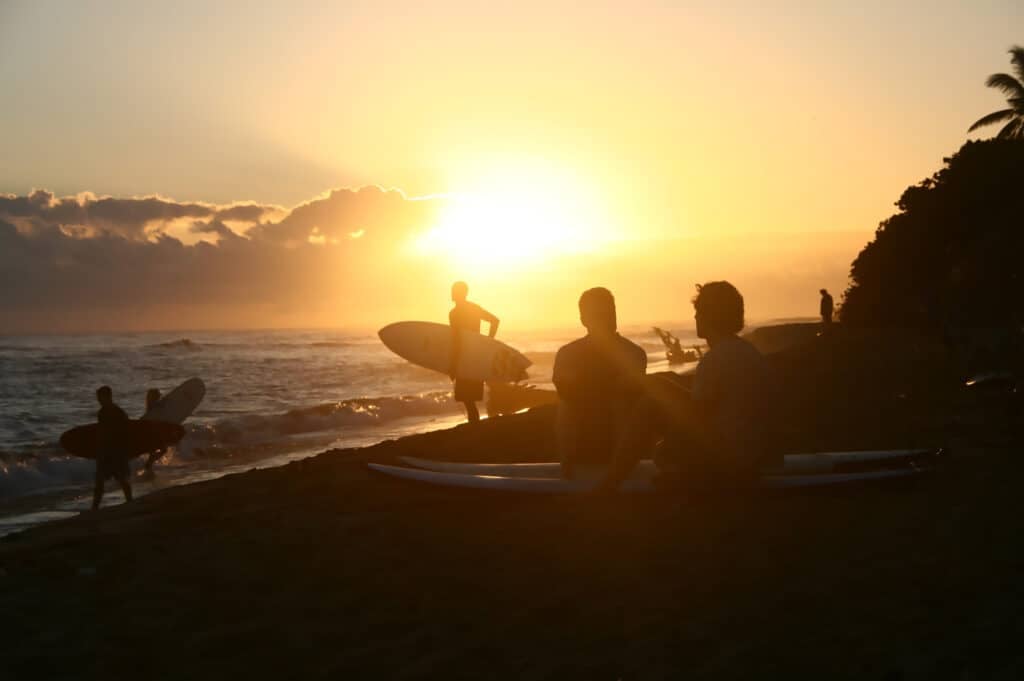
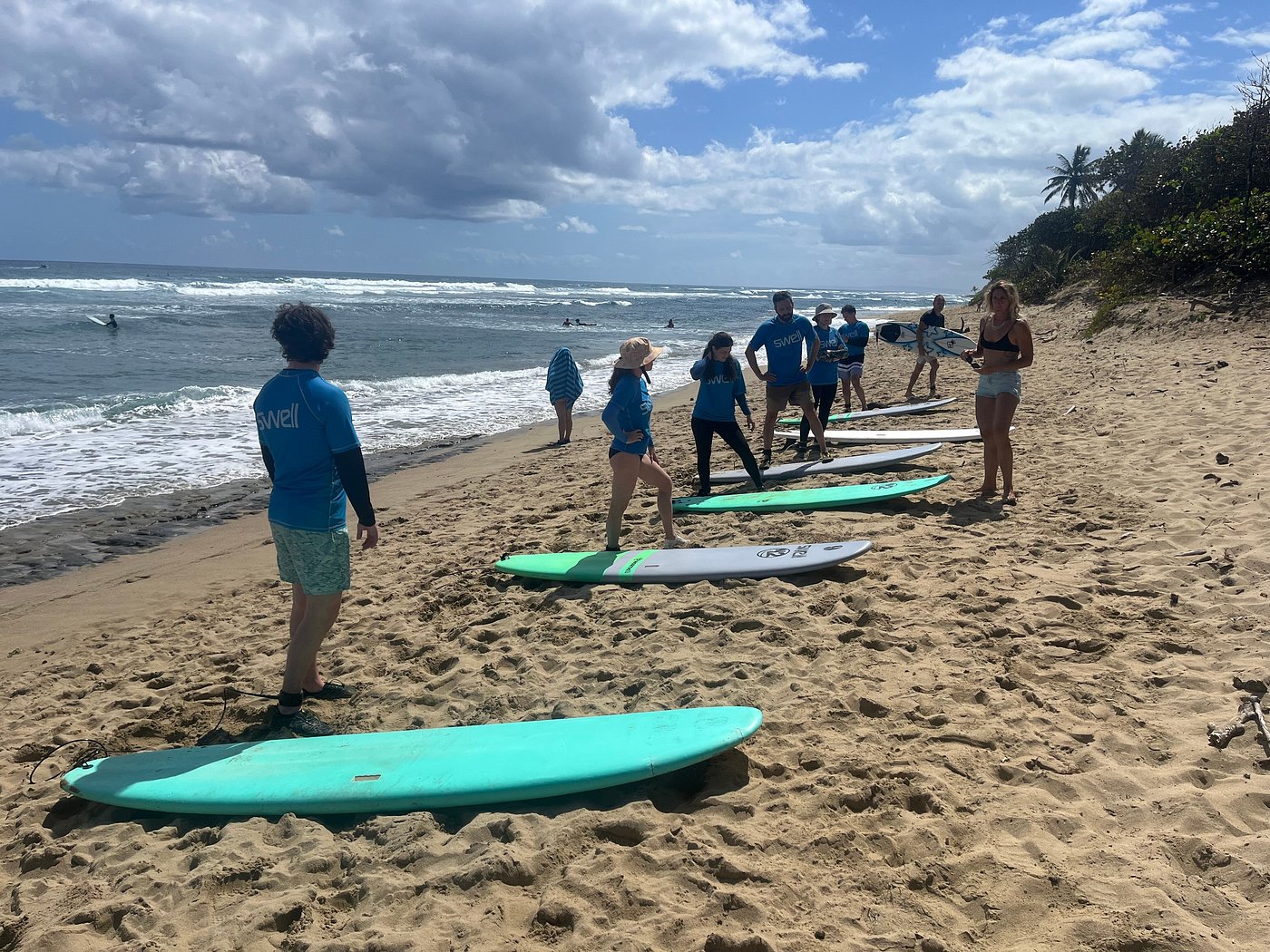
We cap the camp at 16 guests a week and coach in groups of around five, with ISA-certified instructors who also hold water-safety and first-aid training. The week includes airport transfers, daily coaching, all equipment, transport to the beach, breakfasts, three dinners and three yoga sessions. Our average guest is in their late thirties and most arrive having never stood on a board.
Now hold us to the same standard as everyone else. We are not a neutral source on our own camp, the beach is popular and shared with other schools, and the wave is not going to thrill you if you are already surfing well. You can see the coaching setup on our surfing page and exactly what is in the price on our pricing page.
Three things to take away
Ask for the coach ratio as a number, and treat a vague answer as an answer. Check that certification is current rather than historic, along with water safety and first aid. Then work out the real total price including transfers, transport and meals, because the cheapest headline is often not the cheapest week.
Do those three and you will rule out most of the places that would have disappointed you, wherever in the world you end up going.
Reading about it is the easy part
Tell us your dates and who is coming, and we will send you a custom price and availability quote, almost instantly.
Comparing a few camps and want a second opinion on one of them? Send us a message. We have stayed in a lot of them, and we will tell you honestly if another place suits you better.
Frequently asked questions
What should I look for in a surf camp for beginners?
Three things above all others: how many students share one coach, whether the instructors hold current certification and water-safety training, and what the price genuinely includes. Then check the practical details, especially how deep the teaching water is, what is on the sea floor, and how long it takes to get from your bed to the beach each day.
How many people should be in a beginner surf lesson?
Four to six students per coach is where real coaching becomes possible, because the coach can watch each wave you catch and correct the next one. Eight to ten is workable. At fifteen or twenty, which is common at the cheapest camps, you are being supervised rather than taught, and most people repeat the same mistake all week.
Are surf camps worth it for adults who have never surfed?
Yes, and adults with no experience are the group that gains most from a structured week. Daily coaching, the right board and consistent conditions compress months of trial and error into a few days. Look for a camp that states an adult age range rather than one built around an eighteen to twenty-five backpacker crowd, since the teaching pace is genuinely different.
What is usually included in a surf camp price?
Accommodation, daily surf coaching, boards and equipment, and usually breakfast. What frequently sits outside the price is the airport transfer, daily transport to the beach, dinners, wetsuit hire in cold-water destinations, and any coaching beyond one session a day. Ask for the exclusions in writing before comparing two camps on price.
How long should a beginner surf camp be?
A week is the usual minimum for a complete beginner, and it is roughly what it takes to move from whitewater to catching unbroken waves with help. Shorter trips of three or four days will get you standing up, but you lose the part where the skill starts to stick. Most camps set a minimum stay for this reason.