What Level Of Surfer Am I?
“What level of surfer am I?” is one of the most useful questions you can ask before you book a surf trip — and one of the easiest to get wrong. Most people either sell themselves short or, far more often, quietly promote themselves a rung or two up the ladder. Getting it right matters, because your level decides which waves are safe for you, which board will actually help you catch them, and whether your week in the water feels like progress or frustration.
At Swell we have taught thousands of people to surf, and we have watched almost everyone wrestle with this exact question. So this guide gives you a quick self-test, a clear seven-level framework, and honest benchmarks for each stage — so you can place yourself accurately and know precisely what to work on next.
Your surf level is defined by the skills you have mastered, not how long you have been surfing. Beginners ride whitewater; intermediates confidently catch green waves and link bottom turns and cutbacks. Use the 30-second self-test below, match yourself to one of our seven levels, and pick waves and a board that fit. When in doubt, assume the lower level — it is safer and you will progress faster.
What level of surfer am I? A 30-second self-test
Forget how many lessons you have taken for a moment. The fastest way to gauge your ability is to run through the checklist below and count how many you can honestly tick. Be strict with yourself — “sometimes” does not count.
Zero to two ticks puts you in the beginner-to-novice range. Three to four and you are progressing nicely. Five or six ticked honestly, and you are knocking on the door of intermediate. Independent surf coaches use almost identical markers — Surfline defines an intermediate as someone who can paddle out alone and ride waves using the three basic turns, which lines up closely with our own benchmarks.
Why knowing your surf level matters
Overestimating your ability is the single most common mistake we see, and it rarely ends well. Paddle out into waves that are too big or too powerful for your skill set and you risk injury — to yourself and to the surfers around you. A genuinely frightening wipeout can put people off the sport for good.
Underestimating yourself has a smaller cost, but it is still a cost: you spend a week on waves that no longer challenge you and your progress stalls. The sweet spot is an honest assessment, then waves that stretch you just slightly beyond your comfort zone.
Don’t overestimate your skill set
In our experience, most students who have had a few lessons will happily label themselves “intermediate.” Nine times out of ten, they are not — and that is completely normal. It takes a lot of water time and good conditions to reach true intermediate level, and an intermediate surfer already owns a deep bag of skills.
Reading about it is one thing. Doing it is another.
Progress your surfing
Small groups, patient coaches, and boards for every level.
Explore surfing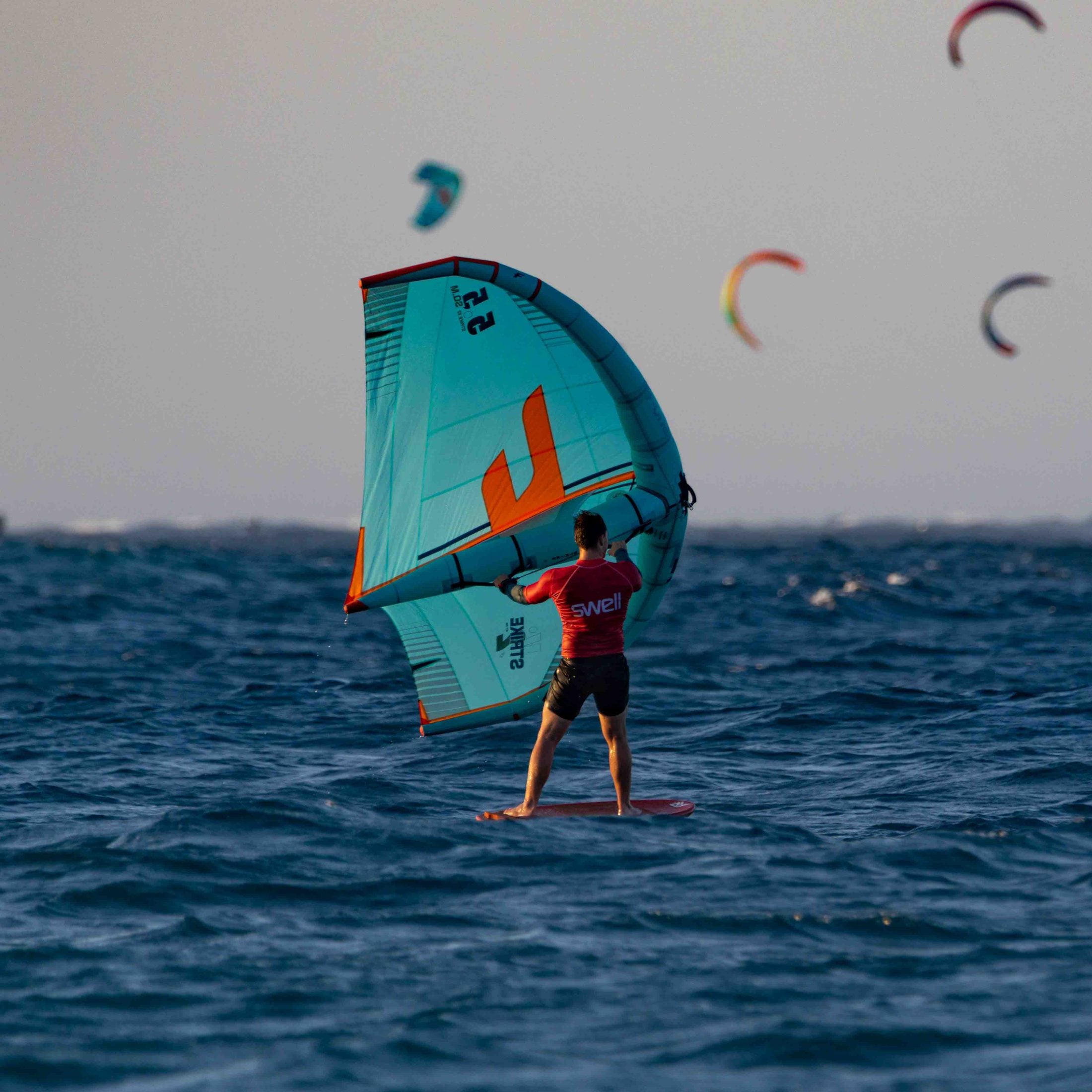
Take up wingfoiling
A new & easy to learn sport — we’ll get you flying.
Explore wingfoilingYour 'home' base
Ensuite rooms • social vibes • tasty food & large community hub.
See the retreat


Here is the catch: time spent surfing is a terrible measure of ability on its own. You might have surfed for only a few months but progressed quickly thanks to plenty of water time, the right beginner surfboard and good conditions. Or you might have “surfed” on and off for years without ever leaping forward, because you kept visiting a poor break, rode a board that was too small, or picked up bad habits early.
That is why we assess the skills you have actually mastered in the water — not your calendar. Nail your pop-up technique and your ability to read and catch unbroken waves, and your level becomes obvious very quickly.
The 7 surf levels explained
Most surf schools squeeze everyone into four boxes: beginner, intermediate, expert and pro. We think that hides the most important part of the journey — the many small, meaningful steps between your first whitewater wave and confident intermediate surfing. So we use seven levels, each with clearly defined skills.
| Level | Wave comfort | Skill snapshot | Typical mistakes |
|---|---|---|---|
| Beginner | Whitewater <1ft | Foam-board practice, learning to pop up | Looking down, poor pop-up, bad stance |
| Novice | Small green ~1ft | Short paddles, inconsistent pop-ups | Wrong wave angle, hesitant commitment |
| Progressive | 1–2ft green | Reliable pop-ups, starting to angle | Chasing the shoulder, no compression |
| Intermediate | 2–3ft green | Confident angled take-offs, bottom turns, soft cutbacks | Stiff style, poor timing |
| Advanced | 3–5ft | Explosive take-offs, top turns, floaters, cutbacks | Over-surfing, weak priority awareness |
| Expert | 5–8ft | Late drops, deep positioning, vertical re-entries | Pushing limits, inconsistent landings |
| Pro | 8ft+ heavy | Any take-off, aerials, barrels, full repertoire | Risk-taking, equipment limits |
Experts and pros do not need our help, of course. But the subtle steps from beginner to intermediate deserve their own names, because that is where most surfers spend their time — and where the right coaching makes the biggest difference. Here is what the early stages look like, plus the board and wave height we would recommend for each.
Beginner
Just starting
New to surfing with no previous experience. You are learning water safety, how to lie and paddle, whether you are goofy or regular, and how it feels to be propelled by a wave.
Novice
A few lessons in
You can catch whitewater unaided, pop up and ride a few metres, and paddle back into position. Now you are starting to read waves and trim along the face.
Progressive
Out of the foam
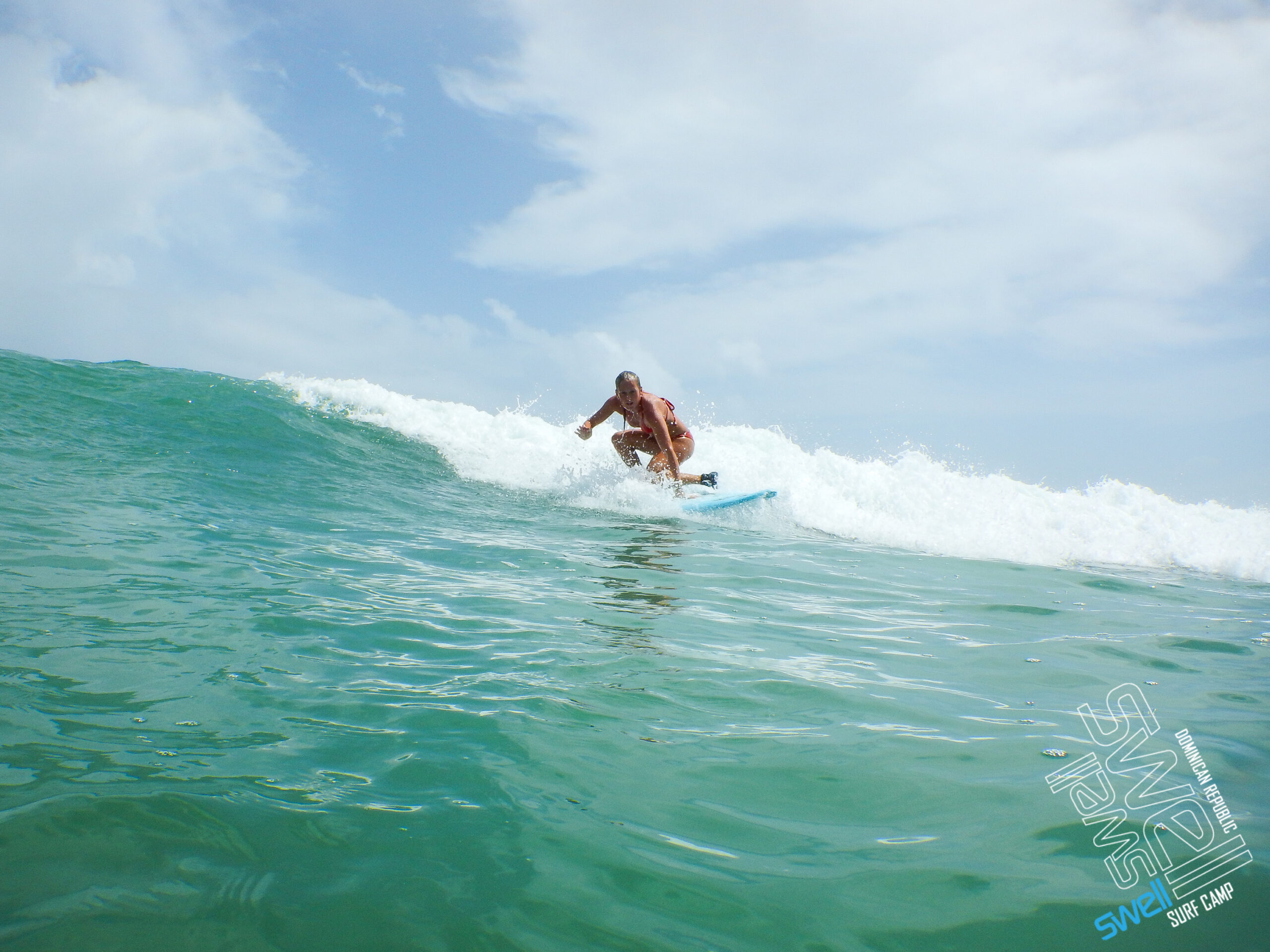
You can paddle out, follow surf etiquette, catch unbroken waves and ride a “wavy line” ahead of the whitewater. Next up: sharper top and bottom turns, and steeper drops.
Intermediate
Green-wave rider
You paddle into overhead waves, keep speed to stay ahead of the section, and link bottom and top turns. Now you are chasing cutbacks, floaters and your first taste of the barrel.
Once you are choosing the right board for your stage, everything gets easier. If you are unsure what to ride as you move up, our guide to which surfboard shape is right for you breaks it down by level.
How long does it take to move up a level?
Consistency beats intensity. A week of daily coached sessions in gentle, beginner-friendly waves will move you further than a scattered year of occasional weekend surfs in whatever conditions turn up. That is exactly why a focused surf holiday accelerates people so quickly — you stack up water time, feedback and repetition day after day.
The variables that speed things up: plenty of catchable waves, the right high-volume board, good instruction from the start, and reasonable paddle fitness. The things that slow people down are usually the opposite — a board that is too small, a break with poor waves, or bad habits picked up without correction.
How to level up faster
Surfing has a long progression curve, and the early technique you groove tends to stick. That is why good coaching pays off most at the start: a coach spots the small stance and timing errors that quietly cap your progress, and pushes you just far enough past your comfort zone to keep improving safely. As surf technique guides note, the bottom turn is the move that unlocks riding the open face — it is the real gateway to intermediate surfing.
A few things that reliably help you level up:
- Surf as often as you can, in waves that suit your current level
- Ride a board with enough volume — do not drop down in size too soon
- Master the pop-up and paddling before chasing turns
- Learn wave selection and surf etiquette early
- Get filmed, or get a coach — outside eyes fix what you cannot feel
Not sure which level you are? Let us tell you honestly.
Final word: be honest, and enjoy the journey
So, what level of surfer are you? Run the self-test, match yourself to one of the seven levels, and — if you are on the fence — pick the lower one. An accurate, slightly humble assessment keeps you safe, puts you on the right waves, and gets you improving faster than any amount of wishful thinking.
Three things to remember: your level is about mastered skills, not time served; the beginner-to-intermediate stretch is where good coaching matters most; and everyone, right up to the pros, is still learning on every wave. Whenever you are ready to take the next step, come and surf with us — our luxury surf coaching holidays have helped thousands of people progress, and we would love to help you find, and climb, your level.
Choosing where to learn matters more than most people realise. Warm water, gentle waves, no rips or reef and a short transfer from the airport can be the difference between standing up by the end of the week and spending your holiday fighting the ocean. Not every “surf destination” is built for a complete beginner, and the cheapest headline price often hides big group lessons, cold water and long drives between spots.
We spent 25 years and more than 20 countries working out where a first-timer actually has the best week before we built our own camp. If you’re still deciding, read our honest, first-hand guide to the best places to learn to surf for beginners — ranked on warm water, safe waves, easy access and real cost, with the trade-offs of each spot laid out plainly (yes, including our own).
Frequently asked questions
How do I know if I’m a beginner or intermediate surfer?
How long does it take to go from beginner to intermediate?
What surfboard should I use for my level?
Is it bad to overestimate my surfing level?
Can a surf camp tell me my real level?