Have you mastered a proper pop-up? Can you read oncoming waves? Can you select, paddle, and catch a wave on your own accord? Can you turn down the line and ride an open-faced, green wave? If so, congratulations. You are ready to learn how to generate speed and set up maneuvers. Generating speed on a wave ensures the longest possible ride, and allows the surfer to set up further maneuvers, such as cutbacks.
There are two ways to generate speed on a wave: trimming and carving. Whether you use trimming or carving depends on a variety of variables like board size, wave type, maneuver goals, and wave size. To find out how to properly generate speed on a wave, and whether you should be trimming or carving, keep reading! At Swell , we are here to help improve your surfing for your next surf trip to our Caribbean surf resort, or just for your surfs at your local break back home!
TRIMMING
What is Trimming?
trimming
Trimming is a technique employed when a surfer needs to maintain speed and navigate the face of a wave to stay in an optimal position to continue surfing at a high speed or to set up a maneuver.
Unlike carving, trimming does not involve large, rounded turns but rather, trimming requires delicate rail work. The rail is the side of a surfboard, and it is the part of the board that is most engaged in the wave face during trimming. When a surfer trims, he or she makes small adjustments in his or her weight distribution and stance to set the rail into the wave’s face and then to release it. This act moves a surfer quickly down the line, keeping her or him ahead of the breaking water.
Wave Type
While there are a number of factors that go into whether you trim or carve on a wave, the wave itself sometimes won’t give you a choice. A fast-breaking wave makes it virtually impossible to perform regular, elongated carves. Therefore, on a fast-breaking wave, you have no choice but to trim.
Board Type
It is possible to trim on all board types. In fact, trimming is useful in a variety of situations on shortboards and longboards. But if you are a longboarder, you will find that you will be trimming on most waves, even if short boarders are carving.
The large surface area and volume that long boards have makes generating speed as simple as walking up the board. To trim properly on a longboard, a surfer should move towards the center of their board and set their rail into the wave and then release it as needed. Longboarders use trimming to set their board, to walk to the nose, or to set up a cutback. Short boarders use trimming to gain speed for an air/ cutback off of a high line, to navigate a barrel, or to stylishly cruise on a high line.
Weight Distribution and Turning
Whether you are on a longboard or a shortboard, trimming takes a specific stance, weight distribution, and technique. To effectively trim, a surfer should be positioned more towards the center of the board, have a stance slightly wider than shoulder width, and have their feet placed somewhat closer to the rail that is engaged in the wave’s face. As you move down the face of the wave, lean in and put your weight towards the wave to move up the face, engaging your rail into the wave.
Additionally, your weight should be distributed more to the front foot than the back. This is referred to as putting on the gas. Once you’re high enough on the wave, faintly let your rail out and allow your board to move down the wave before reengaging and moving back up.
Possible Maneuvers to Set Up
If you’re trimming properly, there are a few maneuvers that you will be able to work on. From a proper trim or high line, you can execute a cutback, set up an air, or if you’re on a longboard, walk the noise. You can also execute floaters on a closeout section.
CARVING
What is Carving?
Carving bottom turn
Carving is a way of moving down the face of the wave and generating speed while doing so. Carving involves larger, deeper, and more radical turns than trimming.
A surfer carving will make a series of bottom turns and top turns down the waves face until the end of the wave, the whole time utilizing their fins to make sharp, dramatic turns on the wave’s face.
Wave Type
While it may be possible to do a few top or bottom turns on a fast-breaking wave, the ideal wave for carving is a slow breaking, somewhat steep-faced, wave. A slow breaking wave allows for a surfer to do a drawn-out bottom turn to drop in, without risking getting caught by the whitewater, and then set up a succeeding top turn. This act is repeated over and over down the wave’s face.
Board Type
To properly execute swooping bottom turns and sharp top turns that are required in proper carving, a shorter board is required. While it is definitely possible to carve on a longboard, it is difficult given the board’s length and the distance of the rider’s feet from the fins and certain points in the wave. A shorter board (anything below 7 feet) will allow you to maneuver more freely and whip the board around for sharper, more dramatic turns.
Weight Distribution and Turning
Like trimming, carving takes a particular stance, technique, and weight distribution to be done successfully. To effectively turn sharply, whether a top turn or a bottom turn, a surfer must “pump the brakes.” Meaning the surfer must put their weight on their back foot to engage their fins in the wave and allow the board to turn sharply. When you are ready to perform a carve, put weight on your back foot and slightly towards the rail that is engaged in the face of the wave.
Then as you turn, shift your weight forwards and towards the direction of your turn. For example, when you engage with your toeside rail in the face of the wave and you want to perform a cutback, then lean into the wave’s face and then engage the fins, rotate your board, and shift your weight to the other rail. When a surfer places weight on their back foot, the nose of the board lifts out of the water just enough to allow the surfer to pivot the board using a combination of the engaged fins and rail.
Possible Maneuvers to Set Up
High-performance surfing essentially is carving. With the exception of airs, most traditional high performance and power surfing maneuvers involve large cutbacks, swooping turns, and powerful hacks into the waves face. If a surfer wants to improve their performance surfing, the first thing he or she should do is learn how to properly carve.
Armed with the knowledge on how to properly trim and carve, you are ready to get out in the water and work on generating speed on a wave. Once you’ve successfully mastered generating speed, move on to learn how to set up maneuvers and learn to look for workable sections in a waves face. To further your progression, come visit us in the Dominican Republic at Swell to surf the warm, welcoming waters of the Caribbean Sea!
We hope you like this article “Surfing: How to generate speed” But if you have any questions about this topic, feel free to send us an email about this topic (or any surf related topic) I am sure we can help you progress with your surf abilities.
Video: Surfing how to generate speed
Similar topics on the Surfing: How to generate speed are the following:
It’s no longer mainstream to ride only high-performance shortboards. In fact, it’s no longer mainstream to ride anything mainstream. Today, at any given lineup you will, of course, find your standard shortboards, but you will also be met with a plethora of fun size crafts, grovelers, twin fins, stand up paddle boards, soft tops, and even foils. The recent eruption in popularity of the alternative surf craft has done wonders for the advancement of fun, which is what surfing is really all about.
There’s no point in trying to force your 6’0” leaned out thruster to go on a two-foot day. There’s no fun involved in stomping repeatedly down the face of a wave with your front foot, only to have the wave close out on you because you couldn’t make the section. Riding boards that are designed for the waves you’re actually riding will increase your fun levels tenfold, especially when you have the ideal board for your skill level.
LONGBOARD
A longboard is anything 9 feet and over. Traditionally, longboards have single fins, but now it is common to see longboards with a “two plus one” set up. Meaning two thruster style fins with a traditional large single fin in the middle.
Longboards are truly an every man’s tool. All surfers start out on them, they’re excellent for learning. But plenty of advanced surfers choose to ride longboards as well.
SKILL OF RIDER As previously mentioned, longboards are the perfect option for beginners. Ideally, a first-time surfer will start out on a soft top, and then progress to a traditional longboard. Longboards are also a great option for advanced surfers who enjoy cruisy rides and want to improve their style. Nothing is more stylish than a skillful long boarder cross stepping his or her way to the noise of their board.
OPTIMAL WAVE TYPE AND SIZE While a truly talented longboarder will take out their trusty log no matter if its 6 inches or 6 feet, most of us turn to longboards when the surf is just a bit too small for a traditional shortboard. Longboards make even the most petite swells enjoyable and riding a longboard (or any board that will increase your wave count) will help improve your understanding of wave mechanics.
WHAT TO EXPECT While riding a longboard, you can expect long, cruisy, drawn-out lines. You will also have the ability to catch and ride small waves that would otherwise be considered uncatchable.
LONGBOARD SURFING VIDEO
FUN SHAPE
Fun shape boards are called fun size for a reason, they make what would be otherwise dull surf amusing. A fun size board is high in volume, wide, and has thick rails. A fun size board stands anywhere from 6’6” to 8’6” in height. One of the most popular fun size shapes is the egg shape, which is often called the “mini-Malibu for its similarities to a longboard.
SKILL OF RIDER
Fun shape boards are a great option for beginner surfers who are looking to progress towards a smaller board. If you have mastered the popup and you can ride clean lines down the face of the wave, then a fun size board will be a great fit for you. Similar to longboards, fun shape boards will give intermediate and advanced surfers a thrill on relatively small days.
OPTIMAL WAVE TYPE AND SIZE
As stated earlier, fun size boards can make a relatively small wave day a lot of fun. That being said, there are a select number of surfers who ride mid-size boards on hollow, barreling days.
WHAT TO EXPECT
Fun size boards offer a similar feel to longboards, with a bit of added performance. Long cruisy rides are met with increased maneuverability that is made possible by the reduced length of the board. Fun size boards offer beginner surfers a chance to begin to learn to carve and turn in the same vein as you would on a shorter board, while still providing plenty of stability.
GROVELER
A groveler may appear to be just a standard shortboard, but upon closer inspection, you will find that a groveler is typically shorter and stubbier than the average high-performance shortboard. What this means is that while grovelers may be ridden at a reduced length, they have an increased width, thickness, and therefore more volume than normal shortboards.
SKILL OF RIDER
A groveler should be part of every surfer’s quiver, whether they are just starting out or they are a sponsored pro. Grovelers serve as a longboard replacement during the small waves of the summer season or any small day for that matter. The increased volume in a groveler allows the board to paddle easily and catch virtually any sized wave. Grovelers are also a great stepping stone for beginner/ intermediate surfers to advance their surfing. The high volume of a groveler will provide more stability than a high-performance shortboard, making them a valuable step in surf progression.
OPTIMAL WAVE TYPE AND SIZE
Grovelers excel in small waves. 2-4 feet is where you will get the most out of a groveler. Most grovelers are too thick to perform well on large waves with steep faces. There are a few exceptions of course if a groveler has a slight entry rocker and a thinned-out tail (such as the Hypto Krypto by Hayden Shapes) then they may be able to perform in larger surf.
WHAT TO EXPECT
As stated above, a groveler will make mushy, small surf more enjoyable. The increased volume allows you to catch more waves with ease. The relatively flat rocker of a groveler gives the board plenty of speed through flat/ closeout sections that would otherwise be difficult to get around. Grovelers will be a tad more cruisey than a high-performance shortboard but will still offer the necessary thrills of performance when the surf is less than ideal.
FUN SHAPE / MID LENGHT SURFING VIDEO
FISH
The fish is an immensely popular shape that has been around since the 1970s. Fishes have a few defining characteristics that separate them from normal shortboards or grovelers. The most notable characteristics of a fish are the wide swallowtail and the twin fin (often keels) set up. Fishes also tend to have a lot of volume under the chest and somewhat flat rockers.
SKILL OF RIDER
Like the groveler, the fish will bring an ample amount of fun to any surf session. The classically drawn outlines of the swallow-tailed twin fin are some of the most stylish in surfing, making fishes popular with intermediate and advanced surfers. That being said, the fish has similar characteristics to the groveler, making it an equally as viable option for progression for those beginner/ intermediate surfers who are looking to improve.
OPTIMAL WAVE TYPE AND SIZE
Similar to any groveler, a fish will turn any small day session into something to remember. Few surfers choose to ride fishes on large days, in part due to their large wide noises, which make steep drops challenging.
FISH SURFING VIDEO
WHAT TO EXPECT
On a fish, you can expect long cruisy lines, plenty of speed, and a loose, skatey feel. A fish may not be able to bank turns like a high-performance shortboard, but when they’re ridden well they sure are fun to watch.
HIGH-PERFORMANCE SHORTBOARD
High-performance shortboards vary in size from about 5’4” to 6’8.” They are designed for one thing and one thing only, to turn on a dime and make the absolute most out of the open face of a wave. A good high-performance shortboard will allow surfers to fit as many turns possible into a wave while maintaining speed and control.
SKILL OF RIDER
High-performance shortboards have thin rails, pointed noises, and low volume. They take time and patience to master, meaning that only advanced surfers will truly have a good time on them.
OPTIMAL WAVE TYPE AND SIZE
There needs to be a bit of size for a high-performance shortboard to truly shine. If the surfer is 4 feet or over, then it is time to grab your trusty shortboard.
WHAT TO EXPECT
High-performance shortboards are generally thin, with low rails, and rockered out. This gives them the ability to turn on a dime and carve up and down the face of a wave with ease. If you’re riding a high-performance shortboard for the first time, expect to work a lot to generate speed and set up each manoeuvre, but know that if you get that cut back just right, it will feel amazing.
WHAT SURFBOARD SHAPE IS RIGHT FOR YOU?
There is no right or wrong in the surfboard shape you choose, our advice is to try out the different surfboard shapes in various conditions and see which one suit your style and surfing ability best. Or don’t choose and mix and match boards to the right conditions or state of mind you are into. Some days are better for glide or speed, others are better for a high-performance approach. Whatever you do, make sure to have fun, since that is essentially what surfing comes down to.; putting a smile on your face.
At Swell, we have an extended surfboard rental pool for people that already know how to surf and don’t want to travel to the Dominican Republic with their surfboard. Our range exists of 25+ boards ranging from 5’10’ fishes to 9’6′ performance longboards and everything in between. Never surfed before? Have a look at the learn to surf and surf coaching packages we offer Surfboards for beginners we have too. Links and resources: Mollusk surfboards sell some of the best looking ‘alternative’ surfboards. Channel Islands is one of the leading manufacturers of high-performance shortboards
QUESTIONS
No results!
HOW DO I KNOW WHAT SURFBOARD VOLUME IS RIGHT FOR ME?
The right surfboard volume depends on your weight, fitness level, and surfing ability. Higher volume boards provide better flotation and wave-catching ability, making them ideal for beginners and intermediate surfers. Lower volume boards offer more maneuverability but require better technique and fitness. When choosing a board, prioritize catching lots of waves over looking cool with a smaller board - wave count is key to improving your surfing skills.
HOW DO FIN SETUPS AFFECT SURFBOARD PERFORMANCE?
Different fin setups dramatically impact how a surfboard performs in the water. Single fin setups (common on longboards and eggs) provide smooth, flowing rides with less drag but limited maneuverability. The classic 3-fin thruster setup, invented by Simon Anderson in the 1980s, offers the best balance of control, speed, and maneuverability for most conditions. Fish boards typically use either 2 large "keel" fins or a 4-fin setup, which provides speed and drive in smaller waves. Quad (4-fin) setups generate more speed and work well in both small and large waves, while offering a looser, more skateboard-like feel compared to thrusters.
WHAT IS A HYBRID SURFBOARD AND WHO SHOULD USE IT?
A hybrid surfboard (6'6" to 7'2") is an "in-between board" that combines the maneuverability of a shortboard with the wave-catching ability of a larger board. It's essentially a scaled-up version of a standard shortboard - wider with more volume to make paddling and wave catching easier. Hybrid boards are perfect for intermediate surfers wanting to transition from a larger board to a shortboard, offering a good all-around performance.
WHEN SHOULD I CONSIDER USING A MINI-GUN OR STEP-UP SURFBOARD?
A mini-gun or step-up surfboard (6'6" to 8'0") is designed for bigger waves and more challenging conditions. These boards are longer than shortboards but narrower, typically featuring a round or pin tail for increased speed and control. They're primarily used by experienced surfers in locations with fast, powerful waves like Australia, Hawaii, and Indonesia. If you're surfing consistently overhead waves with significant power, a step-up board can provide the stability and paddle power needed for these conditions.
WHAT'S THE DIFFERENCE BETWEEN A SHORTBOARD AND A FISH SURFBOARD?
A shortboard (5'8" to 6'8") is the standard performance board that evolved from fish surfboards in the 1980s. It features 3 or 4 fins and is designed for advanced surfers wanting quick maneuverability and speed. A fish surfboard (5'2" to 6'4") is typically ridden 6 inches shorter than a standard shortboard but is wider and thicker with more volume. Fish boards have a distinctive swallow tail and work exceptionally well in smaller, mushier waves while being easier to paddle than regular shortboards.
WHAT MAKES LONGBOARDS BETTER FOR LEARNING TO SURF THAN SHORTBOARDS?
Longboards (9'0" to 9'6") are superior for learning because they offer exceptional wave-catching ability and stability due to their high volume and length. Unlike shortboards that require precise technique and timing, longboards provide a forgiving platform that allows beginners to focus on fundamental skills like paddling, positioning, and standing up. The extra foam and surface area make it easier to catch waves in various conditions, and the stable platform reduces the learning curve significantly. Many learning-focused longboards also feature soft EVA deck padding for added safety and comfort during the learning process.
WHAT WAVE CONDITIONS WORK BEST FOR DIFFERENT SURFBOARD TYPES?
Each surfboard type is optimized for specific wave conditions. Fish surfboards excel in smaller, mushier waves where their width and volume help generate speed, though they can also perform well in larger surf. Shortboards work best in steeper, more powerful waves that allow for quick, sharp maneuvers and high-performance surfing. Longboards and mini-mals are ideal for smaller, less steep waves where their glide and wave-catching ability shine. Mini-guns and step-ups are specifically designed for bigger, faster waves where extra length provides the paddle power and speed needed to catch and ride powerful surf safely. Hybrid boards offer versatility across a wider range of conditions, making them excellent all-around choices.
SHOULD I BUY OR RENT A SURFBOARD WHEN STARTING OUT?
Renting or borrowing surfboards is highly recommended when starting out, as it allows you to experience different board types and find what works best for your style and ability level. Visit multiple surf shops and speak with experienced surf shop owners or local shapers - be honest about your goals and current skill set. This hands-on approach helps you avoid expensive mistakes and ensures you choose the right board when you're ready to purchase. There's no one-size-fits-all solution for surfboards, so testing different options is crucial.
WHAT TYPE OF SURFBOARD SHOULD A BEGINNER CHOOSE?
Beginners should choose a longboard (9'0" to 9'6") or mini-mal (7'6" to 8'2") with high volume and stability. These boards offer excellent wave-catching ability and are often covered in soft EVA deck material for safety. The key is being honest about your fitness level and surfing ability - avoid the temptation to buy a shortboard too early, as insufficient volume will make it much harder to catch waves and slow your progression. Remember: if you can't catch the wave, you won't improve your riding.
SURF VIDEO SURFBOARD TEST
Interested in changing your life to see the health benefits of learning to surf?


 A longboard is anything 9 feet and over. Traditionally, longboards have single fins, but now it is common to see longboards with a “two plus one” set up. Meaning two thruster style fins with a traditional large single fin in the middle.


 A groveler may appear to be just a standard shortboard, but upon closer inspection, you will find that a groveler is typically shorter and stubbier than the average high-performance shortboard. What this means is that while grovelers may be ridden at a reduced length, they have an increased width, thickness, and therefore more volume than normal shortboards.

 The fish is an immensely popular shape that has been around since the 1970s. Fishes have a few defining characteristics that separate them from normal shortboards or grovelers. The most notable characteristics of a fish are the wide swallowtail and the twin fin (often keels) set up. Fishes also tend to have a lot of volume under the chest and somewhat flat rockers.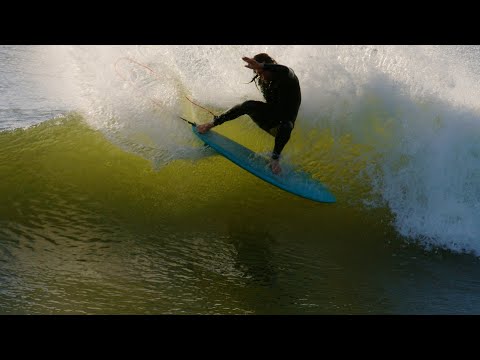
 High-performance shortboards vary in size from about 5’4” to 6’8.” They are designed for one thing and one thing only, to turn on a dime and make the absolute most out of the open face of a wave. A good high-performance shortboard will allow surfers to fit as many turns possible into a wave while maintaining speed and control.
