LEARNING TO SURF AFTER 40

surfing

LEARNING TO SURF AT 40: A COMPLETE GUIDE

IS IT EVER TOO LATE TO START SURFING?

The journey of learning to surf at 40 is not only possible but can be incredibly rewarding. This guide could easily be titled ‘learning to surf after 50, 60 and upward’ because age is truly just a number when it comes to catching your first wave.

learning to surf at 40

EMBRACING THE WAVES: LEARNING TO SURF AT 40

“Surfing? But you’re over 40!” – even if nobody actually says this, it’s something that plagues the mind when looking at activities typically associated with younger crowds. If you think surfing is only suitable for young, athletic types, think again because learning to surf at 40 is becoming increasingly common.

We firmly believe you should be able to start your surfing journey at any age if it’s what you really want to do. Who cares about the number tied to your name? If you feel as though you can do it, why not give it a go? Even if you aren’t quite as flexible as you were many years ago, this shouldn’t ever stop you from enjoying the ocean and reaping the many health benefits learning to surf at 40 can bring.

Today, we want to provide anyone interested with an introduction to surfing and why learning to surf at 40 can be the perfect time to start. As a sport with no physical contact, unlike football and rugby, it’s suited towards those who want to prevent impact injuries. It’s important to be in decent physical shape when learning to surf, as it is a physically demanding activity. Moreover, you can enjoy plenty of health benefits while getting to know new people.

There’s something special about surfing’s impact on the brain. When learning to surf at an older age, you’ll be physically active and your mind will also get a workout as you try to navigate the waves that seem determined to knock you over.

Is there a perfect age to start surfing? Absolutely not! You’re never too old to catch your first wave. Many people believe that surfing is only for the young, but that’s just a myth. Whether you’re in your 40s, 50s, or even 70s, the ocean welcomes everyone.

Age is just a number when it comes to surfing. What truly matters is your passion and willingness to learn.

Here are some reasons why learning to surf at 40 is an excellent decision:

  • Surfing keeps you in shape and boosts your mood
  • It’s a fantastic way to challenge yourself and feel younger
  • You get to meet new people and join a vibrant community

THE JOURNEY OF LEARNING TO SURF AT 40

Of course, we wouldn’t be talking about surfing at all if it wasn’t fun and this is something else to consider. Sure, you might get knocked over once or twice but it’s all in the name of fun (right?).

PHYSICAL BENEFITS OF LEARNING TO SURF AT 40 AND BEYOND

Ever woken up on a Sunday morning and tried to find things to do to avoid the gym? Even washing and ironing are better options for some. If so, you aren’t alone because continually doing the same things in the gym can get rather boring. Thankfully, learning to surf at 40 still offers a cardiovascular workout but every single session will be a thrill and it’ll be different from the last. Also, you’ll get a sense of achievement as your skill increases.

With this in mind, let’s take a look at some of the physical benefits of learning to surf at 40:

benefits of learning to surf at 40

SHOULDER/BACK STRENGTH

We’re going to start with one that perhaps isn’t so obvious, and it’s the improvement you’ll see to your back and shoulder strength. If you ask several retirees the most annoying thing about getting older, many will tell you about their back and shoulder problems. Unfortunately, this can have a huge impact on even everyday tasks such as putting the washing out on the line or trying to sit comfortably to read a book.

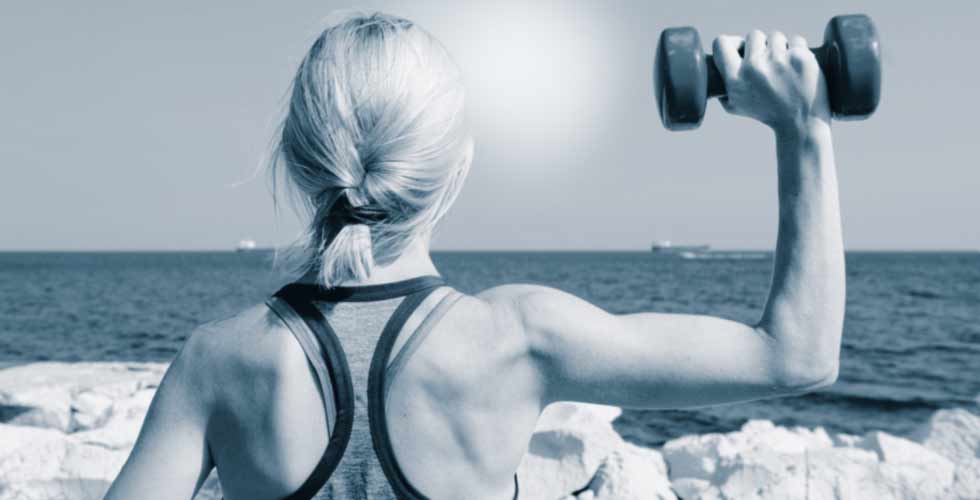
When learning to surf at 40, your arms will always be in use as you attempt to balance, paddle, and the inevitable climbing back onto the board (unless you’re an instant pro!). Even when sitting or lying on the board, you’ll be rotating your arms and the shoulder joint will get a good workout. As your arms go through their full range of motion, this is great news for the shoulders, elbows, and even the spine.

For many, they enjoy increased mobility in their upper body and it generally fights off the stiffness that comes with age. Let’s face it, we’ve all made those grunting noises while attempting to stand up after a long time sitting (we won’t tell anyone!).
surf lessons for learning to surf at 40

CARDIO WORKOUT

Not only is heart disease the leading cause of death in the UK, according to the government website, it causes nearly twice as many deaths as dementia; dementia is the second leading cause of death. While deaths from heart disease and stroke have certainly decreased in recent years, it’s still too high for our liking and learning to surf at 40 is the perfect opportunity to stay active and reduce your chances of struggling with this health issue. Regardless of which form of surfing you choose (duck diving, paddling, or standing), you’ll be moving constantly and this level of activity can only be beneficial for your health.

As your heart rate increases and the different muscles receive blood and oxygen, your cardiovascular system welcomes the activity and this offers various benefits in everyday life. For example, you won’t have any trouble breathing and strenuous activity becomes much easier. Suddenly, you’ll have the energy to take the stairs at work rather than the lift (unless you’re on the 33rd floor, of course!).

surf coaching for those learning to surf at 40

INCREASED FLEXIBILITY THROUGH SURFING

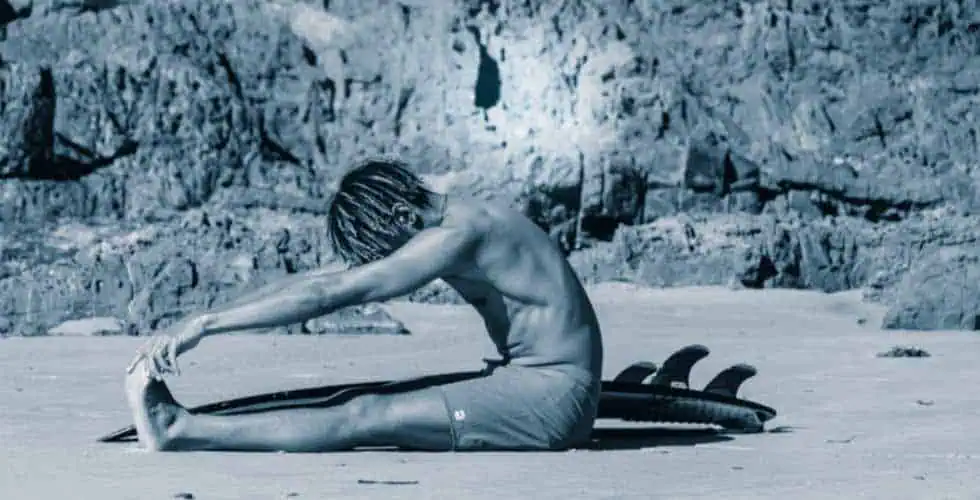
Before we move onto the psychological benefits of learning to surf at 40, we want to talk about flexibility because certain parts of your body will always be stretching and twisting while on the board. Suddenly, muscles and joints you didn’t even know existed will be activated and we mustn’t forget the range of motion your joints will experience as the sheer power of the waves hit the board. With all this stretching, it’ll be like a more dramatic form of yoga and you should experience fewer aches and pains in life.

Benefits of learning to surf at 40

CORE AND LEG STRENGTH IMPROVEMENT FROM SURFING

Something that often goes forgotten with learning to surf at 40 is the work it does with your core; all that effort to stay balanced keeps the core engaged and this is something you’ll certainly feel the morning after your first session. Just as we saw in the cardiovascular section, this is something you might not notice but will improve your life. Whether you’re lifting boxes, standing after long periods of sitting down or using the upper torso in any way, you’re going to see a boost after surfing.

For those who work in an office and stare at a computer all day, learning to surf at 40 can also help with your posture; you might find yourself slouching less while at the desk. In truth, surfing reflects many of the normal movements we put our bodies through on a daily basis (although it might not seem like it at first).

For example, after first paddling out to a wave, you’ll need to activate the muscles in the legs and core to jump to your feet. In every single lesson, you’ll jump to your feet several times. If you can do it on a surfboard in the sea, you can do it getting out of bed or getting off the sofa with ease. Over time, the difference in your leg and core strength will be noticeable and this is another great benefit of learning to surf at 40 (they’re starting to add up, right?).

PSYCHOLOGICAL BENEFITS OF LEARNING TO SURF AT 40 AND BEYOND

Hopefully, we’ve been able to persuade you to book that first surfing lesson on the physical benefits alone. If not, how about we tell you of the brilliant mental benefits of learning to surf at 40?
social benefits of learning to surf at 40

COORDINATION AND CONCENTRATION

Without both coordination and concentration, you won’t be able to stand up on the board for longer than five seconds. These will both be improved over time. Of course, these are two transferable skills so there’s no reason why your coordination and concentration don’t also improve at home, at work, and while playing any other sports. For example, you might notice that you’re able to sit at a desk for a longer period or be more successful in your local pool league.

LEARNING TO SURF AT 40 GIVES A BOOST TO YOUR MENTAL HEALTH

Firstly, all exercise has now been scientifically proven to release endorphins (chemicals in the brain) which improve mood and overall wellbeing. For those who suffer from depression and/or anxiety, many doctors are now starting to recommend exercise for this very reason. This, coupled with the fact you’ll be outside breathing in the fresh sea air, may allow you to adopt a new positive mindset in life.

mental health benefits of learning to surf at 40

DETERMINATION, PERSEVERANCE, AND GRATIFICATION

We must provide a warning at this stage because learning to surf at 40 will require patience, it will require perseverance, and a significant percentage of people stop attending after just one lesson.

However, we urge you to fight through the learning stage. Yes, you might find yourself getting frustrated and you might wonder where the fun starts for a while. But, as you improve, and overcome the mental barrier that stops many, you’ll have one of the most gratifying experiences of your life.

Eventually, all your hard work will pay off and you won’t believe that you nearly gave it all up. From struggling to jump to your feet to being able to stand up confidently for extended periods, you can prove to yourself that all goals in life are achievable. Even when the goal seemed impossible just a short while ago, the hard work and time you invest will always be rewarded.

Soon enough, you’ll enjoy all the physical and psychological benefits of learning to surf at 40 that we’ve discussed and you may even be able to bring friends and family along to watch you shine. As we’ve seen before, these are transferable skills because you’ll be more likely to take this determination and perseverance into your personal life and career.

RELIEF FROM STRESS

Finally, you don’t have to become a master of surfing to enjoy the stress relief it can offer. If you want to push your body to its limit and really test yourself, this is possible. If you want to have a relaxing pastime and enjoy being in the water, this is equally fine. While some choose to navigate every wave and they feel disappointed after a poor lesson, others are just happy to be out in the water sitting on the board and looking out over the stunning horizon.

When it comes to learning to surf at 40, the surfboard and the water are the two essentials. From here, you can do whatever makes you happy. Soon enough, you’ll be wondering where all that stress from work has gone and this for us makes for a successful hobby.

learning to surf at 40 or even 50

MEET NEW PEOPLE

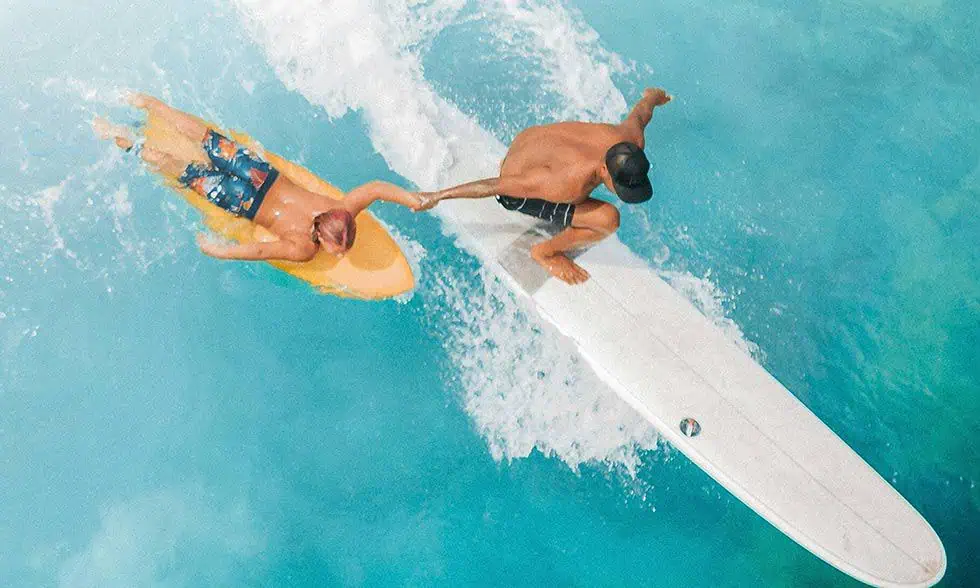
As we get older, often we seem to get stuck in our ‘social circle’ it’s hard to meet new people. Learning to surf at 40 is a great way to expand your social circle.

Instead of networking events or awkward small talk at the office, you suddenly have a built-in icebreaker: “How was that last wave?” Everyone out there is dealing with the same wipeouts, nerves, and little victories, so conversations feel easy and natural. You’ll meet people from different countries, career,s and backgrounds who are there for exactly the same reason you are: to learn, have fun, and reset from everyday life.

In a surf camp setting like Swell, this social side is amplified. Most guests are in their 30s to 50s, many travel solo, and by day two it usually feels more like a group of friends than a bunch of strangers sharing a holiday. Breakfast chats turn into shared surf sessions, yoga classe,s and dinners in town. A lot of our clients stay in touch, plan future surf trips together, or visit each other back home.

If you’ve been feeling like your social life has gone a bit stale, learning to surf at 40 gives you an easy way back into meeting new, like-minded people – without the forced “networking” vibe. Show up, paddle out, be willing to laugh at yourself, and the rest tends to take care of itself.

Surf Coaching for those learning to surf at 40

START LEARNING TO SURF AT 40 TODAY!

As well as the physical and psychological benefits of learning to surf at 40 and the way it allows for a healthy lifestyle, you can also meet new people and forget about the stresses of life for a couple of hours. To finish our guide, we want to provide a few considerations before booking your first surf lesson!

Your height and weight aren’t important because there are various shapes and sizes of boards.

  • Don’t worry about your fitness levels right now because your stamina will improve over time.
  • Surfboards can even be custom-made, if necessary.
  • You should NEVER feel as though you’re too old to start learning to surf at 40
  • The average age of guests coming to Swell is 39!

Don’t live life according to other people’s expectations or rules, make your own rules (perhaps not on the road, but you get the idea!). If you feel you’ll enjoy surfing and you like the sound of the many benefits we’ve discussed here today, we have three words for you; GO FOR IT!


HOW ABOUT WINGFOILING?

Another sport we offer here at Swell is Wingfoiling. The video below shows that age should not hold you back.

YouTube video

QUESTIONS

No results!
  • HOW LONG DOES IT TAKE TO LEARN TO SURF WHEN STARTING AT 40?

    Learning to surf varies for everyone. It depends on factors like your fitness level, how often you practice, and whether you take lessons. Some people get the basics in a few weeks, while others may take months. Learning to surf at 40 might require a bit more patience, but the journey is worth it.

  • CAN I LEARN TO SURF WITHOUT TAKING LESSONS IF I'M STARTING AT 40?

    Yes, you can, but taking surf lessons can speed up your learning and make it safer, especially for those learning to surf at 40. Instructors can teach you proper techniques and help you avoid common mistakes.

  • WHAT SHOULD I FOCUS ON WHEN LEARNING TO SURF AT 40?

    Focus on building your fitness, especially your stamina and strength. It's also helpful to take lessons from instructors experienced with teaching adults who are learning to surf at 40.

  • IS 70 TOO OLD TO START SURFING?

    No, 70 is not too old. There are inspiring stories of people who started surfing in their 70s and even 80s(We recently had an 81 year young client on ou learn to surf course, and our surf instructors managed to get him catching his own waves and up and riding at the end of the course) .  If learning to surf at 40 seems challenging, remember that many have started much later with great success. The key is to listen to your body and go at your own pace.

  • WILL YOUNGER SURFERS JUDGE ME FOR LEARNING TO SURF AT 40?

    Most surfers are friendly and supportive. Everyone once was a beginner, and the surfing community respects anyone willing to learn, regardless of whether you're learning to surf at 40, 50, or beyond.

  • DO I NEED SPECIAL SURFING GEAR IF I'M LEARNING TO SURF AT 40?

    Not necessarily, but having the right gear can make a big difference. Choose a board that's right for beginners and a wetsuit that fits well. Accessories like booties and gloves can add comfort if you live in a colder climate for surfing.

  • WHAT IF I HAVE A FEAR OF THE OCEAN WHEN LEARNING TO SURF AT 40?

    It's normal to have fears, but you can overcome them by starting slow. Spend time in the water, get comfortable with swimming, and consider taking lessons to build your confidence. Many who are learning to surf at 40 share this concern, and instructors are experienced in helping you overcome it.

  • IS IT TOO LATE TO START SURFING AT 50?

    No, it's not too late. Many people start surfing in their 50s and even later. As long as you have a reasonable level of fitness and flexibility, you can learn to surf at any age. Learning to surf at 40 prepares you well for continuing into your 50s.

  • WHY CHOOSE SWELL OVER OTHER SURF CAMPS?

    Because you’re not into dorm-style chaos or cheesy party vibes. Swell was built with comfort in mind—boutique lodging, cozy communal spaces, ensuite rooms with AC and crisp cotton sheets, structured surf lessons, legendary breakfasts, and a social yet chill environment. Founded in 2009, it's the world’s first luxury surf camp designed by surfers for adults.

ABOUT SWELL

Learning to surf at 40 with Swell

Teaching people the sport of surfing in a safe, quick and fun way is what we specialise in at Swell Surf Camp. We have taught thousands of people the basics of surfing, including many who were learning to surf at 40 and beyond.

Age? Well the average age of a Swell client is 39, making us perfect for those learning to surf at 40.


Send us a message today and we’ll get you up and riding…regardless of your age!

Our luxury surf coaching holidays have taught thousands of people the sport of surfing in a safe, fun and quick way, including many who were learning to surf at 40 and beyond.


Share on Facebook

SURFBOARDS FOR BEGINNERS

surfboards for beginners

BEST SURFBOARDS FOR BEGINNERS

HOW TO PICK A SUITABLE BEGINNER SURF BOARD

Now that you’ve had your first surfing lessons and have decided to continue your surfing career, how do you go about buying your first surfboards for beginners? How do you decide on what to buy?

You might get objective advice from some staff at the surf shop, but there are those who’re ready to sell anything to you, just to get their commission… or you might end up with a salesperson that knows next to nothing about surfing.

Our best surfboards for beginners recommendations in this article will be determined by certain factors – where you surf, how often you surf, and if & how often you travel for surfing.

VOLUME & BEGINNER SURFBOARDS

Volume is the most important factor when choosing surfboard for a beginner. A board with lots of volume will float better which makes it easier for learners to get to their feet and catch the waves.

Surfboard Volume
Different surfboards & their volume

A lot of people make this mistake when purchasing their first surfboard. Minimals, foam boards and longboards come with lots of volume, Shortboards and any surfboard under 6’6”, not so much.

Volume is usually measured in litres. We think a great beginner surfboard should have at least 60 litres of volume – and even better if there’s more. A minimal longboard surfboard could have between 65-80 litres or more volume. Now let’s compare it to one of those performance shortboard used by surf professionals… which might have about 6’1 x 18 ¼ inch shortboards. Its volume should be about 25 litres. If you want to enjoy a board as small as that, you’ll need a lot of surfing technique and the right waves.

Something we see on a regular basis here at Swell is from people with Snowboard experience, they assume that because they are good snowboarders: learning to surf will be easy and quick for them too. As a result, they want to skip the phase of learning on a bigger board. This will not speed up your surfing learning curve: in fact, it will do the opposite. You have to learn the basics: Paddle technique – catching waves – Riding the white water; All these things are best done on surfboard with more than 60 litres of volume.

MORE WAVES = MORE PROGRESS = MORE FUN!

Another common mistake is that after dealing with a big longboard in the water for a few days and seeing experienced surfers on their short boards, is to ‘blame their slow progress on the longboard. Yes, a long beginner’s board is not easy to turn, duck dive, or handle in white water. In the beginning of your surf career, it’s not able to take on big waves or make nice turns. In the beginning of your surfing, you should focus on 1 thing: catching as many waves as you can. Catching more waves = Quicker Progress = More fun!

surfing holiday

What you will want as a beginning surfer is to catch waves – starting from the white water, then moving to unbroken ‘green’ waves. And if you want to achieve this as a beginner, you’ll need to get a surfboard with lots of volume. So, at this stage, volume is the most important thing you need in a surfboard.

Durability is another factor to consider for beginner surfboards because you’ll probably end up knocking the board around a bit while you’re learning, which is why you might want to go with something durable.

BEGINNER SURFBOARDS CONSTRUCTION TYPES

SOFT TOP SURFBOARD

Beginner surfboards

These boards come with a soft layer of foam atop them with a slick plastic layer at the bottom.

Extremely durable

They don’t come with sharp points, which makes them safer

Best value for money

Used by practically all the surf schools


MOLDED EPOXY SANDWICH TYPE OF CONSTRUCTION

Epoxy molded surfboard

Bic, NSP & Torq ( which are surfboard brands we use for our Hardtops at Swell) are some of the common brands with this construction type. Although a lot of other brands use similar constructions, they are sometimes called “Pop-outs” because of the mould used for shaping the board’s core.

  • Very durable
  • They usually come with removable fins, which are compatible with systems like FCS or Future Fins
  • Great value is often found in packages with leash & board bags
  • Proven surfboard shapes

TRADITIONAL POLYESTER RESIN

Polyester surfboard

This has been the standard construction for surfboards for years. This surfboard has a soft foam blank shaped into it and layers of fibreglass cloth and polyester resin laminated across the top to give it a harder outer shell and make it more watertight.

  • Fairly lightweight
  • Looks every inch like the traditional surfboard
  • Available in different shapes and sizes
  • Comes with removable fins that are easily replaced
  • Dings and Cracks easily, but can also easily be repaired
  • Turns yellow-ish after a few months in the sun

EPOXY RESIN SURFBOARD

Shaping surfboard
Custom shaping an epoxy surfboard

This board is similar to the polyester boards but with a different foam for its epoxy resin and core, including a fibreglass cloth outer layer.

    • It is lighter than those polyester resin surfboards
    • More durable than polyester resin surfboards
    • Shaped like those traditional surfboards
    • Available in every shape and size
    • Comes with removable fins that are easy to replace
    • Can easily be repaired if cracked or dinged
    • Epoxy boards are lighter boards & more crack-resistant, and their outer layer is more likely to bend, not split when struck by something.

Those are the major types of construction out there, so now you understand the advantages of each construction. You can put this information into consideration when considering the shape of surfboard to pick.

RECOMMENDED SURFBOARDS FOR BEGINNERS

FOAMBOARD/ FOAMIE: LENGTH 7FT – 9FT

Surfboards for beginners

THE GOOD STUFF OF FOAM SURFBOARDS

Quite affordable

Very stable

Soft – which is safer in case you get hit by your board

Great to surf the white-water

Can easily catch most waves

THE DOWNSIDE OF FOAMIES:

Pretty heavy

Not much difference between its price and that of hard surfboards

Not great for surfing shoulder-high waves

Not easy to paddle out in bigger surfs

Not very responsive to the surfer’s input

Will not provide long-term fun

What we think of foam surfboards

Foam surfboards can be found in 6 and 7ft (for kids and folks that are lighter) including 8 and 8ft versions. The smallest length for a regular adult to lean on is 8ft. However, you should know that there are quite a number of low-quality, cheap and badly constructed foamies for sale on sites like Ali express and eBay.

PERFECT BEGINNER SURFBOARDS

Foamies are perfect for people who have never surfed before or are in their first stages of learning to surf so make a perfect first surfboard.

However, if you are going to surf on a regular basis you will grow out of the soft top with 5 to 15 surf sessions and want to move onto a hardtop, so our advice is to rent a soft top at your local surf school or join a surf camp like Swell and then move onto the hardtop boards like the ones listed below

FIBERGLASS PU OR EPOXY LONG BOARD: LENGTH 8FT – 9FT+

beginner surfboard

THE GOOD STUFF

It is faster and easier to manoeuvre than those foam boards

Can be used to learn longboard moves such as hanging 5, cross stepping, etc.

Can be used to surf bigger head waves (provided you can actually paddle out)

Should have good resale value if you ever want to sell

Some people are so in love with longboards that they want to surf forever on them

THE DOWNSIDE

If it is over 8ft long it won’t fit in most cars

Quite bulky to carry around

The fact that it is hard means it will hurt more if it hits you compared to foam boards

Harder to catch waves with them than foam boards

Most airlines don’t allow passengers to check in longboards because of their length

They work better with unbroken ‘green’ waves because they’re not designed to ride white water.

Our Thoughts:

These boards are great for intermediate surfers who want to progress from their first surf lessons on a soft top

This board will keep you entertained for 1 or 2 seasons so you can learn all the surfing fundamentals

Some People love the glide and feel of these boards that they never move onto a shorter board but will stick with this length and type of surfboards for the rest of their surfing career.

Verdict: Recommended as first surfboard/

Worth noting: Not every ‘long’ board is a suitable board for a beginner. There are a lot of high-performance longboards on the market which are geared toward the expert longboarder, they are not very good to learn on. Ask at your local surf shop or bring a friend who can tell the difference.

MINI-MAL SURFBOARDS: LENGTH 7’4 – 8’0

Mini Mal Surfboard

THE GOOD STUFF

The board is smaller so you can easily carry it around

You can fit a 7’6 into a small car

Easier to paddle it in bigger surfs compared to large foam boards

It is also quite progressive, so you can actually enjoy this board for a while

There are people who will rather surf on minimal shaped surfboards

Can be taken on planes – i.e. airlines with an 8ft limit

THE DOWNSIDE

More difficult to catch waves compared to foamies or long boards

They’re not so soft, so you might want to avoid getting hit with them

A minimal board is still a large board so it might be a little difficult to navigate high waves (though it is advisable to stick to smaller waves if you’re a beginner).

They’re slower than the smaller surfboards

Our Thoughts:

Not a bad board for someone to buy after they have had 5 or so sessions on a soft top, however, works best in this size range for lighter men, women or kids.

Verdict: Recommended as a first surfboard for any surfer!

FUN SHAPES

Fun shaped surfboards like minimals are smaller versions of longboards without their middle 2ft.
Comes with thruster and single fin options

THE GOOD STUFF

They’re easier to carry since they’re lighter than foamies and large long boards

These boards which are a little smaller than minimals are faster and easier to paddle out when the surf becomes bigger

Small enough to meet the requirements of most airlines

It is also quite progressive, so you can actually enjoy this board for a while

It is quite popular among surfers, so it has great resale value

It can fit into most cars

THE DOWNSIDE

It doesn’t have as much volume as a long board, so it would require a little more effort to actually catch waves

It is harder to learn on this board than on a longer board

Have to be surfed in more critical parts of the wave to generate enough speed and lift

Our Thoughts:

Not the quickest way to progress in your surfing, you will catch fewer waves and most likely have shorter rides than on the boards listed above. On the plus side, they do cater to a large variety of surf conditions

Verdict: Not ideal but can work as a first surfboard purchase

SHORT BOARDS

Short surf board

THE GOOD STUFF

Great designs at affordable prices

More manoeuvrable and faster than all the other boards mentioned above (fun boards, foamies, minimals and long boards).

They are light and easy to manoeuvre

Easier to duck dive with them under waves whenever you’re paddling out

Can surf both small waist high and overhead waves

They’re small enough to fit the requirements of most airlines

THE DOWNSIDE

Beginners catch very few waves

Waves need to be caught and surfed in the critical part of the wave

Very unstable in small waves

Our Thoughts:

Unless you are young, light and/ or a very very quick progressing surfer with lots of talent, it is not recommended to buy a small shortboard as your first surfboard. You will struggle learning the basics and the gap from a soft-top foamie to a shortboard is huge

Verdict: Don’t buy a standard shortboard as your first surfboard when you are still a beginner / intermediate surfer.

Our final thoughts on the best surfboards for beginners

Buying a surfboard is always a compromise, at the stage of your surf career, every surfboard has different characteristics: some work better in hollow waves, some work better in big waves etc. Starting off your first season as a surfer, we think one of the most important aspects of your surfing should be to catch as many waves as possible.

Bigger boards work well in being able to catch lots of waves and providing good stability once you are up and riding. Yes, shortboards are better for advanced manoeuvres, but…. if you can’t catch the waves in the first place you will not be pulling any fancy moves at all.

Lots of surf shops are also affiliated with a local surf school ( or run one themselves), so ask them if it’s possible to try a certain board from their rental pool before buying it.

Volume is your friend: more volume = more waves = more fun!

HOW DO I MAINTAIN AND CARE FOR MY SURFBOARD

Taking good care of your surfboard will help it last longer and perform better. Here are some simple tips to keep your board in top shape:

  1. Rinse with fresh water: After each surf session, rinse your board with fresh water to remove salt and sand.

  2. Store properly: Keep your surfboard in a cool, shaded area. Avoid direct sunlight, as it can damage the board’s material.

  3. Use a board bag: A board bag can protect your surfboard from dings and scratches during transport.

  4. Repair dings promptly: If you notice any dings or cracks, fix them as soon as possible to prevent water from seeping in.

  5. Avoid dragging: Always carry your board; dragging it can cause unnecessary wear and tear.

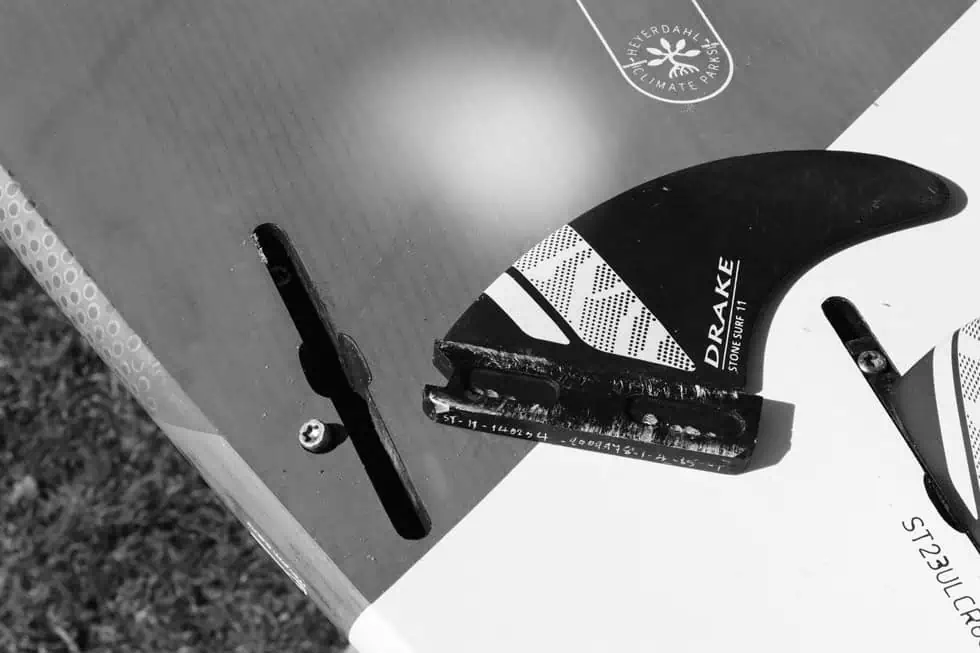
  6. Check the fins: Make sure the fins are secure and not damaged. Loose or broken fins can affect your surfing.

  7. Wax regularly: Keep your board waxed for better grip. Remove old wax before applying a new layer.

By following these steps, you can ensure your surfboard stays in great condition for many surf sessions to come.

QUICK QUESTIONS ABOUT BEGINNER SURFBOARDS

No results!
  • HOW LONG SHOULD A BEGINNER SURFBOARD BE?

    Aim for something around 8 to 9 feet, or roughly three feet taller than you. That size gives you tons of float, paddling speed, and the stability you need when you’re trying to stand up for the first time. It’s a no-brainer if you want to learn faster.

  • WHEN IS IT TIME TO MOVE ON FROM MY BEGINNER SURFBOARD?

    When catching waves on your soft board gets boring and you’re itching for speed or sharper turns— that’s the sign. You'll know: the board won’t hold you back anymore; you’ll be holding back your board.

  • WHAT KIND OF SURFBOARD FOR BEGINNERS IS EASIEST TO LEARN ON?

    Soft-top foam boards—or “foamies”—are hands down the safest, simplest boards to start on. They’re forgiving, buoyant, and much less painful when you inevitably smack your face. Ideal for catching your first waves.

  • HOW MUCH SHOULD I EXPECT TO SPEND ON A GOOD SURFBOARD FOR BEGINNERS?

    Expect to pay $200–$400 for a decent soft-top. Want something lighter or built to last? Epoxy or high-volume funboards cost more—$500–$800—but that’s only worth it once you know you want to stick with surfing.

  • DO I NEED FINS AND A LEASH ON A BEGINNER SURFBOARD?

    Absolutely. Fins give you control and stop you from spinning like a cork. A leash keeps the board attached, so you’re not swimming after it every wipeout. Both are non-negotiable if you actually want to learn without losing half your session.

  • I’M WATCHING MY BUDGET—SHOULD I BUY A NEW OR USED BEGINNER SURFBOARD?

    uying used can save you a chunk, but don’t get a board full of unseen dings. If you go new, stick with a soft-top from a reputable surf shop—we sell ones that cost about as much as a night of dinner and drinks but will help you catch waves all summer. Just don’t let commission-driven advice cloud your judgement.

  • HOW DO FOAM SURFBOARDS COMPARE TO FIBERGLASS OR EPOXY ONES?

    Foamies = gentle, bouncy learning platforms. Stores are forgiving. Fiberglass or epoxy boards are stiffer, faster, and feel more “alive”—but unforgiving if you bail too hard or catch your rail on your knee.

  • CAN KIDS USE THE SAME SURFBOARD FOR BEGINNERS AS ADULTS?

    Not really. Kids need smaller soft-tops—around 6 to 7 feet—so they can actually carry the thing down the beach. They still need float, but not a boat-sized log. Foam boards are perfect for safety and confidence.

  • HOW DO I MAKE MY BEGINNER BOARD LAST LONGER?

    Wash with fresh water after every session, stash it in the shade when you’re done, wax regularly, and check for dings before they become disasters. A little love goes a long way—especially if you don’t want to spend your next paycheck on a replacement.

ABOUT SWELL SURF CAMP

Located on the scenic north coast of the Dominican Republic is our purpose-built surf resort with a learn to surf package beginner surf camp package

We cater for surfers of all levels, from beginners to expert surfers who are looking for an active surf holiday

We at Swell offers full surf packages holidays

Interested in learning how to surf? Have a look at the surf vacation packages we offer for our guests at Swell Surf camp

MORE SURFBOARD INFO

Different surfboard shapes explained

Our luxury surf coaching holidays have taught 1000’s of people the sport of surfing in a safe, fun and quick way.

Share on Facebook

IMPROVE YOUR SURFING AT HOME

Surf Fitness

HOW TO PRACTICE SURFING WHEN THERE ARE NO WAVES

Just back from an amazing surf holiday where you caught wave after perfect wave and made real progress with your surf coaching? Now you’re stuck at home—miles from the ocean—thinking: how on earth do I keep my surfing skills sharp with no waves in sight?

Don’t sweat it! While nothing truly replaces the feeling of gliding across actual waves, you absolutely can maintain your surf fitness and even improve between trips with some clever land-based training. Here’s my take on staying surf-ready when the ocean’s too far away.

WATCH AND ANALYZE SURF VIDEOS

One of my favorite ways to build on what you learned during surf coaching is to really dive into watching surf videos—not just zoning out to cool footage, but actively studying what’s happening. Pay close attention to how surfers position their bodies, where they place their weight on the board, and especially their timing.

Try breaking down the techniques of pro surfers or review footage from your last surf retreat. At Swell Surf Camp, we always incorporate video analysis because it’s incredible how quickly people improve when they can actually see what they’re doing right or wrong.

Don’t have videos of yourself? No worries! Get your surf fix from films like Lost Track Atlantic, Castles in the Sky, or The Physics of Noseriding to stay connected to that surf energy.

FOLLOW A SURF-SPECIFIC HOME WORKOUT

A good surf holiday leaves you feeling strong and energized—but maintaining that feeling takes consistent effort. Surfing demands this unique combination of balance, core strength, endurance, and flexibility that you can absolutely work on at home.

Try mixing these exercises into your routine:

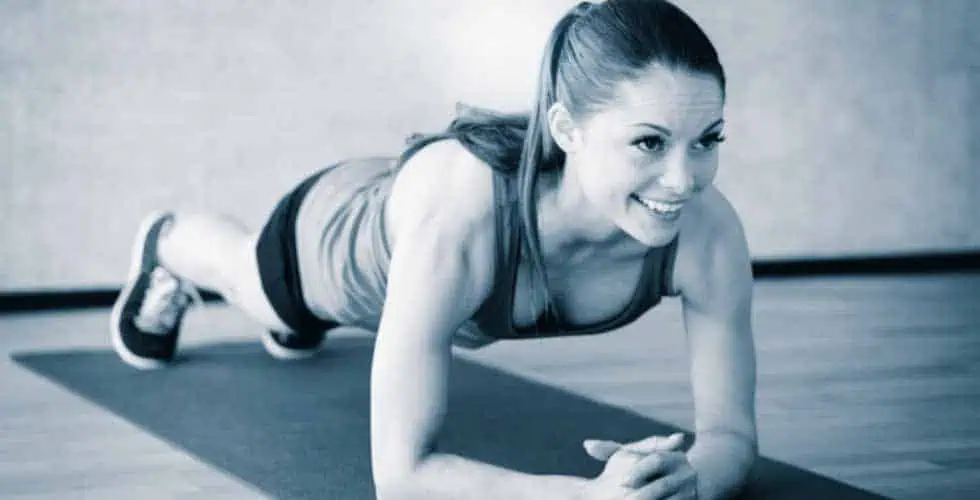
  • Paddle power: Mix up push-ups, planks, and yoga poses like Downward Dog to build those crucial shoulder and core muscles.
  • Pop-up drills: Incorporate squats, lunges, and Pilates “swimming” exercises to boost your leg strength and mobility.
  • Balance work: Practice wall sits and single-leg exercises to develop that dynamic stability you need when you’re riding a wave.

Honestly, with just a yoga mat and a couple of resistance bands, you can keep that surf fitness going strong until your next surf retreat.

IMPROVE BALANCE WITH A BALANCE BOARD

A balance board (something like an Indo Board) is practically a must-have for landlocked surfers—and for good reason. It recreates that feeling of having a surfboard moving beneath your feet, helping you build better coordination and strengthen those crucial lower-body muscles.

YouTube video

I like to use a balance board while watching surf videos, or sometimes challenge myself by holding a medicine ball as I balance. This kind of practice keeps those surf-specific muscles engaged and ready for your next session.

MASTER SURF FORECASTING

If you’re investing in surf coaching or planning your next surf holiday, learning to read a surf forecast properly is a total game-changer.

Sure, wave cams and live reports are handy, but developing your own forecasting skills—really understanding swell direction, period, wind patterns, and tides—gives you a serious edge. Not only will you know when to surf, but you’ll also understand why conditions are working (or not).

Check out some detailed guides or take an online surf forecasting course. Your surf buddies will be impressed by your knowledge next time you’re all hitting the beach together.

WORK ON YOUR POP-UP TECHNIQUE

The pop-up is truly the foundation of everything in surfing, and it’s something you can nail down perfectly on dry land.

Just lay down a yoga mat or towel, get into your paddling position, and practice popping up smoothly into a solid surf stance. Focus on making your movements fluid and controlled, aiming for about 10–20 reps each session to build that crucial muscle memory.

This simple drill is a staple in most surf coaching programs because it trains your body to move efficiently when you’re back in the water—it’s simple but so effective.

SWIM LAPS FOR PADDLE STRENGTH

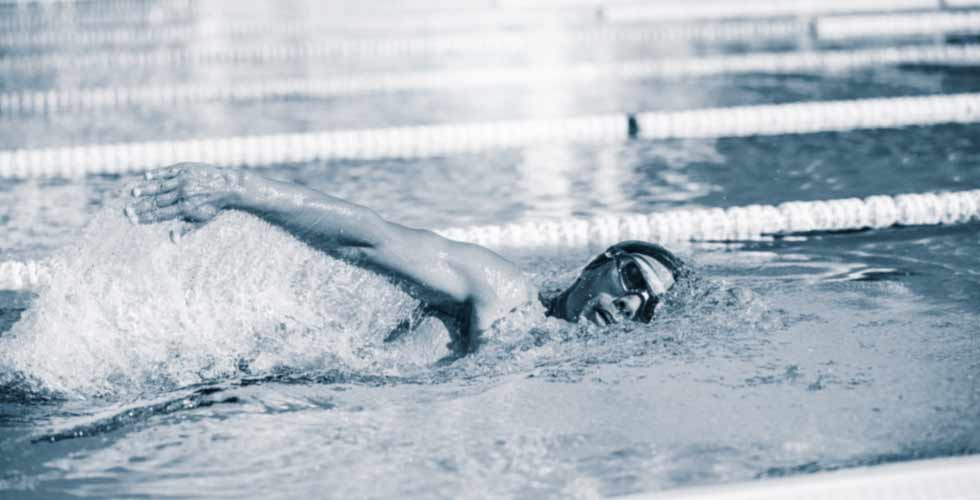
Swimming is hands-down one of the best cross-training workouts for surfers. It boosts your cardio fitness, strengthens all those paddling muscles, and helps improve your breath control—all crucial skills in the lineup.

Surf Swim Training

If you’re gearing up for a surf retreat or surf holiday, regular swimming sessions will help you stay fit and confident in the water. Try adding some duck dives or turtle rolls during your laps to make your training even more surf-specific.

TRY SURF SKATING

Surf skateboards are designed specifically to mimic those fluid turns and carves you do on a wave, making them an awesome tool for practicing on land.

Use surf skating to fine-tune your balance, footwork, and those wave-reading instincts. Just keep in mind: while surf skating complements your surfing beautifully, it shouldn’t replace your other cross-training. Mix it into your routine for the best all-around approach.

YouTube video

FINAL THOUGHTS: STAY SURF-READY BETWEEN TRIPS

Whether you’re counting down to your next surf retreat, dreaming of your perfect surf holiday, or just trying to build on what you learned in your surf coaching sessions, there’s absolutely no reason to let those flat spells or time away from the ocean set you back.

By combining thoughtful video analysis, targeted home workouts, balance training, and regular swimming, you can maintain—and even improve—your surf fitness and technique year-round.

Stay consistent, keep that stoke alive—and when you finally make it back to the ocean, you’ll be ready to paddle straight into the lineup with confidence.

ABOUT SWELL

Looking for that perfect mix of surfing, adventure, and relaxation? Swell Surf Camp offers one of the most unique and memorable surf holidays you’ll ever experience. Whether you’re just getting started or you’ve been surfing for years, Swell provides a tailored surf retreat that goes way beyond what you’d expect from an average surf camp.

EXPERT SURF COACHING FOR ALL LEVELS

At the heart of every Swell Surf Camp experience is our exceptional surf coaching program. Our instructors don’t just push you into waves—they focus on teaching you how to read the ocean, position yourself correctly, and time your takeoffs perfectly. Through personalized feedback and optional video analysis, you’ll progress faster than you thought possible and gain real confidence in your abilities. Whether you’re learning to stand up for the first time or working on more advanced maneuvers, our team is dedicated to helping you unlock your full potential.

A STYLISH AND COMFORTABLE SURF RETREAT

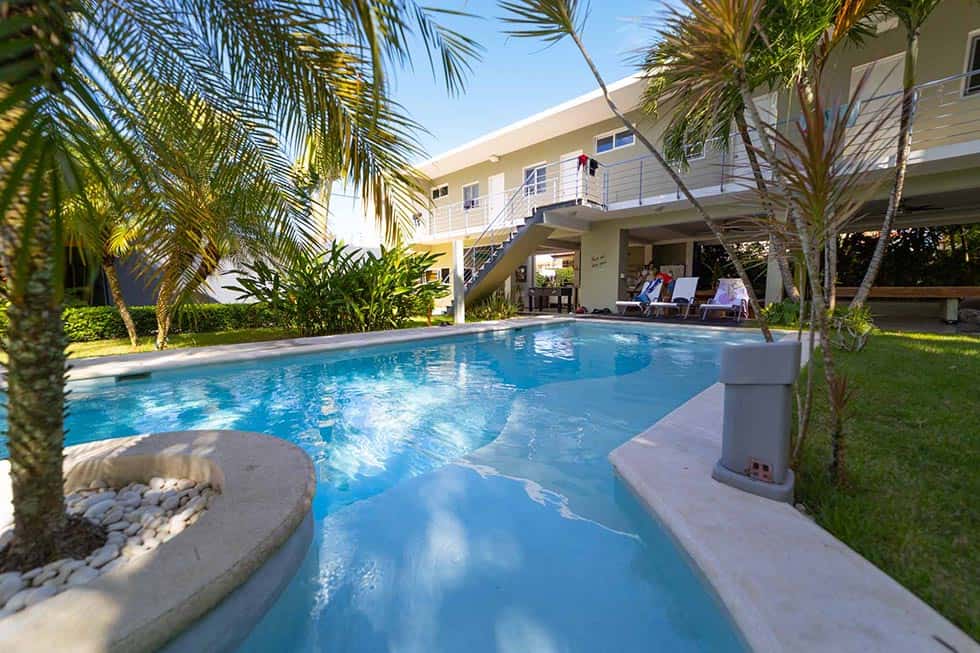
Swell Surf Camp’s accommodations strike that perfect balance between style, comfort, and social connection. Think spacious communal areas, a refreshing pool, lush tropical gardens, and beautifully designed private rooms—all just minutes from consistent surf breaks. Every element of our camp is thoughtfully crafted to create a premium surf retreat experience, where you can properly recharge between sessions and connect with like-minded travelers from around the world.

swell wingfoil camp

BEYOND THE SURF

A surf holiday at Swell isn’t just about time in the water. You can join revitalizing yoga sessions that improve your balance and flexibility, participate in cultural excursions to explore the local area, or simply relax by the pool with a fresh smoothie in hand. You’ll also enjoy healthy, delicious meals that nourish your body and fuel your surf sessions. It’s a truly holistic experience designed to help you feel your absolute best both on and off the board.

BOOK YOUR SURF HOLIDAY TODAY

Ready to take your surfing to the next level, connect with incredible people, and experience a surf holiday unlike any other? Swell Surf Camp is waiting for you. Whether you’re traveling solo, as a couple, or with friends, this is truly the ultimate destination for anyone seeking a transformative surf retreat. Book now and get ready to ride amazing waves, make unforgettable memories, and experience the Swell life firsthand!

Share on Facebook

10 ESSENTIAL SURF FITNESS EXERCISES

surfing unbroken waves

One of the most common comments after the first day of our surf course is that new clients tell the instructors is:”wow surfing is hard work!

Surfing isn’t just about riding waves; it’s about being fit enough to paddle out, catch the wave and then ride the wave.
For beginners, having the right fitness routine can make all the difference. By focusing on exercises that build strength, balance, and endurance, you’ll be better prepared to handle the challenges of the ocean. Here are ten essential surf fitness exercises that every beginner should know.

Key Takeaways

  • Building core strength is crucial for maintaining balance on the board.
  • Improving flexibility and mobility helps prevent injuries.
  • Cardiovascular conditioning boosts your endurance in the water.
  • Upper body strength is essential for paddling and popping up on the board.
  • Lower body power exercises improve your ability to generate speed and control.

Longboard

The Importance of Surf Fitness

Benefits of Surf Fitness

Surfing is a demanding activity that requires a mix of strength, endurance, balance, and flexibility. Getting fit for surfing can help you catch more waves and stay out in the water longer. Here are some benefits of surf fitness:

  • Improved overall health and well-being
  • Enhanced balance and coordination
  • Increased stamina and endurance
  • Better muscle strength and flexibility

Impact on Surfing Performance

Your fitness level directly impacts your surfing performance. When you are fit, you can paddle faster, pop up quicker, and ride waves with more control. Surf exercises help you build the necessary strength and endurance to handle different surfing conditions. This means more fun and less fatigue during your surf holiday.

Training Principles for Beginners

For beginners, it’s essential to start with basic exercises that build a strong foundation. Focus on core strength, balance, and flexibility. Here are some training principles to keep in mind:

  • Start slow and gradually increase the intensity
  • Incorporate a variety of exercises to target different muscle groups
  • Consistency is key; aim for regular workouts
  • Listen to your body and rest when needed

Improving your surfing starts with getting fit on land. By following these principles, you’ll be better prepared to tackle the waves and enjoy your time in the ocean.

CORE STRENGTH EXERCISES

Plank Variations

Plank variations are essential for building a strong core. They target multiple muscle groups including the abs, back, and shoulders. Start with a basic plank and gradually try more challenging versions like side planks and plank jacks.

Surf Fitness

Russian Twists

Russian twists are great for improving rotational strength. Sit on the floor with your knees bent, lean back slightly, and twist your torso from side to side while holding a weight or a medicine ball. This exercise helps in enhancing your balance and stability.

Leg Raises

Leg raises focus on the lower abs. Lie flat on your back with your legs straight. Lift your legs towards the ceiling while keeping them straight, then slowly lower them back down without touching the floor. This move is excellent for building lower abdominal strength.

Consistent practice of these core exercises will significantly improve your surfing performance by enhancing your balance and stability on the board.


BALANCE AND STABILITY TRAINING

Bosu Ball Exercises

Bosu balls are excellent for improving balance and stability. They challenge your core and leg muscles, helping you stay steady on your surfboard. Start with basic exercises like standing on the Bosu ball and progress to more complex movements like squats and lunges.

Surf Core

Single-Leg Exercises

Single-leg exercises are crucial for surfers. They help in building strength and stability in each leg individually. Try exercises like single-leg deadlifts and single-leg squats. These moves will enhance your balance and coordination, making it easier to manoeuvre on the waves.

Balance Board Workouts

Balance boards are a fun way to train your balance and leg endurance. Begin by standing on the board and finding your centre. Once comfortable, try bending your knees and shifting your weight from side to side. For an added challenge, attempt jumps and 180-degree turns. Consistency in these exercises will significantly improve your surfing skills.

Balance and stability are key components in surfing. Regular practice of these exercises will not only enhance your performance but also reduce the risk of injuries.

FLEXIBILITY AND MOBILITY ROUTINES

Dynamic Stretching

Dynamic stretching involves moving parts of your body and gradually increasing reach, speed, or both. This type of stretching is essential before surfing as it warms up your muscles and increases your range of motion. Performing dynamic stretches can help prevent injuries and improve your overall performance on the waves. Examples include leg swings, arm circles, and torso twists.

Foam Rolling Techniques

Foam rolling is a form of self-myofascial release that helps to relieve muscle tightness and improve blood flow. By using a foam roller, you can target specific muscle groups that are commonly used in surfing, such as the calves, quads, and back. Regular foam rolling can enhance your flexibility and reduce muscle soreness, making it easier to paddle and pop up on your board.

Yoga for Surfers

Yoga is an excellent way to improve both flexibility and mental focus, which are crucial for surfing. Poses like Downward Dog, Warrior II, and Pigeon can help stretch and strengthen the muscles you use while surfing. Additionally, yoga promotes better balance and stability, which are essential for maintaining control on your board. Incorporating yoga into your routine can lead to a more harmonious connection between your mind and body, enhancing your surfing experience.

Yoga For Surfers

Flexibility and mobility are key components of surf fitness. They not only help you perform better but also keep you safe from injuries. Make these routines a regular part of your training to stay agile and ready for the waves.

CARDIOVASCULAR CONDITIONING

Interval Training

Interval training is a powerful way to boost your cardiovascular fitness. It combines short bursts of intense activity with periods of rest or low-intensity exercise. This method helps improve both aerobic and anaerobic systems, which are crucial for surfing. For example, you can alternate between sprinting and jogging. This not only builds endurance but also prepares your body for the quick, explosive movements needed in surfing.

Swimming Drills

Swimming is an excellent full-body workout that enhances your cardiovascular health. To make the most of it, break your swim into intervals. Alternate between fast, intense laps and slower, more relaxed ones. This mimics the varying intensities you’ll experience while surfing. If you’re not a strong swimmer, consider taking lessons to build your confidence and skills in the water.

Surf Swim Training

Cycling for Endurance

Cycling is another great way to build cardiovascular endurance. It strengthens your legs and improves lung capacity, both of which are essential for long surf sessions. You can incorporate interval training into your cycling routine as well. Alternate between high-intensity sprints and steady, moderate-paced cycling to maximize your endurance and stamina.

Cardiovascular conditioning is not just about building endurance; it’s about preparing your body for the dynamic and unpredictable nature of surfing. By incorporating interval training, swimming drills, and cycling into your routine, you’ll be well-equipped to handle the physical demands of the sport.

UPPER BODY STRENGTH WORKOUTS

Push-Up Variations

Push-ups are a fundamental exercise for building upper body strength. They target the chest, shoulders, and triceps. Start with standard push-ups and gradually incorporate variations like diamond push-ups, wide-arm push-ups, and decline push-ups to challenge different muscle groups.

Pull-Up Progressions

Pull-ups are excellent for developing back and arm strength. Begin with assisted pull-ups using resistance bands or a pull-up machine. As you gain strength, progress to unassisted pull-ups and eventually to more advanced variations like chin-ups and wide-grip pull-ups.

Shoulder Stability Exercises

Strong shoulders are crucial for paddling and maintaining balance on the board. Incorporate exercises like shoulder presses, lateral raises, and front raises into your routine. Use light weights and focus on maintaining proper form to avoid injury.

Shoulder Surf Training

Consistent upper body workouts will not only enhance your surfing performance but also reduce the risk of injuries. Prioritize these exercises to build a solid foundation for your surfing journey.

LOWER BODY POWER EXERCISES

Squat Variations

Squats are essential for building leg strength and stability. Start with bodyweight squats: stand with feet hip-width apart, bend at the knees and hips to lower yourself into a sitting position, then push back up through your heels. Repeat for 3 sets of 20 reps. For more challenges, try squat jumps. From the squat position, jump as high as you can and land with bent knees.

Lunges for Leg Strength

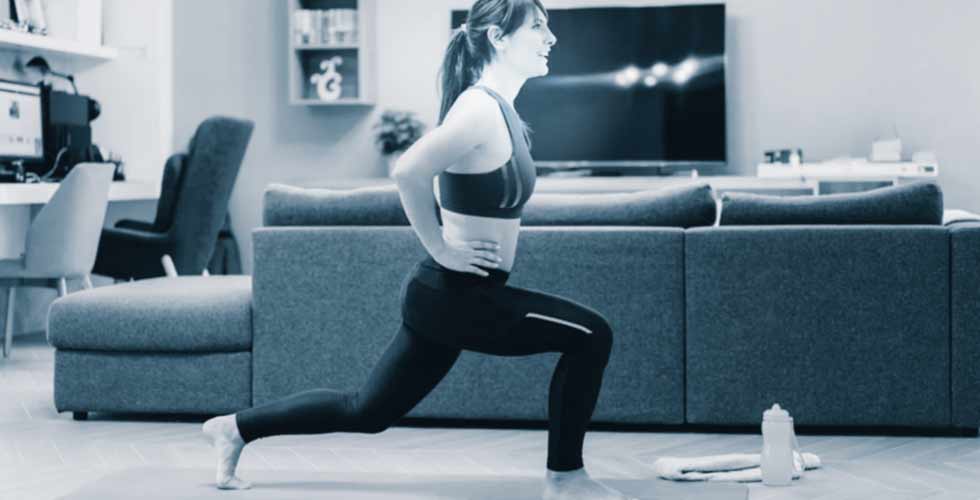
Lunges are excellent for targeting the quadriceps, hamstrings, and glutes. Take a large step forward and bend both knees so your back knee is just off the floor. Drive through your front leg to return to the starting position. Perform 3 sets of 20 reps on each leg. This exercise helps improve balance and coordination, which are crucial for surfing.

Surf Fitness

Plyometric Drills

Plyometric exercises, like jump squats and box jumps, are great for developing explosive power. These drills involve quick, powerful movements that mimic the dynamic actions required in surfing. Incorporate plyometric drills into your routine to enhance your lower body strength and agility.

Consistent lower body training will significantly improve your surfing performance by providing the strength and stability needed to ride waves effectively.

Boost your lower body strength with our top exercises designed to enhance power and performance. From squats to lunges, these workouts are perfect for athletes and fitness enthusiasts alike. Ready to take your training to the next level? Visit our website for more tips and detailed guides!

CONCLUSION

Surfing is more than just riding waves; it requires a blend of strength, balance, flexibility, and endurance. By incorporating these essential exercises into your routine, you can build the fitness needed to improve your surfing skills and enjoy the sport safely. Remember, consistency is key.
Start with the basics, and gradually increase the intensity as your fitness improves.

Whether you are practising core strength exercises, balance training, or cardiovascular conditioning, each workout will bring you one step closer to becoming a confident and capable surfer. So, stay committed, keep practising, and most importantly, have fun catching those waves!

surfer holiday

FREQUENTLY ASKED QUESTIONS

Do I need to be a strong swimmer to start surfing?

It’s important to be comfortable in the water. If you’re not a strong swimmer, taking swim lessons in a pool can help build your confidence before you head to the ocean.

What should I do if I’m scared of big waves?

Start with smaller waves to build your confidence. Practice controlling your breathing to stay calm, and gradually work your way up to bigger waves.

How can I avoid injuries when learning to surf?

Surf on sandy beaches instead of rocky or reef areas. Always warm up before surfing and practice falling safely.

What should I do if I encounter dangerous marine life?

Always be aware of your surroundings. Shuffle your feet when entering the water to avoid stingrays and follow your instructor’s advice on how to stay safe.

How can I improve my balance for surfing?

Practice balance exercises like using a Bosu ball or balance board. Yoga can also help improve your balance and flexibility.

Is it normal to be afraid of deep water when surfing?

Yes, it’s normal. Make sure to let your instructor know about your fear so they can keep you in shallow water until you’re more comfortable.

What type of waves should beginners look for?

Beginners should look for waves that are no bigger than three feet. These smaller waves are easier to manage and safer for learning.

How can I get over my fear of rip currents?

Learn to identify rip currents by looking for choppy, brown water. If you get caught in one, stay calm and swim parallel to the shore until you’re out of the current.

Share on Facebook

SWELL MARCH 2024

surfer holiday

SWELL NEWS

surf holiday

WHAT’S BEEN GOING ON AT SWELL SURF CAMP.

We haven’t posted many updates on our website, since we have been right in the middle of a very busy high season here on the North coast of the Dominican Republic.

We have pretty much had a full house at Swell From December until now (March 2024). The majority of the clients came from North America And West Europe.

THE SURF CONDITIONS.

The conditions for learn to surf and for intermediate surfers to improve their surfing have been great with lots of days of waves in the chest to shoulder high range. The surf Instructor team is going steady with our 5 qualified surf instructors, meaning that most swell clients were in a surf lesson with a 4 to 1 student ratio or less.

surfing yoga retreat


YOGA CLASSES AT SWELL
surfing yoga retreat

Molly’s Yoga classes have always been popular, but this season were are seeing that 70 to 80% of our clients join in with the Swell Yoga classes. The yoga classes are accessible to people with all levels of Yoga. First-timers have loved the classes.

surfing lessons

THINKING ABOUT JOINING US?

Clare still has some dates open for April and May if you are in need of sun, surf and good vibes, send here a message today and you could be out in the Caribbean soon.


paradise

FOOD AT SWELL


social

Our clients rave about the food that Haudy and her staff prepare. Read the latest reviews here about what our clients had to say


LEARN TO WING FOIL / WING SURF

wingsurfing

Wing foiling has gotten very popular, even in the “non” wind season, lots fo clients have signed up for the wingfoiling lessons and have easily managed to get up and riding after their 8 hour lesson course. The coming 5 months in windy season should be a great time to learn this new and exciting sport of wing foiling.

Want to go for big jumps? Learn to kite surf

We hope to see you soon in the action sport capital of the Caribbean.

Jeroen & Clare and the rest of the team at Swell


Share on Facebook

SURF & YOGA HOLIDAYS IN THE CARIBEAN

surf & yoga holiday

SURF & YOGA IN PARADISE

surfing yoga retreat

SURF & YOGA: WHY IT’S SUCH A PERFECT MATCH!

As surfers we have long been big fans of Yoga, it’s the perfect supplement to a healthy lifestyle and ensures you can stay fit and flexible to continue your surfing as you get older. Below

SURF & YOGA HOLIDAYS

Are you craving an escape from the hustle and bustle of daily life? Do you dream of basking in the warm sun, riding the waves, and finding inner peace? If so, a surf and yoga holiday might be just what you need. And there’s no better place to experience this perfect blend of adventure and relaxation than with Swell Surf Camp. In this article, we’ll explore the compelling reasons why you should embark on a surf and yoga holiday with Swell Surf Camp for an unforgettable experience of a lifetime.
surfing yoga retreat

HARMONIZING THE ELEMENTS: SURFING AND YOGA

Surfing and yoga, though seemingly different activities, share a beautiful harmony. Surfing allows you to connect with the powerful ocean, riding waves that bring a sense of exhilaration and freedom. On the other hand, yoga allows you to connect with your inner self, promoting physical, mental, and spiritual well-being. The combination of these two practices creates a unique and transformative experience.

Swell Surf Camp has mastered the art of blending these two disciplines seamlessly. Imagine starting your day with a sunrise yoga session, where you’ll stretch and strengthen your body, preparing it for the exciting adventures that lie ahead. Afterward, you’ll hit the waves with expert instructors who will guide you through the surfing journey, helping you catch that perfect wave and feel the thrill of gliding on water. This balanced approach ensures you leave the camp feeling recharged, physically invigorated, and mentally centered.\
surfing yoga retreat

EXPERT GUIDANCE AND COACHING

Whether you’re a complete beginner or an experienced surfer or yogi, Swell Surf Camp caters to all skill levels. The camp’s team of professional instructors is not only highly experienced in their respective fields but also passionate about sharing their knowledge with others. Their expertise will guide you to progress in both surfing and yoga, regardless of your starting point.

If you’re new to surfing, the instructors will provide you with a solid foundation, teaching you essential techniques, safety measures, and wave dynamics. For seasoned surfers, they’ll help you fine-tune your skills and even introduce you to advanced maneuvers. Similarly, the yoga instructors will lead you through various styles of yoga, catering to different preferences and abilities, ensuring that you benefit from the practice, both physically and mentally.
surfing lessons

THE HEALING POWER OF NATURE

One of the most remarkable aspects of a surf and yoga holiday with Swell Surf Camp is the stunning natural locations of their camps. Swell Surf Camp has thoughtfully selected pristine beaches and scenic spots that harmonize with the environment, allowing you to immerse yourself in nature’s beauty.

Picture yourself practicing yoga on the soft sand as the sun rises over the horizon, filling the sky with breathtaking colors. The soothing sound of waves crashing nearby and the gentle breeze brushing against your skin create an environment that fosters relaxation and self-reflection. The natural surroundings act as a catalyst for personal growth and healing, making your holiday truly transformative.

paradise

EMBRACING THE SURFING LIFESTYLE

Surfing is not just a sport; it’s a way of life. Swell Surf Camp embraces the surfing lifestyle, fostering a sense of community, camaraderie, and respect for the ocean. As you spend time with fellow surf enthusiasts, you’ll find yourself connecting with like-minded individuals from all over the world.

Whether you’re sharing stories around a beach bonfire or cheering each other on as you ride the waves, you’ll forge bonds that can last a lifetime. This sense of belonging and the shared passion for surfing and yoga create a positive and supportive atmosphere throughout the camp.

UNPLUGGING AND RECONNECTING

In our increasingly digital world, it’s essential to take time for ourselves and unplug from screens and constant distractions. A surf and yoga holiday with Swell Surf Camp provides the perfect opportunity to disconnect from the virtual world and reconnect with yourself and the present moment.

During your time at Swell Surf Camp, you’ll have the chance to slow down, savoring each moment without the pressure of deadlines and obligations. You’ll be encouraged to be fully present, embracing the simple joys of life: the sound of waves, the taste of fresh meals, and the joy of genuine human connections. Yes we have internet at Swell, but we encourage everyone to minimise the “online life” and instead enjoy social meals with new friends.
social

A UNIQUE SURF & YOGA EXPERIENCE

Swell Surf Camp understands that each individual is unique, with different preferences and needs. That’s why our surf and yoga holiday packages are customizable to you.

If you have dietary preferences or restrictions, our culinary team will prepare delicious meals that cater to your needs.

**Conclusion**

A surf and yoga holiday with Swell Surf Camp offers a unique opportunity to harmonize the elements of adventure and serenity. Through expert guidance, a vibrant community, and a focus on personalization, We try to create an unforgettable experience tailored to your needs. Embrace the surf & yoga lifestyle, unplug from the digital world, and embark on a journey of self-discovery and growth. Book your surf and yoga holiday with Swell Surf Camp today and change your lifestyle.

ACCOMMODATION: STAY IN COMFORT AND STYLE

At Swell we have been providing active surf and kitesurfing holidays in the Caribbean since 2009, in 2021 we added learn to wingfoil packages to our services.

social

Interested in changing your life to see the health benefits of learning to surf?


Send us a message today and we’ll get you up and riding!

Share on Facebook

CARRIBEAN WINGFOIL PARADISE

CABARETE A WINGFOILING PARADISE

surfing green waves

Cabarete: A Windsport Paradise

Located on the north coast of the Dominican Republic, Cabarete has earned a well-deserved reputation as a windsport paradise. This small town, once a quiet fishing village, has transformed into a mecca for windsurfing, kitesurfing, and other exhilarating watersports. From its perfect weather conditions to its stunning natural beauty and vibrant beach culture, Cabarete offers an irresistible combination of factors that make it a haven for windsport enthusiasts from around the world.

CABARETE WINGFOILING PARADISE PLAYGROUND

YouTube video

HISTORY OF CABARETE AS A WIND TOWN

The first ones to discover the appeal of Cabarete as a wind town were the windsurfers in the early 80’s. They enjoyed an empty Cabarete bay with white sandy beaches a large open bay for slalom windsurfing and the waves on the reef for wave windsurfing. It was windsurfers that put Cabarete on the map. In the early 2000, with the rise of kitesurfing become the new rage in watersports that cabarete got a new influx of watersport lovers. The steady side onshore wind of 15 to 25 knots (ideal range) appealed to kite surfers of all levels. Today Cabarete is still widely regarded as one of the best places in the world for kitesurfing. 20 years later, Cabarete is once again in the spotlight for being one of the best wingfoiling / Wingsurfing destinations in the world. Wide open spaces, flat water, gentle rolling deep water swell and waves create the ultimate playground for beginners and experts wingfoilers.

One of the primary reasons Cabarete is considered a windsport paradise is its exceptional wind conditions. Situated between the Atlantic Ocean and the Cordillera Septentrional mountain range, the town benefits from the constant trade winds that blow consistently throughout the year. The easterly trade winds, known as the Alisios, provide a steady and reliable breeze, creating ideal conditions for windsurfing and kitesurfing. These consistent winds, typically ranging from 15 to 30 knots, allow riders of all levels to enjoy their favorite sports without interruptions or frustration. Whether you are a seasoned pro or a beginner looking to learn, Cabarete’s winds will not disappoint.

WIND CONDITIONS IN CABARETE, DOMINICAN REPUBLIC

Trade Winds: Cabarete experiences the influence of the easterly trade winds, known as the Alisios. These trade winds blow consistently from the east and are responsible for the reliable wind conditions in the area. The prevailing wind direction ensures that riders can enjoy their sports with a steady and predictable breeze.

Wind Speed / wind strength : The wind speeds in Cabarete are generally suitable for windsports. The average wind speed ranges from 15 to 30 knots, providing enough power for riders to harness and enjoy their chosen activities. These wind speeds are suitable for riders of all levels, from beginners to professionals.

YouTube video

Wind Consistency: One of the key advantages of Cabarete is the consistency of its wind conditions. Throughout the year, the town experiences a high percentage of windy days, ensuring that windsport enthusiasts have ample opportunities to get out on the water. This consistency allows for regular practice, skill development, and a reliable wind-dependent lifestyle.

Seasonal Variation: While Cabarete enjoys consistent winds year-round, there are some seasonal variations in wind patterns. The summer months (June to August) tend to have stronger winds, making it an excellent time for advanced riders seeking more challenging conditions. The winter months (December to February) offer slightly milder winds, which are more suitable for beginners and freestyle enthusiasts.

Overall, Cabarete’s wind statistics demonstrate why it is considered a windsport paradise. The consistent trade winds, favorable wind speeds, and wide wind window make it an ideal destination for windsurfing, kitesurfing, and other related activities. Whether you are a seasoned professional or a beginner looking to learn, Cabarete’s wind conditions offer an exhilarating and unforgettable experience.

OTHER SPORTS AND ACTIVITIES

Cabarete boasts a diverse range of water conditions, further enhancing its appeal as a windsport paradise. The town is blessed with a unique geography that offers something for everyone. The expansive beach, stretching for several kilometers, provides ample space for kiteboarders and windsurfers to glide across the water, showcasing their skills and tricks. Additionally, the Atlantic Ocean’s waves, combined with the reef breaks and offshore swells, create excellent opportunities for wave riding. Cabarete Bay, protected by a natural coral reef, offers calmer waters, making it an ideal spot for beginners and freestyle enthusiasts. This variety of conditions ensures that windsport enthusiasts can always find their preferred style of riding, making Cabarete an inclusive and versatile destination.
Watersport adrenaline away from the ocean? That’s possible too. Go on a Canyoning trip to the 27 waterfalls, 30 minutes out of Cabarete. You’ll be swimming through turquoise canyons and jumping of waterfalls

Beyond its exceptional wind and water conditions, Cabarete’s natural beauty is awe-inspiring. The town is blessed with stunning beaches, crystal-clear turquoise waters, and breathtaking sunsets. The golden sand and warm, inviting waters provide the perfect backdrop for windsport activities. As riders harness the power of the wind and glide across the water, they are treated to panoramic views of the Caribbean Sea and the picturesque coastline. The combination of the natural beauty and the thrill of windsports creates an unforgettable experience that keeps visitors coming back for more.

LEARN TO WINGSURF IN CABARETE

At Swell we have been offering wing foiling lessons to our clients since 2021 and have already had 100’s of clients into Wingfoiling enthusiasts. Wingfoiling is easy and quick to learn and when you are in the hands of a good instructor it is also a safe sport to learn. Many of our clients keep coming back to cabarete for more wingfoiling, since they find it hard to find a wingfoil destination anywhere in the world as good as our home town of Cabarete.

LEARN TO WINGFOIL

Cabarete’s vibrant beach culture is another factor that sets it apart as a windsport paradise. The town has a laid-back and welcoming atmosphere that embraces the windsport community. Along Cabarete Beach, there is a lively strip of beach bars, restaurants, and shops catering to the needs of windsport enthusiasts. The area buzzes with energy and excitement, with riders sharing their experiences, discussing gear, and celebrating their passion for the sport. The local community, including both residents and expatriates, is known for its warm hospitality and genuine love for windsports. This sense of community creates a supportive and inspiring environment that fosters growth and camaraderie among riders.

Furthermore, Cabarete is renowned for hosting world-class windsport events, attracting top athletes from around the globe. The town has been the venue for numerous prestigious competitions, including the Cabarete Kiteboarding World Cup and the Master of the Ocean contest, which combines kitesurfing, windsurfing, surfing, and stand-up paddleboarding. These events showcase the town’s commitment to windsports and bring together the best talent in the industry. For spectators, it is an opportunity to witness thrilling displays of skill and athleticism, further cementing Cabarete’s status as a windsport paradise.

CABARETE A WINDFOILING PARADISE

YouTube video

WHY YOU WILL LOVE A WINGFOILING HOLIDAY TO CABARETE

  • Steady tradewinds
  • Warm water
  • Warm air
  • Friendly Caribbean vibes
  • Easy to get to
  • Budget friendly
  • Good for all levels
  • Variety of other sports
  • Stunning scenery


ABOUT SWELL

At Swell we have been providing active surf and kitesurfing holidays in the Caribbean since 2009, in 2021 we added learn to wingfoil packages to our services.

BOUTIQUE SURF HOLIDAYS IN THE CARIBBEAN

Interested in changing your life to see the health benefits of learning to surf?


Send us a message today and we’ll get you up and riding!

Share on Facebook

LEARN TO SURF AT 50

learning to surf at an older age

 LEARN TO SURF AT THE AGE OF 50?

If you are over 50 and considering learning to surf, you might be concerned that you’re too late to the game.

The fact that you will struggle to master the necessary skills, that you will appear foolish, and that all of the other younger, fitter surfers would laugh at your inexperience and slowness and ignore you, are all reasonable concerns.

This, however, is not the case.

surfing green waves

LEARNING TO SURF AT AN ‘OLDER’ AGE

Is it possible to learn to surf at the age of 50? Or Older?
Yes, as long as you have a reasonable level of physical fitness and flexibility. Learning to surf is primarily a matter of persistence, so if you’re ready to keep trying, you can learn to surf at that age.

Consider signing up for a beginner’s surf lesson, getting in shape, improving your swimming skills, selecting the perfect surfboard, and avoiding comparing yourself to others if you’re over 50 and want to learn to surf. You’ll be out there enjoying those waves before you know it!

Surfing has no age restrictions, and it’s never too late to start (even if you’re past 50!)

SURFING IS  A GREAT WAY TO:

  • Keep in shape,
  • Improve your mood,
  • Push yourself,
  • Feel younger for longer.
  • Meet new people

This comprehensive guide will help you learn to surf at 50. It has been compiled to answer your questions and provide support along the process. I’ll go over some of the advantages of this enjoyable outdoor activity and provide a step-by-step tutorial to get you started.

Tips on how to learn to surf aged  50 years or older.

learn to surf at 50

1. WORK ON YOUR FITNESS

Surfing is physically hard at any age, but especially so as you become older.

You’ll need to use your entire body to manage your weight as you paddle out, pop up on your board, and ride those waves. You’ll also be out for extended periods, so you’ll need plenty of stamina to be safe.

As a result, you should begin by increasing your physical activity and improving your fitness. The more physically fit you are, the easier it will be to learn to surf.

To be clear, you don’t need to be in marathon shape when you’re initially learning, but every little bit helps. Here are some suggestions:

Improve your cardiovascular fitness. Take long walks, begin running, ride your bike, or even run around with your children.

Put a premium on functional strength. If you want to keep control, you’ll need good core strength and good arm power for paddling.

Keep in mind to stretch. Stretching, flexibility, and balance should be part of your daily routine to avoid injury and improve your surfing skills.

Most of these surfing workouts may be done from the convenience of your own home. Simply go to YouTube, and you’ll find a plethora of online workouts that will help you get in shape quickly.
Read this article on surf fitness to get started.

2. TAKE SURF LESSON

While you can certainly teach yourself to surf, it’s so much easier and progress a lot quicker when you use the help of a local surf school or surf camp.

For beginners aged 50 and up, these can be invaluable because they give you confidence in your developing talents while also assisting you in improving your technique. You’ll also learn the proper surf ethics and gain a deeper understanding of the water.

SURFING AT AN OLDER AGE

3. IMPROVE YOUR SWIMMING ABILITIES.

If you don’t know how to swim, turn off your computer right now and enrol in some swimming classes. Seriously! If you’re not a great swimmer, there’s no way you’ll be able to stay safe in the ocean.

It is essential to keep in mind that the water is a massive force.

Because waves and currents can be powerful, and sea conditions can change in the blink of an eye, putting you in danger, knowing how to swim is essential. You must be capable enough to look after yourself and get to safety.

Because you’ll be starting in relatively shallow water, you don’t need to be a particularly great swimmer to begin. It is, nevertheless, necessary if you wish to proceed beyond the beginning stage.

Swimming in the ocean as much as possible will help you become a better swimmer. This will provide more authentic conditions than simply going to your local pool, and it will give you more confidence in ‘wild swimming.’

learn to surf at an older age

4. SELECT THE APPROPRIATE BOARD FOR LEARNING TO SURF

When you first begin, make sure you select the appropriate surfboard for a beginner like yourself.

Look for longer, thicker, and wider boards because they provide the most stability and make learning easier. Surfing beyond 40 or 50 is best learned on larger boards like 9 feet + beginner soft top surfboards. More info on beginner surfboards is detailed in this article. 

Avoid smaller boards as much as possible; they are more difficult to manage and can lower your confidence when you first begin. Your local surf shop can assist you in determining the suitable size and shape of a surfboard for your needs and abilities.

5. DON’T MAKE COMPARISONS TO OTHER PEOPLE

I know it is easy to say so rather than act, but you must avoid comparing your surfing abilities to others.

So, what if you’re in a group surf session and someone in your class can show there in 5 minutes, but you’re still having trouble an hour later? Maybe he or she has already learned to surf and is just brushing up on their skills. Perhaps they’re naturally sporty, whereas you’ve spent the last few years lazing on the couch.

Everyone is on their own individual path.

If you want to feel proud of yourself instead of comparing yourself to others, remember that you came up and took the risk of learning to surf at a time when many others would not.

Concentrate on your own game, be proud of your drive and dedication, and work hard to reap the rewards.

If you haven’t already, take benefit of the opportunity to learn to surf. You’ll notice a variety of mental and physical health benefits as soon as you begin.

What are the advantages of learning to surf at the age of 50+?

Learning to surf will change your life for the better, especially if you are over 50 years old. Check out below a few of the reasons behind this:

1. Surfing is a terrific way to stay in shape while having a good time and no more sweating it out for hours on machines in a dark, dingy gym! You’ll be outside, feeling the rush, inhaling in the fresh air while also getting in shape. Awesome.

2. Surfing is a fantastic cardio workout. All of that paddling, popping up, and riding will get your blood pumping, your heart pumping, and your body in terrific form.

surfing holiday

3. Surfing is a fantastic chance to meet new people. When you’re over 50, it’s more difficult to expand your social group. On the other hand, Surfing makes you part of a close-knit group that will keep an eye on you and is there for you when you need it.

4. Surfing aids in the prevention of aches and pains. You will become stronger overall, your joints will become less achy, and you will become more flexible if you engage in regular exercise such as surfing. If you have to sit at your desk all day or have been groaning as you stand up recently, this is the perfect remedy!

5. Surfing is excellent for improving your coordination. When you learn to surf, you’ll notice a significant improvement in your motor skills. If you participate in other sports, this will pay off handsomely and help you age more gracefully.

6. Surfing is a fantastic way to improve your mood. All of that natural daylight exposure, fresh air, exercise, and community spirit will get your endorphins flowing, raise your mood, and, according to some studies, may even help to alleviate your depression and stress.

Don’t let your age stop you from learning to surf. The average age of clients at Swell on a learn to surf holiday is 38. This means we get plenty of people in their 50’s and 60’s that join us.

Want an example:

Clare, one of the owners of Swell Surf Camp was never very interested in learning to surf, then at 52 decided it was time to get in the water and learn surfing. Now she goes for a surf with her surf friends whenever she has a chance. This is Clare 3 years after  her first surf sessions, aged 56 (see the smile on her face)

So what are you waiting for? Sign up for surf lessons at your local surf beach, or join us in the warm and mellow waves of the Dominican Republic for a life-changing surf & yoga retreat holiday

ABOUT SWELL

Teaching people the sport of surfing in a safe, quick and fun way is what we specialise in at Swell Surf Camp. We have taught 1000’s people the basics of surfing.

BOUTIQUE SURF HOLIDAYS IN THE CARIBEAN

Swell offers full surf packages holidays

Interested in changing your life to see the health benefits of learning to surf?


dr learn to surf holiday

Send us a message today and we’ll get you up and riding!

Share on Facebook

CATCHING UNBROKEN WAVES: POSITIONING IN SURFING

surfing unbroken waves

CATCHING UNBROKEN WAVES:

POSITIONING IN SURFING

Learn how to discover, catch, and stay on unbroken “green” waves by positioning yourself correctly in the line-up.

surfing green waves

CATCH MORE WAVES BY SITTING IN THE RIGHT SPOT!

This article will provide you with a basic understanding of better position yourself to catch green waves. It covers the fundamentals of paddling into an unbroken wave and “sticking” on these “green waves” without nose-diving, passing over the wave, or becoming caught on top of it.

Keep in mind that this is one of the most difficult skills to master as a beginner surfer. Nothing can ever take the place of practice. The longer time you spend in the water and the more waves you attempt to catch, the better.

The theory presented in this article will supplement your practice and, in most cases, will speed up your progress and save you a lot of time and frustration.

CATCHING UNBROKEN WAVES

Positioning & where to sit

How to locate and position yourself to catch a long green wave:
1. Recognize the various stages of a wave

stages of surfing waves

PHASE 1:  SWELL LINES
It is only a bump in the road. At this point, catching this wave is impossible. This lump is merely a forewarning that a wave is on its way.

PHASE 2: UNBROKEN WAVE
This is the place to look for a “green wave.” This waveform is great for paddling because it is unbroken and has the right strength and steepness. You can’t catch at phase 1  because it isn’t steep enough, and phase 3 is too vertical for you to take off. ( better surfers with shortboards can take off here)

PHASE 3: BREAKING WAVE
The peak of the wave has arrived. On the flat water, the lip is already beginning to crash down. The wave is too big and steep to catch at this point, especially for inexperienced surfers.

PHASE 4: WHITE WATER
The wave has broken and has turned into a whitewater wave.

Real-world example of the different phases of waves

where to surf


Prepare for a Green Wave by putting yourself in the right place.

Sit around 4 to 5 meters (15 feet) away from the majority of the waves.

Why?

The reason for this is that if you are waiting at a specific location where a large number of waves are breaking, the moment you turn around and paddle for a wave, you will either be catching a white water wave that has already broken, or you will be getting the wave crashing on top of you.

take off surfing


A good spot to take off, not too mellow / not too steep.

What is the status of the more experienced surfers? They probably know more about where to sit in line than you do.

This does not imply that you should sit next to them and wait for their waves. It’s merely a guide to help you figure out how far out you should paddle.
Where to sit is also variable on a couple of different aspects:

  • The paddle fitness of the surf (how fast can he/she paddle)
  • What kind of board the surfer is riding (longboards can catch ‘flatter’ waves more easily than shortboards.

Beginner surfers are frequently found sitting much further out from the wave than more experienced surfers. This doesn’t make much sense; either the waves aren’t breaking as far out that day, or they aren’t breaking at all.

In other words, if you see waves breaking a long distance away from where the expert surfers are sitting, this indicates that it is an “unusual” and larger set of waves (which you most likely do not want to catch as a beginner surfer!).

Look for lumps on the horizon. A “phase 1” wave that will transition into a “phase  2” wave roughly 3 to 5 meters behind you is what you’re searching for.
Choose a wave, turn around, and paddle for at least 8 hard strokes. You should paddle hard enough to keep up with the wave’s pace as it transitions from “Phase 1” to “phase 2.”

ADDITIONAL TIPS FOR CATCHING MORE WAVES IN SURFING

KEEP LOOKING
When paddling for a wave, look behind your shoulder. Taking a couple of glances behind you is the only way to determine whether you need to paddle more, paddle less, or even stop paddling for a short period, depending on the shape of the wave.

It also prevents you from “dropping in” on individuals (for further information on what this means, see “Surf Ethics”). If you glance behind you, you’ll be able to tell if the wave was too steep (phase 3), too weak (phase 1), or just right (phase 2), and hence why you failed or succeeded in catching an unbroken wave.

Many inexperienced surfers fail to look back at the wave and end up paddling incorrectly. They either get smashed by the wave or catch a white water wave. Without looking back and understanding what happened, you will never be able to learn from your mistakes.

surfing unbroken waves

A BIGGER BOARD MAKES A DIFFERENCE!
It will be easier to catch unbroken waves if you have a larger board.

PADDLE SPEED
Paddling fast enough to match the speed of a wave is the key to catching “green waves.” You will spring up and surf faster if you can “capture the momentum” of the wave. Green waves are easier to catch on big boards than on small boards because they paddle faster.

Because they move around a lot, better surfers catch more waves. If you notice a lump in the horizon, consider whether it is a larger wave that will break further out to sea or a smaller wave that will break closer to shore.

It will get easier to paddle around and position yourself to catch unbroken waves the more experience you gain in reading waves. The more proactive you are, the more likely you will be to catch waves. See “How to Read Waves” for additional information on wave reading.

Catch and “Stick” on a wave that isn’t broken.
White water waves differ from unbroken waves in the following ways:

The force of a whitewater wave pushes you forward. You might catch whitewater waves during your first sessions when you first start surfing. Because the momentum of the broken white water wave drives you forward, white water waves are very easy to catch.

Most whitewater waves may be caught without even paddling.

surfing green waves

Gravity is the force that creates an unbroken “Green” water wave. The first thing you need to know about catching and “sticking” on green waves is that the white water does not “push” you ahead. Gravity is the force that allows you to enter the wave. You must imagine yourself paddling down a moving “slope.”

How to “stick” to the unbroken wave without getting swept away?
Long, forceful, and deep strokes should be used when paddling. This is especially critical when catching waves that aren’t broken.

When paddling, you must give everything you have, especially when you feel your surfboard’s tail rise: this is a crucial moment to “Stick” on it.

The way you stand on your surfboard is crucial. As we saw in the How to Paddle on a surfboard article, excellent paddling technique is achieved through precise paddle strokes and optimal body placement on the surfboard.

When your chest is exactly centred on the width of the surfboard, and you are at the correct height, you are in the correct position on the surfboard. Place your body high enough on the board so that the nose is about 3-6 centimetres (1-2 inches) out of the water while keeping your head up (imagining a soccer ball between your chin and the surfboard).

surfing unbroken waves

Your head and upper shoulders are likely to weigh 45 pounds (20 kilograms) or more! Consider how much of a difference it makes when you drop your head and bring it closer to the surfboard when you’re pulled up on a wave. This allows you to catch, stick, and descend the “slope” that is moving forward.

Many kids become accustomed to being pushed into unbroken waves by their trainers, which is beneficial for practice. When you’re pushed, however, you don’t have to lower your head to put weight on the front of your surfboard. If you’re disappointed because it’s difficult to catch green waves without the help of a surf coach, remember that shifting your weight towards the surfboard is the key to catching unbroken waves on your own.

It would help if you popped up at around 2/3 of the height of the wave. Once you feel your tail lift and you believe you have gained enough speed to continue gliding with the wave, give two final paddle strokes, place your hands on the board beside your pectoral muscles, curve your back, and jump!

VIDEO OF CATCHING UNBROKEN WAVES

YouTube video

ABOUT SWELL

Teaching people the sport of surfing in a safe, quick and fun way is what we specialise in at Swell Surf Camp. We have taught 1000’s of people the basics of surfing with our beginner surf camps

BOUTIQUE SURF RETREAT HOLIDAYS

The Caribbean: On the North Coast of the Dominican Republic

surf hotel

Swell offers full surf packages holidays

Are you interested in changing your life to see the health benefits of learning to surf?


dr learn to surf holiday

Send us a message today and we’ll get you up and riding!

Share on Facebook

GETTING FIT FOR A SURF HOLIDAY

surfing retreat

GETTING FIT FOR A SURF HOLIDAY

MAKE THE MOST OF YOUR SURF HOLIDAY

learn surfing older age

SURF FITNESS


Surfing is an incredibly demanding sport for both body and mind. Not only are you pushing yourself physically, but you have to concentrate and focus on reading the ocean at all times to catch the best waves. That’s why being in the know about surf-specific fitness can make all the difference between getting out the back nice and easy, or getting a big set on your head, rag-dolling all the way back to shore. With this surf blog, we hope to give you the tips that bring you that little bit closer to being physically fit to ace your next surf session.

SURF FITNESS GUIDE


This guide is aimed towards beginner surfers, weekend warriors and those whose sessions are few and far between. When learning to surf, the first few times when you come out of the water after a surf, you might not even be able to get your suit off because your arms are jelly from all the paddling. Sheer exhaustion, we’ve all been there!

If you’re planning a surf holiday or surf camp stay this summer, this article gives you the tools to physically prepare for it. We’ll talk about the main muscles used in the different actions and movements of surfing and explain how to train and stretch them for better surfing performance.

Fitness The Basics: Paddle, Pop-Up, Body Position

There are three main stages in the process of catching a wave. First is the paddle, an explosive movement with the arms. Next is the pop-up, using the upper body to lift ourselves enough to bring the legs into our stance position. And finally, once we are on the wave we use our legs, core and upper body to stabilise and create momentum on the wave-face (pumping) and to perform maneuvers.
 
Which Muscles Do We Use When Surfing?

It’s pretty safe to say that you use most of the muscles in your body when you surf, some more than others and some in different ways. The main muscle group we use when paddling is the upper back ones. This provides us with the power needed to accelerate up to a similar speed of the wave itself. It is usually only a few strokes on each arm before popping up. In other words, it is a strength and power move, which we can train to its fullest potential. Our shoulders are also used in the rotary motion of the move but generally only start to burn after a long paddle out, so endurance is the main factor for this set of muscles. The triceps get a good workout with duck diving and with the pop-up, as do the chest muscles. Again, the pop up is an explosive move so we can train our muscles to perform this more effectively. And finally, when we’re up and riding on the wave face, we use the core (in all planes) and legs for stabilisation and movement. 

Training for surf fitness
Training to go on holiday… Really? Every season, we hear a few guests say something like: “I wish I came on this trip in better shape.”

The amount of preparation you want to do is up to you and depends on your current fitness level and your objectives for the surf retreat. We often have guests that really look forward to either progress their technique or surf 3 or 4 hours every day since they don’t have access to quality waves back home. Here are a few tips if you feel your fitness level could limit you on your next trip.

Surfing &/or Swimming
The best way to be physically ready for a surf trip is… to surf! Even though you run, ride a bike, go to the gym weekly, etc. You might not be training your body in the most effective way to prepare for a surf trip. A significant part of surfing is paddling. Even if the waves at home aren’t great, just getting out there for a paddle will train the muscles needed for paddling. Don’t have waves at home? See the paragraph below on swimming.

If you can’t surf at home, the second-best option is to go swimming at your local pool. In the last 4 to 6 weeks before your surf trip, try swimming at least twice per week. Don’t worry about your swimming speed. Try to find your rhythm and do laps for a total of 20 minutes or more if you can (stop between laps when needed). Very important: use the “freestyle” technique (also known as the “front crawl”).

Stretching &/or Yoga
Mobility is essential for surfing, for both performance and to limit the risk of injuries. Stretching poses that focus on your back, shoulders, arms, hamstrings and hips are often the most recommended. Guests over 40 often struggle with their pop-ups if their hips are too tight. Core strength is key for surfing and yoga can be a great way to build it, although it is not always for everyone.

The more you feel that you can move freely, the better. Especially for your hips (for pop-ups) and shoulders (for paddling).

Training & Cardio
Sit-ups, squats, burpees, push-ups… Those are basic exercises that will build core, shoulder, arm and leg strength and endurance. Training these muscles will help you catch more waves and surf for longer sessions. Every guest has their own fitness level and body type. You or a fitness coach that knows you personally will know what exercises you need to focus on most, how many sets, reps and rest suit you, etc. For cardio, you could consider going for a run or a bike ride.

According to the HHS, adults should aim to get 150 minutes to 300 minutes of moderate physical activity or 75 minutes to 150 minutes of vigorous-intensity aerobic physical activity a week. If you do not reach these targets, it would be a good idea to try to start training at least 4 weeks before your trip. The more significant improvement in strength or endurance you are looking for, the more time you will need (sometimes 12 weeks or more are preferable).

More ideas for training on our Magazine:

Nutrition
Eating healthy is obviously important and complementary to exercising if you either want to feel energized, lose fat or build muscle before your trip.

It’s about finding balance…
Surfing is a sport that requires both a good amount of strength and mobility. For example when you paddle hard to catch a wave or when you push up to pop up, you need shoulder and arm strength. You also need fluidity to be able to slide your legs under your chest during pop up, when you twist your body during carves, etc. It’s a good idea to aim for balance. If, for example, you go to the gym often and feel that you are quite strong but not very flexible, focus on mobility exercises. If you think you are already quite flexible, focus on strength conditioning.

ABOUT SWELL


Teaching people the sport of surfing in a safe, quick and fun way is what we specialise in at Swell Surf Camp. We have taught 1000’s of people the basics of surfing.

Age? Well the average age of a Swell client is 39

Swell offer 2 exciting places for learn to surf holidays:

The Caribbean: On the North coast of the Dominican Republic

surf hotel

Interested in changing your life to see the health benefits of learning to surf?

learn to surf holiday

Send us a message today and we’ll get you up and riding…regardless of your age!

Our luxury surf coaching holidays have taught 1000’s of people the sport of surfing in a safe, fun and quick way.

If you like this article about learning to surf after 40 you might also like the following articles.

Share on Facebook

WHAT SURFING DOES TO YOUR HEALTH

WHY SURFING (AND LEARNING TO SURF) IS ONE OF THE BEST CHOICES FOR A HEALTHY & HAPPY LIFE.

SURF HEALTH

The great thing about surfing is that it’s approachable for people of all ages and all walks of life. Surfing is awesome and a life-changing activity that only requires courage to fly in the ocean. The best part about surfing is that it changes the entire lifestyle by adding thrill and adventure. Below, we highlight certain aspects to show why surfing is the best way to stay in shape.

SURF HEALTH

ALL IN ONE WORKOUT

At first, it’s obvious that surfing is a full-body workout. Your every move on the water requires a combination of physical strength, stamina, and cardio. But don’t worry if you are weak at one thing: it’s not a prior requirement to get started. The only thing that it requires is the energy and motivation inside your heart to glide along the ocean waves.

There is not any specific level of skill and experience to start surfing. Going from paddling to popping up on your surfboard will cardiovascular and upper body strength, and keeping yourself stable on the board will work your legs and core. By following these steps, you are utilizing the entire body while having the time of your life.

Besides physical fitness and impressive anaerobic effects, this sport also brings strength in some other life aspects:

STRESS RELIEF

Spending time with nature, enjoying precious moments, and bringing physical strength to use, combinedly to help to reduce strength and anxiety levels. Regular surfing makes you feel similar to morphine. It can produce an ecstatic feel and an optimistic stance on life.

IMPROVED SLEEP

It’s a well-known fact that exercise decreases sleep complaints, especially sleep disorders, and their effects are pretty much similar to sleeping pills. After paddling for a few hours and riding on the water swells, your body is ready for a healing slumber.

INCREASED VITAMIN D

Exposure to the sun along with a healthy workout causes the increased production of Vitamin D inside your body that helps in calcium absorption, improved body structure, and regulation of body functions.

MIND FULLNESS

Surfing helps you in developing your focus by putting everything else aside. Your concentration is on your body language to keep yourself on the board, merge your heartbeat with the surf, and fly in the ocean.

surf balance

BUILDING BALANCE:

Exercising balance in every sphere of life is key to success. Surfing well requires maintaining balance on the board and keep enjoying a healthy and vigorous ride. Your balanced coordination on the board prevents you from serious injuries. Surfing requires a good balance, and keep practising the sport helps you in developing the skill.


Regular surfing strengthens your every day’s fitness and helps you in protecting against common age-related somatic issues like arthritis, tendonitis, and many more.

Many surfers also refer to practice some other exercises, such as pilates and yoga, to improve their core strength, flexibility, and balance and enhance their surfing abilities.

“Core” itself points out the vitality of muscles, including posture to upper-back and lower-back strength.

THE POWER OF PASSION

Perhaps the most impactful benefit of surfing lies in the connection you make to the sport. Your dedication to the sport can give a boost to your overall physical health.

Once a surfer starts feeling less like hard work, the training becomes a piece of enjoyment. Once you are passionate and ambitious for the sport, you try to work out regularly to stay in shape and keep training to become even better.

Connecting to an activity that provides you with a source of enjoyment, along with the workout, makes you feel easier than regular exercise at the gym. A study published in Marketing Letters highlighted that enjoying such activity brings more comfort and relaxation to you.

The reason behind this is that the part of fun diverts your attention from the required effort.

Moreover, it also reduces the tendency to overeat or have extra calories after the training session.

A LIFETIME OF FITNESS

It is not a one-time activity to put yourself in shape. If you are passionate and ambitious about something, you carry it throughout your life and put all your efforts to maintain it. Especially, physical fitness is an ongoing practice that prolongs your shape and strength. Besides physical health, engaging in activity like surfing can also bring a more peaceful mind to you as well.

Even if you don’t surf regularly, the time you spent on the waves has long-lasting effects.

If you feel bored with your workout routine and ready to switch it with a healthy activity?

Surfing might be the best alternative, and one of your favourite hobbies as well.

BALANCE

Balance is a key to surf on the waves. Once you lost your balance, the whole drama is over, and it might cause an injury to you. The best way to learn about balancing is riding as much as you can.

However, mostly the rides aren’t enough long to get yourself trained because all water swells don’t convert into a wave. Performing lunges and squats can strengthen the glutes and leg muscles, which ultimately helps you to maintain your balance on the board.

If you don’t have a balance board, you can achieve it by closing your eyes and standing at one leg for up to 30 seconds and repeating it again and again. Like other skills, it requires your patience and consistency, so don’t lose it.

DIGITAL DETOX
Another great health benefit of surfing is that (at least for now) it also means you are completely disconnected from digital distractions like phones, computers, TV and social media. When you are out in the water it’s just you, your fellow surfers and the elements for you to enjoy.
At times I have gone out for a 2-hour surf session, barely caught any waves, and still come back feeling happy and fulfilled. Enjoyed a sunrise view, did my paddle exercise and had no distractions on my mind.

surf excersise

SURF FITNESS EXCERSIZES

MAXIMIZE YOUR SURF HEALTH

The following are great examples for people that want to get surf fit before their holiday or to keep doing at home, theses exercises will greatly improve your surf sessions.

CORE: SIDE PLANK WITH REACH THROUGH

surf fitnessThe strength of core muscles is responsible to stabilize your torso to help you in balancing, paddling, and rotation through turns.

The side plank can easily strengthen the layers of your obliques, complying with the rotational component. Lay down on your side, bend your knees, and prop up your upper body on your elbow.


Raise off your hips by holding for 8-10 seconds, give a rest for 10 seconds, and do 1-3 sets of 12-15 reps at each side.

LEG STRENGTH: SINGLE LEG SQUATS
surfers healthStronger legs help you in maintaining balance and staying on board for a long time. Whether you are a beginner or an expert, single-leg squats will help you in developing the core and leg strength to paddle at your best and keep enjoying for a long time.

Stand on one foot and lift the other one about 5-7 inches off the ground. Align the knee of the standing foot with the middle toe, lowering down by bending your knee at 45 degrees. You should keep your back straight and head aligned with the shoulders.

Hold for 3-5 seconds in the lowest position and do 3 sets of 5-7 reps on each leg. With time and practice, you can increase the depth of the squats to make it challenging.


PRE-SURF WARM-UP: DEEP SQUAT WITH OVERHEAD REACH
surf warm upBefore you start surfing, you need a quick warm-up to give relaxation to your hips and shoulders and set them ready for paddling.

For this purpose, put your feet apart a little wider than the shoulder width. You can slightly turn out your toes to release the tension.

Keep your gaze forward and your torso straight, squat down and touch the ground with both hands for a while, then stand back up. Now, circle your arms and raise them towards the sky.

Repeat this 10-15 times to warm up yourself for the paddling.

SURF PADDLE FITNESS

A surf session is more paddling than surfing on the waves with a ratio of 95% to 5% . If you have not trained your paddling muscles, then your session will be quite short. You can strengthen your paddling muscles with a simple pool workout. This will considerably add to your strength and power.

WARM-UP:
Spend 5-7 minutes on mixed strokes swimming, such as freestyle stroke, butterfly stroke, breaststroke, backstroke, and sidestroke.

MAIN SET:
2 x 100 yards at an energetic pace with ease and comfort.
3 x 50 yards at a relatively faster pace than the previous one, following with the set of 10 pushups after every 50-yards.
4 x 50 yards at your maximum power.

Relax for 2 minutes after every set, and rest for 15-20 seconds after every round.

BREATH CONTROL

Add some underwater swimming, 3-5 sets. Also, consider swimming at a high pace with all your power for at least one round. When getting near the wall, turn quickly and hold your breath under the water as long as you can. This is the perfect simulation for paddling and duck diving.

Besides breath control, it also mentally prepares for such a situation where someone needs to stay underwater.

To make sure your safety, try to practice it with your friend or a person around. The more important is that you remain calm and relaxed, especially when you need air at the peak.

To sum it up, we think learning to surf is one of the best long terms investments you can make for your mental as well as physical health. The fact that it is great fun and it gives you an incentive to travel to exotic place around the world to surf is an added bonus.

Interested in learn surfing in the warm Caribbean waters of the Dominican Republic? At Swell we offer week-long Learn to Surf & Yoga holidays for adults.

Send us a message today, we guarantee to get you up and riding.

Sunrise at our local surf beach


Share on Facebook

10 REASONS TO VISIT CABARETE

visit cabarete dominican republic

10 Reasons to Visit Cabarete

Once a minute fishing village on the Dominican Republic’s northern shores, Cabarete now stands as the extreme sports capital of the island, if not the whole Caribbean. While Cabarete is home to some of the Dominican’s most pristine beaches, it is much more than just a scenic destination from which to take in coastal views. When most travelers think of the DR, they conjure images of massive all-inclusive resorts that stick out from the coastline like an unwanted growth. Cabarete does not fit this mold.

While Cabarete is not lacking in lodging options, there is wild and untamed land to explore, isolated beaches to stroll, and of course waves to surf. Keep reading to learn 10 reasons why you need to make Cabarete, Dominican Republic your next travel destination.

1. It’s superb for beginner surfers wanting to learn to surf.

Learning to surf is tough, and if you’re not on beginner-friendly waves, it can be near impossible to progress. Fortunately for beginner surfers, Cabarete is full of fun and forgiving waves that will have you up and riding in no time. Playa Encuentro, where our boutique surf resort is located, is home to a variety of surf breaks suitable for all levels. Beginner surfers will find a picturesque beach break with a friendly sand bottom, perfect for learning.

Our surf school spends the majority of their time at Bobos, a perfect learning wave. In addition to surfing in model learning conditions at Playa Encuentro, guests at Swell Surf Camp will have the opportunity to learn from the best surf instructors on the island and participate in surf theory classes.

2. There are serious surf breaks for advanced surfers

In addition to beginner-friendly breaks, Playa Encuentro is home to some serious reef breaks that attract intermediate and advanced surfers from all over the world. Destroyers, a racing, and hollow reef break is ideal for bodyboarders and expert only surfers who are looking for doggy door exit barrels. “The left” is exactly what it sounds like, a solid left-hand reef break that turns on during winter months and provides long, clean rides.

The main peak at Encuentro has a fun left and right-hander for intermediate and advanced surfers. Coco Pipe, right next to Bobos, is a fast-breaking shallow reef break for experts only. There are even a few offshore reefs that can turn on during the right swell. So, regardless of your level of expertise, Playa Encuentro has a surf break for you.

3. You can learn to Kitesurf

While the morning in Playa Encuentro and throughout Cabarete’s coastline is perfect for surfing, the afternoons are idyllic for kiting. Cabarete’s beaches aren’t just some of the best in the country, or the Caribbean, for kiting, they rank among the best in the entire world. Kite surfers travel far and wide to get to the shores of Cabarete and showcase their talents at Kite Beach.

Fortunately for travelers looking to take up a new hobby, Cabarete is also home to some of the best kitesurf instructors in the world. Learning to kite can be dangerous, so it is important to learn from the best. Cabarete boasts a variety of kiting spots that cater to all levels. Advanced kite surfers will find the waves at the outer reefs to be a suitable challenger, while beginners will feel safe and comfortable in the calm waters of Kite Beach and La Boca.

4. It’s close to El Choco National Park

Located less than 15 minutes from the beach and the center of Cabarete, El Choco National Park gives travelers the opportunity for an unparalleled wilderness adventure. With hiking and mountain bike trails, glistening freshwater lagoons, and a labyrinth of caves to explore, El Choco National Park is a paradise for those seeking adventure. The park is home to a diverse array of species, including over 30 species of birds, lizards, and bats. Explore the park solo, or with a bilingual guide.

5. The local nightlife

Cabarete shines just as brightly during the night as its sun-soaked shores do during the day. A plethora of small, beach bars and night clubs line the waterfront and offer cocktails, live music, and all the fun a traveler could ask for. If you’re looking for a high-end night, head to Ocean World Marina to visit the variety of restaurants and entertainment options, including a casino. Start your night off with sunset drinks under the shady, palm tree adjacent bars on Cabarete beach and see where the night takes you.

6. Horseback riding along the beach has never been more fun

In Cabarete, horseback riding on the beach is taken to a whole new level at the pristine Sea Horse Ranch Equestrian Center. Go for trail rides through the jungle, explore the coastline on horseback, or even take lessons. The center offers tours on over 7-miles of trails and beaches. Advanced riders can even take lessons in jumping and other advanced equestrian activities.

7. The DR’s world-class snorkeling & diving

Situated on the northern shores of the Dominican Republic, Cabarete is ideally position for snorkeling and diving expeditions into the enchanting Caribbean Sea. Just a stone’s throw from Cabarete is the town of Sousa, where many dive and snorkeling tours operate. If you’re a first-time diver, fret not, there are plenty of programs that will get you PADI certified in just a few classes. For more advanced divers, or those looking to snorkel, many companies offer full-day or half-day expeditions.

8. It’s within reach of secluded beaches

Playa Caleton, a calm watered, crescent-shaped, secluded beach is the perfect getaway for travelers looking for a little extra relaxation. The isolated shores of Playa Caleton are surrounded by lush vegetation and rocky outcrops, many of which are carved into unique sculptures. Take a dip in the emerald green water or relax on the sandy shores, either way, you’re sure to fall in love with Playa Caleton.

9. Cabarete’s unique local food scene

While Cabarete is small compared to many travel destinations in the Dominican, its food scene is both authentic and diverse making it perfect for food-loving travelers. In Cabarete, travelers will find a diverse food scene with options from all over the world. In the mood for Mexican? Head to Gordito’s Fresh Mex, a local favorite with plans to expand all over the DR. Want something a bit more authentic?

Wilson’s at La Boca is a BBQ beach shack that serves up freshly grilled fish among other favorites. Cabarete Coffee Company serves up breakfast favorites, smoothies, and of course excellent coffee. Cabarete beach is also a hub for fine dining. Enjoy fresh seafood or steaks cooked to perfection at La Casita de Papi’s Seafood.

10. The many adventure opportunities

Cabarete may be the watersport capital of the Caribbean, but there are endless opportunities for adventure inland as well. One of the most popular activities amongst Swell Surf Camp guests—other than surfing— is canyoning through Cabarete’s nearby waterfall system.

This adrenaline-filled adventure will have you jumping off waterfalls, swimming through gorges, and exploring caves. Another popular activity among travelers in Cabarete is ziplining at Laguna Dudu. The zipline at Laguna Dudu is not your average zip line, it sends you soaring above the lagoon from the nearby cliffs before you plunge into the picturesque water.

START SURFING TODAY!

As well as the physical and psychological benefits of surfing and the way it allows for a healthy lifestyle, you can also meet new people and forget about the stresses of life for a couple of hours. To finish our guide, we want to provide a few considerations before booking your first surf lesson!

Your height and weight aren’t important because there are various shapes and sizes of boards.

  • Don’t worry about your fitness levels right now because your stamina will improve over time.
  • Surfboards can even be custom-made, if necessary.
  • You should NEVER feel as though you’re too old to start surfing.

Don’t live life according to other people’s expectations or rules, make your own rules (perhaps not on the road, but you get the idea!). If you feel you’ll enjoy surfing and you like the sound of the many benefits we’ve discussed here today, we have three words for you; GO FOR IT!

ABOUT SWELL

Teaching people the sport of surfing in a safe, quick and fun way is what we specialise in at Swell Surf Camp. We have taught 1000’s of people the basics of surfing.

Age? Well the average age of a Swell client is 37, which roughly means for every 20 year old we teach the sport of surfing, we also teach a 54 year old. We have taught people well in their 60’s the sport of surfing

Adult surf camp
Learn to surf in the Caribbean with us

Interested in changing your life to see the health benefits of learning to surf?

learn to surf holiday

Send us a message today and we’ll get you up and riding…regardless of your age!


Share on Facebook

WHY YOU SHOULD BE RIDING A LONGBOARD

10 REASONS WHY YOU SHOULD BE SURFING A LONGBOARD

Whether you’re learning how to surf, or you’ve been doing it all your life, if you are not currently riding a longboard, or you don’t have a longboard in your quiver then you are missing out. Not only is longboarding tool to learn how to surf Longboarding is the original form of surfing, and there is nothing as stylish, graceful, and in tune with a wave as a skilled longboarder. Surfers started to stray from longboarding with the radical advancements in board shaping that occurred during the seventies and eighties. New surfers were no longer interested in surfing a longboard and doing hanging tens or cheater fives, rather than opt for the endless style of longboarding surfers turned to twin fins and eventually thrusters.

Shortboards brought about new, progressive manoeuvres that ultimately advanced surfing to new heights. But there is something to be said about tradition and going back to the roots of surfing. Longboarding has a lot to offer every surfer, not just beginners. If you’re a surfer who has never truly put in the hours on a longboard, then do yourself a favour and truly learn how to longboard. The results will be evident in your surfing, no matter what you have underfoot.

1. LONGBOARDS ARE PERFECT FOR PEOPLE LEARNING TO SURF

Every surfer should start out on a longboard. Learning how to surf can be a frustrating process, and that frustration is only compounded when trying to learn on the wrong board. A longboard provides beginner surfers with ample surface area that will catch waves with ease and feel stable on the takeoff. Surfers who learn on shortboards or try to jump down in board length too quickly will develop bad habits such as popping up with a dropped knee.

Additionally, learning to manoeuvre and generate speed on a longboard increases a surfer’s understanding of wave mechanics. Learning to walk the board allows surfers to explore the waves face and learn which sections contain speed.

2. INCREASE YOUR DAYS IN THE WATER

Longboards are wave catching machines, plain and simple. The surf does not need to be pumping for a surfer of any level to have a good session on a longboard. The harsh reality of surfing is that waves are rarely perfect.

Your local break might be “world-class” with the right swell and wind direction, but how often does that happen? Even if you know how to surf, and you consider yourself an advanced surfer, a longboard will increase your days in the water. It may as well be law that a day surfing small waves on a longboard is better than a day of not surfing at all.

3. IMPROVE YOUR SURFING

To learn to longboard is to learn how to surf. No one starts out on a shortboard, at least they shouldn’t. It is common practice for beginners to start on soft tops or longboards, and gradually reduce the length of their board as they progress. Longboards, however, are not just for beginners. While it is widely believed that longboards are for novice surfers, longboards actually serve as an invaluable progression tool for all levels of surfers.

When you longboard, things slow down, allowing surfers to deeply study the form and shape of the wave. Each longboarding session turns into a lesson in wave mechanics.

4. LEARN TO NOSE RIDE

Surfing a Longboard
Surfing a Longboard

Nose riding was once seen as the pinnacle of progressive surfing. In the 1960s, longboards were the standard surf craft, board shorts featured 3-inch inseams, and nothing was cooler than being able to ride with your toes hanging off the noise of your board.

To be able to hang ten or perform a cheater five, takes skill, balance, and a deep understanding of wave mechanics. I don’t know a single surfer who can noise ride, who doesn’t also rip on a shortboard.

5. IMPROVE YOUR STYLE

Watching a skilled surfer on a longboard is akin to watching ballet. Riding a longboard well is essentially an intricate dance that requires grace, balance, strength, and a great deal of skill. Style and grace may seem to come naturally to some surfers, but in actuality, they are born out of repetition and deep study.

Learning to longboard will inevitably increase a surfer’s skill and style.

6. LONGER RIDES

Along with more days in the water and an increased wave count, surfing a longboard will also provide lengthier rides. The high volume and length that allow longboards to be able to catch more waves than smaller surfboards, will also increase the length of each ride. Longboards have so much volume that they can cruise through the slow sections of a wave that will typically end a short boarders ride. Additionally, longboarders can easily ride through the ankle-high white water after a wave closes out and reach the reform.

Once you learn to longboard, don’t be surprised if many of your rides take you all the way to the beach.

Surfing Longboard
Surfing Longboard

7. YOU’RE NEVER TOO OLD TO SURF A LONGBOARD

The high volume and length of longboards make them incredibly easy to paddle and manoeuvre, therefore longboards are an ideal surf vessel for those of us who are a bit over the hill age-wise. If your shoulders can’t handle the wear and tear of paddling a board that may be shorter than you and sinks halfway into the water with you on it, then it may be time to learn how to longboard. If your hips cannot perform the jerky movements it takes to pump down the line on a shortboard, then it may be time to learn to longboard.

And if you do not have the strength to submerge your board underwater to duck dive, then it may be time to learn how to longboard.

8. NEVER GET SKUNKED ON A SURF TRIP

Longboard surfing

The seventh circle of hell most likely involves a perpetual cycle of booking a surf trip to some far-flung tropical surf paradise, only to arrive to find that there is no trace of a swell. No one likes getting skunked, but if the waves are small wouldn’t you still want the ability to surf? That’s where a trusty longboard comes in handy.

You may not get spit out of stand-up barrels, but at least you can catch a few waves on a trip where things don’t exactly go as planned.

9. CRUISY AND RELAXING RIDES

Whether you’re just learning how to surf or you’ve been at it for twenty years, you’ll love the laid back, cruisy rides that longboards offer. There’s no need to tire yourself out paddling, just a few hard strokes will put you into virtually any catchable wave. There is no need to take off late and drop in on a steep pitching face, longboards will have you into a wave and on your feet early.

And there’s no need to wear yourself out by tirelessly pumping to get down the line, simply cruise and enjoy the ride.

In conclusion, if you know how to surf, great hop on a longboard. If you don’t know how to surf, no problem at all hop on a longboard and learn. If you’re on the world tour or you’re just an average beach bum, hop on a longboard and you’re guaranteed to have a blast in the water.

LONGBOARDING SURF VIDEO


YouTube video

ABOUT SWELL

Teaching people the sport of surfing in a safe, quick and fun way is what we specialise in at Swell Surf Camp. We have taught 1000’s of people the basics of surfing.

Age? Well the average age of a Swell client is 37, which roughly means for every 20 year-old we teach the sport of surfing, we also teach a 54-year-old. We have taught people well in their 60’s the sport of surfing

Adult surf camp
Learn to surf in the Caribbean with us

Interested in changing your life to see the health benefits of learning to surf?

learn to surf holiday

Send us a message today and we’ll get you up and riding…regardless of your age!

ABOUT SWELL SURF CAMP

Located on the scenic north coast of the Dominican Republic is our purpose built surf resort

We cater for surfers of all levels, from beginners to expert surfers who are looking for an active surf holiday

Swell offers full surf packages holidays

If you like this article about learning to surf after 40 you might also like the following articles.

Share on Facebook

SURFBOARD FIN SETUPS EXPLAINED

Surfboard Fins

SURFBOARD FIN SETUPS EXPLAINED

Have you ever done research while looking for a new surfboard? If so, then you’ll know that there is an overwhelming amount of information on there on making the right choice.

THE SURFBOARD FIN

Fins for your board are no different. They are available in a variety of sizes, materials, setups, and flexibility. And whether you’re a beginner or pro, your fin setup will have a huge impact on your style and preference when surfing. Now, before going any further let’s discuss what fins actually do. They essentially give you control, direction, and stability on your board. Without fins, you take away much of your ability to navigate through waves. Surfing with precision and speed is really only possible with fins. As we said before, there are many different options out there for fin setups. Here’s are the most popular fin set ups used

DIFFERENT SURFBOARD FIN SETUPS

SURFBOARD FINS

The number of fins and possible configurations will vary from board to board and depend on fin type. You’ll have to decide which setup will be best for you and go from there. We will discuss some of the most popular configurations to give you a better idea. Each one is used for a different reason and is chosen by different types of riders.

SINGLE FINS single fin surf

The single fin option is ideal for longboards. Some surfers consider these a touch outdated, while others appreciate the different feel it offers. These fins are really best for basic, straight shot surfing. Basically, they won’t help you while doing anything too fancy.

They are long, wide and big offering fairly easy control over the board. Single fins are best when surfing small/medium, fat and weak waves. Since one fin creates less drag than multiple fins, they are most useful when surfing smooth, slow turns.

That being said, if you try and make quick turns or moves, a single fin won’t handle it as well as a multiple fin setup.

Longboard Surfer


TWIN FIN

A two fin setup is referred to as twin fins or a dual fin configuration. You will typically see a twin fin setup on a shorter surfboard. They can offer more fun, playful surfing when used.

Twin fins give the rider more manoeuvrability and have a skatier feel than a single fin. This fin setup saw a spike in popularity in the 1970s and 1980s.

Surfer Mark Richards used twin-fin “fishes” to win four consecutive World Championships. After that, surfers worldwide saw the competitive edge that two fins can offer a rider versus a single fin. A dual fin setup offers more control and speed than a single fin, but can also feel a little loose and make bottom turns harder.

YouTube video

THRUSTER FIN/TRI FIN

thrusther 3 fin

As you might have guessed this set up is three fins. The tri-fin set up is by far the most popular amongst surfers across the board.

It can be ideal for all skill levels from novice to expert. It’s also the most practical purchase. If you have a tri-fin setup you can always remove fins to try single and twin fin surfing as well. The third fin adds more stability and manoeuvrability.

The two outer fins are angled towards the centre of the board increasing tracking and speed. The middle fin is closer to the tail of the board. The tri-fin setup came from Australian surfer Simon Anderson. He came up with the idea of three equal-sized fins in the 1980s.

The setup exploded in popularity after that. The tri fins do well even in harsher conditions. They can hold up to steep, powerful waves. This setup is great for high-performance riding and tricks. The only real downfall is the drag you get from the additional fin.


QUAD FIN

Quad fun surfboard
Quad fin

The quad fin is, can you guess it? That’s right, 4 fins! This setup can offer you some of the best features of the twin fin and the thruster.

Opposed to Thrusters, Quads can offer much more control and are best used in small surf. When the back fins are positioned close to the rails they help increase speed for the rider.

They also allow for fast turns, similar to a dual fin, however, with a quad, the surfer maintains more control. The quad fin can stand up to powerful waves and not falter. Because this setup doesn’t have a centre fin, there is less drag. This yields maximum speed but doesn’t sacrifice manoeuvrability. The quad setup will take a bit of getting used to. The first time you ride, it may feel a little loose.

YouTube video

5-FIN SURFBOARD SETUP

5 Fin
5 Fin

Although it may sound like a 5-fin setup means you attach 5 fins to your board, this is not the case.

Five fin configurations are not supposed to be surfed with all five fins. Five fin boxes simply give you the option to mix and match fins.

Different types of setups using the various 5 boxes are used depending on your preference and the surf conditions you encounter. Basically, the more boxes your board has, the more fin options you have. You can experience more fin setups with the same board. Not many people ride with the 5 fin setup, most people either prefer 3 fin or 5 fin setup.

2+1 FIN

2+1 Fin
2+1 Fin

This is a 3 fin configuration, similar to a thruster/tri-fin setup. The difference here: the middle fin is a longboard single fin. The remaining 2 fins are regular thruster side fins on each side. The middlebox is longer with a 2+1 setup.

This gives you the choice to attach the middle fin more towards the front or back. This setup is gaining popularity with riders who use funboards, eggs, logs and SUPs.

FIN TYPE

Now that we have a general idea of fin setups, let’s dive into fin type. We are going to look at glassed-in fins vs. swappable (removable) fins. It is important to know the differences between the two and what each is used for.

GLASSED-IN

The biggest aspect of glassed-in fins is that they are not interchangeable. They are permanently attached to your board. These fins are usually very smooth and offer a nice ride. However, because they can’t be taken on and off, they limit your versatility. This also poses expensive repairs when the fins get damaged.

SWAPPABLE (REMOVABLE)

Removable fins offer lots of versatility because you can take them on and off. These types of fins are screwed into your surfboard via “boxes”. Swappable fins are taken on and off using what’s called a fin key. The key adjusts the small screws and is very simple to do. Different types of fins are used in the corresponding type of boxes. Don’t force a fin into the wrong type of box and make sure the fin is being attached the right way. Once the fins are attached to the correct box in the correct position, you simply tighten the screws. It’s really that simple. If you decide removable fins are the right fit for you, there are a few things to know about the boxes used to attach the fins to your board. There are a few different types to choose from.

BOX TYPES & COMPATIBILITY

The only surfboard that is widely compatible with many different fin boxes are longboards. Most all other surfboard styles are a little more specific with what’s required. These boards will generally be equipped with one of three different box types.

DUAL TAB (FCS AND FCS II) FIN BOXES FCS

(Fin Control System) came out in the 1990s and has since been the most popular fin system used by surfers worldwide. The FCS fins are attached by two tabs or plugs that are screwed into the board. FCS recently released the FCS II keyless Fin Standard. This option does not require screws or a fin key to attach and remove the fins. FCS II is also backwards compatible. This means you can use your older FCS fins with the new FCS II system. All that’s required is a compatibility kit.

Fcs2 Fins

More info: FCS Fins (opens a new window)

SINGLE TAB (FUTURES) FIN BOXES

The other common type of fin box is a single tab (futures). The single tab fin box connects to the entire length of the of the fin box (unlike boxes with plugs). This box type offers a strong, lightweight connection to the surfboard. These boxes are also attached with screws. More info: Future fins (opens a new window) Different Aspects Of Your Fins To Keep In Mind FIN SIZE Bigger fins will offer a tighter feel. More of the board’s surface is in direct contact with the water. On the other hand, small fins will offer a looser feel. Of course, it gets a touch more technical than that, as there’s a lot more to it.

Future Fins

FIN FLEXIBILITY/FLEX

As you might imagine, the flexibility of a fin will affect how your board will handle certain waves. Fins that are stiffer will respond quickly but don’t allow for much give. These fins are great for all skill levels. They are quite stable and predictable. A stiff fin works best in hollow waves. A flexible fin is best used with playful waves. They offer a much skatier feel. These fins are ideal for fast turns but are harder to control. Of course, it’s not as simple of just stiff versus flexible. Fins have flex patterns. This means that certain fins may have a stiffer base while the tip is flexier. A fin-like this can offer a rider stability while simultaneously providing agility.

FIN BASE/LENGTH

The fin base measurement refers to the part of the fin that is directly attached to the board. The longer the base, the more drive and speed you can expect. When a rider turns the surfboard, pressure is put against the base of the fin which increases their speed. If you choose a fin with a smaller base you won’t feel as much drive but you’ll see more success with quick, short moves.

FIN RAKE/SWEEP

When looking at a fin, the rake (sweep) refers to how far the fin tilts to the back. A fin with less rake will make it easier to turn fast, while a fin with more rake will help riders with longer turns. If you enjoy big, playful waves, you’ll want to opt for more rake. If you are a quick turning, fast rider, you may choose less rake.

TOE/SPLAY

The toe (splay) refers to the angle of the fins on the side in comparison the fin in the middle. Side fins are usually described as toed-in. This means the front of the fin is angled towards the middle of the board. This angle allows water pressure to build on the outside of the fins and helps the rider with responsiveness. FOIL The term foil refers to the curve and shape of outer and inner sides of the fin. The thinnest part will be near the tip and thicker part near the fin’s base.

Different types of foil will alter the way water flows over the surface of your fin. This will, of course affect the way your fins and board perform. Your middle fins will always be symmetrical and convex on both the inner and outer sides. This is sometimes called 50/50, signaling even stability and water distribution. Your outside fins will typically be convex on the outer side and flat or curved on the inner side.

Surfing

A flat inside will give the rider more balance and control as well as speed. A concave or curved inside will offer less drag which helps build speed and gives more fluidity.

HEIGHT/DEPTH

The height, sometimes called the depth, is the measurement from the fin base to the very tip. This feature can affect how stable your board feels through turns. Typically, the taller the fin, the more forgiving and easier it is to handle. For more advanced riders who will be doing quicker, more trick turns, shorter fins offer a smoother ride.

CANT

The degree that your fins tilt in regards to the surfboard’s base is called the cant. When the angle of the fin to the board is completely straight up and down, it’s at 90 degrees; this means it has a 90 degree cant. A 90 degree cant is also called “no cant” because it has no angle. When you have a 90 degree cant, you will usually ride faster. Any angling that is greater than 90 degrees will give you better response. Surfers will cant their fins to help feel more control of the board and increase responsiveness. Canted fins are especially helpful through turns. Fins with no cant will give you speed, but offer less playfulness. When you give your fins a little cant they’ll allow for more maneuverability and a looser feel.

VIDEO EXPLAINING DIFFERENT SURFBOARD FIN SET UPS


YouTube video

ULTIMATELY

When learning about fins, it can be a lot to take in. There are so many different choices and aspects to consider. The best advice we can offer is to try different combinations until you find what feels best for you personally. Think of it as test driving a car. Test out different fin types and setups to get a sense of how each feels for you. QUICK-REFERENCE TIPS:

  • For a playful setup, add small fins with a little flex and sweep to a stiff surfboard
  • For a faster ride with more drive, add stiff, big fins with a lot of sweep to a soft board •The terms cluster and placement of the fins mean how close together or far apart they are on the surfboard
  • The more spread out a fin cluster is, the more control the rider will have; the closer together a cluster is, the more speed and response the rider will feel
  • Where you place your fins in relation to the tail of your surfboard will change how it feels. Fins attached more towards the front will feel looser. While fins more towards the back will give the surfer a more controlled feel
  • Wide-tailed boards are usually best paired with bigger fins
  • Surfers who prefer shortboards and ride bigger waves will benefit most from fins with more rake We hope you enjoyed this article and learned a little bit about the world of surfboard fins. Happy riding!

SURFBOARD FINS QUESTIONS

## Beginner Questions

**Q: How do I know what size fins to use on my surfboard?**
A: Fin size depends on your weight, surfing style, and wave conditions. As a general rule, heavier surfers need larger fins for better control and drive. Most fin manufacturers provide size charts based on rider weight. Start with medium-sized fins if you’re unsure, as they offer a good balance of control and maneuverability.

**Q: Can I mix different brands of fins on my surfboard?**
A: Yes, you can mix fin brands as long as they’re compatible with your fin box system (FCS, FCS II, or Futures). However, it’s generally recommended to use fins from the same set to maintain consistent performance and balance.

**Q: What’s the difference between fiberglass and plastic fins?**
A: Fiberglass fins are stiffer, more responsive, and offer better performance but are more expensive and can break on impact. Plastic fins are cheaper, more flexible, and nearly unbreakable, making them ideal for beginners or rocky surf spots, but they provide less drive and precision.

## Technical Surfboard Fins Questions

**Q: What does “fin template” mean?**
A: Fin template refers to the overall shape and outline of the fin when viewed from the side. Different templates (like dolphin, pivot, or rake) are designed for specific surfing styles and wave conditions. More upright templates are better for quick turns, while swept-back templates excel in powerful waves.

**Q: How tight should I screw my fins in?**
A: Fins should be snug but not over-tightened. You should be able to remove them with reasonable effort using a fin key. Over-tightening can strip the screws or crack the fin box. If your fins feel loose during surfing, gradually tighten them until they feel secure.

**Q: What are honeycomb fins and when should I use them?**
A: Honeycomb fins have a lightweight honeycomb core with fiberglass layers. They offer a good balance of performance and durability while being lighter than solid fiberglass fins. They’re excellent for intermediate surfers who want performance fins without the brittleness of pure fiberglass.

## Performance and Setup Questions

**Q: Should I use the same fin setup in small waves versus big waves?**
A: Generally, no. In small, weak waves, you might want smaller, more flexible fins or even try a twin-fin setup for more speed and flow. In larger, more powerful waves, you’ll typically want larger, stiffer fins with more rake for better hold and control.

**Q: What’s the difference between FCS I and FCS II systems?**
A: FCS II features a keyless system where fins click in and can be removed by hand, while FCS I requires screws and a fin key. FCS II also provides a stronger connection over a larger surface area. FCS II boxes are backward compatible with FCS I fins using an adapter kit.

## Maintenance and Care Questions

**Q: How do I know when my fins need replacing?**
A: Replace fins when you notice significant chips, cracks, or worn edges that affect water flow. Bent fins, loose connections, or damaged fin boxes also indicate it’s time for replacement. Regular inspection after surf sessions helps catch damage early.

**Q: Can I repair a cracked fin?**
A: Minor chips and small cracks in fiberglass fins can sometimes be repaired with marine epoxy or fiberglass repair kits. However, major cracks or damage to the base compromise the fin’s integrity and performance. Plastic fins are generally not repairable.

**Q: How do I clean my fins?**
A: Rinse fins with fresh water after each session to remove salt and sand. For deeper cleaning, use mild soap and a soft brush to remove wax buildup or algae. Avoid harsh chemicals that could damage the fin material or finish.

## Advanced Questions

**Q: What is fin cant and how does it affect my surfing?**
A: Fin cant is the angle at which side fins tilt away from vertical. More cant (greater angle) increases responsiveness and hold during turns but creates more drag. Less cant provides more speed but reduced turning response. Most modern thruster setups use 4-7 degrees of cant.

**Q: Should I adjust my fin position based on my surfing style?**
A: Yes. Moving fins forward makes the board feel looser and more pivotal, ideal for quick turns and progressive surfing. Moving fins back increases drive and stability, better for powerful carving turns and high-performance surfing in bigger waves.

**Q: What are quad fin trailer fins and how do they work?**
A: Quad trailer fins are the smaller rear fins in a quad setup. They provide extra hold and drive while maintaining the speed benefits of not having a center fin. Trailer fins are typically smaller and more upright than the front quad fins to maintain balance.

**Q: Can I use longboard fins on a shortboard?**
A: Longboard single fins are designed for longer fin boxes and different hydrodynamics, so they won’t fit or perform well on shortboards. However, you can sometimes use shortboard fins on certain longboards if the box systems are compatible, though performance may not be optimal.

## Wave-Specific Questions

**Q: What fin setup is best for beach breaks versus reef breaks?**
A: Beach breaks often benefit from more forgiving setups like medium-flex fins or even smaller fins for quick adjustments to changing conditions. Reef breaks typically require stiffer, larger fins with more hold for the more consistent, powerful waves.


Surfboard Fins

In need of good waves?

At Swell we provide Learn how to surf holidays for people that have never surfed before as welll as a great social place to stay for advanced and expert surfers looking for a cool, comfortable & social place to stay. We offer full packages which include:

    • Airport transfers
    • Breakfast and 4 dinners
  • Comfortable & stylish accommodation
  • surfboard rentals and surf transport
  • A great social vibe

ABOUT SWELL SURF CAMP

Located on the scenic north coast of the Dominican Republic is our purpose-built surf resort We cater for surfers of all levels, from beginners to expert surfers who are looking for an active surf holiday Swell offers full surf packages holidays


 We hope to see you in the Dominican Republic soon

Share on Facebook

SURFBOARD DESIGN 101

active learn to surf holiday

SURFBOARD DESIGN 101

Surfboard shaping and design have both changed significantly over the last few decades. Shaping trends are constantly changing. In the seventies, the twin-fin fish began to dominate line ups. Surfers were completely enthralled by the newfound speed and maneuverability of a shorter board. In the eighties, the thruster was designed and changed performance surfing forever. In the nineties and into the new millennium, high-performance boards were long, thin, and completely rockered out for maximum maneuverability. Today, high-performance boards are getting shorter and fatter with an increased focus on the volume under the chest. But what do all these design features really do? How does a board with low entry rocker compare to one with plenty of rocker when you’re actually surfing? What’s the difference in feel between a single fin, a twin fin, a thruster, and a quad? If you’ve ever wanted to know the ins and outs of surfboard design, you are in the right place. From design to function, this article explores all the intricacies of board design surfboard

SURFBOARD LENGTH

Length is a pretty intuitive design feature. The length is the measure of the surfboard from the tip of the nose to the tail. But there is more to length than one might think. Just a few inches taken or added to a board will create a noticeably different ride. The basic school of thought when it comes to length is that the more length a board has, the easier it will be to catch waves. Surfers may ride longboards on small days, or when the surf is maxing out, they may opt for larger step-ups and even big wave guns for help paddling into waves that would be otherwise too large and too fast to catch.

SURFBOARD WIDTH

Width is the measurement of a surfboard across the board at its widest point. Width plays a role in a few different aspects of surfing. The more surface area a board has, the more it will float, the easier it is to paddle, and the easier it is to catch waves. One way shapers achieve this increased surface area without adding length to a board is by increasing width. Small wave grovelers often feature wide tails; this allows surfers to catch more waves. A board with a wide nose might do well in small surf, but it struggles in large surf with steep faces because a narrow nose allows for a steep drop.

TAIL

The tail is the back end of the surfboard. Its shape and thickness directly affect the performance of the board on a wave. The shape of the tail either allows the board to maintain hold on a wave’s face through a turn or release quickly. For example, a rounded tail can hold, but a tail with a wing feature or a swallow tail releases the board from the waves face.

Surfboard Tails

SURFBOARD RAILS

Rails are the edges of the board. Rails affect boards speed, planning ability, and tube riding ability. Thick rails, for example, will plane well and allow for a lot of speed. A hard, low rail has plenty of hold to the waves face, perfect for a good tube riding.

Surfboard Rails

ROCKER

Rocker is a term that refers to the curvature of the board. A dramatic, heavy, or steep rocker will be more curved, while a flat rocker will be less curved. A steep rocker at the nose of the board allows the surfer to take steep drops. Contrastingly, a board that has a steep tail rocker or a steep rocker for the length of the board allows the surfer more manoeuvrability because the board has fewer contact points on a wave and therefore, less drag. High-performance boards often have intricate rockers that allow surfers to perform in steep, dynamic surf. Small wave boards often have flat rockers allowing the board to plane and maintain speed through slow sections of the wave.

Surfboard Design Rocker

BOTTOM CONTOURS

Often overlooked, but crucial factor that plays a significant role in the performance of a surfboard is the bottom contour.

These seemingly minor variations on the underside of the surfboard significantly impact how the board interacts with the water, affecting the ride’s speed, stability, and manoeuvrability.

The concept revolves around hydrodynamics, the branch of physics concerned with the force exerted by or on liquids in motion.

Surfboard Concave


SURFBOARD VOLUME

Importance of Correct Surfboard Volume

Selecting the appropriate surfboard volume is essential for maximizing performance and manoeuvrability in the water. The right volume not only improves your surfing experience but also guarantees suitability for various wave conditions, enabling you to handle different types of waves effortlessly.

Moreover, comprehending the significance of the appropriate surfboard volume customized to your weight, experience level, and surf conditions is fundamental for a successful and enjoyable surfing session.

Impact on performance

The size of a surfboard significantly impacts its functionality in water. High-volume boards, excellent for gaining speed and catching waves with ease, often limit swiftness and make sharp turns difficult.

They are suitable for beginners or those surfing smaller, less forceful waves. Conversely, seasoned surfers frequently favour low-volume boards for handling large waves or performing exact manoeuvres.

These boards provide superior control and permit steeper drop-ins but necessitate more expertise to paddle and catch waves.

Concrete data from tracking devices installed in surfboards provide clarity: there is an optimal balance between size and performance adjusted to each surfer’s weight, skill level, and the wave conditions they aim to master.

Insufficient size leads to sinking, making even the starting difficult; excess can leave a surfer grappling with a board that feels cumbersome and hard to control. Whether opting for longboards that effortlessly slide across small swells or shortboards for rapid turns on large wave days, choosing the correct size is crucial for any surfer wishing to optimize their time in the water.

Surfing

Suitability for different wave conditions

Choosing the right surfboard volume greatly depends on the wave conditions you’ll be surfing in. For smaller waves, opt for boards with more litres to increase speed and glide. This bit of extra volume helps maintain momentum when the power from the ocean isn’t as strong.

On large days, however, surfers should switch to boards with less volume. These sleeker designs provide greater manoeuvrability, allowing for sharp turns and snap on powerful waves without losing control.

In extreme conditions like XXL waves, which require both paddle power and stability, selecting a board with a higher volume becomes essential again. Adjusting your board’s volume according to these guidelines can transform your surfing experience.

Adding roughly 3 liters to your board’s volume can make all the difference in small-wave performance by helping catch more waves easier; whereas reducing volume enhances handling in heavy swells.

How to Calculate Your Ideal Surfboard Volume

When determining your ideal surfboard volume, take into account your weight, experience level, and the wave conditions you’ll be surfing in. These elements are essential in finding the appropriate volume that will optimize your performance and enjoyment on the waves. Utilize online volume calculators to gain thorough understanding of the particular needs for various types of surfboards customized to suit you.

Factors like weight, experience level, and surf conditions

Assessing your optimal surfboard volume begins with comprehension of three vital factors: weight, skill level, and the wave conditions you aim to tackle. These components aid in deciding not just about your comfort and steadiness on the water, but also enhance your competence and advancement as a surfer.

  1. Weight: More weighty surfers need surfboards with a greater volume to keep afloat. For instance, novices can start looking for boards where the volume is equal to 100% of their body weight in kilograms. As you advance to an expert rank, this requirement modifies to a board volume that extends from 30-40% of your body weight. Such a calculated activity certifies that the board backs you sufficiently without affecting maneuverability.
  2. Experience Level: Your skills largely impact the volume of surfboard you require. Novices gain from extra volume as it provides increased steadiness and simpler wave catching. Typically, their boards have volumes similar to their complete body weight in liters to simplify paddling into waves and making standing up more achievable. Conversely, adept surfers can manage boards with a lesser volume—around 30-40% of their body weight in liters—permitting for sharper turns and superior control in high-performance surfing situations.
  3. Surf Conditions: The magnitude and force of the waves you aim to tackle are defining factors in selecting the suitable surfboard volume. Boards that are larger with higher volumes are recommended for smaller or weaker waves as they simplify catching such waves earlier. On the other hand, substantial wave conditions suggest a reduction in volume for desirable speed control and manoeuvrability. This adapted strategy lets surfers optimize their experience based on wave conditions, assuring they have the right equipment for both relaxed cruises on small swells and challenging rides on colossal waves.

By meticulously considering these three aspects – weight, skill level, and wave conditions – you prepare yourself for triumph on the water. Whether opting for a funboard for its lenient nature or accepting big wave guns for exciting rides, understanding how each component impacts your surfboard’s performance is vital to your growth as a surfer.

Examples of Volume Calculations

Calculating the ideal volume for your surfboard is crucial for optimal performance in various wave conditions. Consider factors like weight, experience level, and surf conditions when determining the right size for you.

Understanding the volume requirements based on these elements can significantly enhance your surfing experience. Read our comprehensive guide to find out more about calculating your perfect surfboard volume.

Different surfboard types and their typical volume ranges

Understanding the right surfboard volume for your needs is crucial. It changes how you catch waves, your speed, and your ability to perform tricks. Here’s a quick look at various surfboard types and their typical volume ranges. This guide aims to help you make an informed choice.


Surfboard Type Volume Range (liters)
Shortboard 22-35
Fish 25-45
Funboard 40-60
Longboard 60-100


Shortboards, known for their agility, fall within a 22-35 liters volume range. They’re best for experienced surfers who want sharp turns and control on steep waves. Fish surfboards, offering a bit more volume at 25-45 liters, cater to those looking for a balance between speed and manoeuvrability. Funboards, with their 40-60 liters volume, suit beginners well, offering ease of catching waves and stability. Longboards have the highest volume, ranging from 60-100 liters, ideal for surfers who prioritize wave-catching ability and a smoother ride over sharp manoeuvres.

Each surfboard type caters to different skill levels and wave conditions. Choose wisely to enhance your surfing experience.

Surf Volume Weight Chart

SURFBOARD FINS

Fins propel the board forward, dictate the turning radius, create hold on a waves face, and much more. So obviously, fin set up directly affects the board’s performance and feel. While there are a few novelty few setups that have gone in and out of fashion over the years, such as the bonzer or the asymmetrical setup, there are four standard fin setups: single fin, thruster, twin fin, and quad.

THRUSTER

The thruster (3 fins) is, perhaps, today’s most common fin set-up. When the thruster first appeared on the scene during the 1980s, most surfers were riding twin fins that offered a lot of speed, but not much manoeuvrability. The addition of the back fin provided surfers enough control to be able to turn on a dime. The thruster set-up allows surfers to change direction with ease and carve out massive turns on an open face. This increased manoeuvrability completely changed progressive surfing and brought about the power surfing style that was popularized in the ’90s.

Surfboard Fins

TWIN FIN

The twin fin came into popularity during the 1970s with the rise of “the fish.” These unique shortboards, with two fins placed far apart, allowed surfers to reduce drag and increase speed. Twin fins are ideal, and a blast, in small to medium waves where they provide optimal maneuverability and flow.


QUAD

The Quad fin set up (4 fins) leans heavily on the basic science behind the twin fin, a wide space between fins for water to flow equals speed. However, the extra two fins on the quad provide additional hold, which comes in handy in smaller waves.

twin fin surf
Twin Fin

Quads with the trailer fin closer to the rails and further up on the board, perform great on smaller waves, like a twin fin but with a bit more control.

Quads with the trailer fins further back provide extra hold in large hollow barrels, without sacrificing speed.

SINGLE FIN

single fin surfToday, most single-fin surfboards are longboards, but that wasn’t always the case.

Single fins offer surfers long, drawn-out, arching turns. The one large fin offers plenty of hold but does not have the manoeuvrability of a board with three fins, regardless of the board’s length.


MORE INFO ABOUT SURFBOARDS, SHAPES AND DESIGNS:

– The Swell article surfboard shapes give you more insight into the different types of shapes. – New to surfing? Read the beginners surfboard guide. – What is needed to get you into this? Read the surf equipment and accessories page. – Don’t want to bring your surfboard to Cabarete? See our list of surfboards for rent in Cabarete

ABOUT SWELL

Teaching people the sport of surfing in a safe, quick and fun way is what we specialise in at Swell Surf Camp. We have taught 1000’s of people the basics of surfing. Adult surf camp Learn to surf in the Caribbean with us Interested in changing your life to see the health benefits of learning to surf at our surf retreat?

Share on Facebook

UNDERSTANDING SURF FORECASTS

understanding wave forecasts

UNDERSTANDING SURF FORECASTS

Decades have passed since surf travel has required reading nautical charts, packing weather radios, and crossing your fingers that your destination had some trace of swell. Gone are the days of surf exploration, where any hidden stretch of coastline could possess the often sought after—yet rarely found—perfect wave. Today, we open our phones and we are able see what the surfs doing anywhere in the world in a matter of seconds.

Regardless of the local of your session, surf trip or not, getting skunked burns the same. Surf and weather forecasting might be the most advanced it has ever been, but it will do no good if you’re not quite sure how to read a forecast. Can you say without a shred of doubt that you understand the relationship between swell interval and wave size? Do you know what swell directions the best for your local break?

Can you track a swell originating halfway around the world until it makes landfall on your coast? At Swell Surf Camp, we want you to prepared and knowledgeable surfers, whether you’re surfing at our Caribbean surf resort, or at your home break. Keep reading to learn how to read and interpret surf forecasts and you’ll be sure to score on your next trip down the coast or across the world.

WAVE HEIGHT

Wave height, it’s pretty self explanatory . Simply put, it is the height of the wave. Understanding the mix of variables that affect a wave’s height will improve a surfer’s ability to read a forecast, and ultimately lead to catching more waves. First, it is important to know that the forecasted wave height, and the height of a wave’s face are typically different. Waves are measured from the top of the peaking swell, which is not the same thing as the face. So, a 2-foot forecast on an offshore day, with the right ocean floor contour, can produce a 3 to 5-foot face.

The forecast might read 2-3 feet, but the waves face could easily be head high.

wave height surf

SWELL INTERVAL

Failure to comprehend and properly read swell interval can lead to missing a solid surf session. Swell interval is defined as the time that passes between two waves, typically measured in seconds. Swell interval has a direct relationship to wave size in that a long interval will produce larger surf.

The concept is simple. If a wave has a long interval, it has more time to build in size. Thus, along swell interval or period —as it is often called— will create bigger surf than a short interval on with the same size swell. Longer interval swell will also produce more powerfull breaking waves.

SWELL DIRECTION

Swell direction is another term with a self-explanatory title, it is simply the direction of the incoming swell. A swell’s direction is categorized by the direction the swell is traveling from, rather than the direction of that swells trajectory.

A swell traveling from south to north would be labeled as a south swell. How swell direction affects wave quality depends what direction the coast/ break is facing and the wind direction. If a beach is facing southwest and the incoming swell is a northwest swell, the resulting conditions will most likely be choppy.

The most common Swlel direction on the North Coast of the Dominican Republic is North East, but in winter time when stronger storms are off the coats of New Work it will send waves down to the North Coast of the DR in a good North Swell. A typical North Swell in The DR will be 6 foot in height with a 13+ second interval, resulting in waves overhead to double overhead in Cabarete

WIND DIRECTION

Wind direction will always make the difference between average waves and great waves. If the wind is blowing onshore (towards the beach) it will flatten waves and cause chop. If the wind is blowing cross shore, it will create shop and poor wave conditions.

If the wind is blowing offshore, however, it will prop up the face of the wave and create clean surf conditions.

WIND SPEED

Regardless of what direction the wind is blowing, high wind speeds will create more difficult surfing conditions. A gentle wind is an ideal scenario for surfing. If the wind is blowing onshore, but only at a speed of 3 or 4 mph, then the conditions will most likely still be clean.

Even if the wind is directly offshore, high wind speeds will make it difficult to drop into waves.

TIDE

While some breaks work at all tides, not all breaks are created equal. In the same vein, some breaks work well at high tide and others exclusively at low tide. The deciding factor has to do both with swell/ wave size and the ocean floor contour.

For example, certain reef breaks may only be safe to ride at high tide because the reef could be exposed or too shallow at low tide. Similarly, some sand bars may be too deep to effectively cause waves to break during high tide, but they may work well during low tide.

Fortunatly for us, there’s very little tidal change on the beaches of the North Coast, so you can surf in all tides

VIDEO EXPLAINING THE DIFFERENT ELEMENTS

YouTube video

WAVE TYPE

While the wave type of any given break does not fluctuate and is not technically part of your daily surf forecast, it is usually included in a small section to help you better comprehend how the wave breaks on any given day.

There are three main wave types: beach break, reef break, and point break. Each wave type can produce a left, a right, or an “A-frame” depending on the set up of the break.

BEACH BREAK

A beach break is the ideal learning setting for any beginner surfer. Beach breaks have sand floors, meaning that they have surfers who hit the bottom have a low risk of injury. Waves break over sand bars (rather than reefs), which can shift significantly during a day creating several peaks.

Additionally, wave energy pounds into the sand and has nowhere to go but up and out, which creates an arduous paddle out during a large swell.

REEF BREAK

A reef break is any wave that breaks over some type of submerged rock formation. There are a variety of types of reef breaks, some of which are beginner/ intermediate friendly and some of which that are advanced only.

SUBMERGED REEF

A submerged reef break is the only variety that could be considered beginner to intermediate friendly. While every beginner surfer should start out on a beach break, once they have mastered the pop-up and are able to successfully ride down the line at will, riding a submerged reef break is not out of the question.

A submerged reef break is not a live coral reef, the ocean floor is made up of rock that has been covered by sand. While you don’t’ necessarily want to get slammed into a submerged reef, you won’t hurt yourself by walking on it.

CORAL REEF

Coral Reefs are, are full of, living organisms. Coral is sharp, simply stepping on coral can cause injury. Additionally, many coral reefs can be full of sea urchins that’ll ruin any surfer’s day. Coral reefs, regardless of the depth of water at the break, should only be surfed by intermediate to advanced surfers.

ROCK REEF

Similarly, rock reefs can put a serious damper on your day if you come into contact with them during a wipeout. While the rocks may not be sharp (they often are though), they may still be riddled with sea urchins just waiting to impale you. Depending on the depth of water over the reef, rock reefs should only be ridden by intermediate to advanced surfers.

POINT BREAK

Point breaks cater to surf progression. Point breaks are generally slow breaking, mellow rides that often offer up ideal sections for carving and turning. A point break is caused by an obtrusive land or underwater mass—often rock— that runs perpendicular to the wave/shoreline.

The protruding mass will cause the peak of the break to present itself at roughly the same place every single wave, which can crowd the lineup, but offers workable sections for intermediate surfers looking to improve.

Armed with the newfound knowledge of an amateur meteorologist, you are ready to take to the sea, plan your next surf trip to Swell Surf Camp, or drive down to the coast to catch some waves!

WAVE FORECASTS FOR THE DOMINICAN REPUBLIC

The surf forecasts we use the most in Cabarete are and Windguru (opens new window) which is very reliable for wave and wind forecasts for surfers and kitesurfers.

In need of good waves?

At Swell we provide Learn how to surf holidays for people that have never surfed before as welll as a great social place to stay for advanced and expert surfers looking for a cool, comfortable & social place to stay. We offer full packages which include:

  • Airport transfers
  • Breakfast and 4 dinners
  • Comfortable & stylish accommodation
  • surfboard rentals and surf transport
  • A great social vibe

  We hope to see you in the Dominican republic soon

Share on Facebook

THE TOP 5 OCEAN ACTIVITIES

Stand up paddle surf

THE TOP 5 OCEAN ACTIVITIES

(WHEN THE WAVES ARE FLAT)

Like it or not, sometimes, there are just no waves to be surfed. On the North Coast of the Dominican republic this is very rare, but 5 to 10 days per year the waves get smaller than knee high. This is something which is naturally disappointing if you have travelled to a particular destination intent on catching some swell, though there are many other exciting and fun ocean activities which you can certainly try if the waves are flat. These will perhaps provide you with an altogether different experience and feel of the ocean than surfing. Nonetheless, they still have the potential to be amazingly fun and increase your overall appreciation of the ocean when the surf is not up.

SUP

Stand-up paddleboarding is something which many surf enthusiasts have likely already tried. If not, then anyone with some decent experience on the board will take to this ocean activity in no time at all. There is something very tranquil and peaceful about SUP. This activity allows you to glide, almost effortlessly across the ocean.

Stand up paddle surf

During this experience, you are bound to experience some moments of peaceful enlightenment. SUP is growing steadily in popularity with many beautiful global destinations keen to offer this for periods during which the waves are calm. It is also relatively easy for a novice surfer to pick up.
As mentioned, it is a great way to improve board confidence which you can then transition into your surfing experiences. Check out the center for surf research for some awesome information on all things sustainable, and some great information on the best paddleboards to suit your style. As with any activity, it takes some learning and practice which is best performed with the right equipment. Once you get the hang of paddleboarding though, it is perfect for those days when the waves are flat, or you just feel like a more relaxing cruise along the coast. Some have even been known to commute via paddleboard.

KAYAKING

Another water-based sport for the times when the ocean is calm, although this can be either relaxing or exhilarating depending on your preference. Naturally, you can have some great experiences kayaking the oceans when the waves are low. There are many different types of kayak suitable for one or two people which are usually highly durable and easy to transport to your destination.
watersport holiday
Besides just paddling around, you could explore some nearby caves, or just admire the views and the stunning ocean from your location.
Kayaking is very easy to pick up for beginners in terms of a learning curve, and you can be out on the ocean in no time at all. The fantastic thing about kayaking is thanks to the safety and security of most kayaks, you can go out in groups and enjoy a really fun day in the ocean.

Why not bring some lunch and aim for a nearby sandbar or beach to explore for the day. All of this will be possible depending upon your location. This is one of the most enjoyable pursuits for many who want a break from surfing but still wish to enjoy the qualities of the ocean from above. Certain forms of kayaking can also provide the thrill which many surfers often seek, although these are most often found in rivers rather than with ocean kayaking. Either way, it presents a great opportunity to view the ocean from the surface in all of its splendour.

SNORKELING

Moving below the surface, snorkelling can be an easily accessible, yet life-transforming experience under the correct conditions when the waves are not on your side for surfing. With just a few easy to acquire pieces of equipment, you can begin exploring what lies beneath that beautiful ocean which you often surf. For many, this can be a truly transformative experience. Seeing the beauty of life, flora, and fauna which is just below our feet can be a powerful moment.

snorkeling sosua
Ultimately, snorkelling is a fun activity which you can also enjoy at your leisure with a partner or younger family members without any fear of injury or accident, and if you are lucky, you may get to capture some picturesque moments along the way. Certain areas are of course more suitable than others. These include areas such as Cebu, the Philippines which is famous for its amazing snorkelling experiences where swimmers can interact with whale sharks up close.

There are many of these types of experiences offered, usually in the deeper waters, but if you are just curious to check out what is beneath the usual surf, this is the ideal activity of choice for you on the next calm ocean day.
Swell offers snorkeling trips to Sosua for our clients, see more information on the adventure day trips we offer

SCUBA DIVING

If you have tried and enjoyed snorkelling but wish to go quite a lot deeper and become fully immersed, then scuba may be the ideal direction for you. Naturally, this is not something which you can decide to do on a whim. It will take a lot of learning and dedication to become an accomplished diver. Even getting started as a beginner can be a daunting task. It is also though, one of the most rewarding experiences which any ocean lover can undertake.

Suba Diving dominican republic
Exploring deep below the surface, you will likely encounter many breathtaking scenes which you simply could not comprehend from above. This gives most of us an entirely new perspective on ocean life, and can greatly enhance our future surfing experiences. From having the ability to view shipwrecks to the most diverse ranges of aquatic life, this is certainly one of the most impressive and energizing experiences you can engage in, and in fact, it goes much further beyond just something to do when the surf is not good. Both activities though can certainly be learned and enjoyed at the same time.
You can also check an interesting article on underwater scooters for scuba diving on Cape Boating

SAILING

If all of the above sound like a lot of hard work to you, you could always decide to take to the ocean in a different form of transport entirely. One activity loss is another’s gain. Sailing is one activity which certainly relies on calm seas, quite the opposite to what would be ideal for surfing. Of course, this is another activity which requires some preparation, you need to have the use of a sailing boat for a start. Once this is the case, however, there is often no better or more exciting way to traverse the open sea, depending on the type of sailboat you are using.

Laser sailing
Sailing can be smooth and relaxing or also hard work. It really depends on who is doing the sailing, however, as a passenger it can provide a fantastic sense of freedom and adventure. There are many stories of solo or tea sailboats travelling the world. This open approach to the ocean provides a sense of escape which is unattainable through an activity such as surfing. With someone else in control, it can also be a relaxing way to experience your surroundings from a more distant and comfortable viewpoint.

CONCLUSION

Of course, under ideal circumstances, the waves will be fantastic and perfect for surfing. As experienced surfers, however, we know that this is not always the case and that unexpected changes in conditions can drastically alter your plans for the day. As we can see from the above ocean activities, though, there is no shortage of other options to pursue when the sea conditions are calm. Whichever other activity you choose to spend your time on will open up your eyes to viewing the ocean in a new light, and will likely also provide the entertainment or relaxation you require.

Share on Facebook

4 TIPS FOR PERFECT WAVE SELECTION

surf wave selection

4 Tips For Perfect Wave Selection

How do you get perfect wave selection?
Is perfection even possible? Maybe.
Waves are a funny thing, every wave is different, but they can look quite similar. Predicting how a wave will break may seem like a difficult task, but don’t worry. There are a few things you can do to get yourself prepared, and we’ve got four great tips right here to improve your wave selection.

1 – KNOW YOUR SURF BREAK

In order to get perfect wave selection, you need to know your surf break in and out… or at least know what makes your spot tick.
Several factors go in to creating a surfable wave at your break.

Distant storms

It usually starts by a storm far out at sea. Powerful winds wash over the ocean, creating friction in the surface of the water. Over time, this friction builds up more and more, to create powerful swell that can travel over entire oceans. Once the waves reach shallower water, your surf break for example, they jack up in size and fold over themselves.

This is what we call breaking waves, or “surfable waves”.

Know what your break needs

To have those perfect, glassy waves of your dreams, a number of factors must come together.
At your surf break, we’re talking:

  • Wind speed
  • Wind direction
  • Tide
  • Swell direction
  • Wave periods

If the wave period is too short, with howling onshore winds, in an extreme high tide, chances are that the waves won’t be very good.
With terrible conditions, chances are most of the surfed waves will be pretty terrible too.

Perfect offshore winds

For perfect conditions, usually you’re looking for:

  • Light winds
  • Offshore winds (blowing across the beach towards the ocean, the opposite is onshore) (Light onshore if you love to pop airs)
  • The best tide for your surf break (check online)
  • Swell direction pointing directly towards your surf break
  • Longer wave periods, over 10 seconds.


Surfing in great conditions will make it way easier to select your perfect wave… … but as you already know, perfect conditions aren’t always there.

That’s why we strongly recommend you to surf in lesser-than-perfect conditions as well. If you can develop perfect wave selection in subpar conditions, chances are you will absolutely excel on those good days. Just don’t go out in hurricanes or anything too crazy.

Research your break

Research your surf break online. See what weather conditions and type of swell makes your surf break go nuts. Read up on the best tide, wind direction, swell direction and type of swell. Then go surf as much as you can on those good days.

2. Watch the waves

Playa Encuentro
Empty wave at our local surf spot in Cabarete

Watching the waves is a big one and goes hand in hand with our first tip. You first need to know about the perfect conditions for your surf break, to know when it’s go time. Then, you need to spend some time watching the waves when you get there.

It doesn’t have to be an hour long watching session… but in order to build up your perfect wave selection, you need to see how the ocean behaves before you paddle in. This could be done when doing your warm-up stretches, or when debating where to paddle out with your friend.
When watching the waves, there are a few things you should look for.

Find the peak

Surf line up
The Line up

“The peak” of a wave, means the position where the wave will start breaking first. Or, the ideal place to paddle and surf the wave.
You should always try to catch the wave right at the peak, to gain maximum speed and momentum. Shoulder hopping doesn’t do you any favors (on super crowded days we’ve all been there though…) and will limit your progress.

Look for where the line-up is and see where the other surfers are. Hopefully, most or at least a few surfers will know where the best place to sit is.

See how the waves break

In order to perfect your wave selection ability, you need to watch how the waves are breaking.

Are they mainly lefthanders? Righthanders? Is it a slower, mushier wave, or a fast, steaming, barreling freigh train? See if you can spot different sections in the wave. How many waves are in each set? Which wave is the biggest, and how far apart are the sets?

Having crystal clear knowledge about the waves you’re going to surf is critical for perfect wave selection.

If you don’t know which waves you want to surf, how could you see them in the line-up?

Other things (not necessarily related to wave selection) to look for include:

  • Entry/exit points
  • Rip currents
  • Hazards (rocks, dry reef, structures etc.)

It makes a lot of sense to know what you’re getting yourself in to before paddling out, which is why this is so important.
Watching the waves accomplishes three things:

-You develop a greater understanding of your break and the current surfing conditions
-You know which waves you want to catch…
-And which waves you don’t.

3. How to read waves

While in the water, having the ability to read waves is essential for perfect wave selection.
Imagine, you’re sitting on your board in the line-up, waiting for the next wave… you are first in line and stoked. The next set comes in. A huge, dark wall is

coming at you fast. Almost in an instant, you have to make the decision of whether to go, or to bail.

Incoming wave
Spotting an incoming wave

How do you even know if it’s a good wave? Are you in a section that will just close out or are you in perfect position?

When to paddle

There is quite a simple technique you can use to read how a wave is going to act.
First off, use the horizon as a reference. Compare the angles of the incoming wave to the vertical line. The picture beside shows what an incoming wave could look like. You could be closer to the right or left side, or you could be right in the center. What does this mean? When should you paddle?

The parts of a wave

left wavesLooking at the wave coming at you, the left side is called a “right” because you go right when you surf it. The right side is called a “left” because you surf it to the left.
On the left and right side, you see the ends of the wave. This is called the shoulders of the wave. Shoulder hopping means catching the waves far out on the shoulders and should be avoided. The shoulders lack the power and speed that the peak provides.

Closeouts

Beware of closeouts (a wave “shutting down”). On an incoming wave, it’s quite easy to tell whether it’s a closeout or not. Any part of a wave that’s parallel to the horizon (vertical) will break first. Only the angled parts of a wave will break slower. In the example below, pretty much the whole middle part of the wave would break at once.

Is it a slow or fast breaking section?

The more vertical the wave is, the faster it will break. A steeper angle will break slower. In the example below, the right hander on this wave would break faster than the left hander. Why is it like this? Physics. And gravity-stuff… I don’t know.

Which direction do you surf?

If the wave looks exactly like in the picture, with both the option of going left and right, you have to make out which side you are closest too. If you are closer to the right, you catch and surf the right hander. Closer to the left? Then you surf the left hander.
What’s important is that you catch the wave in the steepest part of the wave, “the peak”. Then you ride towards the shoulder you are closest too. Or in other words, along the direction of the brea

4. Adapt your surfing

To get the most out of each wave, it’s important to adapt your surfing to the waves you surf.
You now know which conditions make your surf break great. You have watched the waves. With the surfboard around your arm, you sprint down to the beach, adrenaline rushing through your system.
Reading waves is now a piece of cake. You now know whether it’s a right or left hander and have some ideas on how to surf it. You also know where the peak is located and have decided on your focused location in the line-up.

Now what?

Adapt your surfing to the conditions you’re about to surf
If it’s a smaller day and a bit onshore, with fast sections, try working on your airs. Maybe work on your bottom turns or quick snaps. If it’s barreling but closing out, work on getting tucked in the barrel. Practice steep, fast drops. Work on getting pounded.
Make it clear in your mind before you jump in, what kind of surfing you are going to do with the waves of the day. This way you take full advantage.

You vs. Perfect wave selection
Perfect waves only exist on the most perfect of days. And the perfect days could almost always get better…
The key to selecting the perfect wave is to know which wave you want. And paddle for it.

In need of good waves?

At Swell we provide Learn how to surf holidays for people that have never surfed before as welll as a great social place to stay for advanced and expert surfers looking for a cool, comfortable & social place to stay. We offer full packages which include:

  • Airport transfers
  • Breakfast and 4 dinners
  • Comfortable & stylish accommodation
  • surfboard rentals and surf transport
  • A great social vibe


We hope to see you in the Dominican republic soon

Share on Facebook

SURF FITNESS: BEST STRENGTH EXERCISES

surf fitness exercises

The Best Strength Exercises to Improve Your Surfing

Last week we focussed on cross training exercises to get your surf fitness up. Today we focus on the best strength exercises for surf fitness

Surfing is not like most sports: there’s no running clock, there’s no designated playing area, and there is certainly no prescribed training regime that works for all athletes. Many would argue that surfing is not a sport, but rather a lifestyle.

Hanging out at the beach  and catching waves certainly doesn’t feel like a sport. Regardless of one’s views on where surfing fits into the sporting world, no one can deny that surfing is physically demanding. Simply paddling out on a decent-sized day requires a well-tested cardiovascular engine and a fit upper body. Catching a wave and popping up entails heightened agility and ample flexibility.

While the act of actually riding a wave and carving demands intense core strength and sturdy legs. Not all surfers are the type to hit the gym and pump serious iron, and that’s ok. Bulky muscle is not conducive to paddling, anyways. To achieve an optimal level of surf fitness, one needs the perfect blend of strength and muscle endurance. Dive in below, to check out Swell’s:

BEST SURF FITNESS EXERCISES

1. Pushups

surf-fitness-exercisesThis may seem obvious, but the simple push-up is a highly effective, yet often overlooked, tool for building upper body strength and endurance. The good thing about the push-up, as with any bodyweight exercise, you won’t build bulky, excess mass.

Instead, you will build functional upper body strength that is proportionate to your body weight. Work to perform a high number of reps at a high intensity. Set a lofty goal, like 100, 200, or 300 push-ups, and see how long it takes you to get there. Like paddling, the pushup, or press up as it is often referred to across the pond, requires a blend of strength and muscle endurance.

2. Pull-ups

Surf strenghtLike the pushup, the pull-up is another phenomenal bodyweight exercise that will build functional strength relative to one’s body weight, not bulky, unnecessary mass, so an ideal surf fitness exercise. Similarly to how we described the pushup, with the pullup we want to build our rep capacity.

Start with a reasonable number like 10, 20, 30, 40, or 50 and attempt to execute that many reps in as few sets as possible. As you get stronger, set your rep goals higher. Unlike the pushup, the pull-up does, somewhat, mimic paddle movement and work the large muscles in the back (the lats) that are activated during paddling.

3. Inverted Rows

surf strenght exercisesOften used as a scaled-down pull-up substitute, inverted rows are a great way to strengthen your lats, the small muscles in your upper back, and your rear deltoids (all paddle muscles). As stated previously, if you cannot do a pull-up, inverted rows are a great place to start. To perform lay horizontally below a suspension trainer or secured barbell. The higher off the ground the suspension trainer/barbell, the easier the exercise will be.

With your heels planted on the ground, grip the bar slightly wider than shoulder-width apart, or hold your suspension trainer in a neutral position slightly wider than shoulder width. Pull your chest towards the bar/ suspension trainer. As you pull, keep your core tight and hips up, in line with the rest of your body. As your chest moves higher, pinch your shoulder blades together to activate the smaller muscles in your back. Perform three sets of ten.

4. Handstand Push Up

hand stand exerciseHandstand push-ups might sound intimidating, but they are not as difficult as they may look and they have a myriad of benefits that will directly improve your surfing. Handstand pushups target your deltoids, which are used heavily when we paddle. What makes Handstand pushups superior to any old overhead press, for surf training specifically, is that like the aforementioned push-up and pull up, handstand pushups build lean muscle and functional strength relative to one’s body weight.

To perform, place a pad about 12 inches from the wall.
Place your hands slightly wider than shoulder width on the sides of the pad and kick your feet up so that you are in a full handstand position with your heels supported by the wall. Lower your head slowly down until it is resting on the pad and then push up to the starting position. Perform 3 sets of 5-10 reps.
Here is a good article on how to get started with handstand push ups (opens a new window)

5. Pike Push Up

For those not quite ready to kick up onto a wall and crank out handstand pushups, the pike push-up is the ideal substitute.

Like the handstand push-up, the pike push-up targets our shoulder muscles (deltoids), which are crucial in paddling. To perform a pike push-up, place your feet on a bench or box, with your hands on the ground, wider than shoulder width, shape your body like an inverted L. With your torso vertical, and your legs horizontal, lower your head down to the floor between your hands, and press back up.

6. Suspension Trainer Rear Delt Fly

The small muscles in our back our crucial for paddle endurance, but they are often overlooked in training. Fortunately, it doesn’t take much to keep your rhomboids and surrounding muscles fit. You don’t need to use a lot of weight, in fact, you only need to use a fraction of your body weight. Suspension trainer rear delt flies are a great way to train these muscles and you can do it virtually anywhere.

To perform, grab the suspension trainer handles and hold them together vertically, at arm’s length away from your chest. Walk forward a few steps and lean back so that your body is hanging at a slight incline, supported by the suspension trainer. Firmly gripping each handle, with your elbows slightly bent, pull the handles apart, while simultaneously pinching your shoulder blades together. Perform 3 sets of ten, focusing on control and maintaining a slow movement throughout the set.

7. Burpee Box Jumps

If you’re looking for an intense way to train explosiveness, like that required in a pop-up during a steep drop, look no further than the burpee box jump. Yes, it is as brutal as it sounds, but the combination of these two already explosive exercises create the perfect pop-up trainer. The burpee portion mimics the pop-up movement, training muscle memory, while the box jump adds lower-body strength training and explosiveness to the equation.

To perform, stand in front of a box slightly further than an arm’s length away. Drop to the ground, chest to the floor with your arms tucked at your side like you are about to perform a push-up. Then, explode off the floor back into a standing position and in one movement, execute the box jump.

8. Bosu Ball Stability Squats

This exercise is a tad more advanced than some of the others, but if executed properly and regularly, it will enhance your surfing ability. The Bosu Ball is a unique piece of fitness equipment that allows you to train strength and balance simultaneously.

If you can already properly execute a squat while balancing on a Bosu Ball, consider adding weight. If you’ve already added weight, try adding uneven loads, like one kettlebell overhead, and alternate sides. To perform, place the Bosu Ball ball side down and stand on the platform with your feet shoulder distance apart. Slowly and carefully, lower yourself down into a squat position. Make sure your knees never go past your heels. Add weight if necessary.

9. Rowing

The erg machine might be the best piece of equipment in the gym for total body surf training. Rowing recruits massive amounts of lower body strength, arm and back strength, muscle endurance, and heavy aerobic activity. Whether you’re training to paddle hard, toss buckets on turns, or to last hours in the lineup rowing is the exercise for you. To start, try rowing 1000 meters for time.

The most important part of training and getting in shape, is finding something that works well for you and that will keep you motivated. If you can surf every day, do it. There is no better surf training than surfing itself. If you can’t surf every day, hit the gym, the pool, the yoga studio, or the trail.

Enhancing Flexibility with Yoga

Best Yoga Poses for Surfers

Yoga and surfing go together like peanut butter and jelly. Yoga helps you become more flexible and balanced, which is super important for surfing. Some great yoga poses for surfers include:

  • Downward Dog
  • Warrior II
  • Pigeon Pose
  • Cobra Pose
  • Child’s Pose

These poses help stretch and strengthen your muscles, making it easier to move on your board.

surf yoga

How Yoga Prevents Injuries

Doing yoga regularly can help you avoid getting hurt while surfing. Yoga improves your posture and makes your joints healthier. This means you’re less likely to pull a muscle or strain something. Plus, yoga helps you stay relaxed and focused, which is key when you’re out on the waves.

Incorporating Yoga into Your Routine

Adding yoga to your daily routine is easier than you think. Start with just 10 minutes a day. You can do it in the morning to wake up your body or in the evening to wind down. Try to mix it up with different poses to keep things interesting. And remember, the more you practice, the better you’ll get at surfing!


Improving Balance with Bosu Ball Exercises

Top Bosu Ball Moves

The Bosu Ball is a fantastic tool for improving your balance and strength at the same time. Here are some top moves to try:

  • Bosu Ball Squats: Stand on the flat side of the Bosu Ball and perform squats. This will challenge your stability and leg strength.
  • Single-Leg Balance: Stand on one leg on the Bosu Ball and try to hold your balance. Switch legs after a set time.
  • Push-Ups: Place your hands on the Bosu Ball and do push-ups. This adds an extra balance challenge to a classic exercise.

Benefits for Surfing

Using a Bosu Ball can greatly improve your surfing skills. Better balance means better control on your board. Plus, the strength you build will help you paddle stronger and pop up faster.

Safety Tips

When using a Bosu Ball, safety is key. Here are some tips to keep in mind:

  1. Start slow: Begin with basic exercises and gradually move to more advanced ones.
  2. Use a spotter: If you’re trying a new move, have someone nearby to help if needed.
  3. Keep your core engaged: This helps maintain balance and prevents falls.
  4. Check your form: Make sure you’re doing the exercises correctly to avoid injury.

Cardio Boost: Jump Rope Drills

Why Jump Rope is Great for Surfers

Jump rope is an awesome way to boost your cardio and get your heart pumping. It’s a full-body workout that helps improve your coordination, balance, and endurance. Plus, it’s super fun and can be done almost anywhere!

Fun Jump Rope Routines

Mixing up your jump rope routines can keep things exciting. Here are a few to try:

  • Basic Jump: Just your standard jump, but try to keep a steady rhythm.
  • High Knees: Bring your knees up to your chest with each jump.
  • Double Unders: Swing the rope under your feet twice for every jump.
  • Criss-Cross: Cross your arms in front of you while jumping.

Jump Rope Safety Tips

To avoid injuries, keep these tips in mind:

  1. Warm-Up: Always start with a warm-up to get your muscles ready.
  2. Proper Footwear: Wear supportive shoes to protect your feet and ankles.
  3. Smooth Surface: Jump on a flat, non-slip surface to prevent falls.
  4. Stay Hydrated: Drink plenty of water before, during, and after your workout.

Longboard


Conclusion

Surfing is more than just a sport; it’s a way of life that demands a unique blend of strength, flexibility, and endurance. By incorporating these strength exercises into your routine, you’ll not only improve your surfing skills but also reduce the risk of injury. Remember, the key is consistency and having fun with your workouts. So, grab your board, hit the gym, and get ready to ride those waves with more power and confidence. Happy surfing!

Frequently Asked Questions

Why are push-ups important for surfers?

Push-ups help build upper body strength, which is essential for paddling and popping up on your board.

How do planks improve my surfing skills?

Planks strengthen your core, which helps with balance and stability while surfing.

What benefits do squats offer to surfers?

Squats build leg strength, which is crucial for maintaining balance and control on your surfboard.

Why should surfers include rows in their workouts?

Rows strengthen your back muscles, which are important for paddling and overall posture.

Are burpees good for surfing endurance?

Yes, burpees are great for building both cardio and strength, helping you last longer in the water.

How can lunges help my surfing performance?

Lunges improve lower body strength and stability, which are key for powerful and controlled movements on your board.

What yoga poses are best for surfers?

Poses like Downward Dog, Warrior, and Pigeon help improve flexibility and prevent injuries.

Why is balance training important for surfers?

Balance exercises, like those on a Bosu ball, help you stay steady on your board and react quickly to waves.

This article: Surf fitness exercises is part of our Swell instructional how to surf blog posts. Other popular episodes are:

About us

Have a look and see what a surf holiday with Swell is all about. We offer learn how to surf holidays for adults looking for an active & social water sport holiday. But we also offer a stylish and comfortable place to stay for people who already know how to surf.

Share on Facebook

7 CROSS TRAINING TIPS FOR PEAK SURFING PERFORMANCE

surf fitness

7 Cross Training Tips for Peak Surfing Performance

IMPROVE YOUR SURF FITNESS

We all want to be able to ride the waves like a true champion. When you first begin surfing, no matter the age, you are both excited and motivated to take on this new challenge. As many will attest though, despite any amount of youthful confidence in your earliest lessons, many are shocked to discover that the challenge of being the next pro surfing great, is indeed greater than they anticipated.

Not to be discouraged though, many new and experienced boarders will simply bounce back up and give it another go. There are several exercises and tips you can incorporate though if you really want to maximize your ability and potential on the board. Here are 7 of the best to improve your surf fitness:

SKIING

skiing surf fitnessMany may recommend snowboarding here, and whilst practicing another board sport is an excellent way to prepare for the open water, skiing just adds that extra dynamic of having your feet move more freely. This is something which absolutely helps to improve your focus, and given the unpredictability of the waves on occasion, we feel like I is a similar match for that of the mountain and the obstacles which it presents.

Working on your skiing will help you focus on a variety of areas which are considered essential in surfing too. These include knowing where your feet are positioned and how to direct them at all times. Besides this great footwork training, you will also get accustomed to dealing with the reality of falling down but getting right back up again. This is something which is likely no more perfect to prepare you for the life beyond the TV glamour of learning to surf, which undoubtedly will involve many horizontal moments.

SWIMMING

swimm surf fitnessIt seems like an obvious selection, but as a reminder to some who may have overlooked it, swimming is the most important skill which any surfer must possess. It is after all a water sport, and you will indeed find yourself in the ocean on more occasions than you may expect. This is key through all stages of your surfing development. As you start to become more accomplished, sure you become a better surfer, being a top quality swimmer suddenly becomes all the more important.

The added advantage with bringing top notch swimming skills to the water add is that you will have the confidence in swimming so that you do not fear falling from the board. This can be a key tool in helping you overcome challenges when learning. As any surfer will tell you, the water often feels like their second home, this is particularly useful at times when you feel challenged by boarding techniques.

SKATEBOARDING

skateboard fitness
Another board sport which many surfers gravitate toward and vice versa. Skateboarding is ideal from both a theoretical and practical viewpoint when you are learning to surf. It helps you identify the best boards that suit your style. FinBin is an awesome resource for choosing your surfboard, but skating really gets you in the groove in terms of identifying what you need and prefer.
As a more experienced surfer, it is not always possible to get on the water, that could be due to poor conditions or a variety of other reasons. Skateboarding is perfect for keeping your skills honed and on point when you can’t make it to the surf. Achieving your potential really requires constant practice and keeping those skills sharp at all times. This is one of the primary reasons you will find many of the world’s top surfers at your nearest skate park on the off-season.

DANCING

dance to surf fitnessThis next training technique is a bit of a curve ball for many. Dancing can have a number of benefits to see you reach peak performance on the board. How is that possible? – Movement. This movement and most importantly coordination with your partner in dancing, can easily transfer across onto the board. Knowing where your feet are positioned at all times is vital when boarding and dancing.

Timing, movement and coordination are all vital parts of both activities, therefore it actually makes perfect sense that the best surfers in the world should spend some time on the dancefloor perfecting their moves. That said, if you have two left feet on the dancefloor, don’t worry too much. There are many other methods you can use to reach peak performance in surfing as we have outlined.

CORE STRENGTH

surf fitnessThis is a broader concept, but staying upright on a surfboard requires a lot of core strength. Not only that, but getting back up on to your board and keeping your balance are all centered on the core of the body. Therefore, anything you can do to boost your core strength will result in positive results in the swell.
Luckily for us, many of the exercises mentioned here are also fundamentally based around improving your core strength, so in many cases these activities come with multiple benefits to help you get the best out of your surfing potential.

CROSSFIT

cross to surf fitWhat better way to boost that core strength we just mentioned than engaging in one of the trending exercises of the moment. CrossFit training will absolutely help boost your core strength and that of the rest of your muscle groups whilst also promoting and improving agility. There is so much crossover here which can help you with your surfing performance that most top guides nowadays would actively encourage registering yourself with a CrossFit program.
Naturally, this strength and agility will help you on the board, but it should also serve to boost your self confidence in that beach body too! This is something which cannot be underestimated when boarding and getting the most out of your performance. Having the ability and confidence to test yourself and not be afraid of failure is absolutely vital.

CALISTHENICS

calisthenics for surfWhen we talk about movement, agility, and flexibility, we absolutely must give a mention to calisthenics. This makes us focus on all of those areas and boosts a number of the areas which we have already discussed. This attention to bodily movements and the amazing boost which some of the workouts will give you raw core strength is vital if you want to take to the waves and be the best that you can be.
A final key area where calisthenics proves invaluable to surfers is focus. Focus and clarity of the mind may be one of the single most important attributes a surfer possesses. Having the ability to focus on themselves and the challenges they face, without distraction. This is something relevant to any professional sport and particularly surfing. That is a primary reason why you will see many top surfers and athletes in general now engaging in more and more calisthenics training.

CONCLUSION

Of course, much of a really elite level surfer’s skill comes from a profound level of natural ability. Desire and motivation to reach those challenging goals are also vital. Having the right type of equipment too. What we have outlined though is that through training, in any area, there are multiple ways in which you can improve your own performance and skill level.

Working hard and training hard is a vital element in any sport or profession, surfing is no different. With multiple options to choose from, there is no excuse not to engage and derive some benefit from any of the activities mentioned which can ultimately translate to you improving your surfing skills regardless of your level.

Share on Facebook