
TIPS FOR GETTING STARTED WITH KITESURFING
INTRODUCTION
Starting a new extreme sport can feel like standing at the edge of a thrilling adventure. If you’ve set your sights on learning how to harness the wind and waves, kitesurfing might just be your next big challenge.
Finding clear, simple advice for beginners isn’t always easy amidst a sea of information. That’s where we step in with tips to help you learn kitesurfing safely and enjoyably.
Cabarete is known worldwide as a prime spot for kiteboarders because of its perfect conditions almost year-round. This fact alone makes it an excellent place for anyone looking to ride the winds and waves for the first time.
Our guide will walk you through selecting locations with ideal wind conditions, understanding essential gear, quick improvement steps, safety measures, and more to ensure you can start this exciting journey with confidence.
Get ready for fun!
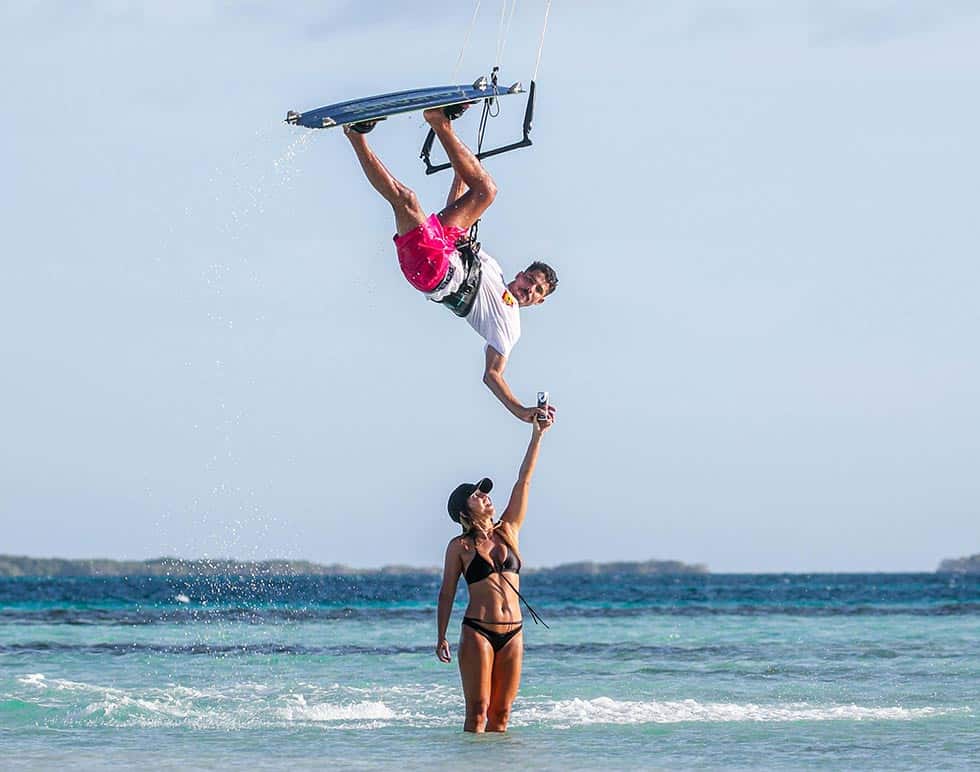
Key Takeaways
- Pick a spot with steady breezes and clear waters like Cabarete for easier learning.
- Start with basic equipment including a larger, stable kiteboard and a smaller trainer kite to practice control.
- Watch instructional videos and get lessons from qualified instructors to improve quickly and safely.
- Always wear safety gear such as helmets, life vests, and rash guards to prevent injuries.
- Practice handling your kite on the beach before moving onto water starts and board rides for better control.
SELECTING THE IDEAL KITESURFING LOCATION
Picking the right place to learn kitesurfing makes a big difference. Look for beaches with steady breezes and clear waters, but watch out for any dangers like rocks or strong currents.
Wind conditions
For kitesurfing, picking a spot with the right wind is crucial. Cabarete shines in this area because its winds are steady and side-onshore, ranging between 14 and 20 knots. These conditions make it not just safe but ideal for learners and experts alike to enjoy the sport year-round.
Yet, keen kitesurfers should note that from mid-September to mid-October, the winds can be less reliable.
Steady breezes provide balance and control for beginners learning to manoeuvre their kiteboards. Sites like Cabarete offer these optimal conditions that significantly impact quick learning and safety on the water.
Beyond just knowing about wind strength, aspiring kitesurfers need an understanding of wind directions too—a skill vital for mastering kiteboarding basics such as launching and landing safely on shores or managing upwind courses efficiently.
Water Conditions
Cabarete offers warm sea temperatures making it a cozy place to learn kitesurfing. Beginners find the flat water areas especially welcoming, as they provide an easier and safer environment to practice.
Warm waters mean you can stay in for longer periods without feeling cold, focusing on mastering your skills instead of shivering.
Different spots around Cabarete cater to various skill levels. For newcomers, these zones are perfect for getting comfortable with your board and kite before tackling more challenging conditions.
The diverse locations ensure there’s always a suitable spot regardless of your progress or confidence level. Next, let’s talk about the hazards to look out for while enjoying these ideal .
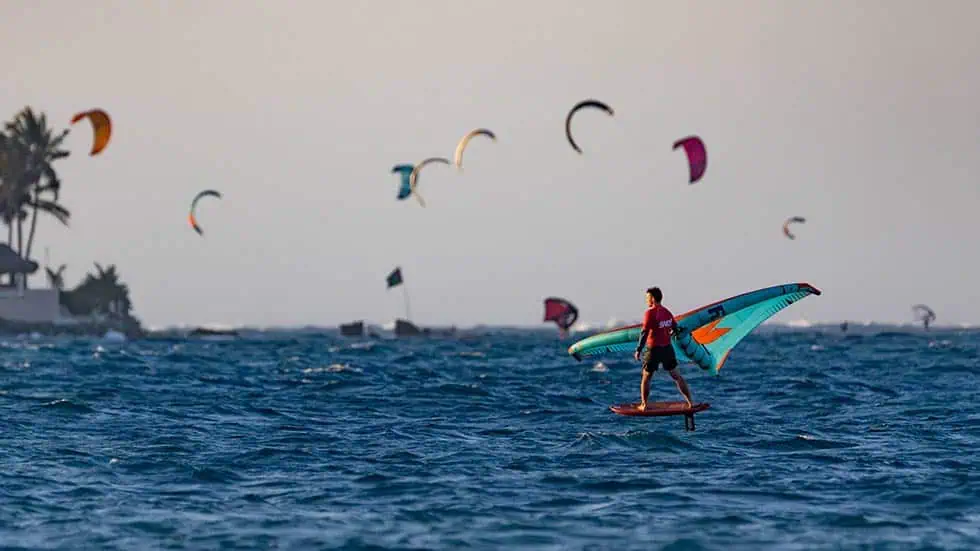
Hazards
Choosing a location with inconsistent and ocean-bound winds could potentially lead you away from the coastline. Always verify the wind conditions before you venture out to ensure they are stable and blowing towards the mainland or along the shore.
Being conscious of these climatic patterns can keep you safe from hazardous circumstances out on the water.
In certain areas, kitesurfers need to exercise caution due to sharks and other potentially dangerous sea creatures. Interactions with these animals can induce fear and occasionally cause injury.
To minimize this risk, familiarize yourself with the aquatic life in your selected kitesurfing locale. Don proper safety gear such as aquatic shoes and a rash guard for an added layer of protection against scrapes or bites.
Tales of personal experiences narrated by seasoned kitesurfers often underscore the need for continuous awareness about such realities while participating in the sport.
The Dominican Republic is an ideal destination
The Dominican Republic, particularly Cabarete, is a prime choice for those new to kitesurfing. The location has a consistent wind speed between 14 and 20 knots and maintains warm water throughout the year.
Its expansive sandy beaches create a conducive environment for launching and landing your kite safely. Also, there’s no concern about dangerous aquatic life here.
The appeal of this location extends beyond its natural attributes; it includes facilities with trainers ready to instruct on board and kite handling. Whether you’re grasping the groundwork of kite flying or perfecting more complex maneuvers, Cabarete’s instructors offer individualized guidance suitable for your capabilities.
Moreover, with rental stores in proximity providing all the essential gear, from wetsuits to life vests, participants have all they require easily accessible.

KEY EQUIPMENT FOR KITESURF BEGINNERS
Selecting the appropriate equipment is your initial phase into kitesurfing. Prior to testing the waters, make sure to be equipped with a surfboard suitable for wave riding, a compatible kite for your skills, and control bar with lines for guidance.
Begin with a compact training kite for honing your skills. Safety gears such as helmets and life vests shouldn’t be overlooked to ensure your safety. Eager to learn more? Explore further on how each equipment piece contributes to your venture on the waves!

Choosing the Right Kiteboard
Selecting the ideal kiteboard is a crucial action for anyone initiating kitesurfing. The appropriate board provides beginners with a feeling of stability and assurance as they experience their initial gusts of wind.
When commencing, search for boards that are larger and wider. Such boards extend an augmented buoyancy and stability, facilitating the ease of learning the fundamental skills of balancing and steering on the water.
As you advance your skills, you might think of switching over to a smaller board for enhanced control and tricks.
You should also take into account the circumstances in the location where you plan to kitesurf. For instance, flat water areas in Cabarete are wonderful for novices practicing with large boards.
Initiate with a size which is comfortable yet poses a bit of challenge for the growth of your skills. It should be noted that top-tier equipment such as what Swell kitesurfing school provides can ease the process of learning and make it safer.
Regardless of the type of kiteboard you select, never forget to put on indispensable safety gear including helmets and life vests.
Understanding Kite Specifications
Once the right kiteboard has been selected, it is crucial to move forward with understanding kite specifications. Essential for every beginner in kitesurfing, these specifications include aspects such as size, shape, and type – each of which can significantly impact your learning progression and overall enjoyment while out on the water.
For instance, with their precise control capability, C-kites are well-suited for performing tricks, but they may pose a challenge for beginners. On the other hand, bow-kites or delta kites are seen as friendlier alternatives due to their stability and easier relaunch capability from the water.
During the initial lessons at the Swell kitesurfing school, it was heavily stressed by instructors how varying sizes can influence performance based on wind conditions. Larger kites perform well in milder winds, whereas their smaller counterparts are better suited to stronger winds.
Your body weight has implications too; those with a heavier body mass would require larger kites to generate sufficient lift. The takeaway from this: choices made according to individual needs and local weather conditions result in a more gratifying ride and quicker improvement.
Basics of Kite Bar and Lines
After acquiring knowledge about kite specifications, the proceeding step includes comprehending the kite bar and lines. The kite bar serves as your control mechanism for your kite.
It’s a vital implement linking you to your kite, allowing you to determine its course and power. You could see it as managing a potent beast’s movement; you influence the speed and direction with only subtle movements.
Kite lines bear equal significance. They are often fabricated from durable materials capable of resisting intense winds and abrupt tugs. These strings attach the bar to your kite and present with varied lengths suitable for distinct kitesurfing styles.
Shorter lines offer rapid responses yet diminished power; in contrast, longer lines yield greater power but delayed responses. Selecting the appropriate equilibrium greatly impacts your experience on the water.
Together, these instruments establish a reciprocal connection between you, your kite, and natural factors like windward directions or wakeboarding waves – converting simple movements into elegant slides over water bodies or noteworthy leaps into mid-air flights.
They constitute a critical bond allowing riders to effectively utilize wind energy while guaranteeing optimal safety via appropriate control measures like flotation apparatus during talespin maneuvers or directing downwind paths with exact sailing techniques – thus, making them indispensable elements in every kitesurfer’s equipment bag.
Starting with a Trainer Kite
Using a trainer kite is the first important step in learning to kitesurf. It helps beginners understand how to control and steer the kite safely on the beach. This basic skill sets the foundation for all future progress in the sport.

Flying a trainer kite allows new learners to get comfortable with the wind’s power and direction, which are key elements in kitesurfing.
My own journey began with mastering a trainer kite in light winds. I spent hours practicing movements and reactions until they became second nature. This early experience was crucial for my safety when I advanced to larger kites and open water sessions.
The use of booties protected my feet during this training phase, even on sandy beaches where hazards were minimal. Learning through this hands-on approach made complex techniques easier to grasp as I progressed in kitesurfing.
Essential Safety Gear
Wearing the right safety gear is crucial while learning to kitesurf. Your harness, which comes included during lessons from a kitesurfing school, is key. This piece fits around your waist or legs and connects you to your kite, keeping you secure as you navigate the waves or soar above the water.
Along with this, a flotation device is vital for staying safe in deep waters. The ocean can be unpredictable, and even strong swimmers can tire out.
Other important items include helmets and rashguards, offering protection for your head and skin. Helmets guard against impacts when falling onto the water or board, while rashguards provide sun protection and prevent chafing from constant movement against equipment surfaces.
In areas like Cabarete in the Dominican Republic where people often learn to kitesurf, sunny days are frequent; thus wearing a rashguard becomes even more critical to avoid sunburns during long sessions on the water.
Always ensure your gear fits well and check it before heading out to guarantee everything works as intended.
STEPS FOR QUICK IMPROVEMENT IN KITESURFING
To get better at kitesurfing fast, practice flying a small kite on land and watch videos to learn more. Taking lessons from pros and having the right gear will also help you improve quickly.
Keep reading to find out how to make your kitesurfing adventure amazing!

Mastering Trainer Kite Flying
Flying a trainer kite on the beach is your first step into kitesurfing. You learn to control the kite, feeling its pull and understanding how it moves with the wind. It’s essential to get comfortable here before you try larger kites.
This stage teaches you about the kite’s power and how to manage it safely.
I started by practicing in open spaces away from people and hazards. The experience was thrilling as I got a grip on steering and controlling my kite’s altitude with simple hand movements.
This phase of practice builds confidence for future lessons on water starting and board riding. Mastering these skills means you’re ready for more challenging adventures in windsurfing or even snow kiting.
Learning through Instructional Videos
Watching instructional videos is an excellent way to commence your journey in kitesurfing. Observe professionals demonstrating how to manage the kite, glide across the water, and utilize gear properly.
These videos usually originate from experienced instructors or professionals like Kirsty Jones who share their direct experiences. You’ll receive easy-to-follow tips and can practice in your own time.
Videos assist you in comprehending wind dynamics and other essential concepts without feeling pressured.
Discover these beneficial resources on social media platforms, such as Instagram, or websites full of kite-flying tutorials. These display clear steps for advancing from piloting a trainer kite to managing a larger one in water.
This visual guide elevates your confidence before you even step foot onto the beach. As a reminder, while Swell partner kitesurfing school offers premium equipment and IKO certified instructors for practical learning, initiating your journey with instructional videos establishes a strong base for swift progression in this exciting sport.
Training with Qualified Instructors
Learning kitesurfing from qualified instructors makes a big difference. These experts are IKO certified, meaning they’ve met international standards for teaching the sport. They bring skills and knowledge that ensure students learn effectively and safely.
With instructors who can speak French, German, Dutch, Spanish, and English, language barriers fade away. This opens up learning to more people across the globe.
These instructors use tools like kiteboards and trainer kites in their lessons. They guide beginners through each step, from flying a trainer kite to mastering the first water start and board ride.
Learning with them helps students understand essential safety measures too. Their instruction covers everything needed for a solid foundation in kitesurfing.
Next is investing in suitable gear for your journey.
Investing in Suitable Gear
Buying the right gear is a big step in learning to kitesurf. You need a kite, a bar with lines, and a harness that fits well. These tools help you control the kite and stay safe on the water.
Swell partner kitesurfing school gives students high-quality equipment for their lessons. This shows how important good gear is for both safety and learning.
I found that having my own gear made practice easier. It let me get used to the same equipment each time I went out on the water. This consistency helped improve my skills faster than if I had used different kits each time.
Choose your equipment carefully to make sure it matches your level of skill and style of riding.
Safety Measures and Kitesurfing Techniques
Safety first! Before hitting the water, learning how to manage your kite on the shore sets a solid foundation. Mastering control of your flying gear in different situations keeps you and others safe.
Techniques like body dragging, board handling, and starting your ride are key skills every kitesurfer needs to enjoy the sport while staying secure.
Handling the Kite on the Beach
Learning to manage your kite on the beach is vital. You start with a trainer kite. This step helps you understand how it reacts to wind and movements without water’s complexity. It’s like using training wheels before riding a bike.
Safe flying sets a foundation for all future skills in kitesurfing.
Your goal is to keep control of the kite while being aware of your surroundings. Watch out for other people, trees, and anything that could catch or disrupt your kite. Use clear signals if you’re flying in an area shared with others to prevent accidents.
I learned this through my own experiences—getting comfortable with my kite on land made me more confident when I moved into the water.
Mastering Kite Control and Body Dragging
Gaining control over your kite is the first step to becoming a proficient kitesurfer. Practice makes perfect. Begin with a smaller trainer kite on land to understand the nuances of steering and managing its power before moving into deeper waters.
This builds confidence and coordination without the added difficulty of balancing on a board.
Body dragging in water imparts essential skills for retrieving your board and mastering directional control while being pulled by your kite. It might seem tough at first, but with persistence, you’ll learn how to exploit the wind’s force to move in desired directions.
This experience is crucial for safely returning back to shore or chasing after your board if you fall off. Always wear recommended safety gear during these practices to mitigate risks and ensure a fun learning environment.
Techniques for Water Re-Launch and Self-Rescue
Mastering the art of relaunching your kite in water is an essential ability for every kitesurfer. Initiate by aligning yourself in a way that the wind makes contact with the leading edge of your kite.
Utilize the control bar to gently nudge one end of the kite upward, capturing wind beneath it. This airborne force should raise your kite from the water and revert it back to flight mode.
Consistent practice is key here; the goal is to maintain smooth and controlled motions.
Self-rescue is another critical skill you should have at your disposal if situations don’t align with your plans. Start this procedure by pulling in one line at a time until you can touch your kite’s leading edge directly.
This technique converts your kite into a temporary sailboat, facilitating you to draw yourself closer to it or even employ it as a floatation device back to safety. My personal journey has taught me that maintaining composed and knowing these steps can transform potentially frightening instances into manageable ones, assuring every session concludes safely on the beach instead of out in the ocean.
BOARD HANDLING BASICS
Handling your board correctly is key to enjoying kitesurfing. You start by getting the board on your feet. This may sound simple, but it takes practice. Place the board downwind of you while keeping tension in the lines.
Slide your feet into the straps or bindings firmly to ensure they are secure but not too tight.
Next, focus on maintaining a correct stance on the board for balance and control. Keep your knees slightly bent and lean back slightly against the pull of the kite. This position helps manage the kite’s power and steers you through water smoothly.
After mastering these steps, moving onto initiating a waterstart becomes easier.
Initiating Waterstart and First Board Ride
Starting your waterstart and first board ride is exciting. You use the power of the kite to lift you out of the water. Your instructor will guide you through this process during an 8-hour course over five afternoons.
The class covers everything from handling the kite to getting up on the board for the first time. They’ll ensure you’re safe and ready using provided gear, including kites, bars, lines, and harnesses.

Practicing these initial steps lets you feel how wind dynamics affect your ride. This understanding is key as it helps with balance and direction once you are up on the board. With personalized tips from your instructor, soon enough, you’ll glide smoothly across flat waters like those at Kite Beach.
Each successful attempt builds confidence as well as skill in managing both kite and board together.
Techniques for Riding and Staying Upwind
Keeping your kite surfing equipment in top shape enables you to ride seamlessly against the wind. Direct the kite gently in the wind’s path without facing it head-on. Orient both your board and body just off the wind, establishing resistance with the water surface.
This strategy enables you to move against the waves more efficiently, propelling you ahead without shifting off course.
Subsequently, concentrate on your board position. Slightly flex your knees and recline to distribute more weight on the rear foot. This pose assists in elevating the board’s front, reducing resistance, and making it easier to stay on the upwind route.
Exercising these techniques in steady wind conditions, like those in Cabarete, will enhance your assurance and proficiency promptly.
SELECTING A RELIABLE KITESURFING INSTITUTION
Choosing a Reputable Kitesurfing School
Picking a good kitesurfing school is key for anyone starting this exciting sport. Look for schools with IKO certified instructors, as they meet international standards. The Swell partner kitesurfing school near the camp is one such place where learning becomes easier and safer.
Their teachers speak languages like French, German, Dutch, Spanish, and English. This factor makes lessons accessible to people from different parts of the world.
Another important aspect to consider is the school’s ownership and its reputation in the kitesurfing community. A school run by a world-renowned international kitesurfing champion suggests it offers high-quality instruction and follows best practices in teaching methods.
With these elements in mind, students can feel confident they’re getting top-notch training that will help them quickly improve their skills on the water.
TOP RECOMMENDED KITESURFING SPOTS FOR BEGINNERS
Finding the perfect spot to learn kitesurfing can make all the difference. Look for places with steady breezes and calm seas, like Cabarete and Las Terrenas in the Dominican Republic, which are known for their beginner-friendly conditions.
Cabarete, Dominican Republic
Cabarete in the Dominican Republic stands out as a leading location for kitesurfing, praised for its predictable and side-onshore winds, making it a secure site for beginners. This venue offers flat water fitting for beginners, while simultaneously offering wave-prone areas for experienced riders.
Swell Surf Camp at this place offers a variety of holiday packages suitable for both new learners and expert kitesurfers.
This venue is furnished with excellent schools that offer high-grade equipment and instruction from internationally certified instructors. Learners gain vital abilities such as comprehending wind dynamics, managing a training kite safely, and gradually transitioning to larger models.
The ample training space in Cabarete guarantees sufficient room for learning without the concern of motorized water vehicles or dangerous marine animals interrupting your learning process.
Las Terrenas, Dominican Republic
Las Terrenas offers a peaceful setting for kitesurf learners due to its gentle winds and minimal waves. Approximately 2.5 hours east from Cabarete, this site provides distinct conditions appropriate for those just starting on their journey.
In contrast to areas with stronger winds or larger waves, Las Terrenas provides a calmer environment to grasp the basics without feeling pressured.
Many kitesurfers appreciate Las Terrenas, thanks to its favorable wind and water conditions, coupled with minimal crowd. This provides ample space to practice and reduces potential risks on the water.
For newcomers aspiring to advance their skills in tranquility, it’s a perfect option. The picturesque charm of Las Terrenas heightens the experience, making learning fun and informative.
FAQS AND PRACTICAL TIPS FOR KITESURF BEGINNERS
Many beginners inquire about the ideal time to initiate kitesurfing. The response is immediate, particularly if you’re near a location with consistent winds and temperate water. Locations like Cabarete in the Dominican Republic provide ideal conditions pretty much the entire year.
Prior to challenging the waves, ensure your ability to manage an introductory kite on land. This skill proves essential when transitioning to larger kites and extensive waters.
An often asked question pertains to the first pieces of equipment to invest in. A sound advice is initially leasing gear since it allows the exploration of various kinds before purchasing personal equipment.
Always sport protective gear, inclusive of a helmet and impact vest, regardless of held proficiency levels. Keep in mind, undertaking lessons from certified instructors drastically hastens your learning curve and ensures safety.
Every session contributes to your competency for managing kites on crowded beaches or areas filled with potential obstacles.
Beginners commonly neglect physical preparation but conditioning your body off the water significantly impacts your performance on it. Stand-up paddle boarding enhances core muscles crucial for kitesurfing stability and stamina without the prerequisite of wind or waves.
Finally, the act of respecting privacy while committing to environmentally-conscious behaviors greatly contributes to the long-term viability of our sport—employ marine-life friendly sunscreens and practice discretion with personal data when posting location-based achievements via online platforms such as website analytics tools or social media platforms partnered with Google Ireland entities concentrating on marketing knowledge for advertisers keen on outdoor sports aficionados engaged in kitesurfing as well as other aquatic adventures like scuba diving.
PREPARING FOR A KITESURFING ADVENTURE
Getting your body ready and your mind set for kitesurfing matters a lot. Work on strengthening your muscles and practice staying calm to enjoy every moment on the water.
Physical Conditioning
Getting fit for kitesurfing means focusing on strength, balance, and core stability. You need a strong upper body to manage the kite in different moves. Your legs must be strong and endure long sessions on the board.
Flexibility keeps you safe from injuries and boosts your performance on the water. I found that yoga greatly improved my flexibility for kitesurfing. Strength training made handling my kite much easier, especially when performing challenging manoeuvres.
Cookies might not help with your fitness goals, but activities like stand up paddle boarding will. Stand up paddle boarding builds balance and strengthens your core, both crucial for kitesurfing success.
My journey into kitesurfing taught me how essential is before hitting the waves leeward side first. Early investment in physical prep paid off quickly once I began mastering basic skills on the water.
Mental Readiness
Kitesurfing requires more than physical prowess; it also demands mental readiness. Familiarizing yourself with wind dynamics enables you to understand how wind fluctuations may impact your performance and safety.
This kind of awareness fosters self-assuredness, allowing you to concentrate on your growth rather than your concerns. Identifying secure environments, such as consistent winds and areas devoid of motorized watercraft, also forms an integral part of mental preparation.
Insights gathered from instructors significantly contribute to your mental readiness. Learning from individuals who have walked in your shoes simplifies the process and makes it seem less overwhelming.
They guide you to appreciate the challenge instead of being intimidated by it. Interaction with certified instructors enhances your capabilities and also reassures you that proficiency in kitesurfing can indeed be achieved with persistence and regular practice.
Conclusion
FINDING THE RIGHT SPOT and picking the best gear set you up for success in kitesurfing. Master flying a training kite before hitting the water. Videos and lessons from experts speed up your learning.
Always focus on safety, like how to handle the kite on land and master key moves in the water. Fun spots like Cabarete welcome beginners with perfect winds. Are you ready to ride the waves?
Choosing gear that fits makes learning easier and safer. Quick progress comes from practice and good instruction. Safety skills are as important as riding ones. Starting at places known for their beginner-friendly conditions gives you an edge.
Have you thought about where your first ride will be? Gear up, learn well, and find yourself gliding over the sea sooner than you think!
FAQs
1. What are some tips for beginners learning to kitesurf?
Beginners learning to kitesurf should start with lessons from a certified instructor, use appropriate safety gear, and practice in calm weather conditions.
2. How important is safety when learning to kitesurf?
Safety is paramount when learning to kitesurf. Always wear protective gear such as helmets and life jackets, keep an eye on the weather forecast, and follow the instructions of your coach closely.
3. Is it necessary to be physically fit before starting kitesurfing?
While being physically fit can help you learn faster and avoid injuries, even people with average fitness levels can enjoy this sport. However, strength training exercises targeting core muscles could be beneficial.
4. Can I teach myself how to Kitesurf?
No, not in a safe way! It’s not advisable due its complexity and potential risks involved. Learning from a certified professional ensures understanding of essential techniques & safety measures which guarantees a secure & enjoyable experience.
About Swell Surf camp
Swell Surf Camp was started in 2009 In the Dominican Republic. Started from scratch with the help of award-winning Architects from Switzerland, to create a purpose-built luxury surf resort for people that are seeking an active Holiday whilst meeting new People.
Swell was founded By Clare & Jeroen Mutsaars. Both avid water sport enthusiasts with years of experience in Windsurfing, Kitesurfing, Surfing, WingFoiling and Stand Up Paddle Surfing. Clare and Jeroen have lived in the Dominican Republic for over 10 years and now spend half the time in the Caribbean and half the time in Europe



 The Kitesurfing spots in the Cabarete area: (from East to West)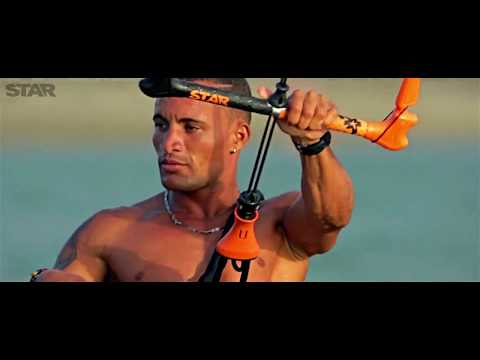


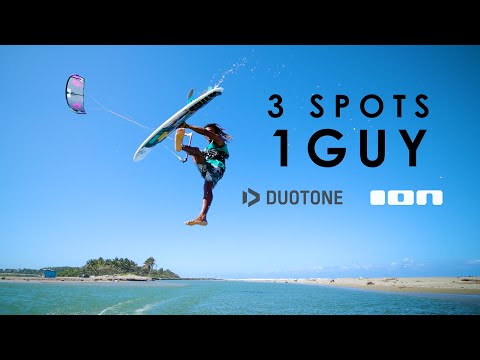
 we are going to be biased here ( look at the URL in your browser), even though we are called Swell Surf Camp, we get loads of kitesurfers (or people
  There are at least a dozen or more kite surf schools in Cabarete, some are well established and very good, and some are, well not so. There are price differences too; but do keep in mind that kitesurfing is not a cheap sport, the lessons are not cheap and neither is the equipment. Swell deals with Laurel Eastman Kiteboarding school (LEK), located at Cabarete beach, and with KiteClub at Cabarete Kitebeach. Both are very well-known and 2 of the most established, professionally run schools in Cabarete, neither of them are the cheapest kite schools, but what you will get with them is:


