LEARNING TO SURF AFTER 40

surfing

LEARNING TO SURF AT 40: A COMPLETE GUIDE

IS IT EVER TOO LATE TO START SURFING?

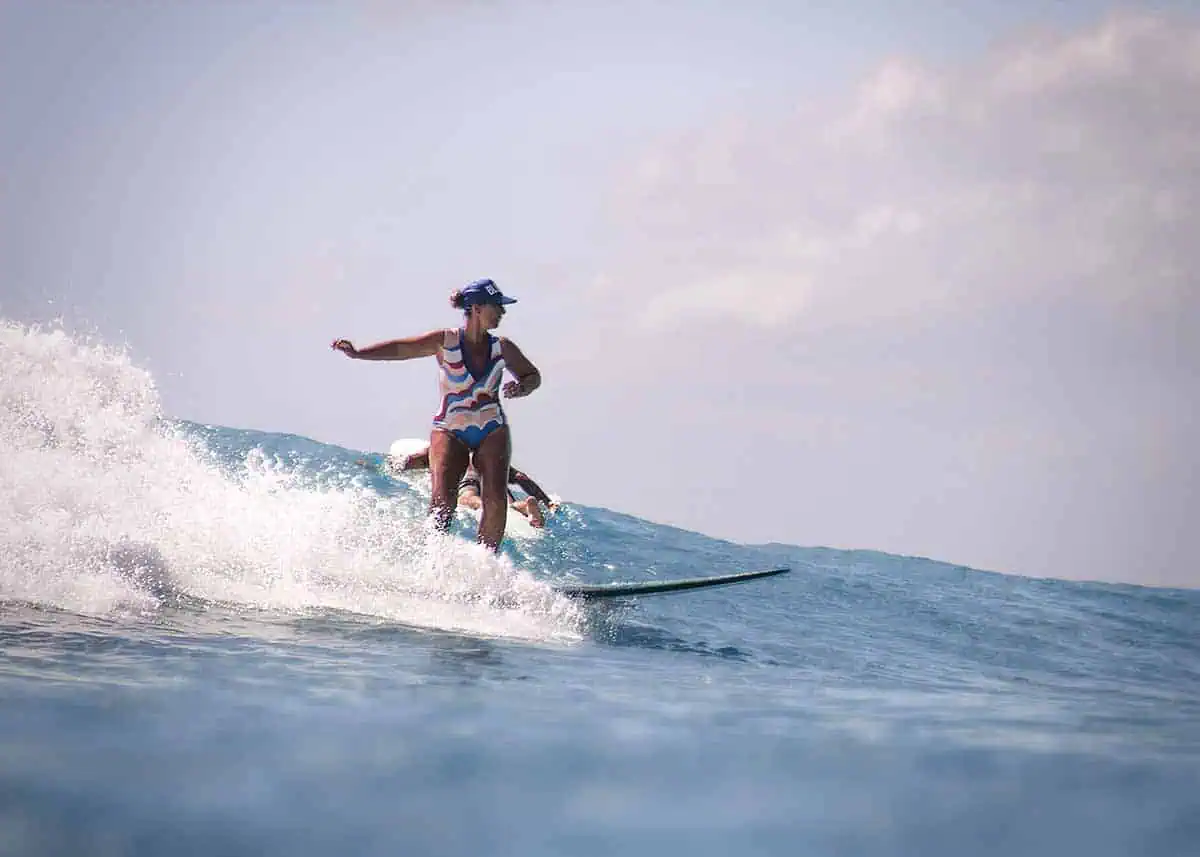
The journey of learning to surf at 40 is not only possible but can be incredibly rewarding. This guide could easily be titled ‘learning to surf after 50, 60 and upward’ because age is truly just a number when it comes to catching your first wave.

learning to surf at 40

EMBRACING THE WAVES: LEARNING TO SURF AT 40

“Surfing? But you’re over 40!” – even if nobody actually says this, it’s something that plagues the mind when looking at activities typically associated with younger crowds. If you think surfing is only suitable for young, athletic types, think again because learning to surf at 40 is becoming increasingly common.

We firmly believe you should be able to start your surfing journey at any age if it’s what you really want to do. Who cares about the number tied to your name? If you feel as though you can do it, why not give it a go? Even if you aren’t quite as flexible as you were many years ago, this shouldn’t ever stop you from enjoying the ocean and reaping the many health benefits learning to surf at 40 can bring.

Today, we want to provide anyone interested with an introduction to surfing and why learning to surf at 40 can be the perfect time to start. As a sport with no physical contact, unlike football and rugby, it’s suited towards those who want to prevent impact injuries. It’s important to be in decent physical shape when learning to surf, as it is a physically demanding activity. Moreover, you can enjoy plenty of health benefits while getting to know new people.

There’s something special about surfing’s impact on the brain. When learning to surf at an older age, you’ll be physically active and your mind will also get a workout as you try to navigate the waves that seem determined to knock you over.

Is there a perfect age to start surfing? Absolutely not! You’re never too old to catch your first wave. Many people believe that surfing is only for the young, but that’s just a myth. Whether you’re in your 40s, 50s, or even 70s, the ocean welcomes everyone.

Age is just a number when it comes to surfing. What truly matters is your passion and willingness to learn.

Here are some reasons why learning to surf at 40 is an excellent decision:

  • Surfing keeps you in shape and boosts your mood
  • It’s a fantastic way to challenge yourself and feel younger
  • You get to meet new people and join a vibrant community

THE JOURNEY OF LEARNING TO SURF AT 40

Of course, we wouldn’t be talking about surfing at all if it wasn’t fun and this is something else to consider. Sure, you might get knocked over once or twice but it’s all in the name of fun (right?).

PHYSICAL BENEFITS OF LEARNING TO SURF AT 40 AND BEYOND

Ever woken up on a Sunday morning and tried to find things to do to avoid the gym? Even washing and ironing are better options for some. If so, you aren’t alone because continually doing the same things in the gym can get rather boring. Thankfully, learning to surf at 40 still offers a cardiovascular workout but every single session will be a thrill and it’ll be different from the last. Also, you’ll get a sense of achievement as your skill increases.

With this in mind, let’s take a look at some of the physical benefits of learning to surf at 40:

benefits of learning to surf at 40

SHOULDER/BACK STRENGTH

We’re going to start with one that perhaps isn’t so obvious, and it’s the improvement you’ll see to your back and shoulder strength. If you ask several retirees the most annoying thing about getting older, many will tell you about their back and shoulder problems. Unfortunately, this can have a huge impact on even everyday tasks such as putting the washing out on the line or trying to sit comfortably to read a book.

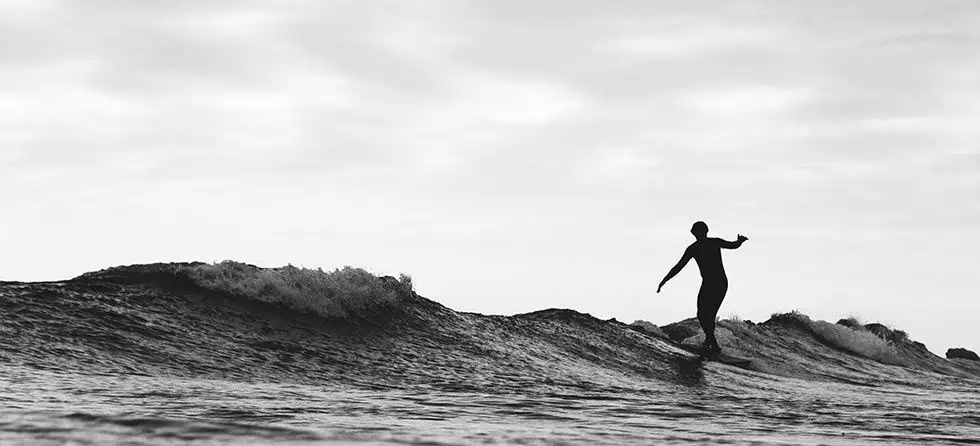
When learning to surf at 40, your arms will always be in use as you attempt to balance, paddle, and the inevitable climbing back onto the board (unless you’re an instant pro!). Even when sitting or lying on the board, you’ll be rotating your arms and the shoulder joint will get a good workout. As your arms go through their full range of motion, this is great news for the shoulders, elbows, and even the spine.

For many, they enjoy increased mobility in their upper body and it generally fights off the stiffness that comes with age. Let’s face it, we’ve all made those grunting noises while attempting to stand up after a long time sitting (we won’t tell anyone!).
surf lessons for learning to surf at 40

CARDIO WORKOUT

Not only is heart disease the leading cause of death in the UK, according to the government website, it causes nearly twice as many deaths as dementia; dementia is the second leading cause of death. While deaths from heart disease and stroke have certainly decreased in recent years, it’s still too high for our liking and learning to surf at 40 is the perfect opportunity to stay active and reduce your chances of struggling with this health issue. Regardless of which form of surfing you choose (duck diving, paddling, or standing), you’ll be moving constantly and this level of activity can only be beneficial for your health.

As your heart rate increases and the different muscles receive blood and oxygen, your cardiovascular system welcomes the activity and this offers various benefits in everyday life. For example, you won’t have any trouble breathing and strenuous activity becomes much easier. Suddenly, you’ll have the energy to take the stairs at work rather than the lift (unless you’re on the 33rd floor, of course!).

surf coaching for those learning to surf at 40

INCREASED FLEXIBILITY THROUGH SURFING

Before we move onto the psychological benefits of learning to surf at 40, we want to talk about flexibility because certain parts of your body will always be stretching and twisting while on the board. Suddenly, muscles and joints you didn’t even know existed will be activated and we mustn’t forget the range of motion your joints will experience as the sheer power of the waves hit the board. With all this stretching, it’ll be like a more dramatic form of yoga and you should experience fewer aches and pains in life.

Benefits of learning to surf at 40

CORE AND LEG STRENGTH IMPROVEMENT FROM SURFING

Something that often goes forgotten with learning to surf at 40 is the work it does with your core; all that effort to stay balanced keeps the core engaged and this is something you’ll certainly feel the morning after your first session. Just as we saw in the cardiovascular section, this is something you might not notice but will improve your life. Whether you’re lifting boxes, standing after long periods of sitting down or using the upper torso in any way, you’re going to see a boost after surfing.

For those who work in an office and stare at a computer all day, learning to surf at 40 can also help with your posture; you might find yourself slouching less while at the desk. In truth, surfing reflects many of the normal movements we put our bodies through on a daily basis (although it might not seem like it at first).

For example, after first paddling out to a wave, you’ll need to activate the muscles in the legs and core to jump to your feet. In every single lesson, you’ll jump to your feet several times. If you can do it on a surfboard in the sea, you can do it getting out of bed or getting off the sofa with ease. Over time, the difference in your leg and core strength will be noticeable and this is another great benefit of learning to surf at 40 (they’re starting to add up, right?).

PSYCHOLOGICAL BENEFITS OF LEARNING TO SURF AT 40 AND BEYOND

Hopefully, we’ve been able to persuade you to book that first surfing lesson on the physical benefits alone. If not, how about we tell you of the brilliant mental benefits of learning to surf at 40?
social benefits of learning to surf at 40

COORDINATION AND CONCENTRATION

Without both coordination and concentration, you won’t be able to stand up on the board for longer than five seconds. These will both be improved over time. Of course, these are two transferable skills so there’s no reason why your coordination and concentration don’t also improve at home, at work, and while playing any other sports. For example, you might notice that you’re able to sit at a desk for a longer period or be more successful in your local pool league.

LEARNING TO SURF AT 40 GIVES A BOOST TO YOUR MENTAL HEALTH

Firstly, all exercise has now been scientifically proven to release endorphins (chemicals in the brain) which improve mood and overall wellbeing. For those who suffer from depression and/or anxiety, many doctors are now starting to recommend exercise for this very reason. This, coupled with the fact you’ll be outside breathing in the fresh sea air, may allow you to adopt a new positive mindset in life.

mental health benefits of learning to surf at 40

DETERMINATION, PERSEVERANCE, AND GRATIFICATION

We must provide a warning at this stage because learning to surf at 40 will require patience, it will require perseverance, and a significant percentage of people stop attending after just one lesson.

However, we urge you to fight through the learning stage. Yes, you might find yourself getting frustrated and you might wonder where the fun starts for a while. But, as you improve, and overcome the mental barrier that stops many, you’ll have one of the most gratifying experiences of your life.

Eventually, all your hard work will pay off and you won’t believe that you nearly gave it all up. From struggling to jump to your feet to being able to stand up confidently for extended periods, you can prove to yourself that all goals in life are achievable. Even when the goal seemed impossible just a short while ago, the hard work and time you invest will always be rewarded.

Soon enough, you’ll enjoy all the physical and psychological benefits of learning to surf at 40 that we’ve discussed and you may even be able to bring friends and family along to watch you shine. As we’ve seen before, these are transferable skills because you’ll be more likely to take this determination and perseverance into your personal life and career.

RELIEF FROM STRESS

Finally, you don’t have to become a master of surfing to enjoy the stress relief it can offer. If you want to push your body to its limit and really test yourself, this is possible. If you want to have a relaxing pastime and enjoy being in the water, this is equally fine. While some choose to navigate every wave and they feel disappointed after a poor lesson, others are just happy to be out in the water sitting on the board and looking out over the stunning horizon.

When it comes to learning to surf at 40, the surfboard and the water are the two essentials. From here, you can do whatever makes you happy. Soon enough, you’ll be wondering where all that stress from work has gone and this for us makes for a successful hobby.

learning to surf at 40 or even 50

MEET NEW PEOPLE

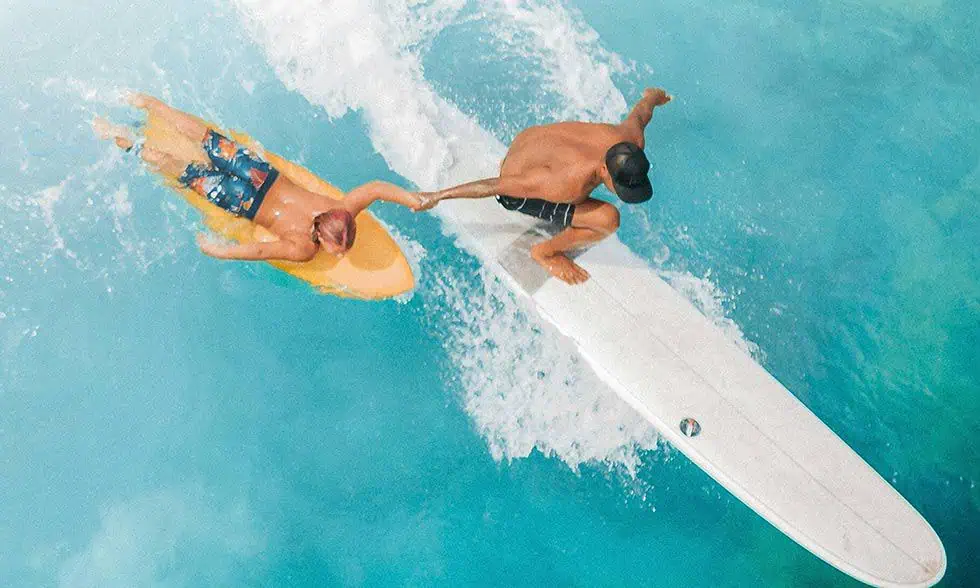
As we get older, often we seem to get stuck in our ‘social circle’ it’s hard to meet new people. Learning to surf at 40 is a great way to expand your social circle.

Instead of networking events or awkward small talk at the office, you suddenly have a built-in icebreaker: “How was that last wave?” Everyone out there is dealing with the same wipeouts, nerves, and little victories, so conversations feel easy and natural. You’ll meet people from different countries, career,s and backgrounds who are there for exactly the same reason you are: to learn, have fun, and reset from everyday life.

In a surf camp setting like Swell, this social side is amplified. Most guests are in their 30s to 50s, many travel solo, and by day two it usually feels more like a group of friends than a bunch of strangers sharing a holiday. Breakfast chats turn into shared surf sessions, yoga classe,s and dinners in town. A lot of our clients stay in touch, plan future surf trips together, or visit each other back home.

If you’ve been feeling like your social life has gone a bit stale, learning to surf at 40 gives you an easy way back into meeting new, like-minded people – without the forced “networking” vibe. Show up, paddle out, be willing to laugh at yourself, and the rest tends to take care of itself.

Surf Coaching for those learning to surf at 40

START LEARNING TO SURF AT 40 TODAY!

As well as the physical and psychological benefits of learning to surf at 40 and the way it allows for a healthy lifestyle, you can also meet new people and forget about the stresses of life for a couple of hours. To finish our guide, we want to provide a few considerations before booking your first surf lesson!

Your height and weight aren’t important because there are various shapes and sizes of boards.

  • Don’t worry about your fitness levels right now because your stamina will improve over time.
  • Surfboards can even be custom-made, if necessary.
  • You should NEVER feel as though you’re too old to start learning to surf at 40
  • The average age of guests coming to Swell is 39!

Don’t live life according to other people’s expectations or rules, make your own rules (perhaps not on the road, but you get the idea!). If you feel you’ll enjoy surfing and you like the sound of the many benefits we’ve discussed here today, we have three words for you; GO FOR IT!


HOW ABOUT WINGFOILING?

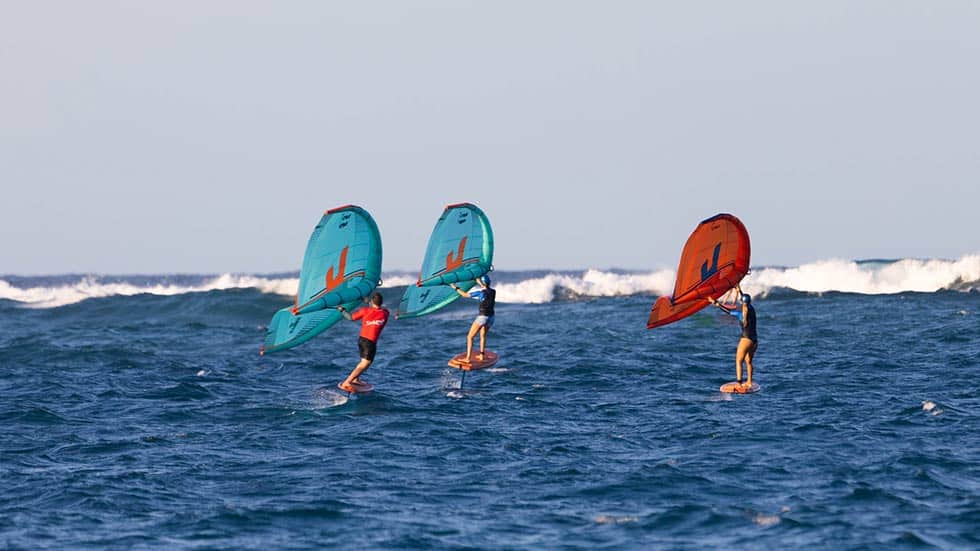
Another sport we offer here at Swell is Wingfoiling. The video below shows that age should not hold you back.

YouTube video

QUESTIONS

No results!
  • HOW LONG DOES IT TAKE TO LEARN TO SURF WHEN STARTING AT 40?

    Learning to surf varies for everyone. It depends on factors like your fitness level, how often you practice, and whether you take lessons. Some people get the basics in a few weeks, while others may take months. Learning to surf at 40 might require a bit more patience, but the journey is worth it.

  • CAN I LEARN TO SURF WITHOUT TAKING LESSONS IF I'M STARTING AT 40?

    Yes, you can, but taking surf lessons can speed up your learning and make it safer, especially for those learning to surf at 40. Instructors can teach you proper techniques and help you avoid common mistakes.

  • WHAT SHOULD I FOCUS ON WHEN LEARNING TO SURF AT 40?

    Focus on building your fitness, especially your stamina and strength. It's also helpful to take lessons from instructors experienced with teaching adults who are learning to surf at 40.

  • IS 70 TOO OLD TO START SURFING?

    No, 70 is not too old. There are inspiring stories of people who started surfing in their 70s and even 80s(We recently had an 81 year young client on ou learn to surf course, and our surf instructors managed to get him catching his own waves and up and riding at the end of the course) .  If learning to surf at 40 seems challenging, remember that many have started much later with great success. The key is to listen to your body and go at your own pace.

  • WILL YOUNGER SURFERS JUDGE ME FOR LEARNING TO SURF AT 40?

    Most surfers are friendly and supportive. Everyone once was a beginner, and the surfing community respects anyone willing to learn, regardless of whether you're learning to surf at 40, 50, or beyond.

  • DO I NEED SPECIAL SURFING GEAR IF I'M LEARNING TO SURF AT 40?

    Not necessarily, but having the right gear can make a big difference. Choose a board that's right for beginners and a wetsuit that fits well. Accessories like booties and gloves can add comfort if you live in a colder climate for surfing.

  • WHAT IF I HAVE A FEAR OF THE OCEAN WHEN LEARNING TO SURF AT 40?

    It's normal to have fears, but you can overcome them by starting slow. Spend time in the water, get comfortable with swimming, and consider taking lessons to build your confidence. Many who are learning to surf at 40 share this concern, and instructors are experienced in helping you overcome it.

  • IS IT TOO LATE TO START SURFING AT 50?

    No, it's not too late. Many people start surfing in their 50s and even later. As long as you have a reasonable level of fitness and flexibility, you can learn to surf at any age. Learning to surf at 40 prepares you well for continuing into your 50s.

  • WHY CHOOSE SWELL OVER OTHER SURF CAMPS?

    Because you’re not into dorm-style chaos or cheesy party vibes. Swell was built with comfort in mind—boutique lodging, cozy communal spaces, ensuite rooms with AC and crisp cotton sheets, structured surf lessons, legendary breakfasts, and a social yet chill environment. Founded in 2009, it's the world’s first luxury surf camp designed by surfers for adults.

ABOUT SWELL

Learning to surf at 40 with Swell

Teaching people the sport of surfing in a safe, quick and fun way is what we specialise in at Swell Surf Camp. We have taught thousands of people the basics of surfing, including many who were learning to surf at 40 and beyond.

Age? Well the average age of a Swell client is 39, making us perfect for those learning to surf at 40.


Send us a message today and we’ll get you up and riding…regardless of your age!

Our luxury surf coaching holidays have taught thousands of people the sport of surfing in a safe, fun and quick way, including many who were learning to surf at 40 and beyond.


Share on Facebook

SURFING DOMINICAN REPUBLIC

SURF HEALTH

SURFING DOMINICAN REPUBLIC

THE ULTIMATE SURF TRAVEL GUIDE

Name:  República Dominicana (Dominican Republic)

Capital:  Santo Domingo

Location:  Caribbean region

Lat / Lon:  19°00′N 70°40′W

Currency:  Dominican peso

Language: Spanish

Coastline: 800 Miles / 1288 KM

surfing dominican republic


GETTING TO THE DOMINICAN REPUBLIC

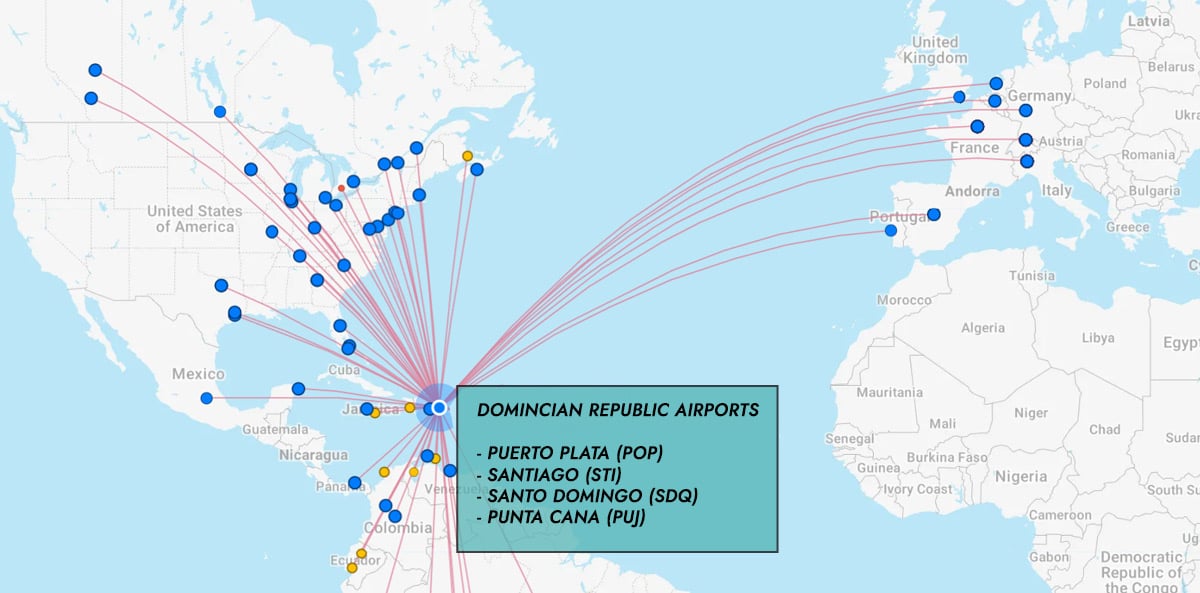
Easy quick flights from New York, Boston, Miami, Toronto  and major cities in Europe bring you to Puerto Plata (POP) or Santiago (STI) international airport

Getting To the Dominican Republic


BEST TIME TO VISIT DOMINICAN REPUBLIC

Year round surf varying from waist high in the summer months to well overhead in the winter months. Always warm and no need for a wetsuit. There’s no distinct rainy season or dry season.


AVERAGE TEMPERATURES

LOCATION OF THE DOMINICAN REPUBLIC

The Dominican Republic borders the Atlantic Ocean to the north and the Caribbean Sea in south.

Hispaniola is home to the independent nations of Haiti in the west and the Dominican Republic, which occupies the eastern part. The nation covers an area of 48,310 km² making the Dominican Republic slightly smaller than Slovakia or about the size of the U.S. states of Vermont and New Hampshire combined.

surf map dominican republic


WHY THE DOMINICAN REPUBLIC AS A SURF DESTINATION?

  • Year-round surf destination
  • No need for wetsuits / warm clothes
  • Fun waves for all different levels
  • Plenty of non-surfing activities
  • Easy travel
  • Friendly Caribbean vibes
  • Great food
  • Good choice of accommodation

YouTube video

BEST TIME TO GO ON A SURF TRIP

The great thing about choosing a surf holiday in the Dominican Republic is that there are approximately 350 surfable days each year, with very few flat days to spoil the fun.  
Another notable thing about surfing in the Caribbean is that there is no distinct rainy season (unlike in Costa Rica and Nicaragua where June to September are a wash-out).

WAVE SEASON

Dominican Republic Surf Seasons


JAN-MAR


4-6′
Beginners: Good
Intermediates: Good
Experts: Good

APR-JUN
 
 
3-5′
Beginners: Good
Intermediates: Good
Experts: so-so

JUL-SEP
 
 
3-5′
Beginners: Good
Intermediates: Good
Experts: so-so

OCT-DEC


4-6′
Beginners: Good
Intermediates: Good
Experts: Good

SURF SEASON OVERVIEW

  • Winter (JAN-MAR) & Fall (OCT-DEC): Larger waves ideal for all skill levels
  • Spring (APR-JUN) & Summer (JUL-SEP): Slightly smaller waves, better for beginners and intermediates
  • “Good” rating indicates favorable conditions
  • “So-so” rating indicates acceptable but not optimal conditions


Suitable for
Beginner
Intermediate
Expert

Best time to go

 
Beginner / Intermediate

 
Expert

TYPICAL WAVE HEIGHT BY MONTH – NORTH COAST DR

Approximate surf for the Cabarete / Playa Encuentro area. Winter is usually head high, shoulder seasons are shoulder high, and summer brings chest to waist high fun waves.

Heights are an approximate average in feet and described with common surf terms (head high, shoulder high, chest high, waist high).

NOTE FOR LEARNERS

*For beginners and learners it’s ideal to stick to the inside part ( closer to the beach) in the months where the waves are over 5′-6′ creating ideal waves for learning in the 3′ range.

THE BEST SURF  SPOTS IN THE DOMINICAN REPUBLIC

Surfing in or around Punta Cana (south east of the island) is practically non-existent.  If you are looking for a surf camp in Punta Cana, or to take surf lessons in or around Punta Cana, you may be disappointed.  This is because Punta Cana is bordered by the Caribbean sea, a largely flat body of water.  Waves need open water to generate (you may not know that waves travel hundreds, sometimes thousands of miles before they reach the shore).  Punta Cana will get some waves in hurricane season, being one of the most exposed points to any approaching storm approaching as they do from the East.

YouTube video

It’s not that Punta Cana has no waves at all; there are occasional waves at a location called Macao Beach, but don’t expect consistent waves or anything over waist high on most days.

Cabarete, on the North coast is bordered not by the Caribbean Sea, but by the Atlantic Ocean and the waves which reach the north shore are often started (as I already mentioned above) many miles away from a passing storm over North America.  The waves generated take longer to arrive to shore, which makes them more organised and powerful.

Encuentro, Puerto Plata, Canal, Preciosa and El Barco on the North coast all face the Atlantic and are recognised surf spots.  Here is a guide to the best spot for you to go and surf, depending on your level, the time of year and swell direction.

SURF SPOTS OF THE NORTH COAST OF THE DOMINICAN REPUBLIC

surf spots dominican republic

  Type Direction Quality Consistency
La Puntilla 🪨 Reef break ➡️ Right 8/10 3/10
Sosua Bay 🪨 Reef break ➡️ Right 7/10 3/10
El Canal 🪨 Reef break ➡️ Right 8/10 6/10
Playa Encuentro* 🌊 Reef / beach break 🔁 Right & Left 8/10 10/10
Offshore reefs 🪨 Reef break 🔁 Right & Left 6/10 4/10
Bozo Beach 🏖️ Beach break 🔁 Right & Left 3/10 3/10
Mananero 🏖️ Beach break 🔁 Right & Left 7/10 5/10
Rio San Juan 🪨 Reef break ➡️ Right 4/10 3/10
Preciosa 🪨 Reef break 🔁 Right & Left 10/10 4/10


DETAILED SURF MAP OF PLAYA ENCUENTRO

surf spots playa encuentro

DESTROYERS

Shallow, fast & hollow // For bodyboarders or kamikaze expert surfers

THE LEFT (IZQUIRDA)

Great left hander, best in winter months with north swell direction
// For advanced surfers, and respect the local surfers

MAIN PEAK OF ENCUENTRO (LA DERECHA)

Ultra consistent right and left hander
// Melow waves for intermediate and expert surfers

surf spot playa encuentro


BOBOS POINT

Inside at Bobo’s is a perfect learning wave where the surf school of Encuentro teach surfing on a mellow inside wave

COCO PIPE

Quality left (short) and right (longer)
// For advanced surfers only, it’s a fast barreling wave over a pretty shallow reef

OFFSHORE REEFS

A few miles of offshore reef all the way to Cabarete, ideal for SUP ( SUP is banned at Encuentro for safety reasons).
Also, a few peaks that have quality waves on north swells for surfers. ( no crowds)
More surfing cabarete info can be found on this page.

The offshore reefs at Cabarete Bay and Kitebeach are also ideal spots for prone foil surfing or using a foil drive (foil surfing is not permitted at Playa Encuentro).


YouTube video

LEARNING TO SURF IN THE DOMINICAN REPUBLIC

It’s not just intermediate and expert surfers that will benefit from a surf holiday to the DR.

For people that have never surfed before The DR provides ideal learning to surf conditions pretty much year-round.
Playa Encuentro is one of the most consistent surf spots in Central America and the Caribbean, rivalling Costa Rica and Nicaragua.

What makes Cabarete such and ideal place to learn to surf?

SURF SCHOOL playa encuentro
There are several reasons:

  • Mellow waves
  • Hardly any rips or dangerous currents
  • Shallow waters ( beginners surf in water that is generally chest-deep)
  • Nor dangerous sea creatures ( no sharks or crocodiles, unlike Costa Rica)
  • A large designated area for beginners ( so people learning to surf don’t get hit or are in the way of more advanced surfers)

WHEN TO GO TO THE DOMINICAN REPUBLIC FOR A LEARN TO SURF HOLIDAY:

playa encuentro
Playa Encuentro gets waves year-round for surfers of all levels, but there are some differences in wave heights.

Generally speaking from April to October the waves are at the smallest ( around waist to chest high) so for complete beginners and intermediates this would be an ideal time to go.

Between November and March, the waves are a bit bigger ( between Chest high and overhead) which makes it a good time for people that want to practise their turning and riding down the line.


YouTube video

Want to be prepared before you go on a learn to surf holiday?

Read this surf technique page for more info.

More info on the (surf) season of the Dominican Republic can be found on this page

HURICANE SEASON

From mid-August onwards, sea temperatures can warm up to such a degree that storms forming off the coast of Africa start to wing their way across the Atlantic, heading in the direction of the Caribbean.  Some of these storms will stay as tropical depressions, but some will become tropical storms and some hurricanes if conditions are conducive.

Whilst Puerto Rico and other smaller islands suffered huge, even catastrophic damage in 2017 from H. Maria and H. Irma , the Dominican Republic was largely unaffected.  Why is this?  Well, there is a very good reason why the Dominican Republic is safer from big storms and has not had a direct hit from storm since 2004 (T.S Jeanne).  This is because of Pico Duarte ( https://en.wikipedia.org/wiki/Pico_Duarte ), the highest mountain peak in the entire Caribbean region.

Hurricanes need to keep rotating to maintain their power and are always strongest across open water where there is nothing to disturb them.

Pico Duarte and the Cordillera Mountain range which cross from one side of the Dominican Republic to the other, form a physical barrier to the forces of a hurricane or tropical storm and disturb the centrifugal forces needed to keep these storms active.

As a result, even when a storm looks on track to ‘visit’ the Dominican Republic, this mountain range tends to bounce the storm away from the land mass, keeping the island from suffering any real damage.

* (Whilst on the subject of hurricanes, it’s important to point out that the Dominican Republic is NOT the same place as Dominica (which was devastated by H. Maria).  The Dominican Republic is a totally different island, a whopping 1004 km. distance from Dominica.  Hurricanes which pass north of the D.R. (approx. 50% pass to the south of the island) are known to give some of the very best waves of the year.  Instead of fear rising when a storm is approaching the north coast, Dominican surfers start waxing their big guns.  )

There are a few different websites who do a good job of predicting the surf and wind forecast for the DR

HOW TO GET TO THE DOMINICAN REPUBLIC

There are 4 major airports on the island and a couple of smaller ones too.  The Dominican Republic is actually located on Hispaniola, which is a BIG island; made up of 1/3 Haiti and 2/3 Dominican Republic.  It’s approximately 470km from Punta Cana in the far West to the Haitian Border in the East (that’s a 7 hour + drive).

While Costa Rica and Nicaragua are often surf destinations which involve a day or more travel to get to, the Dominican Republic is much more accessible, with direct flights from New York, Boston, Miami, Toronto, and Montreal, all taking around 4 hours to POP, from where you can reach Cabarete in 25 minutes.

If you are planning on surfing the north coast, try to fly into Puerto Plata (airport code POP).  The 2nd best option is Santiago Los Caballeros (STI) and the 3rd best is Santo Domingo (SDQ).  Flying to Punta Cana might be cheap (lots of cheap charter flights go there to ferry people to the many all-inclusive hotels lining the coast) but it’s not a viable entry point if you want to surf.  Punta Cana is all about white sand beaches and all-inclusives; there’s no ‘real’ Dominican culture close by.

American Airlines, Jet Blue, Continental, Air Canada, West Jet are just some of the flights arriving into POP, STI and SDQ.  There are also charter flights arriving daily from Europe.  You can see more flight suggestions on this page.

Getting To the Dominican Republic


GENERAL TRAVEL INFO 

GETTING AROUND THE DR

Getting from the airport to your choice of hotel or accommodation is pretty easy in the D.R, especially if you can afford a private taxi.  Taxi drivers all have to be licensed and are very well protected and regulated by the authorities.  Taxi fares are set nationally and are advertised at all ports of entry.  Upon your arrival at the airport, you will always find an official taxi desk and a driver can be allocated to you for a set fare.  Uber exists within the country but having an Uber collect you from the airport is extremely unlikely as the regulated taxis will not stand for it.

Your other options are to take a ‘carrito’ or a gua-gua if you are going somewhere fairly local.  Both are forms of public transportation.  A gua-gua is a mini-bus and a carrito is normally a beaten-up Toyota Camry or similar.

Both will stop for you at the side of a main road wherever you are standing, if you put your hand out, but be prepared for a crowded journey; whilst they are super-cheap (a 19km journey from Puerto Plata airport to Cabarete will cost around 100 to 200 pesos depending on your negotiating skills with the exchange rate at the time of writing being 45 pesos to 1 USD), they make up for the low-prices by seriously squeezing bodies in.

Neither are really a viable option with a surfboard or a suitcase of any size and be prepared to have your personal space invaded.

There are also Moto-taxis, which are small motorbikes which cost (generally speaking) 50 pesos (just over one US dollar) for around 5km.  You will frequently hear the ‘ssssssssttt’ from a passing driver offering you a ride.  Be careful of the safety of these bikes and watch for very serious burns to your calf (commonly known as ‘the Dominican Tattoo’) from the exhaust pipe.  It’s a terrible way to start your surf vacation and will take weeks to heal.  It’s not unknown for these guys to double up as drug dealers or pimps, so beware.

Car rental is cheap but driving in the Dominican Republic is not for the faint-hearted.  Dominicans have a rather laissez-faire attitude towards driving, so always expect the unexpected (people coming out of junctions without looking, or driving on the wrong side of the road), don’t drive fast, never drive under the influence and you should stay safe.

Keep your eyes open and your mirrors tuned, especially for the motos, as they will approach at speed from all directions.  

A Sat Nav is a good idea for longer journeys as good signposting is a rarity.  If you are involved in an accident, stay in your vehicle if it is safe to do so and call your insurance company.  

Dominicans can tend to flock to an accident, especially if a local person is injured, and it can be intimidating. If you rent a motorbike, and wear a helmet; it’s not only the law, but in a country with a very poor R.T.A. record, it may just save your life.


ENTRY REQUIREMENTS AND VISA

Generally speaking, the Dominican Republic is a visa-free country to visit.  Very few nationalities require a visa to enter this Caribbean island.  The majority of nationalities though will need to purchase a Tourist Card upon entry at Puerto Plata (airport code POP), or any of the other airports of the Dominican Republic

The Tourist Card costs $10 USD and is valid for 30 days of entry.  You need to pay for the card in USD only.  Some countries are exempt from this and I’ve provided a link below to check whether your country of origin requires a visa, a Tourist Card or neither.  Generally speaking, Americans, Canadians and Europeans don’t need a visa, but do require the Tourist Card.

​MEDICAL INFORMATION BEFORE YOU TRAVEL

So most of the medical-related websites, such as the CDC for example, will give you blanket advice about vaccinations required and list all medical risks.  The truth is that from region to region, the risks vary considerably and some risks mentioned on these websites are not much of a risk at all. Malaria is practically non-existent in the Dominican Republic with the last reported case in 2011.  The Zika virus; again, although it is reported there have been cases in the Dominican Republic, these have been centred in Santo Domingo, the capital city, located on the south coast, which is about 4 hours by road from Cabarete on the North coast.

There are no recent reports of Zika on the North Coast at the time of writing.  The daytime mosquito (Aedes) carries the worst diseases, including Dengue, so it’s obviously better to prevent being bitten at all.  Wear a good repellent containing DEET.  Windy coastal areas have far fewer mosquitos than inland on the island. Hepatitis A and B vaccines are recommended; Hep A can be caught from contaminated food or water and Hep B from sexual partners who are themselves contaminated, or even from getting a tattoo done.  If you feel you might be in either risk group, it could be a good idea to get these shots.

LOST LUGGAGE

In our experience, the airlines are good at reuniting you with your baggage as long as you have forwarding information.  It’s always best to print off a map of where you are staying so you have it to hand for the airline if your bags are lost and/or for the driver who takes you to your accommodation.

DAMAGED SURFBOARDS

If you’ve paid to bring your surfboard or even your quiver to the Dominican Republic, it might be (God forbid) that you have a broken surfboard, or a ding to repair.  Luckily, down at the surf beach and in Cabarete town itself, there are some really good guys doing first-class repairs.  If you are a Swell surf camp client, we will help get your board to the repair shop so you can be back riding your favourite surfboard in no time. Here’s a useful link to 2017 prices for surfboard carriage from all the major airlines here are many shops and shacks at the beach that will rent you a surfboard if you don’t want to pay to bring your own.

MONEY

Don’t change your money at the airport.  Airport currency exchanges are notorious for having appalling rates.  In May 2018, Wally Exchange (based in Cabarete) are buying a US dollar for approximately 45 DOP (Dominican pesos). 

Banks are also good places to change money with decent rates.  Cabarete has plenty of banks to choose from.  Take an ID with you as they won’t change money for you without proof of who you are. There are money changers on the street, but you might be cheated, even with an attractive rate to lure you in, sleight of hand and dubious counting techniques will normally mean you don’t end up with the correct amount of DOP for your dollars.

ATM machines are widely available.  But, as in other countries, devices can sometimes be fitted to these machines to copy card information for the purpose of fraud.  Guard your pin number very carefully and mask it effectively when entering it.  ATM machines only give out DOP and will frequently run out of money by Friday evening as people head from the cities to Cabarete for the weekend.

WHERE TO STAY?

There is a huge amount of accommodation on offer in and around Cabarete alone and much more in the wider area.  From all-inclusive hotels to guest houses and Airbnb’s.

Outside of Puerto Plata is Playa Dorada, an area that was developed some 40 years ago to be one of the first all-inclusive one-stop-holiday shops in the Caribbean region.  Sadly, it’s showing its age and the cheapness of the flights, packaged with accommodation, reveals itself in the quality of room and food/drink you will receive.

If you value cheapness above quality, then these holidays are still a good option for some sun and beach.  Playa Dorada is a good 40-minute drive to Cabarete, so getting to and from the surf beach, if you are coming to surf, will not be easy or cheap.

Sosua is a 15-minute taxi from Cabarete (Encuentro, the surf beach is only 5 minutes outside of Cabarete in the direction of Sosua).  Sosua itself has a stunning bay and beautiful water for snorkelling, but a rather deserved reputation for being a bachelor haunt.  Bars and clubs at night are frequented by prostitutes.

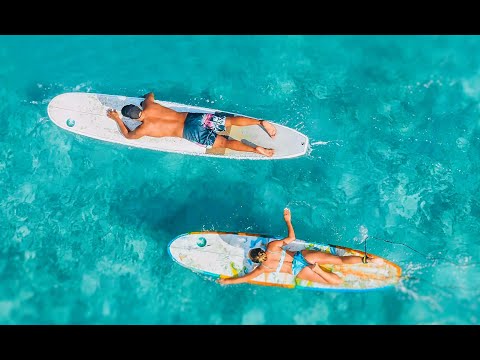
The new Mayor of the town is doing her best to clean up Sosua, but she faces a tough task. Cabarete is the sporty neighbour of Sosua.  Itself set inside a panoramic bay, there’s a safe area for swimming with calm water and an area of the beach reserved for windsurfers and kiteboarders.  SUP is now very popular in this huge bay where you can paddle out to the reef to catch some waves, or stay on the flat water inside and paddle up and down the bay.

The bay is light sand and lined with palm trees, just in front of a large number of charming restaurants.  The restaurants have their own sun loungers where you can pay a couple of dollars to sit all day, have food and drinks served to your lounger, and watch the various water spots go on around you.

Cabarete has a ban on motorised water sports, so you won’t be disturbed by any motorboats or jet skis.  There are modern apartment complexes right on the beach, Ocean One, Harmony, Ocean Dream which have apartment rentals aplenty.  

You can find these rentals advertised on Airbnb or on a specialist agency website like L’Agence in Cabarete.  Luxury places like Ultra-Violeta recently opened and are offering high-end, relatively expensive apartments on the beach. Kite Beach and Cabarete East also have accommodation on offer which might suit fervent kite-boarders looking for cheap accommodation, but bear in mind you will have a 20-30 minute walk back to town for dining and partying, so you will likely need transportation.

Specialist accommodations like Swell surf camp offer packages of accommodation including surf lessons, airport pickups, some meals and surf beach transportation.

surfing retreat

SURFBOARD RENTALS AND SURF SHOPS

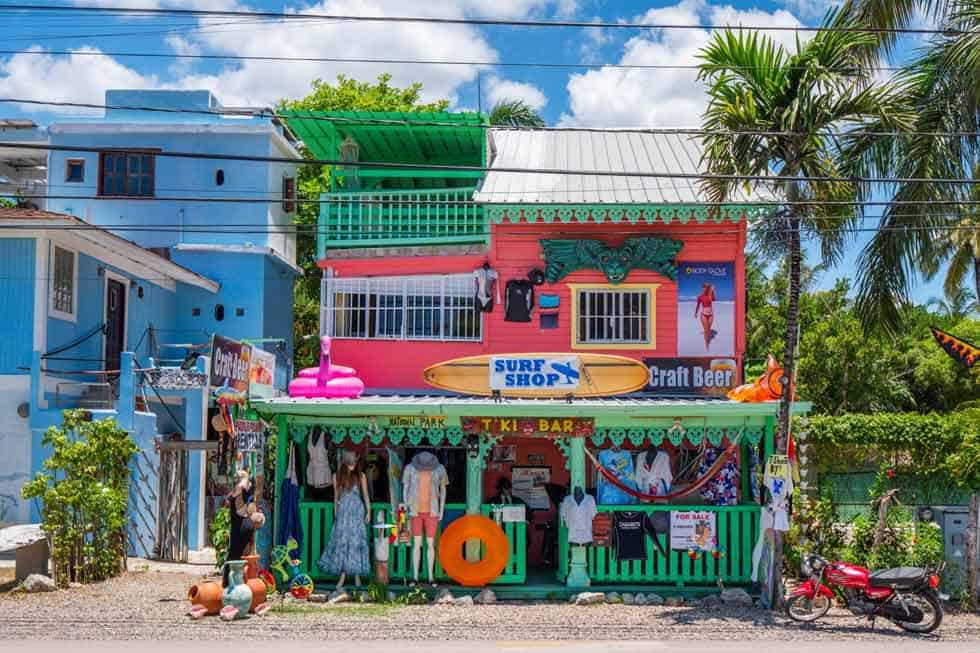
Naturally, in a surf town, surf shops are abundant.  You’ll find genuine article shops like Liquid Blue  in the center of Cabarete, Surfea in the middle of town but you’ll also find cheaper imitation shops, selling fake branded goods.

There are surf shops that will rent you a surfboard for a week, but at the surf beach itself, there are numerous surf schools that also rent boards.  You can turn up and take a surf lesson at Encuentro, at schools like Bobo’s, Pauhana, Chino’s, etc.  Pauhana specializes in teaching kids to surf. Swell Surf Camp will only teach their own guests to surf.

SHOPPING 

Cabarete is full of boutique shops.  Lili and Lou, Olivia’s and several other charming independent clothing retailers offer locally made and imported clothes/beachwear for men, women and kids.  There are numerous artisan jewellery stores using locally mined stones such as Amber (the north coast of the Dominican Republic is known as The Amber Coast because of the large number of amber deposits found there).  It’s a shopping beachside paradise.

Shopping In Cabarete

For groceries, there are several choices.  Food shopping has improved hugely in the last 10 years and what was a very basic provision of produce is now pretty international.  Much of the Dominican Republic’s own fruit and vegetables are organic.  There is not much that you cannot buy in the DR now, but be aware that specialist produce, such as gluten-free ingredients is more scarce and if found, will be pricey.  If you are traveling with babies or young children, you will find everything you need for your child in the local supermarkets, from milk formulas and diapers to rash creams and soothers.

You will be able to buy sunscreen and mosquito repellent in Cabarete, but prepare to pay more for anything which is imported, as many of these products are.

COMMUNICATIONS

The Dominican Republic is rapidly improving its cellular coverage.  4G is now available through providers like Claro and Altice Dominicana.  Get yourself a local sim; it will save you a fortune in roaming data charges.  Claro and Altice have offices in Cabarete. You’ll just need a passport for ID to buy one.

PHARMACIES

There are a couple of good pharmacies in Cabarete and the staff there are able to give you some decent medical advice for minor ailments.  A lot of drugs that would ordinarily require a Doctor’s prescription in your country of origin can be bought over the counter without one.  Hospitals and Medical Emergencies.

Between Cabarete and Sosua is the CMC (Cabarete Medical Centre), a well-equipped hospital.  Seriously, don’t travel to the Dominican Republic without comprehensive travel insurance and make sure your insurance does not have exclusions for water sports.

If you have to see a doctor at a drop-in centre (there’s also one in the centre of Cabarete) it will not be cheap and you might face a bill of $200 USD for a consultation.  Normally, even if your condition is serious, you will not be treated until you have demonstrated the funds to pay for your treatment.  The first thing you will be asked for is your insurance information.

EATING OUT; RESTAURANTS

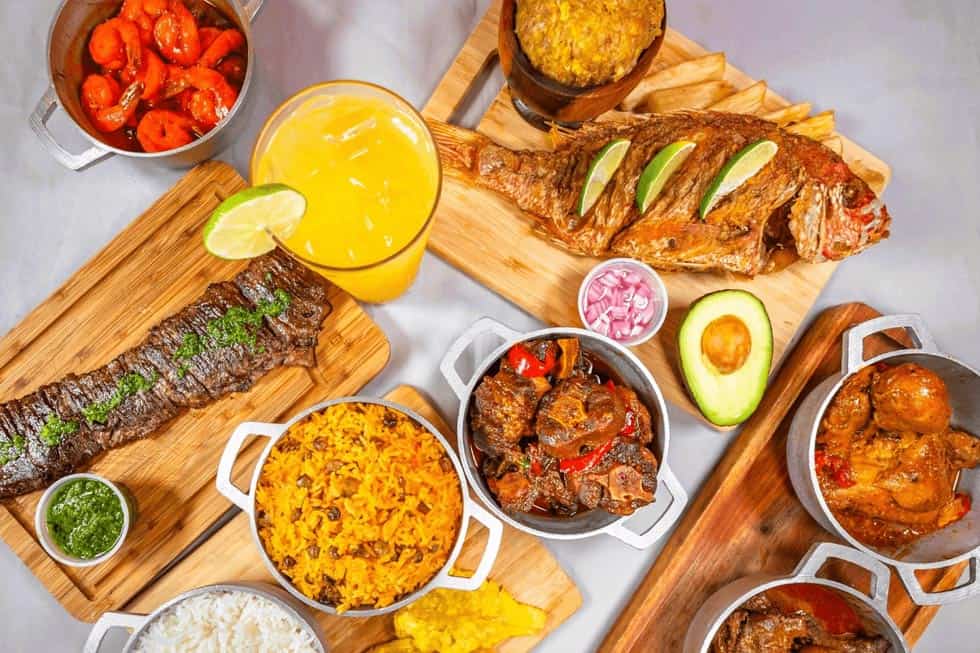
I’ll start with the best first; Dominican food.  Dominican recipes are handed down for generations; varied, rich stews of fish, chicken, beef or pork marinaded for hours with a huge array of herbs and spices: the tender fish, meat and sauces are to die for.  If you are not a meat lover, you will also love the many traditional Dominican vegetarian dishes, like Yucca fritas, aroz con guandules, and delicious platanos; really, the list is endless.

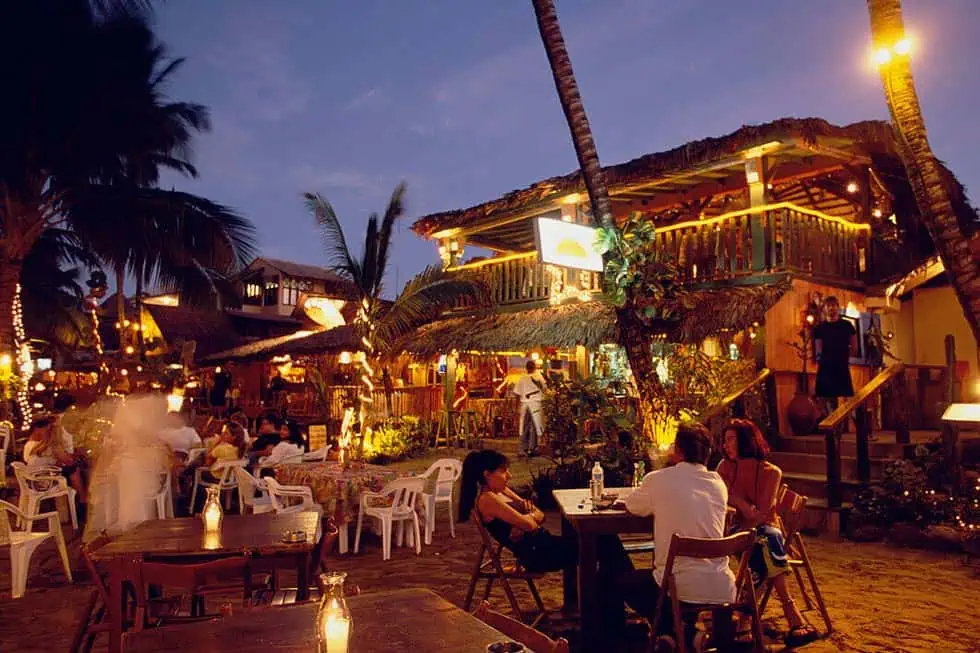
Cabarete At Night

There are several traditional Dominican restaurants in and around Cabarete; they are often the simplest-looking places but you can trust the food will be well prepared and delicious.  Try the famous ‘chicken man’ of Cabarete main street; marinated quarter, half, or whole chicken BBQ’d to perfection and served with rice and salad.  ​

RESTAURANTS IN CABARETE

There are a ton of places to eat, but these are our top tips​Le Bistro // French cuisine // Highly recommend // Price range: $$

Otra Cosa // Western cuisine // Romantics setting // Price range: $$$​Pomodoro // ​Italian cuisine // Great fresh pasta // Price range: $$

Gordito’s // Mexican // Cheap , Tasty & quick // Price range: $

Yamazato // Sushi // fresh & tasty // Price range: $$

Fresh fresh cafe // Healthy Lunches // Price range: $$

Wilson, La Boca // Top  Dominican Experience // Price range: $$​

NIGHTLIFE IN CABARETE

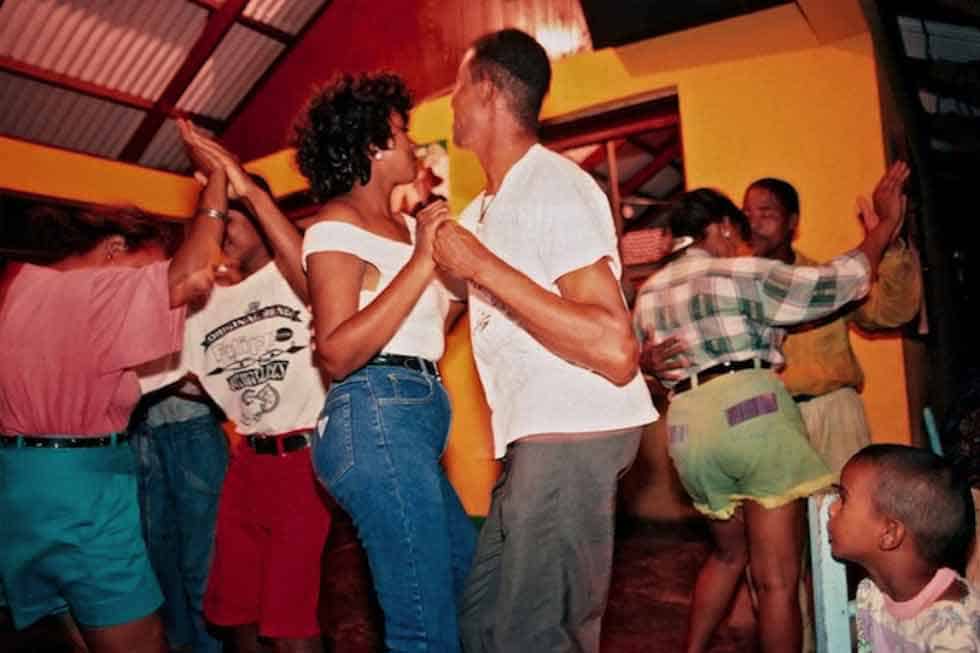
Cabarete has a vibrant party scene.  Not so much that it spoils the place for those of us (myself included) who no longer wish to dance the night away, but enough that those of you who love to go out and dance will find a party on the beach most nights of the week.  Once dinner is over and chairs and tables are stacked, the music is cranked up at two or three venues in the bay.

Some of the kite surf schools in Cabarete will host bonfire parties and pig roasts, especially in high season.

Presidente and Bohemia are the two major beers; Presidente being particularly good. The Dominicans are famous for their rum and it’s cheap.  A Cuba libre (rum and coke) is probably the most downed drink on the island but you’ll find every type of cocktail available at the bars.

Lots of people start their party night at one of the cheaper street side bars in town before heading to the beachside to dance.  Drinks are powerful in those street side bars, with big measures, so pace yourself.

If you are a smoker, cigarettes are cheap on the island, so no need to stock up before you arrive. Dominican cigars are world-famous, so make sure to visit one of the specialist cigar shops in town.

SAFETY IN THE DOMINICAN REPUBLIC

The biggest danger in and around Cabarete that you will face will be from or on the roads.  I don’t recommend renting a car or a bike as the driving really is nuts.  Yes, it’s great to bomb back and forth from the surf beach with no helmet and no T-shirt, but we’ve seen so many horrible accidents over the years, it’s just not worth it.  Take a taxi, and share a ride with others to keep the costs down.  Better still, if you are there for surfing, stay at a surf camp, like Swell, where you are a short, safe walk from all the bars and restaurants and you get taken back and forth from the surf beach.

Dance Cabarete

Tourist Police patrol Cabarete day and night and keep it very safe for tourists, but don’t do stupid things like leaving your stuff unattended on the beach.  It’s a poor country and your iPhone is a valuable commodity.

It’s generally safe to be out late, but be sensible and apply logic.  Pick pockets are operating in the night clubs and they looking for the easy targets, who it must be said are mostly drunk tourists.  Top tip; if a local girl approaches you for a cuddle, it might be a set-up.  Often they are doing it to distract you whilst someone else lifts your wallet/phone, etc. from your pocket.  Don’t walk home alone along long, unlit stretches of beach in the early hours; stick with a friend or partner and stay on the lit streets.  If your walk back to your lodging must involve a deserted area, take a taxi.

If you have suffered a theft, you will need to go and get a police report from your insurance company.  There is a police station in Cabarete at the far east end of the main street. Drugs carry very high penalties in the Dominican Republic and whilst they are available to buy, consider the time you may end up in a very unpleasant prison if you are caught in possession. Being LGBT in the Dominican Republic is completely accepted and there is a relaxed attitude towards same-sex relationships.  Cabarete has a vibrant gay community.

TOP THINGS TO DO

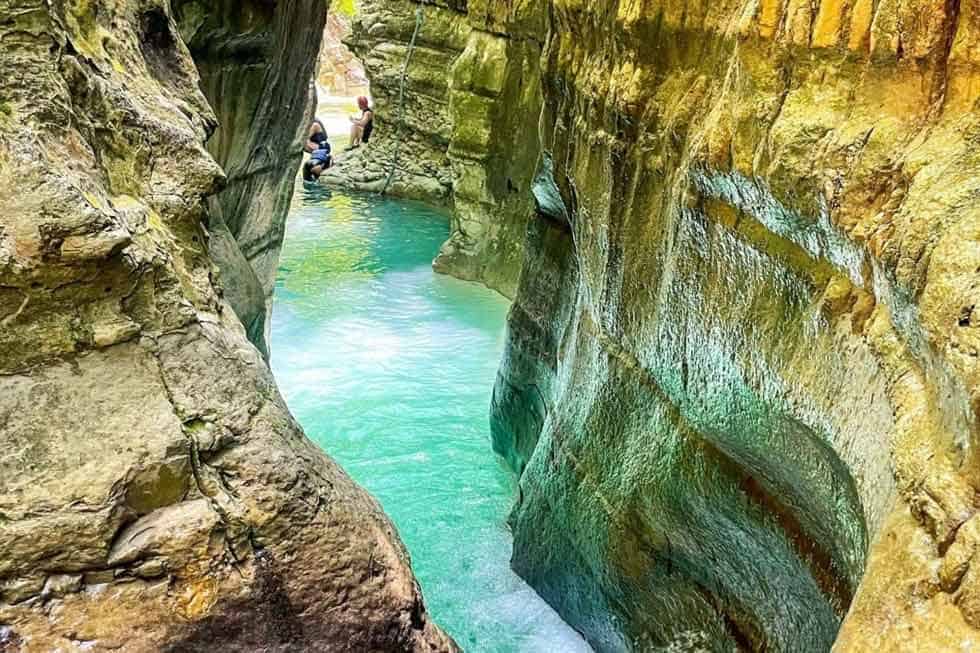
Parts of the movie Jurassic Park were filmed on location on the Amber Coast so naturally, it is a beautiful setting.  Mountains and rivers abound and there are a number of tour companies who will help you explore this wonderful landscape.

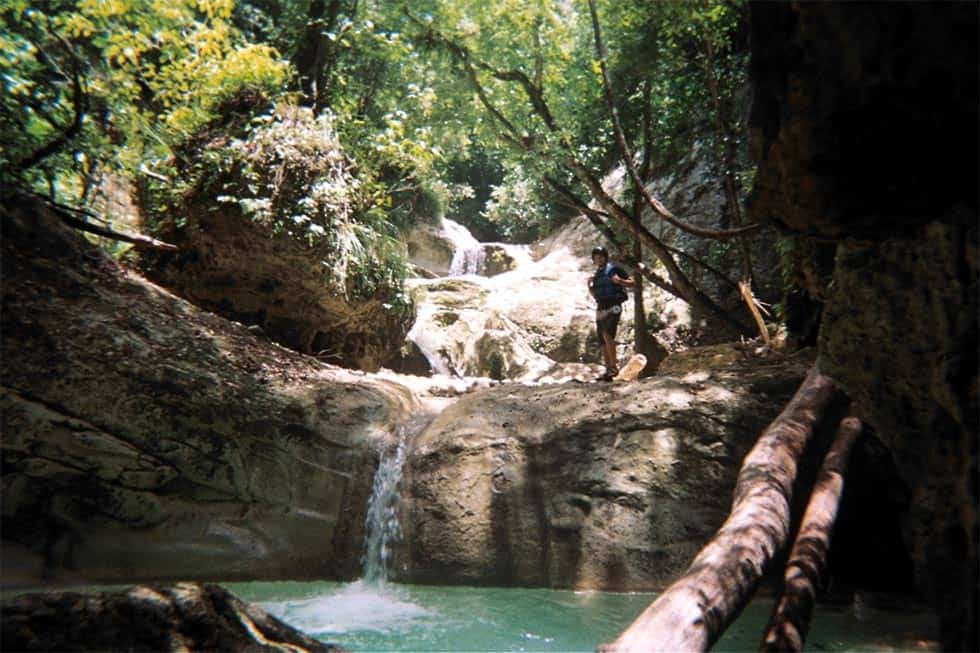
Kayak River Adventures and Iguana Mama are the two most widely respected operators with high safety standards, and both offer exciting tours of the many canyons and rivers.  The Magic Mushroom, Big Bastard, Ciguapa Falls and the 27 Waterfalls (Charcos) of Damajagua are just some on offer.

Canyoning

​You have the choice of caving, mountain biking, ziplining, monkey jungle, SUP, and kayak tours of the rivers, together with a huge road cycling community who regularly cross the country on their bikes.  
Sailing both Optimists and Lasers is available from the Carib Wind Centre and windsurf, SUP and kite lessons are all right on Cabarete Bay with providers like Vela Cabarete.

If you are into horses, both beach rides and mountain trekking are available to you. Check out Tommy at Rancho Luisa; he’s French Canadian born but lived most of his life in the Dominican Republic, and it seems, on the back of a horse.  His rides through the mountains, rivers, and villages are epic. 
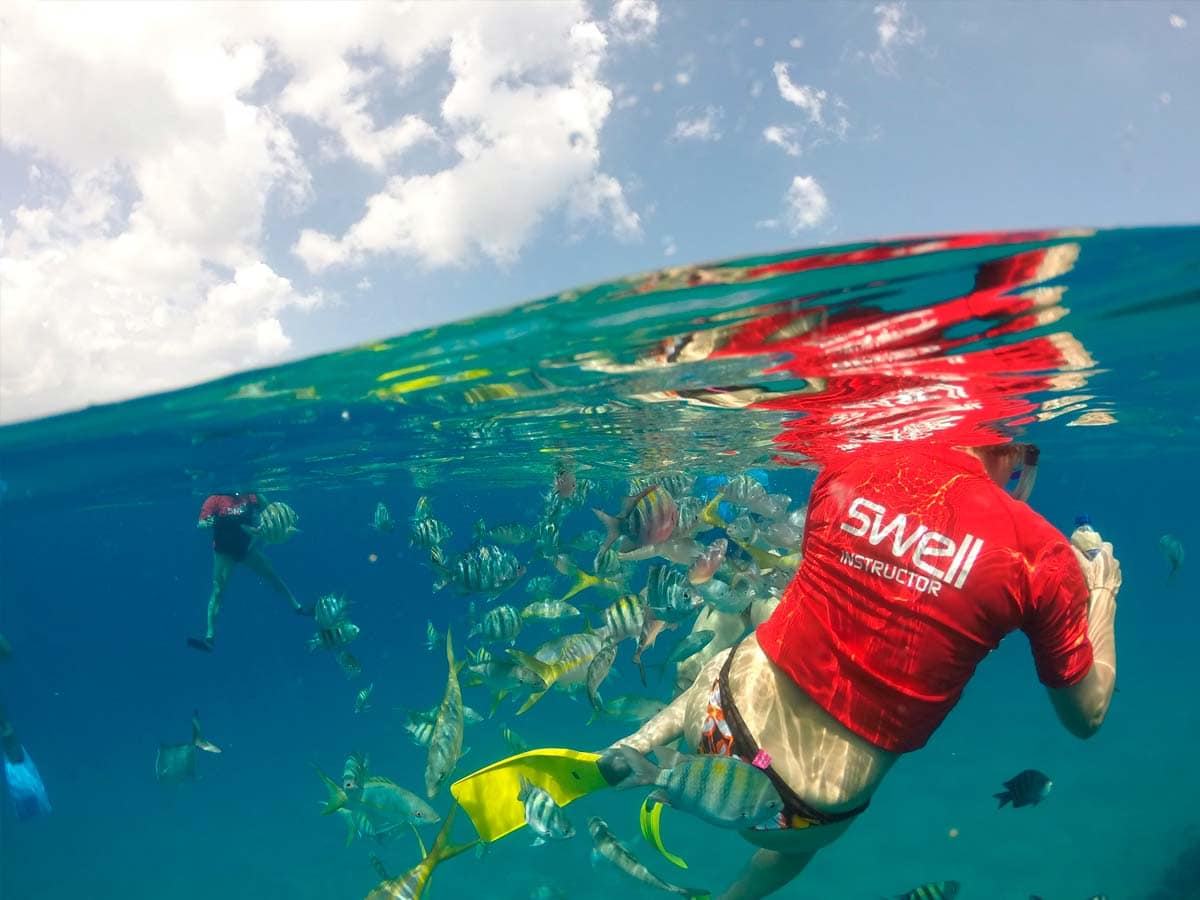
Snorkeling in the bay of Sosua is really lovely (15-minute taxi from Cabarete) and there’s deep sea fishing from Puerto Plata harbor.

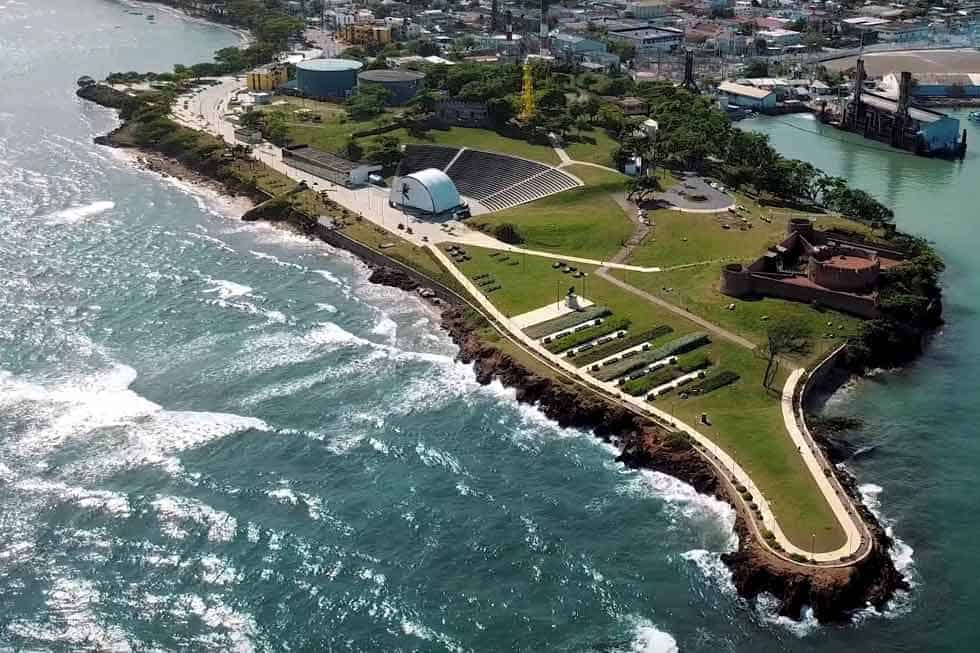
Go visit the ancient port of Fortaleza San Felipe in Puerto Plata (built in 1564 for King Felipe II of Spain). From the port, you can walk to the recently updated/restored town with its many old colonial buildings and find plenty of shopping and eating, too.


Take the cable car up to Isabel de Torres, also close to Puerto Plata, early one morning to see the sunrise; there’s a botanic garden at the top with breathtaking views of the north coast.  Visit the truly beautiful, huge beach of Playa Grande for the day to swim in clear, blue water and eat BBQ fish beneath the palm trees.  Visit Laguna Dudu, Gri Gri and the Blue Lagoon, all close to Playa Grande.

YouTube video

QUESTIONS ABOUT SURFING IN THE DR

No results!
  • WHAT KIND OF SURFERS GO TO SWELL? IS IT JUST FOR PEOPLE IN THEIR 20S?

    Not at all. Guests typically range from 35 to 60 years old, though we’ve had people as young as 18 and as seasoned 70+ jump in. Most are working professionals escaping the daily grind—looking for quality, not parties till dawn.

  • WHY CHOOSE SWELL OVER OTHER SURF CAMPS?

    Because you’re not into dorm-style chaos or cheesy party vibes. Swell was built with comfort in mind—boutique lodging, cozy communal spaces, ensuite rooms with AC and crisp cotton sheets, structured surf lessons, legendary breakfasts, and a social yet chill environment. Founded in 2009, it's the world’s first luxury surf camp designed by surfers for adults.

  • WHAT IS THE BEST TIME OF YEAR TO SURF IN THE DOMINICAN REPUBLIC?

    You can ride waves year-round here, but not all months are created equal. Winter (November–February) delivers overhead swells that intermediate and advanced surfers crave. Shoulder seasons like March–May and September–October still offer decent surf. Summer (June–August)? Expect waist-high waves—fun if you're a beginner, but underwhelming if you're chasing power.  For beginner surfers, there are no months to avoid as you will always be surfing inside of where the main wave power breaks.

  • WHAT OTHER ACTIVITIES CAN I DO BESIDES SURFING?

    Think kitesurfing, wingfoiling, yoga, canyoning, mountain biking, horseback riding, SUP, snorkeling—plus epic food and nightlife just steps from camp.

  • ARE THE SURFING CONDITIONS BEGINNER-FRIENDLY IN THE DOMINICAN REPUBLIC?

    Absolutely. Our local surf beach serves up warm, mellow chest-deep waves on the inside—no strong rips, scary wildlife, or punishing currents. Ideal for first-timers.

  • HOW EASY IS IT TO GET TO THE DOMINICAN REPUBLIC AND SWELL SURF CAMP?

    Ridiculously easy. Direct flights from North America and Europe land you in Puerto Plata in 3–4 hours (even just 1.5 from Miami). The camp is a breezy 25-minute drive from the airport.

  • WHAT IS THE WATER TEMPERATURE LIKE ON THE NORTH COAST

    Forget about a wetsuit in the Dominican Republic. Air and water temps stay warm year-round. Boardshorts and bikini's are your only requirements. 

  • WHAT DATES DO YOU RUN SURF CAMPS FOR FAMILIES?

    Families are welcome year round, but in the popular school holidays we tend to get more families. Ask us about the minimum age we can cater for, as this depends on the availability of surf instructors and the other younger guests that are already booked in.

    Q: How far in advance do I have to book a family surf camp with you?
    A: The popular school holidays tend to get booked up well in advance so if you and your family  are thinking about joining us for a surf camp week, send us a message with your dates as soon as possible.

PLANNING A SURF HOLIDAY TO THE DOMINICAN REPUBLIC?

The Dominican republic is a great surf destination for surfers of all different levels and ages. We hope this surf travel guide is helpful. If you need more info, feel free to contact us via our contact us form, and we’d be very happy to help you with any further questions. See you in the water!

Share on Facebook

SWELL MARCH 2024

surfer holiday

SWELL NEWS

surf holiday

WHAT’S BEEN GOING ON AT SWELL SURF CAMP.

We haven’t posted many updates on our website, since we have been right in the middle of a very busy high season here on the North coast of the Dominican Republic.

We have pretty much had a full house at Swell From December until now (March 2024). The majority of the clients came from North America And West Europe.

THE SURF CONDITIONS.

The conditions for learn to surf and for intermediate surfers to improve their surfing have been great with lots of days of waves in the chest to shoulder high range. The surf Instructor team is going steady with our 5 qualified surf instructors, meaning that most swell clients were in a surf lesson with a 4 to 1 student ratio or less.

surfing yoga retreat


YOGA CLASSES AT SWELL
surfing yoga retreat

Molly’s Yoga classes have always been popular, but this season were are seeing that 70 to 80% of our clients join in with the Swell Yoga classes. The yoga classes are accessible to people with all levels of Yoga. First-timers have loved the classes.

surfing lessons

THINKING ABOUT JOINING US?

Clare still has some dates open for April and May if you are in need of sun, surf and good vibes, send here a message today and you could be out in the Caribbean soon.


paradise

FOOD AT SWELL


social

Our clients rave about the food that Haudy and her staff prepare. Read the latest reviews here about what our clients had to say


LEARN TO WING FOIL / WING SURF

wingsurfing

Wing foiling has gotten very popular, even in the “non” wind season, lots fo clients have signed up for the wingfoiling lessons and have easily managed to get up and riding after their 8 hour lesson course. The coming 5 months in windy season should be a great time to learn this new and exciting sport of wing foiling.

Want to go for big jumps? Learn to kite surf

We hope to see you soon in the action sport capital of the Caribbean.

Jeroen & Clare and the rest of the team at Swell


Share on Facebook

WHY THE DOMINICAN REPUBLIC FOR A SURF HOLIDAY

surfing tips

The Dominican Republic is more than just a spot for a lazy beach holiday. It’s a paradise for those seeking adventure, especially if you’re into surfing. With its stunning landscapes, vibrant culture, and friendly locals, the Dominican Republic offers a unique experience that stands out from other popular surfing destinations like Costa Rica.

Learn to surf

Key Takeaways

  • The Dominican Republic has a rich and vibrant culture with unique cuisine, music, and festivals.
  • Top surfing spots include Cabarete Beach, Encuentro Beach, and Macao Beach.
  • You can enjoy unique experiences like whale watching, exploring waterfalls, and cultural immersion.
  • Costa Rica’s surfing scene is often crowded and more expensive compared to the Dominican Republic.
  • The Dominican Republic is known for its warm hospitality, friendly locals, and a welcoming surfing community.

THE VIBRANT CULTURE OF THE DOMINICAN REPUBLIC

Local Cuisine

The Dominican Republic offers a delightful mix of Latin, Spanish, and African flavors. Popular dishes include sancocho, a hearty meat stew, and arroz blanco, which is white rice served with stewed beans and braised chicken or beef. Don’t miss the chance to try these local favourites!

Dominican Food

Traditional Music

Music is a big part of life in the Dominican Republic. Merengue and bachata are the most popular genres, and you’ll often hear them playing in the streets and local clubs. The lively beats and rhythms will make you want to dance!

Colorful Festivals

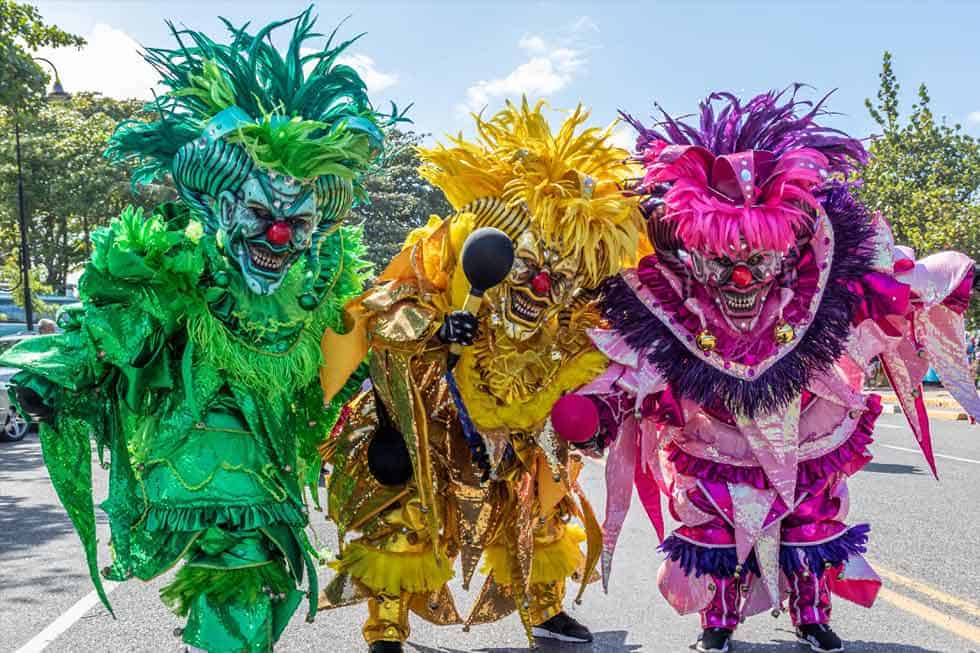
The Dominican Republic is home to many vibrant festivals throughout the year. From Carnival to the Merengue Festival, these events are filled with colorful costumes, lively music, and dancing. They offer a fantastic way to experience the local culture and have a great time.

Cabarete Culture

SURFING SPOTS IN THE DOMINICAN REPUBLIC

Cabarete Beach

Cabarete Beach is a must-visit for any surf holiday in the Dominican Republic. Known for its consistent waves, it’s perfect for both beginners and seasoned surfers. The beach is also famous for its vibrant nightlife and numerous surf schools, making it a great spot to learn and have fun.

Encuentro Beach

Encuentro Beach is one of the most popular surf spots on the North Coast. It’s ideal for surfers of all levels, offering a variety of waves that cater to both beginners and experts. The beach is less crowded, providing a more relaxed and authentic surfing experience.

Encuentro Drone

UNIQUE EXPERIENCES IN THE DOMINICAN REPUBLIC

Whale Watching

One of the most magical experiences you can have in the Dominican Republic is whale watching. Every year, humpback whales migrate to the warm waters of Samaná Bay. Seeing these majestic creatures up close is unforgettable. You can take a boat tour to witness their acrobatics and hear their songs.

Exploring Waterfalls

The Dominican Republic is home to some stunning waterfalls. One of the most famous is El Limón, a 130-foot cascade in the Samaná Peninsula. You can hike or ride a horse through lush forests to reach it. Once there, you can swim in the cool, refreshing pool at the base of the falls.

El Choco

Cultural Immersion

To truly understand the Dominican Republic, you need to immerse yourself in its culture. Visit the Zona Colonial in Santo Domingo, a UNESCO World Heritage site, to see historic buildings and learn about the country’s history. You can also attend local festivals, where you’ll experience traditional music, dance, and food. This is a great way to connect with the friendly locals and understand their way of life.

Dance Cabarete

THE DR COMPARED TO COSTA RICA’S SURFING SCENE 

Crowded Beaches

Costa Rica is known for its beautiful beaches, but they can get very crowded, especially in popular spots like Tamarindo. This can make it hard to find a quiet place to surf. If you prefer a more laid-back experience, you might find the crowds overwhelming.

surfing costa rica

(Crowded beaches in Costa Rica)

Less Authentic Experience

Many of Costa Rica’s surfing spots are highly commercialized. This means you’ll find lots of surf schools and touristy bars, which can take away from the authentic feel of the place. If you’re looking for a genuine cultural experience, Costa Rica might not be the best choice.

Higher Costs

Surfing in Costa Rica can be expensive. From accommodation to food and surf lessons, the costs can add up quickly. Accommodation, food and surf lessons in Costa Rica are priced on par or more expensive than in the USA And Canada. In comparison, a surf holiday in the Dominican Republic can be much more affordable, making it a better option for budget-conscious travellers.

DOMINICAN REPUBLIC’S WARM HOSPITALITY

Friendly Locals

The people in the Dominican Republic are known for their friendliness and warmth. They welcome visitors with open arms and make you feel at home. Their genuine smiles and helpful nature make your stay even more enjoyable.

Welcoming Surfing Community

The surfing community in the Dominican Republic is very welcoming. Whether you’re a beginner or an experienced surfer, you’ll find people ready to share tips and stories. The camaraderie among surfers here is something special.

social surfing

Safe Environment

Unlike in Costa Rica, There are no crocodiles sightings  in the Dominican Republic. No shark sightings in the DR either.

ENVIRONMENTAL CONSERVATION EFFORTS

Protecting Marine Life

The Dominican Republic is dedicated to protecting its marine life. Efforts include creating marine protected areas and enforcing fishing regulations. These actions help keep the ocean’s ecosystem healthy and thriving.

Sustainable Tourism Practices

Sustainable tourism is a big deal in the Dominican Republic. Many hotels and tour operators follow eco-friendly practices. They use solar energy, recycle waste, and support local communities. This way, tourists can enjoy their stay without harming the environment.

Preserving Natural Beauty

The country works hard to keep its natural beauty intact. National parks and reserves are well-maintained. Visitors are encouraged to follow guidelines to minimize their impact. This ensures that the stunning landscapes remain unspoiled for future generations.

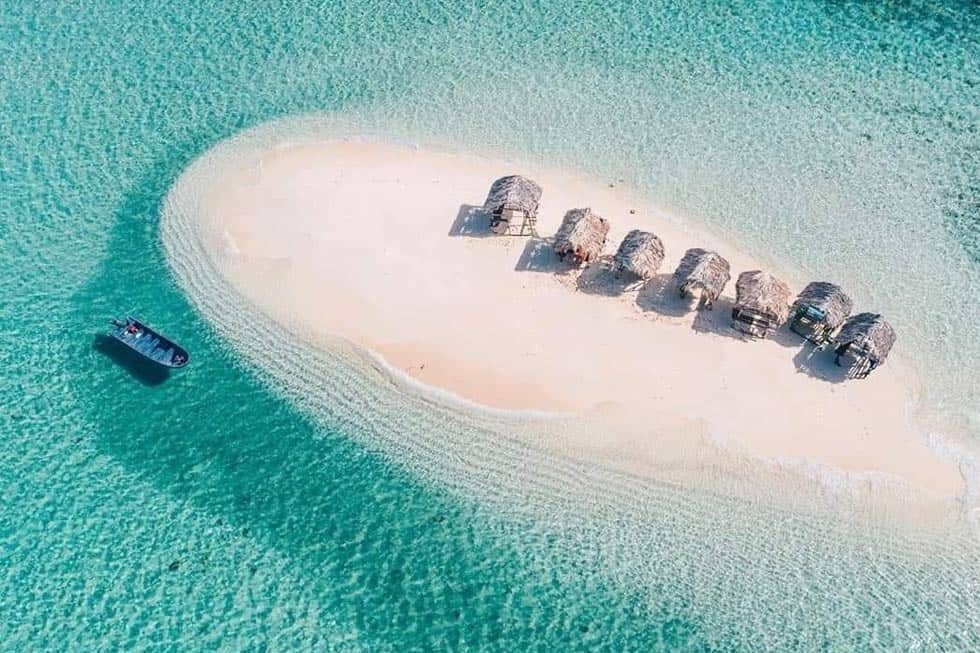
Cayo Arena

ADVENTURE BEYOND SURFING

Zip-lining in the Rainforest

Imagine soaring through the lush green canopy of a tropical rainforest. Zip-lining in the Dominican Republic offers an exhilarating experience that lets you see the island from a whole new perspective. Feel the rush of adrenaline as you glide above the treetops, taking in breathtaking views of the landscape below.

Hiking to Hidden Caves

For those who love to explore, hiking to hidden caves is a must-do activity. The Dominican Republic is home to numerous caves, each with its unique features. Some caves even have ancient drawings on their walls, offering a glimpse into the island’s rich history. Make sure to bring a flashlight and a sense of adventure!

Exploring Colonial Architecture

Step back in time by exploring the colonial architecture of the Dominican Republic. The island boasts a variety of well-preserved buildings from the colonial era, each telling a story of its own. Wander through cobblestone streets and marvel at the intricate designs of these historical structures. It’s a perfect way to combine adventure with a bit of education.

San Felipe Fort

LOCAL ARTISAN MARKETS AND HANDICRAFTS

Unique Souvenirs

Cabarete is a treasure trove of boutique shops. Here, you can find locally made and imported clothes and beachwear for everyone in the family. The north coast is famous for its amber deposits, making artisan jewellery stores a must-visit for unique pieces.

Supporting Local Artists

When you shop at these markets, you’re not just buying a souvenir; you’re supporting local artists and their families. Many shops offer handmade items that reflect the rich culture and traditions of the Dominican Republic.

Colourful Market Atmosphere

The markets are vibrant and full of life. Strolling through them, you’ll experience a lively atmosphere filled with colours, sounds, and the friendly chatter of vendors. It’s a shopping paradise by the beach, where every corner has something new to discover.

HEALTH AND WELLNESS  IN THE DOMINICAN REPUBLIC

Yoga and Meditation Centers

The Dominican Republic is home to many yoga and meditation centres where you can find peace and relaxation. These centres offer classes for all levels, from beginners to advanced practitioners. Imagine starting your day with a sunrise yoga session on a beautiful beach. It’s a perfect way to connect with nature and yourself.

Organic Farm-to-Table Dining

Eating healthy is easy in the Dominican Republic. Many retreats offer organic farm-to-table dining experiences. You can enjoy fresh fruits, vegetables, and other local produce. This not only supports local farmers but also ensures you are eating the freshest and healthiest food possible. At Swell, we try to produce our breakfasts and dinner with local fresh & organic produce.

Holistic Spa Treatments

Pamper yourself with holistic spa treatments available at many wellness retreats. From massages to facials, these treatments use natural ingredients to help you relax and rejuvenate. A spa day can be the perfect way to unwind after a long day of surfing or exploring.

CONCLUSION

Choosing the Dominican Republic for your next surfing holiday is a decision you won’t regret. With its vibrant culture, stunning surfing spots, and unique experiences, it offers something for everyone. Unlike Costa Rica, the Dominican Republic provides a more authentic and affordable adventure. You’ll be welcomed by friendly locals and a warm surfing community, all while enjoying a safe environment. Plus, the country’s commitment to environmental conservation ensures that its natural beauty remains unspoiled. Beyond surfing, there’s a world of adventure waiting, from zip-lining in the rainforest to exploring colonial architecture. Don’t miss out on the colourful local markets and health and wellness retreats. The Dominican Republic truly is a paradise for those seeking both excitement and relaxation.


Frequently Asked Questions

Why is the Dominican Republic a great place for a surfing holiday?

The Dominican Republic offers beautiful scenery, warm waters, and great waves almost all year round. It’s also less crowded than other popular surfing spots.

Is it only surfing that is on offer?

Aother  aspect that makes the Dominican Republic such a great surf holiday destination is that it’s one of the few places in the world where you can combine surfing with several other exciting watersports. Sports like Kitesurfing, Windsurfing, sailing and the new sport of wingfoiling are all on offer right in Cabarete bay

wingfoiling cabarete

What are the best beaches to surf in the Dominican Republic?

Some of the top surfing beaches are Playa Encuentro, Cabarete’s surrounding beaches and Playa Preciosa next to Playa Grande. More info on surfing in the Dominican republic can be found here

Is it expensive to surf in the Dominican Republic?

No, it’s generally cheaper than places like Costa Rica. You can find affordable accommodations, meals, and surf lessons. For example, at Swell we have a package with a learn-to-surf holiday for around $1,900 USD pp/pw A similar package in at a Costa Rica surf camp will cost $3,500 and up. (some Costa Rican Surf resorts charge over$6,000 USD pp/pw)

When is the best time to go surfing in the Dominican Republic?

You can surf almost any time of the year. There are about 350 surfable days annually, and there’s no distinct rainy season to worry about.

Is the Dominican Republic safe for tourists?

Yes, the Dominican Republic is known for its warm hospitality and safe environment, especially in popular tourist areas.

What other adventure activities can I do besides surfing?

Plenty of other adventures include whale watching, exploring waterfalls, zip-lining, and hiking to hidden caves. Bsides those exciting adventure day trips, there’s sports like, windsurfing, kitesurfing, sailing, diving and Wingfoiling

YouTube video

How is the local culture in the Dominican Republic?

The local culture is vibrant and welcoming. You can enjoy delicious local cuisine, traditional music, and colourful festivals.

About

At Swell we have been teaching people to surf, using our own unique method of teaching to get our guests to make quick, safe progress in a fun way. Interested in learning to surf? Or Improving your surfing skills? Have a look at the different surf holiday packages we offer and join us in the caribbean for a week of sun, surf and good vibes

Share on Facebook

SURF & YOGA HOLIDAYS IN THE CARIBEAN

surf & yoga holiday

SURF & YOGA IN PARADISE

surfing yoga retreat

SURF & YOGA: WHY IT’S SUCH A PERFECT MATCH!

As surfers we have long been big fans of Yoga, it’s the perfect supplement to a healthy lifestyle and ensures you can stay fit and flexible to continue your surfing as you get older. Below

SURF & YOGA HOLIDAYS

Are you craving an escape from the hustle and bustle of daily life? Do you dream of basking in the warm sun, riding the waves, and finding inner peace? If so, a surf and yoga holiday might be just what you need. And there’s no better place to experience this perfect blend of adventure and relaxation than with Swell Surf Camp. In this article, we’ll explore the compelling reasons why you should embark on a surf and yoga holiday with Swell Surf Camp for an unforgettable experience of a lifetime.
surfing yoga retreat

HARMONIZING THE ELEMENTS: SURFING AND YOGA

Surfing and yoga, though seemingly different activities, share a beautiful harmony. Surfing allows you to connect with the powerful ocean, riding waves that bring a sense of exhilaration and freedom. On the other hand, yoga allows you to connect with your inner self, promoting physical, mental, and spiritual well-being. The combination of these two practices creates a unique and transformative experience.

Swell Surf Camp has mastered the art of blending these two disciplines seamlessly. Imagine starting your day with a sunrise yoga session, where you’ll stretch and strengthen your body, preparing it for the exciting adventures that lie ahead. Afterward, you’ll hit the waves with expert instructors who will guide you through the surfing journey, helping you catch that perfect wave and feel the thrill of gliding on water. This balanced approach ensures you leave the camp feeling recharged, physically invigorated, and mentally centered.\
surfing yoga retreat

EXPERT GUIDANCE AND COACHING

Whether you’re a complete beginner or an experienced surfer or yogi, Swell Surf Camp caters to all skill levels. The camp’s team of professional instructors is not only highly experienced in their respective fields but also passionate about sharing their knowledge with others. Their expertise will guide you to progress in both surfing and yoga, regardless of your starting point.

If you’re new to surfing, the instructors will provide you with a solid foundation, teaching you essential techniques, safety measures, and wave dynamics. For seasoned surfers, they’ll help you fine-tune your skills and even introduce you to advanced maneuvers. Similarly, the yoga instructors will lead you through various styles of yoga, catering to different preferences and abilities, ensuring that you benefit from the practice, both physically and mentally.
surfing lessons

THE HEALING POWER OF NATURE

One of the most remarkable aspects of a surf and yoga holiday with Swell Surf Camp is the stunning natural locations of their camps. Swell Surf Camp has thoughtfully selected pristine beaches and scenic spots that harmonize with the environment, allowing you to immerse yourself in nature’s beauty.

Picture yourself practicing yoga on the soft sand as the sun rises over the horizon, filling the sky with breathtaking colors. The soothing sound of waves crashing nearby and the gentle breeze brushing against your skin create an environment that fosters relaxation and self-reflection. The natural surroundings act as a catalyst for personal growth and healing, making your holiday truly transformative.

paradise

EMBRACING THE SURFING LIFESTYLE

Surfing is not just a sport; it’s a way of life. Swell Surf Camp embraces the surfing lifestyle, fostering a sense of community, camaraderie, and respect for the ocean. As you spend time with fellow surf enthusiasts, you’ll find yourself connecting with like-minded individuals from all over the world.

Whether you’re sharing stories around a beach bonfire or cheering each other on as you ride the waves, you’ll forge bonds that can last a lifetime. This sense of belonging and the shared passion for surfing and yoga create a positive and supportive atmosphere throughout the camp.

UNPLUGGING AND RECONNECTING

In our increasingly digital world, it’s essential to take time for ourselves and unplug from screens and constant distractions. A surf and yoga holiday with Swell Surf Camp provides the perfect opportunity to disconnect from the virtual world and reconnect with yourself and the present moment.

During your time at Swell Surf Camp, you’ll have the chance to slow down, savoring each moment without the pressure of deadlines and obligations. You’ll be encouraged to be fully present, embracing the simple joys of life: the sound of waves, the taste of fresh meals, and the joy of genuine human connections. Yes we have internet at Swell, but we encourage everyone to minimise the “online life” and instead enjoy social meals with new friends.
social

A UNIQUE SURF & YOGA EXPERIENCE

Swell Surf Camp understands that each individual is unique, with different preferences and needs. That’s why our surf and yoga holiday packages are customizable to you.

If you have dietary preferences or restrictions, our culinary team will prepare delicious meals that cater to your needs.

**Conclusion**

A surf and yoga holiday with Swell Surf Camp offers a unique opportunity to harmonize the elements of adventure and serenity. Through expert guidance, a vibrant community, and a focus on personalization, We try to create an unforgettable experience tailored to your needs. Embrace the surf & yoga lifestyle, unplug from the digital world, and embark on a journey of self-discovery and growth. Book your surf and yoga holiday with Swell Surf Camp today and change your lifestyle.

ACCOMMODATION: STAY IN COMFORT AND STYLE

At Swell we have been providing active surf and kitesurfing holidays in the Caribbean since 2009, in 2021 we added learn to wingfoil packages to our services.

social

Interested in changing your life to see the health benefits of learning to surf?


Send us a message today and we’ll get you up and riding!

Share on Facebook

CARRIBEAN WINGFOIL PARADISE

CABARETE A WINGFOILING PARADISE

surfing green waves

Cabarete: A Windsport Paradise

Located on the north coast of the Dominican Republic, Cabarete has earned a well-deserved reputation as a windsport paradise. This small town, once a quiet fishing village, has transformed into a mecca for windsurfing, kitesurfing, and other exhilarating watersports. From its perfect weather conditions to its stunning natural beauty and vibrant beach culture, Cabarete offers an irresistible combination of factors that make it a haven for windsport enthusiasts from around the world.

CABARETE WINGFOILING PARADISE PLAYGROUND

YouTube video

HISTORY OF CABARETE AS A WIND TOWN

The first ones to discover the appeal of Cabarete as a wind town were the windsurfers in the early 80’s. They enjoyed an empty Cabarete bay with white sandy beaches a large open bay for slalom windsurfing and the waves on the reef for wave windsurfing. It was windsurfers that put Cabarete on the map. In the early 2000, with the rise of kitesurfing become the new rage in watersports that cabarete got a new influx of watersport lovers. The steady side onshore wind of 15 to 25 knots (ideal range) appealed to kite surfers of all levels. Today Cabarete is still widely regarded as one of the best places in the world for kitesurfing. 20 years later, Cabarete is once again in the spotlight for being one of the best wingfoiling / Wingsurfing destinations in the world. Wide open spaces, flat water, gentle rolling deep water swell and waves create the ultimate playground for beginners and experts wingfoilers.

One of the primary reasons Cabarete is considered a windsport paradise is its exceptional wind conditions. Situated between the Atlantic Ocean and the Cordillera Septentrional mountain range, the town benefits from the constant trade winds that blow consistently throughout the year. The easterly trade winds, known as the Alisios, provide a steady and reliable breeze, creating ideal conditions for windsurfing and kitesurfing. These consistent winds, typically ranging from 15 to 30 knots, allow riders of all levels to enjoy their favorite sports without interruptions or frustration. Whether you are a seasoned pro or a beginner looking to learn, Cabarete’s winds will not disappoint.

WIND CONDITIONS IN CABARETE, DOMINICAN REPUBLIC

Trade Winds: Cabarete experiences the influence of the easterly trade winds, known as the Alisios. These trade winds blow consistently from the east and are responsible for the reliable wind conditions in the area. The prevailing wind direction ensures that riders can enjoy their sports with a steady and predictable breeze.

Wind Speed / wind strength : The wind speeds in Cabarete are generally suitable for windsports. The average wind speed ranges from 15 to 30 knots, providing enough power for riders to harness and enjoy their chosen activities. These wind speeds are suitable for riders of all levels, from beginners to professionals.

YouTube video

Wind Consistency: One of the key advantages of Cabarete is the consistency of its wind conditions. Throughout the year, the town experiences a high percentage of windy days, ensuring that windsport enthusiasts have ample opportunities to get out on the water. This consistency allows for regular practice, skill development, and a reliable wind-dependent lifestyle.

Seasonal Variation: While Cabarete enjoys consistent winds year-round, there are some seasonal variations in wind patterns. The summer months (June to August) tend to have stronger winds, making it an excellent time for advanced riders seeking more challenging conditions. The winter months (December to February) offer slightly milder winds, which are more suitable for beginners and freestyle enthusiasts.

Overall, Cabarete’s wind statistics demonstrate why it is considered a windsport paradise. The consistent trade winds, favorable wind speeds, and wide wind window make it an ideal destination for windsurfing, kitesurfing, and other related activities. Whether you are a seasoned professional or a beginner looking to learn, Cabarete’s wind conditions offer an exhilarating and unforgettable experience.

OTHER SPORTS AND ACTIVITIES

Cabarete boasts a diverse range of water conditions, further enhancing its appeal as a windsport paradise. The town is blessed with a unique geography that offers something for everyone. The expansive beach, stretching for several kilometers, provides ample space for kiteboarders and windsurfers to glide across the water, showcasing their skills and tricks. Additionally, the Atlantic Ocean’s waves, combined with the reef breaks and offshore swells, create excellent opportunities for wave riding. Cabarete Bay, protected by a natural coral reef, offers calmer waters, making it an ideal spot for beginners and freestyle enthusiasts. This variety of conditions ensures that windsport enthusiasts can always find their preferred style of riding, making Cabarete an inclusive and versatile destination.
Watersport adrenaline away from the ocean? That’s possible too. Go on a Canyoning trip to the 27 waterfalls, 30 minutes out of Cabarete. You’ll be swimming through turquoise canyons and jumping of waterfalls

Beyond its exceptional wind and water conditions, Cabarete’s natural beauty is awe-inspiring. The town is blessed with stunning beaches, crystal-clear turquoise waters, and breathtaking sunsets. The golden sand and warm, inviting waters provide the perfect backdrop for windsport activities. As riders harness the power of the wind and glide across the water, they are treated to panoramic views of the Caribbean Sea and the picturesque coastline. The combination of the natural beauty and the thrill of windsports creates an unforgettable experience that keeps visitors coming back for more.

LEARN TO WINGSURF IN CABARETE

At Swell we have been offering wing foiling lessons to our clients since 2021 and have already had 100’s of clients into Wingfoiling enthusiasts. Wingfoiling is easy and quick to learn and when you are in the hands of a good instructor it is also a safe sport to learn. Many of our clients keep coming back to cabarete for more wingfoiling, since they find it hard to find a wingfoil destination anywhere in the world as good as our home town of Cabarete.

LEARN TO WINGFOIL

Cabarete’s vibrant beach culture is another factor that sets it apart as a windsport paradise. The town has a laid-back and welcoming atmosphere that embraces the windsport community. Along Cabarete Beach, there is a lively strip of beach bars, restaurants, and shops catering to the needs of windsport enthusiasts. The area buzzes with energy and excitement, with riders sharing their experiences, discussing gear, and celebrating their passion for the sport. The local community, including both residents and expatriates, is known for its warm hospitality and genuine love for windsports. This sense of community creates a supportive and inspiring environment that fosters growth and camaraderie among riders.

Furthermore, Cabarete is renowned for hosting world-class windsport events, attracting top athletes from around the globe. The town has been the venue for numerous prestigious competitions, including the Cabarete Kiteboarding World Cup and the Master of the Ocean contest, which combines kitesurfing, windsurfing, surfing, and stand-up paddleboarding. These events showcase the town’s commitment to windsports and bring together the best talent in the industry. For spectators, it is an opportunity to witness thrilling displays of skill and athleticism, further cementing Cabarete’s status as a windsport paradise.

CABARETE A WINDFOILING PARADISE

YouTube video

WHY YOU WILL LOVE A WINGFOILING HOLIDAY TO CABARETE

  • Steady tradewinds
  • Warm water
  • Warm air
  • Friendly Caribbean vibes
  • Easy to get to
  • Budget friendly
  • Good for all levels
  • Variety of other sports
  • Stunning scenery


ABOUT SWELL

At Swell we have been providing active surf and kitesurfing holidays in the Caribbean since 2009, in 2021 we added learn to wingfoil packages to our services.

BOUTIQUE SURF HOLIDAYS IN THE CARIBBEAN

Interested in changing your life to see the health benefits of learning to surf?


Send us a message today and we’ll get you up and riding!

Share on Facebook

LEARN TO SURF AT 50

learning to surf at an older age

 LEARN TO SURF AT THE AGE OF 50?

If you are over 50 and considering learning to surf, you might be concerned that you’re too late to the game.

The fact that you will struggle to master the necessary skills, that you will appear foolish, and that all of the other younger, fitter surfers would laugh at your inexperience and slowness and ignore you, are all reasonable concerns.

This, however, is not the case.

surfing green waves

LEARNING TO SURF AT AN ‘OLDER’ AGE

Is it possible to learn to surf at the age of 50? Or Older?
Yes, as long as you have a reasonable level of physical fitness and flexibility. Learning to surf is primarily a matter of persistence, so if you’re ready to keep trying, you can learn to surf at that age.

Consider signing up for a beginner’s surf lesson, getting in shape, improving your swimming skills, selecting the perfect surfboard, and avoiding comparing yourself to others if you’re over 50 and want to learn to surf. You’ll be out there enjoying those waves before you know it!

Surfing has no age restrictions, and it’s never too late to start (even if you’re past 50!)

SURFING IS  A GREAT WAY TO:

  • Keep in shape,
  • Improve your mood,
  • Push yourself,
  • Feel younger for longer.
  • Meet new people

This comprehensive guide will help you learn to surf at 50. It has been compiled to answer your questions and provide support along the process. I’ll go over some of the advantages of this enjoyable outdoor activity and provide a step-by-step tutorial to get you started.

Tips on how to learn to surf aged  50 years or older.

learn to surf at 50

1. WORK ON YOUR FITNESS

Surfing is physically hard at any age, but especially so as you become older.

You’ll need to use your entire body to manage your weight as you paddle out, pop up on your board, and ride those waves. You’ll also be out for extended periods, so you’ll need plenty of stamina to be safe.

As a result, you should begin by increasing your physical activity and improving your fitness. The more physically fit you are, the easier it will be to learn to surf.

To be clear, you don’t need to be in marathon shape when you’re initially learning, but every little bit helps. Here are some suggestions:

Improve your cardiovascular fitness. Take long walks, begin running, ride your bike, or even run around with your children.

Put a premium on functional strength. If you want to keep control, you’ll need good core strength and good arm power for paddling.

Keep in mind to stretch. Stretching, flexibility, and balance should be part of your daily routine to avoid injury and improve your surfing skills.

Most of these surfing workouts may be done from the convenience of your own home. Simply go to YouTube, and you’ll find a plethora of online workouts that will help you get in shape quickly.
Read this article on surf fitness to get started.

2. TAKE SURF LESSON

While you can certainly teach yourself to surf, it’s so much easier and progress a lot quicker when you use the help of a local surf school or surf camp.

For beginners aged 50 and up, these can be invaluable because they give you confidence in your developing talents while also assisting you in improving your technique. You’ll also learn the proper surf ethics and gain a deeper understanding of the water.

SURFING AT AN OLDER AGE

3. IMPROVE YOUR SWIMMING ABILITIES.

If you don’t know how to swim, turn off your computer right now and enrol in some swimming classes. Seriously! If you’re not a great swimmer, there’s no way you’ll be able to stay safe in the ocean.

It is essential to keep in mind that the water is a massive force.

Because waves and currents can be powerful, and sea conditions can change in the blink of an eye, putting you in danger, knowing how to swim is essential. You must be capable enough to look after yourself and get to safety.

Because you’ll be starting in relatively shallow water, you don’t need to be a particularly great swimmer to begin. It is, nevertheless, necessary if you wish to proceed beyond the beginning stage.

Swimming in the ocean as much as possible will help you become a better swimmer. This will provide more authentic conditions than simply going to your local pool, and it will give you more confidence in ‘wild swimming.’

learn to surf at an older age

4. SELECT THE APPROPRIATE BOARD FOR LEARNING TO SURF

When you first begin, make sure you select the appropriate surfboard for a beginner like yourself.

Look for longer, thicker, and wider boards because they provide the most stability and make learning easier. Surfing beyond 40 or 50 is best learned on larger boards like 9 feet + beginner soft top surfboards. More info on beginner surfboards is detailed in this article. 

Avoid smaller boards as much as possible; they are more difficult to manage and can lower your confidence when you first begin. Your local surf shop can assist you in determining the suitable size and shape of a surfboard for your needs and abilities.

5. DON’T MAKE COMPARISONS TO OTHER PEOPLE

I know it is easy to say so rather than act, but you must avoid comparing your surfing abilities to others.

So, what if you’re in a group surf session and someone in your class can show there in 5 minutes, but you’re still having trouble an hour later? Maybe he or she has already learned to surf and is just brushing up on their skills. Perhaps they’re naturally sporty, whereas you’ve spent the last few years lazing on the couch.

Everyone is on their own individual path.

If you want to feel proud of yourself instead of comparing yourself to others, remember that you came up and took the risk of learning to surf at a time when many others would not.

Concentrate on your own game, be proud of your drive and dedication, and work hard to reap the rewards.

If you haven’t already, take benefit of the opportunity to learn to surf. You’ll notice a variety of mental and physical health benefits as soon as you begin.

What are the advantages of learning to surf at the age of 50+?

Learning to surf will change your life for the better, especially if you are over 50 years old. Check out below a few of the reasons behind this:

1. Surfing is a terrific way to stay in shape while having a good time and no more sweating it out for hours on machines in a dark, dingy gym! You’ll be outside, feeling the rush, inhaling in the fresh air while also getting in shape. Awesome.

2. Surfing is a fantastic cardio workout. All of that paddling, popping up, and riding will get your blood pumping, your heart pumping, and your body in terrific form.

surfing holiday

3. Surfing is a fantastic chance to meet new people. When you’re over 50, it’s more difficult to expand your social group. On the other hand, Surfing makes you part of a close-knit group that will keep an eye on you and is there for you when you need it.

4. Surfing aids in the prevention of aches and pains. You will become stronger overall, your joints will become less achy, and you will become more flexible if you engage in regular exercise such as surfing. If you have to sit at your desk all day or have been groaning as you stand up recently, this is the perfect remedy!

5. Surfing is excellent for improving your coordination. When you learn to surf, you’ll notice a significant improvement in your motor skills. If you participate in other sports, this will pay off handsomely and help you age more gracefully.

6. Surfing is a fantastic way to improve your mood. All of that natural daylight exposure, fresh air, exercise, and community spirit will get your endorphins flowing, raise your mood, and, according to some studies, may even help to alleviate your depression and stress.

Don’t let your age stop you from learning to surf. The average age of clients at Swell on a learn to surf holiday is 38. This means we get plenty of people in their 50’s and 60’s that join us.

Want an example:

Clare, one of the owners of Swell Surf Camp was never very interested in learning to surf, then at 52 decided it was time to get in the water and learn surfing. Now she goes for a surf with her surf friends whenever she has a chance. This is Clare 3 years after  her first surf sessions, aged 56 (see the smile on her face)

So what are you waiting for? Sign up for surf lessons at your local surf beach, or join us in the warm and mellow waves of the Dominican Republic for a life-changing surf & yoga retreat holiday

ABOUT SWELL

Teaching people the sport of surfing in a safe, quick and fun way is what we specialise in at Swell Surf Camp. We have taught 1000’s people the basics of surfing.

BOUTIQUE SURF HOLIDAYS IN THE CARIBEAN

Swell offers full surf packages holidays

Interested in changing your life to see the health benefits of learning to surf?


dr learn to surf holiday

Send us a message today and we’ll get you up and riding!

Share on Facebook

CATCHING UNBROKEN WAVES: POSITIONING IN SURFING

surfing unbroken waves

CATCHING UNBROKEN WAVES:

POSITIONING IN SURFING

Learn how to discover, catch, and stay on unbroken “green” waves by positioning yourself correctly in the line-up.

surfing green waves

CATCH MORE WAVES BY SITTING IN THE RIGHT SPOT!

This article will provide you with a basic understanding of better position yourself to catch green waves. It covers the fundamentals of paddling into an unbroken wave and “sticking” on these “green waves” without nose-diving, passing over the wave, or becoming caught on top of it.

Keep in mind that this is one of the most difficult skills to master as a beginner surfer. Nothing can ever take the place of practice. The longer time you spend in the water and the more waves you attempt to catch, the better.

The theory presented in this article will supplement your practice and, in most cases, will speed up your progress and save you a lot of time and frustration.

CATCHING UNBROKEN WAVES

Positioning & where to sit

How to locate and position yourself to catch a long green wave:
1. Recognize the various stages of a wave

stages of surfing waves

PHASE 1:  SWELL LINES
It is only a bump in the road. At this point, catching this wave is impossible. This lump is merely a forewarning that a wave is on its way.

PHASE 2: UNBROKEN WAVE
This is the place to look for a “green wave.” This waveform is great for paddling because it is unbroken and has the right strength and steepness. You can’t catch at phase 1  because it isn’t steep enough, and phase 3 is too vertical for you to take off. ( better surfers with shortboards can take off here)

PHASE 3: BREAKING WAVE
The peak of the wave has arrived. On the flat water, the lip is already beginning to crash down. The wave is too big and steep to catch at this point, especially for inexperienced surfers.

PHASE 4: WHITE WATER
The wave has broken and has turned into a whitewater wave.

Real-world example of the different phases of waves

where to surf


Prepare for a Green Wave by putting yourself in the right place.

Sit around 4 to 5 meters (15 feet) away from the majority of the waves.

Why?

The reason for this is that if you are waiting at a specific location where a large number of waves are breaking, the moment you turn around and paddle for a wave, you will either be catching a white water wave that has already broken, or you will be getting the wave crashing on top of you.

take off surfing


A good spot to take off, not too mellow / not too steep.

What is the status of the more experienced surfers? They probably know more about where to sit in line than you do.

This does not imply that you should sit next to them and wait for their waves. It’s merely a guide to help you figure out how far out you should paddle.
Where to sit is also variable on a couple of different aspects:

  • The paddle fitness of the surf (how fast can he/she paddle)
  • What kind of board the surfer is riding (longboards can catch ‘flatter’ waves more easily than shortboards.

Beginner surfers are frequently found sitting much further out from the wave than more experienced surfers. This doesn’t make much sense; either the waves aren’t breaking as far out that day, or they aren’t breaking at all.

In other words, if you see waves breaking a long distance away from where the expert surfers are sitting, this indicates that it is an “unusual” and larger set of waves (which you most likely do not want to catch as a beginner surfer!).

Look for lumps on the horizon. A “phase 1” wave that will transition into a “phase  2” wave roughly 3 to 5 meters behind you is what you’re searching for.
Choose a wave, turn around, and paddle for at least 8 hard strokes. You should paddle hard enough to keep up with the wave’s pace as it transitions from “Phase 1” to “phase 2.”

ADDITIONAL TIPS FOR CATCHING MORE WAVES IN SURFING

KEEP LOOKING
When paddling for a wave, look behind your shoulder. Taking a couple of glances behind you is the only way to determine whether you need to paddle more, paddle less, or even stop paddling for a short period, depending on the shape of the wave.

It also prevents you from “dropping in” on individuals (for further information on what this means, see “Surf Ethics”). If you glance behind you, you’ll be able to tell if the wave was too steep (phase 3), too weak (phase 1), or just right (phase 2), and hence why you failed or succeeded in catching an unbroken wave.

Many inexperienced surfers fail to look back at the wave and end up paddling incorrectly. They either get smashed by the wave or catch a white water wave. Without looking back and understanding what happened, you will never be able to learn from your mistakes.

surfing unbroken waves

A BIGGER BOARD MAKES A DIFFERENCE!
It will be easier to catch unbroken waves if you have a larger board.

PADDLE SPEED
Paddling fast enough to match the speed of a wave is the key to catching “green waves.” You will spring up and surf faster if you can “capture the momentum” of the wave. Green waves are easier to catch on big boards than on small boards because they paddle faster.

Because they move around a lot, better surfers catch more waves. If you notice a lump in the horizon, consider whether it is a larger wave that will break further out to sea or a smaller wave that will break closer to shore.

It will get easier to paddle around and position yourself to catch unbroken waves the more experience you gain in reading waves. The more proactive you are, the more likely you will be to catch waves. See “How to Read Waves” for additional information on wave reading.

Catch and “Stick” on a wave that isn’t broken.
White water waves differ from unbroken waves in the following ways:

The force of a whitewater wave pushes you forward. You might catch whitewater waves during your first sessions when you first start surfing. Because the momentum of the broken white water wave drives you forward, white water waves are very easy to catch.

Most whitewater waves may be caught without even paddling.

surfing green waves

Gravity is the force that creates an unbroken “Green” water wave. The first thing you need to know about catching and “sticking” on green waves is that the white water does not “push” you ahead. Gravity is the force that allows you to enter the wave. You must imagine yourself paddling down a moving “slope.”

How to “stick” to the unbroken wave without getting swept away?
Long, forceful, and deep strokes should be used when paddling. This is especially critical when catching waves that aren’t broken.

When paddling, you must give everything you have, especially when you feel your surfboard’s tail rise: this is a crucial moment to “Stick” on it.

The way you stand on your surfboard is crucial. As we saw in the How to Paddle on a surfboard article, excellent paddling technique is achieved through precise paddle strokes and optimal body placement on the surfboard.

When your chest is exactly centred on the width of the surfboard, and you are at the correct height, you are in the correct position on the surfboard. Place your body high enough on the board so that the nose is about 3-6 centimetres (1-2 inches) out of the water while keeping your head up (imagining a soccer ball between your chin and the surfboard).

surfing unbroken waves

Your head and upper shoulders are likely to weigh 45 pounds (20 kilograms) or more! Consider how much of a difference it makes when you drop your head and bring it closer to the surfboard when you’re pulled up on a wave. This allows you to catch, stick, and descend the “slope” that is moving forward.

Many kids become accustomed to being pushed into unbroken waves by their trainers, which is beneficial for practice. When you’re pushed, however, you don’t have to lower your head to put weight on the front of your surfboard. If you’re disappointed because it’s difficult to catch green waves without the help of a surf coach, remember that shifting your weight towards the surfboard is the key to catching unbroken waves on your own.

It would help if you popped up at around 2/3 of the height of the wave. Once you feel your tail lift and you believe you have gained enough speed to continue gliding with the wave, give two final paddle strokes, place your hands on the board beside your pectoral muscles, curve your back, and jump!

VIDEO OF CATCHING UNBROKEN WAVES

YouTube video

ABOUT SWELL

Teaching people the sport of surfing in a safe, quick and fun way is what we specialise in at Swell Surf Camp. We have taught 1000’s of people the basics of surfing with our beginner surf camps

BOUTIQUE SURF RETREAT HOLIDAYS

The Caribbean: On the North Coast of the Dominican Republic

surf hotel

Swell offers full surf packages holidays

Are you interested in changing your life to see the health benefits of learning to surf?


dr learn to surf holiday

Send us a message today and we’ll get you up and riding!

Share on Facebook

GETTING FIT FOR A SURF HOLIDAY

surfing retreat

GETTING FIT FOR A SURF HOLIDAY

MAKE THE MOST OF YOUR SURF HOLIDAY

learn surfing older age

SURF FITNESS


Surfing is an incredibly demanding sport for both body and mind. Not only are you pushing yourself physically, but you have to concentrate and focus on reading the ocean at all times to catch the best waves. That’s why being in the know about surf-specific fitness can make all the difference between getting out the back nice and easy, or getting a big set on your head, rag-dolling all the way back to shore. With this surf blog, we hope to give you the tips that bring you that little bit closer to being physically fit to ace your next surf session.

SURF FITNESS GUIDE


This guide is aimed towards beginner surfers, weekend warriors and those whose sessions are few and far between. When learning to surf, the first few times when you come out of the water after a surf, you might not even be able to get your suit off because your arms are jelly from all the paddling. Sheer exhaustion, we’ve all been there!

If you’re planning a surf holiday or surf camp stay this summer, this article gives you the tools to physically prepare for it. We’ll talk about the main muscles used in the different actions and movements of surfing and explain how to train and stretch them for better surfing performance.

Fitness The Basics: Paddle, Pop-Up, Body Position

There are three main stages in the process of catching a wave. First is the paddle, an explosive movement with the arms. Next is the pop-up, using the upper body to lift ourselves enough to bring the legs into our stance position. And finally, once we are on the wave we use our legs, core and upper body to stabilise and create momentum on the wave-face (pumping) and to perform maneuvers.
 
Which Muscles Do We Use When Surfing?

It’s pretty safe to say that you use most of the muscles in your body when you surf, some more than others and some in different ways. The main muscle group we use when paddling is the upper back ones. This provides us with the power needed to accelerate up to a similar speed of the wave itself. It is usually only a few strokes on each arm before popping up. In other words, it is a strength and power move, which we can train to its fullest potential. Our shoulders are also used in the rotary motion of the move but generally only start to burn after a long paddle out, so endurance is the main factor for this set of muscles. The triceps get a good workout with duck diving and with the pop-up, as do the chest muscles. Again, the pop up is an explosive move so we can train our muscles to perform this more effectively. And finally, when we’re up and riding on the wave face, we use the core (in all planes) and legs for stabilisation and movement. 

Training for surf fitness
Training to go on holiday… Really? Every season, we hear a few guests say something like: “I wish I came on this trip in better shape.”

The amount of preparation you want to do is up to you and depends on your current fitness level and your objectives for the surf retreat. We often have guests that really look forward to either progress their technique or surf 3 or 4 hours every day since they don’t have access to quality waves back home. Here are a few tips if you feel your fitness level could limit you on your next trip.

Surfing &/or Swimming
The best way to be physically ready for a surf trip is… to surf! Even though you run, ride a bike, go to the gym weekly, etc. You might not be training your body in the most effective way to prepare for a surf trip. A significant part of surfing is paddling. Even if the waves at home aren’t great, just getting out there for a paddle will train the muscles needed for paddling. Don’t have waves at home? See the paragraph below on swimming.

If you can’t surf at home, the second-best option is to go swimming at your local pool. In the last 4 to 6 weeks before your surf trip, try swimming at least twice per week. Don’t worry about your swimming speed. Try to find your rhythm and do laps for a total of 20 minutes or more if you can (stop between laps when needed). Very important: use the “freestyle” technique (also known as the “front crawl”).

Stretching &/or Yoga
Mobility is essential for surfing, for both performance and to limit the risk of injuries. Stretching poses that focus on your back, shoulders, arms, hamstrings and hips are often the most recommended. Guests over 40 often struggle with their pop-ups if their hips are too tight. Core strength is key for surfing and yoga can be a great way to build it, although it is not always for everyone.

The more you feel that you can move freely, the better. Especially for your hips (for pop-ups) and shoulders (for paddling).

Training & Cardio
Sit-ups, squats, burpees, push-ups… Those are basic exercises that will build core, shoulder, arm and leg strength and endurance. Training these muscles will help you catch more waves and surf for longer sessions. Every guest has their own fitness level and body type. You or a fitness coach that knows you personally will know what exercises you need to focus on most, how many sets, reps and rest suit you, etc. For cardio, you could consider going for a run or a bike ride.

According to the HHS, adults should aim to get 150 minutes to 300 minutes of moderate physical activity or 75 minutes to 150 minutes of vigorous-intensity aerobic physical activity a week. If you do not reach these targets, it would be a good idea to try to start training at least 4 weeks before your trip. The more significant improvement in strength or endurance you are looking for, the more time you will need (sometimes 12 weeks or more are preferable).

More ideas for training on our Magazine:

Nutrition
Eating healthy is obviously important and complementary to exercising if you either want to feel energized, lose fat or build muscle before your trip.

It’s about finding balance…
Surfing is a sport that requires both a good amount of strength and mobility. For example when you paddle hard to catch a wave or when you push up to pop up, you need shoulder and arm strength. You also need fluidity to be able to slide your legs under your chest during pop up, when you twist your body during carves, etc. It’s a good idea to aim for balance. If, for example, you go to the gym often and feel that you are quite strong but not very flexible, focus on mobility exercises. If you think you are already quite flexible, focus on strength conditioning.

ABOUT SWELL


Teaching people the sport of surfing in a safe, quick and fun way is what we specialise in at Swell Surf Camp. We have taught 1000’s of people the basics of surfing.

Age? Well the average age of a Swell client is 39

Swell offer 2 exciting places for learn to surf holidays:

The Caribbean: On the North coast of the Dominican Republic

surf hotel

Interested in changing your life to see the health benefits of learning to surf?

learn to surf holiday

Send us a message today and we’ll get you up and riding…regardless of your age!

Our luxury surf coaching holidays have taught 1000’s of people the sport of surfing in a safe, fun and quick way.

If you like this article about learning to surf after 40 you might also like the following articles.

Share on Facebook

UNDERSTANDING SURF FORECASTS

understanding wave forecasts

UNDERSTANDING SURF FORECASTS

Decades have passed since surf travel has required reading nautical charts, packing weather radios, and crossing your fingers that your destination had some trace of swell. Gone are the days of surf exploration, where any hidden stretch of coastline could possess the often sought after—yet rarely found—perfect wave. Today, we open our phones and we are able see what the surfs doing anywhere in the world in a matter of seconds.

Regardless of the local of your session, surf trip or not, getting skunked burns the same. Surf and weather forecasting might be the most advanced it has ever been, but it will do no good if you’re not quite sure how to read a forecast. Can you say without a shred of doubt that you understand the relationship between swell interval and wave size? Do you know what swell directions the best for your local break?

Can you track a swell originating halfway around the world until it makes landfall on your coast? At Swell Surf Camp, we want you to prepared and knowledgeable surfers, whether you’re surfing at our Caribbean surf resort, or at your home break. Keep reading to learn how to read and interpret surf forecasts and you’ll be sure to score on your next trip down the coast or across the world.

WAVE HEIGHT

Wave height, it’s pretty self explanatory . Simply put, it is the height of the wave. Understanding the mix of variables that affect a wave’s height will improve a surfer’s ability to read a forecast, and ultimately lead to catching more waves. First, it is important to know that the forecasted wave height, and the height of a wave’s face are typically different. Waves are measured from the top of the peaking swell, which is not the same thing as the face. So, a 2-foot forecast on an offshore day, with the right ocean floor contour, can produce a 3 to 5-foot face.

The forecast might read 2-3 feet, but the waves face could easily be head high.

wave height surf

SWELL INTERVAL

Failure to comprehend and properly read swell interval can lead to missing a solid surf session. Swell interval is defined as the time that passes between two waves, typically measured in seconds. Swell interval has a direct relationship to wave size in that a long interval will produce larger surf.

The concept is simple. If a wave has a long interval, it has more time to build in size. Thus, along swell interval or period —as it is often called— will create bigger surf than a short interval on with the same size swell. Longer interval swell will also produce more powerfull breaking waves.

SWELL DIRECTION

Swell direction is another term with a self-explanatory title, it is simply the direction of the incoming swell. A swell’s direction is categorized by the direction the swell is traveling from, rather than the direction of that swells trajectory.

A swell traveling from south to north would be labeled as a south swell. How swell direction affects wave quality depends what direction the coast/ break is facing and the wind direction. If a beach is facing southwest and the incoming swell is a northwest swell, the resulting conditions will most likely be choppy.

The most common Swlel direction on the North Coast of the Dominican Republic is North East, but in winter time when stronger storms are off the coats of New Work it will send waves down to the North Coast of the DR in a good North Swell. A typical North Swell in The DR will be 6 foot in height with a 13+ second interval, resulting in waves overhead to double overhead in Cabarete

WIND DIRECTION

Wind direction will always make the difference between average waves and great waves. If the wind is blowing onshore (towards the beach) it will flatten waves and cause chop. If the wind is blowing cross shore, it will create shop and poor wave conditions.

If the wind is blowing offshore, however, it will prop up the face of the wave and create clean surf conditions.

WIND SPEED

Regardless of what direction the wind is blowing, high wind speeds will create more difficult surfing conditions. A gentle wind is an ideal scenario for surfing. If the wind is blowing onshore, but only at a speed of 3 or 4 mph, then the conditions will most likely still be clean.

Even if the wind is directly offshore, high wind speeds will make it difficult to drop into waves.

TIDE

While some breaks work at all tides, not all breaks are created equal. In the same vein, some breaks work well at high tide and others exclusively at low tide. The deciding factor has to do both with swell/ wave size and the ocean floor contour.

For example, certain reef breaks may only be safe to ride at high tide because the reef could be exposed or too shallow at low tide. Similarly, some sand bars may be too deep to effectively cause waves to break during high tide, but they may work well during low tide.

Fortunatly for us, there’s very little tidal change on the beaches of the North Coast, so you can surf in all tides

VIDEO EXPLAINING THE DIFFERENT ELEMENTS

YouTube video

WAVE TYPE

While the wave type of any given break does not fluctuate and is not technically part of your daily surf forecast, it is usually included in a small section to help you better comprehend how the wave breaks on any given day.

There are three main wave types: beach break, reef break, and point break. Each wave type can produce a left, a right, or an “A-frame” depending on the set up of the break.

BEACH BREAK

A beach break is the ideal learning setting for any beginner surfer. Beach breaks have sand floors, meaning that they have surfers who hit the bottom have a low risk of injury. Waves break over sand bars (rather than reefs), which can shift significantly during a day creating several peaks.

Additionally, wave energy pounds into the sand and has nowhere to go but up and out, which creates an arduous paddle out during a large swell.

REEF BREAK

A reef break is any wave that breaks over some type of submerged rock formation. There are a variety of types of reef breaks, some of which are beginner/ intermediate friendly and some of which that are advanced only.

SUBMERGED REEF

A submerged reef break is the only variety that could be considered beginner to intermediate friendly. While every beginner surfer should start out on a beach break, once they have mastered the pop-up and are able to successfully ride down the line at will, riding a submerged reef break is not out of the question.

A submerged reef break is not a live coral reef, the ocean floor is made up of rock that has been covered by sand. While you don’t’ necessarily want to get slammed into a submerged reef, you won’t hurt yourself by walking on it.

CORAL REEF

Coral Reefs are, are full of, living organisms. Coral is sharp, simply stepping on coral can cause injury. Additionally, many coral reefs can be full of sea urchins that’ll ruin any surfer’s day. Coral reefs, regardless of the depth of water at the break, should only be surfed by intermediate to advanced surfers.

ROCK REEF

Similarly, rock reefs can put a serious damper on your day if you come into contact with them during a wipeout. While the rocks may not be sharp (they often are though), they may still be riddled with sea urchins just waiting to impale you. Depending on the depth of water over the reef, rock reefs should only be ridden by intermediate to advanced surfers.

POINT BREAK

Point breaks cater to surf progression. Point breaks are generally slow breaking, mellow rides that often offer up ideal sections for carving and turning. A point break is caused by an obtrusive land or underwater mass—often rock— that runs perpendicular to the wave/shoreline.

The protruding mass will cause the peak of the break to present itself at roughly the same place every single wave, which can crowd the lineup, but offers workable sections for intermediate surfers looking to improve.

Armed with the newfound knowledge of an amateur meteorologist, you are ready to take to the sea, plan your next surf trip to Swell Surf Camp, or drive down to the coast to catch some waves!

WAVE FORECASTS FOR THE DOMINICAN REPUBLIC

The surf forecasts we use the most in Cabarete are and Windguru (opens new window) which is very reliable for wave and wind forecasts for surfers and kitesurfers.

In need of good waves?

At Swell we provide Learn how to surf holidays for people that have never surfed before as welll as a great social place to stay for advanced and expert surfers looking for a cool, comfortable & social place to stay. We offer full packages which include:

  • Airport transfers
  • Breakfast and 4 dinners
  • Comfortable & stylish accommodation
  • surfboard rentals and surf transport
  • A great social vibe

  We hope to see you in the Dominican republic soon

Share on Facebook

HOW TO GET TO THE DOMINICAN REPUBLIC

Getting to the Dominican republic

HOW TO GET TO THE DOMINICAN REPUBLIC

You have made the smart choice on going on a holiday to the Caribbean country of the Dominican Republic, and now you are looking for information on how to get to the Dominican republic, and once on the island on how to get around.

The DR is a large island so below we have made compiled all the info you need for a succesfull trip to & around the DR.

The first part is about getting to the Dominican republic, and the second part is about getting around the island

GETTING TO THE DOMINICAN REPUBLIC

In the Dominican Republic, there are several marinas for ships and boats, domestic airstrips for private planes and charter, and eight international airports are operational. Regardless of your means of transportation and destination in DR, one major factor to consider is choosing the right gateway. DR is a large island with road distances that could take you close to 24 hours to reach your destination. For instance, you will have to spend about seven hours to transport overland from Punta Cana to Puerto Plata airports. Hence, it becomes pertinent to choose the right arrival and departure gateway that is nearest to your destination as it will reduce cost and stress.

INTERNATIONAL AIRPORTS OF THE DOMINICAN REPUBLIC:

Airports of the Dominican Republic

SANTO DOMINGO

• Las Americas International Airport (SDQ): this airport is about 30 minutes from the capital of Santo Domingo. Also, it is the main point of entrance for international air arrivals into the city. SDQ which is also known as the Jose Francisco Pena Gomez International Airport is one of the most accessible places to reach the beach towns of Boca Chica and Juan Dolio as it is just six miles away.

• La Isabela International Airport: which is also called Dr. Joaquin Balaguer International Airport (JBQ) is situated at the north end of Santo Domingo where flights are leaving and arriving from Haiti, Cuba and the chosen nearby Caribbean islands are handled.

PUNTA CANA

From Punta Cana International Airport (PUJ) to Punta Cana and Cap Cana areas, it will take you 15-minute drive, but you will need a 30-minute drive to reach Bavaro, El Cortecito, and Arena Gorda from the same airport. Also, about 45-minute is needed to move from the airport to areas such as Macao and Uvero Alto. PUJ is the busiest airport in DR because it handles flight from more than 28 different countries and 96 cities around the globe. Also, it is the second busiest airport in the whole of the Caribbean region with an estimated 3.5 million international passengers entering DR through PUJ per year.

PUERTO PLATA

The Gregorio Luperon International Airport – simply known as POP – is situated at a 20-minute distance to the north coast city of Puerto Plata as well as some nearby tourist centers such as Cabarete, Playa Dorada, Cofresi, and Sosua. Also, you will be able to reach Playa Grande and Rio San Juan within an hour by road from POP.

LA ROMANA

The southeastern coast located La Romana International Airport (LRM) is also referred to as the Casa De Campo International Airport. The airport is about 10 minutes and 20 minutes away from Casa de Campo Resort & Villas and Bayahibe respectively by car. Also, you will be able to reach Santo Domingo by car from LRM within two hours while it will take less than one hour to reach Punta Cana.

SAMANA

You can also call the El Catey International Airport as Juan Bosch International airport or simply as AZS. It is about 30 minutes from the city of Santa Barbara de Samana as well as Las Terrenas. Nevertheless, you will have to be patient for an hour to reach Las Galeras from the airport by car.

SANTIAGO

From the Cibao International Airport (STI) to the bustling Santiago, it will take just 15 minutes. Santiago is the second biggest city in the Dominican Republic and is located within the mountainous region of the nation. STI is also close to other cities and towns such as Constanza, La Vega, and Jarabacoa. You can use STI as your gateway if you will be residing in Puerto Plata; however, it is advisable to add some extra transportation time to the time of your return flight.

The Dominican Republic has an excellent means of movement to other countries around the world. And also, within the country, you will see a series of flight options that travel to North America and Europe. Airports such as the Santo Domingo, Punta Cana, and Puerto Plata are the primary entry point into the country by air. However, international airports at Santiago and Samana are also used continuously and reliable.

Entering the Dominican Republic is relatively cheaper if you come through a charter flight as a result of the massive all-inclusive tourism industry which is located along the Dominican shores. Within this area, a package deal which includes airfare, food abound, hotel at a low price are made available to those who will like to tour around. Even if you choose not to go all-inclusive, the air charters which moves package tourists to their inclusive destinations do provide additional seats to independent travelers regularly at a low price. While those entering DR from South Africa may get to see lesser bargains, they will need some strength to enter the country through the major airlines; although, they won’t be safe from a transfer in some moments during their trip.

Flights entering Dominican Republic from USA and Canada

how to get to the dominican republic

Some flights are available from the major cities of Canada and USA that conveys passenger to the Dominican Republic. Although some west-coast movements need an overnight stay in New York or Miami, you will get some of the cheapest and most frequently passed gateway from the cities of New York, Montreal, Toronto, and Miami. For instance, JetBlue – the budget airline – offers low-cost travel from North America to airports in Santiago, Puerto Plata, and Santo Domingo. Since all the flights pass through New York City, it is necessary to demand a transfer if you are coming from other countries on the continent.

You can get a handful of companies that offer valuable package tours to Dominican resorts for seven to fourteen days. Generally, these packages are made obtainable to the top commercialized destinations like Cabarete, Puerto Plata and Sosua in the north end of the country and Boca Chica, Punta Cana/Bavaro and Juan Dolio in the south side.

Most package tour operators in the USA mostly work from a specific city and may not be able to connect flights from other areas. Basically, one operator will be able to book your flight with American Airlines and take you to the DR from any major city in the USA – take note that their services are always a bit pricier. If you are leaving from Canada, Dominican packages are served by series of travel “wholesalers” and charter airlines who do avoid dealing with individual citizen directly; instead, you will have to engage a local travel agent if you want to order for one of their packages.

Flights entering Dominican Republic from Europe

how to get to the dominican republic

You can get a direct flight from London to Punta Cana through British Airways, but its only twice per week; currently, they operate on Thursdays and Sundays to and fro at the cost of £300 to £400 all year-round. Also, it is possible to leverage BA to enter Puerto Plata and Santa Domingo; although you will have a stopover in Miami with a connecting flight via their partnered American Airlines.

Another option you can use is that there are some charter flights which travel directly from London Gatwick and Birmingham to Punta Cana or Puerto Plata. Typically, they operate with all-inclusive hotel accommodation, but you can book for a free seat through the website of one of the many charter flight wholesalers. Every scheduled travel to the Dominican Republic moves every day from Gatwick and Heathrow – if you are going to Punta Cana, you will have to move through Paris while to arrive in Puerto Plata, you will need a stop off in New York.
There are also several charter flights per week to the Dominican Republic from: Germany, Switserland, France & Scandinavia

Flights entering the Dominican Republic from Australia, South Africa, and New Zealand

Traveling directly to the Caribbean from Australia or New Zealand is almost unrealistic. The reason is that there is no direct flight from these countries to the Dominican Republic as you will have to fly down to the US or Europe first. Whichever route you decide to take, it is a day-long journey; however, the most comfortable way is through Australia in which there won’t be any stop off from Sydney to New York City through Qantas, United, or American, which is preceded by a follow-up movement to the Dominican Republic through any of the North American Airlines highlighted below. If you are coming from New Zealand, you can follow a direct flight from Auckland to New York, but there will be a stop at Los Angeles, from where you will proceed to DR.
Tourists from South Africa can enter Santo Domingo by following Iberia airlines, although there will be a stopover at Madrid and/or London. Also, they can land at Puerto Plata and Punta Cana through British Airways with stops at London and/or Miami during the journey.

GETTING AROUND THE DOMINICAN REPUBLIC

PUBLIC TRANSPORTATION

The public transportation system in the Dominican Republic is modernized and comprehensive. Citizens of the countries are regularly on the road for one reason or the other. You can get Uber in three big cities such as Santiago, Puerto Plata, and Santa Domingo. On the contrary, Taxis are everywhere while you can also get different kind and sizes of a bus moving to different towns or cities you might want to visit. Public transportation is one of the most affordable means of movement in DR as well as an excellent way of sightseeing. Consequently, it promises a memorable experience in the country.

SANTO DOMINGO SUBWAY

The Santo Domingo metro works on two lines which are mostly utilized by residents moving to their place of work. However, there are several stops which makes sightseeing quite convenient. For instance, line 1 pass through north to the south via Maximo Gomez Avenue, right from the Villa Mella region to the Centra De Los Heroes which is the area where the Congress, Department of Migration, the Supreme Court of Justice and several other government ministries are situated. If you alight at the Casandra Damiron stop on line 1, you will see the Plaza de la Cultura directly – this place is where important Museums and the National Theater are located. From the east to the west, the Line 2 moves from the John F. Kennedy Avenue through the Agora Mall located at the Pedro Mir stop and to the Felix Sanchez Olympic Stadium. For a roundtrip subway, the transport fare is RD$15 for a rechargeable metro card, RD$40 for roundtrip and RD$80 to have a day pass. The subway opens by 6 am and closes by 10:30 pm.

TAXIS

Taxis are ubiquitous and can be board in almost every city and town. You will see them mostly at major bus stations, tourist areas or hotel vicinities. If you will be residing in major cities such as Puerto Plata, Santiago or Santa Domingo, the most advisable option is to order for a 24-hour taxi service from one of the taxi companies – you can ask a representative from your hotel, or ask any native for the most reliable option and also to help contact the brand. For example, Apollo Taxi and Aero Taxi are famous in Santo Domingo. It is advisable to confirm the car color and the estimated waiting time while speaking with the representative of the taxi company. Also, endeavor to confirm the cost of your destination and rates which are stipulated by taxi association for movement within the city.

UBER & CABIFY

In the year 2015, the popular ride service app UBER was launched in the Dominican Republic, and currently, it is highly active in three big cities, namely Santiago, Puerto Plata, and Santo Domingo. Also, Cabify works in Domingo. The two apps are safe to use within any region in DR. The reason why most tourists choose to use the two apps is that there is no need to discuss with the driver on the phone – which is a solution to the language barrier. Also, they operate with a better functional car with air conditioning system and seatbelts – that aside, the fare is low during periods of no heavy traffic.

LONG DISTANCE LOCAL TRAVEL

INTERURBAN COACH BUS SERVICE

Comfortable and large coach bus services which links several regions to another is one of the significant advantages of DR. Three reliable brands provide a daily trip to major cities with modern, air-conditioned buses which has Wi-Fi service. One of the three brands is the Metro Tours buses that travel through Santo Domingo, Puerto Plat, Sosua, La Romana, and Santiago as well as a daily departure to Port-au-Prince, Haiti. The second brand is the Caribe Tours buses that also leaves for Santo Domingo, Santiago, Sosua, and Puerto Plata. Also, Caribe buses do visit Barahona, Cabrena, Samana, La Vega, Montecristi and several towns in the Dominican Republic including Haiti daily. The third bus company is known as Expreso Bavaro which is the only bus service which links Santo Domingo to Bavaro daily, and also, it is an excellent option for Punta Cana travelers.

The cost of Bus service does range between RD$200 to RD$500 for a one-way trip. Ensure that you arrive one hour before the departure time of the buses to take a seat, and ensure that you move along with a sold jacket or scarf because the buses mostly set the air-conditioning to the lowest level.

LOW-COST MINIVAN BUS SERVICE OR GUAGUAS

Private individuals own the Popularly known minivan buses called Guaguas. They are small compared to the large buses and travel scheduled routes within a city, long-distance to small and big areas daily. The guaguas which cover the long-distance journey are quite comfortable like the large coach buses with 20-25 passengers. Each passenger will have a seat and Wi-Fi connection to use. If you don’t want to stop during your trip with guaguas, it is best advised to check those labeled with “Expreso.”

IN-CITY TRANSPORTATION

MINIVAN BUSES

DR guagua transport

The guaguas which travels to the innermost part of the city are usually white vans which stop to pick and drop passengers while moving along a scheduled route. These minivans are the slowest form of movements on the ground. In most cases, passengers are packed together. However, it is the cheapest form of transportation within the city or town. It is advisable to have your change before entering the buses as the drivers do not have changes in most cases, and eventually, you might have no choice than to pay more. Every guagua has a driver and a conductor who call passengers while the minivan is moving, collect fares from the passengers and inform the driver about the next stop. It is encouraged to tell the conductor where you will be alighting immediately you enter the bus, and be ready to pay once you enter or as demanded by the conductor.

Word of warning: The Small guaguas can get very full ( How many passengers can fit into 1 Guagua? Siempre uno mas! Always 1 more)

MOTORBIKE TAXIS OR MOTOCONCHOS

Most of the locals in the big cities such as Santo Domingo, Puerto Plata, and Jarabacoa uses the famous Motorbike taxis as they are the cheapest and quickest means of getting past the traffic. However, it is also the most dangerous means of traveling most especially in big cities where there is heavy traffic. Most of the drivers of motorbike taxis don’t have a helmet for passengers, even though they are tasked to provide one by the government. You should know that taking a slow bike taxi across the mountain towns of Constanza and Jarabacoa is an excellent method of exploring fantastic scenes. You will likely see a motorbike taxis driver wearing a neon-colored vest – but not all of the drivers do wear it. You can request for a motoconcho hub in your area or secure a referral from your hotel. Depending on your destination distance, the cost of fare for motorbike taxis does range from RD$25 to RD$75 within the city.

SHARED TAXIS OR CONCHOS

The shared taxis are also referred to as carrito–conchos, carritos or simply as conchos. Conchos are four-doors sedans which are similar to the in-city guaguas since they also move through particular routes and stop at any spot along the way based on passenger’s request. They can be boarded in the big cities, towns as well as villages. Compared to the guaguas, they are more comfortable; nevertheless, the passengers are usually packed together at the back and front seat. The cost of conchos’ fare is cheaper than the fare of private taxi – which costs RD$150 – as it falls between RD$25 to RD$50 based on your destination.

HIGHWAYS OF THE DOMINICAN REPUBLIC

There are several modern and functional highways in the Dominican Republic which connects the major cities, the coastlines and many famous places of tourism together. The highways are a reflection of the memorable scenes within the nation, most especially the beautiful views along the highways that run from Santo Domingo to the Samana Peninsula, Jarabacoa as well as the coast of Puerto Plata. You should get accustomed to these highways particularly if you aim to hire a car and tour around several regions within the country. You can encounter tolls based on your destination and location; endeavor to ask a representative at your guesthouse before proceeding with your expedition. For example, the highway that covers Santo Domingo to Boca Chica holds one tollbooth; in contrast, there are four tollbooths between Santo Domingo and Bavaro. Also, you should know that the toll fees do vary between RD$60 to RD$1OO per booth. Take along a small change in Dominican pesos while moving out. Although dollars are acceptable, any change required will be given in local currency.

Route One: Autopista Duarte covers from Santo Domingo to Santiago: It has four lanes connecting the north and south side of the country. It will take about two hours to drive from the capital city to Santiago which leads to La Vega and Jarabacoa.

Route Three: Autopista Las Americas: it connects the Las Americas International Airport in Santo Domingo to the western end of the city as well as the beach town of Boca Chica towards the eastern end. Eventually, it links up with Autopista Coral along La Romana.

Route Three: Autopista Oscar de la Renta: it is also referred to as the Autopista del Coral. It connects Santo Domingo to the Punta Cana resort area while bypassing Higuey within three hours and also enters La Romana in a one-hour drive.

Route Five: Carretera de Puerto Plata: this highway is a dual-lane which runs along the North coast. This highway offers one of the most eccentric and beautiful drives within the country as it passes fishing villages, beaches, far verdant hills, and campo life.

Route Seven: Santo Domingo to Samana Highway: as the name suggests, this highway connects Santo Domingo to the northeastern Samana Peninsula. You will be fascinated with appealing scenes of dense coconut tree-laden hills from the coconut oil plantation looking over a bright blue sea. Another option you can use is to pass through Route 133 or Turístico del Atlántico to reach Las Terrenas; however, it will cost you extra US$11 as a toll fee which is nothing compared to the exciting, winding coastal scene and a vista images over the Bay of Coson through your expedition.

The Dominican Republic has it all!

top 20 activities in the DR

Enjoy your holiday on our beautiful Caribbean island, if you are still looking for a cool place to stay and are looking for an active watersport holiday, see what Swell Surf camp has to offer for you

Questions or comments about this surf technique article? Let us know, send us a message.

Share on Facebook

SURF IN THE CARIBBEAN

Yes, there is Surf in The Caribbean!

The Caribbean Sea is often associated with warm, tranquil, turquoise waters, white sand, and ideal weather.

But to the surprise of many, the Caribbean is actually home to a myriad of world-class surf breaks scattered throughout the various island nations.

Most people presumably think of umbrella drinks when they think of the Caribbean Islands, not pumping hollow waves that are perfect for a surf holiday.

Looking at a map, it’s hard to tell where swell comes from in the Caribbean, so many people assume that there is little to no surf in the region.

Unlike the West or East Coast of the United States, the Caribbean islands are susceptible to swell from multiple directions, making our Caribbean surf camp a must for any traveling surfer’s bucket list.

good waves
Fun waves at Playa Encuentro

When to surf the DR

There is consistent year-round swell in the DR that will provide waves for any beginner or intermediate surfer. During the fall and winter months, however, the surf picks up in size and consistency, making the Dominican Republic the warm water destination for any expert surfer who is tired of the cold.

For Beginners:

For people who have never surfed before and want to start their wave riding careers, any time of the year is a good time. When the waves get big we stay at the inside and surf the mellow inside part of the wave.

surf instruction
Learn to surf in the Caribbean

Intermediate surfers ( between 1 to 3 years surfing)

For intermediate surfers some of the best months of the year are actually the months with the smaller waves ( June,  July & August) Average wave size is around 1 to 1,5 meters ( chest to head high). If you are an intermediate and want to start riding bigger waves than the winter months are better ( Between Dec and April)

surfer girl
Ideal waves to improve

Expert surfers

Experts surfers have 2 options on the North coast of the Dominican Republic: The winter season will bring north swells with waves ranging between head high and double overhead on a very consistent basis. The other option is to do a strike surf mission to the north coast the moment a hurricane goes well north of the DR, this will produce good surfing conditions for 4-5 days.

Winter swells

Where our swell comes from & How it is formed

The Caribbean is vast, and its surf spots are spread out among the various islands. They can be organized into the leeward (protected from the wind) and windward (upwind to the east) islands. It’s the general rule of thumb that the windward Caribbean Islands receive much of the same swell that the East Coast of the United States receives (North Atlantic), with the added bonus that there is no large continental shelf inhibiting the swell before it reaches the islands.

The leeward islands receive surprisingly powerful north swells that originate in the Gulf of Mexico or the Caribbean and generate surf on the northern coasts of the islands.

Here at Swell Surf Camp, located on the Northern Coast of the Dominican Republic in the beautiful town of Cabarete, we have a variety of surf breaks to give guests of all levels their flawless day in the water. The local breaks work best with a north swell. North swells are most frequent during the late fall and winter months and even into the early spring.

Large North Atlantic swells occur when cold air from North America, usually eastern Canada, travels down and combines with the Gulf Stream (a warm air wind system) and creates a low-pressure system. This low-pressure system produces a large amount of wind which travels over the Atlantic or Gulf of Mexico and generates fetch. Fetch is best defined as the area over water that wind blows in a consistent direction resulting in the generation of swell.

This swell travels hundreds of miles over the Gulf of Mexico and the Atlantic into the Caribbean Sea where it collides with the Dominican coastline’s sandbars and reef systems creating ridable waves on the north coast of the DR. When these systems intensify, they are known as “no’r Easters,” and wreak havoc on the East coast of the United States.

Our Waves

Swell Surf Camp is located on Playa Encuentro, on the Northern Dominican Coast. Playa Encuentro is positioned perfectly to catch North Atlantic swells as they track down the East Coast of the United States. There are a number of surf breaks along Playa Encuentro that will satisfy every level of surfer, from friendly beach breaks to fast, barreling reef breaks.

surfing Caribbean
© copyright surfingdominicanrepublic.com

Coco Pipe

On a proper north swell, usually during the winter, Coco Pipe will go off. There is a left and a right, however, the left is pretty short. The right, on the other hand, can produce picturesque barrels. This wave is not for beginners. It has a shallow reef bottom and a fast, critical drop in.

The Left

As its name will tell you, The Left is a long, dreamy left-hander that peels far down the beach. Like Coco Pipe, The Left breaks fairly shallow, meaning it is not for beginners.

Main Peak

longboarding cabarete
Main peak at Encuentro in summer

The main peak at Playa Encuentro offers a left and a right. The right is mellow and skatey, perfect for practicing turns. This wave is ideal for intermediates and experts.

Bobo’s

Bobo’s offers lefts and rights with some barreling potential. The inside waves at Bobo’s offer are ideal for beginner surfers. Our learn to surf camp lessons will begin at Bobo’s.


Destroyer’s

Fast, shallow, and hollow, Destroyer’s is popular amongst body borders and daring expert surfers. Destroyer’s works best during the winter months on a large, north swell.

Other Nearby Breaks

El Canal

hurricane waves
Surfing El Canal

While it is difficult to access and requires a long walk to reach it, the wave at El Canal offers a great left that works well during winter north swells.


El Mañanero

A friendly beach break that works well during summer mornings before the winds kick in.

Playa Grande

As its name suggests, Playa Grande is a large stretch of beach offering multiple peaks. Playa Grande is best during the winter months.

Preciosa

One of the best waves on the island ( in fact one of the best waves in the Caribbean) however its not super consistent, it’s needs specific north swells to really start working well. When it’s good, expect a great barreling left over reef, and a shorter right. Surfers need to be confident in powerful reef breaks before paddling out here.

El Barco

Offers a quality right-hander but is known for its powerful riptide and currents. Not beginner friendly.


MORE INFO ON SURFING THE CARIBBEAN

If you found this article interesting and want to  start planning your Caribbean surf trip, then have a look at our extensive Dominican Republic Surf Travel Guide. 

Or if you are interested in join Swelll for a unique adventure holiday, then have a look at our surf packages and contact Clare today to reserve your Caribbean surf Holiday with Swell.

ABOUT SWELL

Swell offers luxury Surf & Yoga Holidays, but it’s not just surfing and yoga that is on offer; located in the action sport capital of the caribbean is the surf town of Cabarete. In Cabarete you can surf in the morning, learn to kitesurf in the afternoon and finish with a Yoga session at sunset.

Other activities include: Canyoning – Mountain Biking – Horse riding – Diving – Snorkeling – Windsurfing and Stand up Paddle surfing. In short if you are looking for an action packed adventure holiday, then visit us in Cabarete.

Hasta Pronto!

good waves

Share on Facebook

TOP ACTIVITIES DOMINICAN REPUBLIC

Activities Dominican Republic

TOP ACTIVITIES DOMINICAN REPUBLIC

So you want to go on vacation to the Dominican Republic; an island jam-packed full of beautiful beaches and azure-colored water.

DOMINICAN REPUBLIC:
A SUPERB HOLIDAY DESTINATION FOR ALL

best surfing camp vacation

You may not realise though that the Dominican Republic has a landscape which lends itself to some of the most beautiful and exciting activities on offer, not just in the Caribbean region, but on the entire planet.
There’s a good reason why some parts of the movie Jurassic Park were filmed on location on the island. Famed for its prehistoric Amber stone, coffee and cacao, the Dominican Republic is a gem of an island, offering so many activities to choose from, you won’t be able to fit them all in during a week-long stay.

ACCOMMODATION CHOISES IN THE DOMINICAN REPUBLIC

With regards to accommodation in the Dominican Republic, you’ve certainly got some good choices of where to stay on this huge island. Perhaps you are thinking to stay in a place like Punta Cana, where the majority of accommodation is in large all-inclusive hotels with organised tours, but not much in the way of local life outside of your hotel, or are you going to be more adventurous/independent and head for ‘real’ towns like Cabarete or La Terrenas? Either way, the Dominican Republic is vast and beautiful, with a friendly population who love to share the adventures of their island with you.

DOMINICAN REPUBLIC ALL INCLUSIVE HOTELS

Many people staying in an all-inclusive are led to believe that it’s not safe to leave a resort, but this could not be further from the truth. This advice is given by all-inclusive hotels who have a clear motive; if you go out and about by yourself, they miss out on huge commissions from all the tours they would otherwise sell you, so it’s more profitable to keep you inside. Better still, steer clear of the all-inclusives hotels altogether and choose a smaller, privately owned hotel or guest house to stay in, with an owner who can share their extensive local knowledge with you on where to eat great food and visit fun places.

TOP ACTIVITIES DOMINICAN REPUBLIC

Rest assured, from someone who lived in the Dominican Republic (in Cabarete) for 12 years, getting out and about in the Dominican Republic will be rewarding, safe and fun, so think about organising a vacation around two or three different areas of the island.

Sunrise Playa EncuentroHow about combining a few days of surfing or kiteboarding in a sporty, vibrant town like Cabarete, with a few days in the oh-so-peaceful La Terrenas, and even a couple of days in the Zona Colonial for some culture in the capital city, Santo Domingo? Or perhaps a hiking tour up Pico Duarte, followed by a truly relaxing few days on a deserted beach like Punta Rucia. Whatever you plan, be sure to get the very best out of this interesting, beautiful and diverse country.

This article deals mainly with sports and adventure tours in the Dominican Republic, but if you are also interested in the culture, carnivals and festivals on offer on the island, have a look at page.

Here we have given you the top 20 must-do activities in the Dominican Republic, listing the sports activities and adventures on offer alphabetically. Hopefully, it will give you an idea or two when you are planning your vacation to the Dominican Republic.

Top 20 activities in the Dominican Republic

1. ATV TOURS

Several Dominican companies run these fun ATV tours around various parts of the island. You will find one close to any tourist area like Puerto Plata, Punta Cana, Samana, etc. Many combine the fun of driving these 4×4 open vehicles with a little local culture, such as driving through the sugar cane fields or visiting local coffee growers.

Safety can be a concern as rigid rules on health and safety are rarely adhered to, but in fairness, this can often add to the fun! Duration of tours is generally 3 to 4 hours, but check with local operators.

2. CANYONING

The Dominican Republic is a huge island (it takes 7 hours to drive east/west). Right across the centre of the island mass are mountain ranges (with the highest peak in the Caribbean, Pico Duarte at 3098m). canyoning dominican republicWith mountains come canyons and rivers and the Dominican Republic has more than its fair share of both.

If you are relatively fit and a little bit brave, these tours are not to be missed. With iconic names like The Big Bastard (about sums it up), The Magic Mushroom (a geological marvel) and Ciaguapa Falls, to name some, canyoning trips involve hiking (upwards) for a few hours and jumping, sliding and repelling all the way back down again.

Trips generally last the whole day and you will need non-slip shoes which can get wet. Your reputable tour operator will provide proper safety gear, including wet suits (the water from the mountains is cold), harnesses and helmets.

The best tours are in the Cordillera Septentrional, Puerto Plata region, so base yourself in the cool surf town of Cabarete to get the very best of the canyoning trips in the Dominican Republic.

3. CATAMARAN TOURS

Again, several providers based across the island offer catamaran tours of local waters. Some double-up as fishing adventures and others are more of a sunbathing and swimming cruise, often involving drinks and food. Notable operators are Tip Top or Freestyle Tours in Puerto Plata and too many to mention in Punta Cana. Your hotel will have local leisure cruise, fishing and booze-cruise information.

4. DEEP SEA FISHING

Both Puerto Plata and Punta Cana have deep sea fishing tours and charters on offer. High Z and Mahi Mahi Tours are the best on offer in Puerto Plata whilst Punta Cana tends to have more expensive private charters for hire.

5. SCUBA DIVING

Being a Caribbean island, bordered both by the Atlantic (North Coast) and the Diving SosuaCaribbean Sea (East and South coast), the Dominican Republic enjoys some beautiful, turquoise water, abundant with fish and corals.

There are many scuba dive schools operating on the island. Our pick of the bunch would be Merlin Dive school in Sosua (close to Cabarete) and Dressel dive school operating in Punta Cana and Puerto Plata. We chose these companies because of their European-style professionalism in operating; scuba diving needs to be taken seriously. More info at https://www.divecenter-merlin.com

6. EL LIMON WATERFALL

limon waterfallIn the Samana region, about half an hour from Las Terrenas, you will find El Limón waterfall. This trip is less extreme than the canyoning mentioned previously, or the 27 waterfalls (27 Charcos) we will mention later in this article.

El Limón is quite a spectacular waterfall, standing at a whopping 52m high. Getting to the waterfall involves a horseback ride of roughly 45 minutes, where you will get wet as your horse negotiates several river crossing points to reach the base of this magnificent waterfall. You’ll be offered this tour from locals whilst walking around the charming town of Las Terrenas but it’s worth sticking to the more established tour operators like Santi or Parada La Manzana as they have better guides and well-cared for horses. Walking is also possible, but add an hour or so to the trek.

7. HIKING PICO DUARTE

hiking pico duarteWe’ve already mentioned that the Dominican Republic is home to Pico Duarte, the tallest mountain in the Caribbean at 3098m high. If you are a fit and regular walker, this is a great choice to see the magnificent interior of the island.

Tours generally are 2 to 3 days and start at Jarabacoa. Tours are not cheap, but accommodation, meals and guides are included and generally break down to around $150 USD per person, per day.

8. HORSERIDING

It’s a fact that for many people, a beach holiday is not complete without a pony trek along the sand, or if you are a more accomplished rider, a canter through the shore-break. horse riding cabareteAll tourist regions offer horse-back riding tours from several sources.

Riding on the beach can be exhilarating, but we strongly recommend that you take a tour which goes inland and rides through some local towns and villages, along with river crossings through some beautiful valley scenery. Rancho Louisa y Tommy is one such company, based in Sabaneta de Yasica, close to Cabarete on the north coast. You can contact them on their Facebook page https://www.facebook.com/Rancho-Luisa-y-Tommy-430058250408145/

9. KITEBOARDING

Cabarete, on the North coast of the Dominican Republic is widely thought to be the kiteboarding capital of the world. Side-on steady winds and warm water combine to provide perfect kiteboarding conditions. The waters of Cabarete Bay are full of the beautiful multi-coloured kites as they glide effortlessly through the water.

Kiteboarding might look difficult, but actually, it’s much easier than it appears. A good kiteboarding school, such as LEK Cabarete, Kite Club Cabarete or Kite Club Punta Cana, will teach you in a one-on-one lesson with an IKO qualified kiteboarding instructor. Learning is not cheap, but it shouldn’t be as each kite equipment set used in lessons is valued at around $3000 USD and is easily damaged (kite crashing to the beach) during lessons. Don’t be tempted to cut costs in a kite lesson; it’s not worth the safety risk.

Poor instruction in a kite lesson can lead to very serious injury; the kites wield enormous power and it’s easy to get launched high in the air if you don’t move the kite in the correct way. With good instruction, it’s exhilarating and quick to learn; you can make great progress in 6 to 8 hours of lessons. A good kite boarding school will charge between $69 and $72 USD per person per hour of instruction.

10. LAGUNA DUDU & LUGANU GRI GRI

These two truly stunning azure lagoons of water are close to each other, on either of Cabrera along the North coast. You could combine a trip to them both in one day.

laguna duduGri Gri is formed from a natural spring, but after an earthquake in 1952, the subterranean water rose up and formed a lagoon. Named after the Gri-Gri tree which grows in abundance in the surrounding mangrove forrest, tours go by boat through the lagoon, taking in the caves where thousands of Swallows nest. The boats often have glass bottoms, so you can really appreciate the quite incredible colour of the water beneath you.

El Dudu offers the same stunningly beautiful azure water (both Gri Gri and El Dudu look as though the water has been dyed, such is the vibrancy of the colour), but it’s more of a small lagoon for jumping into, with a zip line and ladders to aid a fast or slow decent into this most spectacular pool of water.

A boat trip on the Laguna Gri Gri lasts around an hour or so and you can spend as long as you like hanging out at El Dudu. A taxi from Cabarete to Cabrera will cost around $80 to $100 USD for a return trip, even if there are several people in the vehicle. Cheaper gua gua’s and carritos also go for a few pesos each, but expect a very crowded journey.

11. MONKEY JUNGLE

Just outside of Cabarete, you will find the Monkey Jungle & Zipline adventures. monkey jungleOpened as a way to fund urgent free medical care for Haitians and Dominicans who previously had no access to any medical care, the Monkey Jungle is now a firm favorite on the North coast (base yourself in Cabarete or Sosua for this adventure).

Sadly Chuck and Candy, the founders of the project lost their lives in a small ‘plane in 2016, whilst returning from a humanitarian mission to deliver much needed supplies to Haiti. Their legacy lives on in the form of a really fun afternoon feeding the Squirrel Monkeys and racing down the ziplines. It’s great to know that while you enjoy yourself, the money you have paid to do so is going to such a great cause.

12. MOUNTAIN BIKING

We’ve already written of the expansive mountain ranges of the Dominican Republic, so of course, mountain biking is readily available through the Cordillera Central. In fact, cycling generally is huge in the Dominican Republic, with regular road races happening both within the major cities and between mtb cabaretethem most Sundays.

Bike Map have several rides listed here on https://www.bikemap.net/en/l/3508796/

SEE WHAT CABARETE IS ALL ABOUT

(There’s a reason it’s called the adventure capital of the Caribbean)

13. PLAYA GRANDE BEACH & GOLD COURSE

Playa Grande is thought to be one of the most beautiful beaches on the North coast of the Dominican Republic and well worth a trip if you are staying in the region. playa grande dominican republicTraditionally a popular beach for locals every Sunday, this stunning beach is bordered by fisherman’s huts/restaurants. As soon as you arrive, you’ll be offered a simple table and chairs beneath the palm trees and delicious, BBQ’d fresh catch of the day.

Beware the shore break on some days, it can be quite heavy, but generally, kids who are good swimmers will love playing in the waves whilst you lie on the golden sand.

The renowned golf course designer, Robert Trent Jones Sr. designed two golf courses on the North coast. Playa Dorada and Playa Grande. Playa Dorada (just outside of Puerto Plata) is a nice, quaint little course but Playa Grande is the masterpiece; a links golf course with stunning holes atop the cliffs, all overlooking the magnificently blue Atlantic ocean.

Whilst on the subject of golf in the Dominican Republic, there are enough great courses on the island to plan a multi-centre golf vacation, including the world-famous Teeth of the Dog golf course in Casa De Campo (south coast). There are no less than 26 golf courses to choose from in the Dominican Republic, making it the best Caribbean island choice for a golf vacation!

14. SNORKELING

Several locations on the island are great for snorkeling. Sosua, the next town Snorkeling activities dominican republicto Cabarete, has a stunning bay and snorkelling trips are leaving from the bay for a short trip to the reefs in front of the beach. Merlin dive centre are one of the companies who will organise a local boat to take you into the bay to where you will be able to swim with and feed the fish. If you are staying in Puerto Plata or in Punta Cana, your resort hotel will have a list of the companies they use for their snorkelling trips.

15. SUP (STAND UP PADDLE BOARDING).

This popular sport is available in several locations. Las Terrenas and Punta Cana both have flat water so if you like to paddle around without waves, you will be very likely to be able to rent an SUP at your local beach.

SUP Cabarete

The North coast is where the majority of the waves are, so if you are able to surf waves with an SUP, head for Cabarete where you can find some great waves on the reef in the town’s main bay. There’s also flat water in the bay of Cabarete. Bear in mind that SUP boards are banned at the surf beach of Encuentro for safety reasons.

Sup’ing (or kayaking) down the rivers in the Sabaneta de Yasica area, close to Cabarete, is very popular. Check with Kayak River Adventures for more details.

16. SURFING

Bearing in mind the fact that the Dominican Republic is bordered by two different oceans (the Caribbean Sea and the Atlantic Ocean) there is a distinct location for good surfing and that is on the Atlantic side of the North coast. best surf vacationThe Caribbean side (Punta Cana, Casa de Campo, etc) is flat pretty much year-round, so if you are coming to the Dominican Republic to surf, you must head to the North. In this regard, if you are a surfer, fly to Puerto Plata (POP) and not to Punta Cana (PUJ) as it takes 6 hours to drive north from PUJ.

Encuentro is the main surf beach of the North coast. Situated about 10 minutes drive from Cabarete, it has several different surf peaks to suit all levels of surfing. The best surf for expert surfers is to be found between November and April, with the summer months May to October, being better for smaller waves.

There are many  other surf breaks along the North coast; you can find more information on surfing in the Dominican Republic on this page

Down at Encuentro beach there are a number of local surf schools who will give you surf lessons but if you want to take a more intense surf course, then stay somewhere like Swell surf camp, where you can be immersed in a complete surf camp experience, with lessons, airport pickups, meals and a vibe with other surfers to enjoy.

Macao Beach, just north of Punta Cana, does have some rather limited shore breaks at certain times of the year. You will find surf schools located on the beach there when the surf is up.

17. 27 CHARCOS WATERFALLS

27 waterfallsWe’ve already spoke about the canyoning trips, but there’s another amazing waterfall experience close to Puerto Plata on the North coast. The 27 Waterwalls (local name, 27 Charcos), is a breathtakingly beautiful hike, walking up no less than 27 linking waterfalls and then descending by sliding and jumping.

Historically, this trip did not enjoy good safety standards and very sadly, after the deaths of 3 people at the waterfalls some years ago during heavy rains, a rapid revision was made of safety standards. Guides were properly trained and new regulations put into place about when the waterfalls should be open or closed (too much rain now results in closure). These days, the trip is much better organised, but do bear in mind, it is a strenuous hike and you should not attempt it if you don’t enjoy a decent level of fitness. Do not go during periods of prolonged rain and remember that sometimes, even when the sun is shining on the beach, it can be raining up at the falls, such is the nature of local weather patterns. Check with the operator who is planning to take you, whether the conditions at the falls are favorable.

You can choose to do less than the full 27 waterfalls and most of the trips from all-inclusive hotels will not attempt the full hike. Instead, you will normally hike the first 1/3 of the 27 waterfalls.

18. WINDSURFING

Cabarete, on the North coast of the Dominican Republic is one of the world’s best spots for wind-sports. Long before kitesurfing became popular, Cabarete attracted many good windsurfers who enjoy this bay’s perfect wind direction (side-on), warm water and great waves on the reef for launching slick tricks like the Shifty 720.

There are some good windsurf schools on the bay of Cabarete who will give you a beginner lesson in this king of water-sports. Quality gear rentals are also available from these schools, so if you windsurf already, there’s no need to be carrying your heavy windsurf gear to the Dominican Republic.

Flat water windsurfing is available at other resort towns like Puerto Plata and Punta Cana.

19. WHALEWATCHING

On the North-East peninsula of the Dominican Republic, off the coast of Samana, from mid-December to mid-March, humpback whales will congregate for their annual migration. It is one of the most densely populated areas in the world for whales during these months and you are pretty much guaranteed to see them.

whale watching dominican republicIn fact, if you stay anywhere on the North coast, whales will be visible to the naked eye from the shore during the whale mating season, especially during January and February, as they pass by on their way to Samana.

If you want to get close to the whales, there are many companies in and around Las Terrenas and Samana who will organise a boat trip for you to travel into the breeding grounds. A note of caution; after many years of zero regulation, it is now illegal to to harass the whales. Strict regulations have been introduced to reduce the impact of these tours on the whale’s breeding ground. Now only 3 boats are allowed to be relatively close to a pod so there is often a lot of waiting around for your boat to have a ‘turn’ getting close to these majestic creatures. Boats are also restricted to 45 minutes in the vicinity of a pod of whales. Do not accept a ‘whale-watching tour’ from any ‘regular’ fishing boat as only boats holding a license from the Ministry of the Environment are allowed into the humpback whales’ breeding ground. We strongly recommend that you go with a company like that run by Kim Beddall http://www.whalesamana.com/ who stringently follow these vitally important regulations, not just for your own safety, but for the protection of these crucial breeding areas.

20. YOGA

With more than 20 million people regularly taking part in Yoga in the United States alone, Yoga is firmly established as an important element of people’s daily or weekly lives and that continues, even on vacation.

yoga cabareteYou will find many Yoga studios in the Dominican Republic. Cabarete has 3 or 4 different venues for Yoga, including a 3x weekly Ashtanga Yoga class at Swell surf camp (you’ll have to be staying at Swell though to take their classes).

Las Terrenas, Samana, Puerto Plata, Punta Cana, La Romana, Santiago and Santo Domingo will all have Yoga classes you can take part in. Check with your accommodation host or hotel to see where and when your nearest Yoga class will be: They should also be able to tell you about the type of Yoga being held.

We really hope that this article has given you some ideas of what to do on vacation in the Dominican Republic; it really is an amazing place!

“The Dominican Republic has it all”

We hope you enjoyed reading this article about the top activities the Dominican Republic offers, feel free to share it on your favorite social media site.

Dominican culture & arts

GETTING TO THE DOMINICAN REPUBLIC

Here is our updated 2019 info page on how to get to the Dominican Republic, and how to get around the island

SEE WHAT THE DOMINICAN REPUBLIC AND SWELL IS ALL ABOUT

Share on Facebook

CARNIVALS, MUSIC, FESTIVALS & BASEBALL

Guloya Festival

STUFF TO SEE IN THE DOMINICAN REPUBLIC

It is no surprise, given the country’s rich and varied history, starting with the original Taino Caribbean people and followed by invasions from the Spanish, French and even the Americans in 1965, that the Dominican Republic has such an incredible array of cultural and music festivals and celebrations on offer, year-round.

MUSIC AND DANCE

For Dominicans, music and dance are vital ingredients for a good life and so when they decide to put on a party, you can guarantee that it will be an almighty spectacle. Combine that with religious syncretism, a history of slavery, emancipation and going even further back, roots in Voodoo and Changó, you can begin to get a picture of just how varied and entertaining their festivals and parades are.

We want you to know where and when these festivals take place so you don’t miss out on some of the very best things to do in the Dominican Republic. We’ve put them more or less in date order, so you can plan a trip to travel around the island and join in the fun.

Bear in mind that getting around in the Dominican Republic is pretty easy; coaches or buses (Caribe Tours and Metro Tours) travel South and North, East and West between all major cities and there are smaller, more localised mini-buses or taxis, called gua-guas and carritos respectively, which flit between towns and offer very affordable transport. It’s safe to get around too, just follow the usual precautions you would use in any city in the world; Dominicans are super-friendly and helpful and many speak English too.

NEW YEARS EVE PARTIES IN THE DR

New Year’s Eve all cities, especially Santo Domingo, Santiago and Cabarete – Dec 31st/Jan 1st

We may as well start with the very beginning of the year: All major towns and cities on the island will enjoy bringing in the New Year. In the capital, Santo Domingo, revellers head to The Malecón (which is Ave. George Washington). Bordering the ocean, this wide avenue will host music of all genres with dancing and fireworks continuing through the night. On the north coast, the surf-beach town of Cabarete has one of the most popular parties, with live bands on the beach and fireworks + a party to last the whole night.

Guloya Festival San Pedro de Macorís

When January 1st

Guloya Festival
Guloya-Festival

This is a festival not to be missed if you are looking for one of the most colourful and vibrant on the whole island. The Guloya Festival is held to celebrate the start of the new year and more importantly, the considerable cultural influence of the Cuban immigrants who founded this town when fleeing from their own country’s War of Independence in the 1800’s. UNESCO has listed this spectacular festival as a ‘Masterpiece of the Oral and Intangible Patrimony of Humanity’.

Baseball

Where: Major cities and towns
When: October through January

Baseball in the Dominican Republic

Did you know that many of the Major League Baseball players in the United States are Dominicans? Baseball to the Dominicans is as important as their music and dancing and is a vital part of local culture. All towns will have a baseball ground of some description and the larger stadiums are funded and maintained by wealthy benefactors. Since the 1950’s all 30 MBL franchises have a training academy in the Dominican Republic. The natural athleticism of Dominicans unsurprisingly leads to their success first at home and then often in the US leagues.

If you want to spectate at one of these high quality and lively matches, then head for the professional league (L.I.D.O.M.) baseball teams, based in Santo Domingo (Estadio Quisqueya), San Pedro de Marcoris (Estadio Tetelo Vargas), La Romana (Estadio Francisco Micheli), San Francisco de Macoris (Estadio Julián Javier) or Santiago (Estadio Cibao). Lower league teams can be found in Puerto Plata and most larger towns throughout the island.

Día de Duarte

Where:various cities
When: January 26th.

Juan Pablo Duarte is revered as the founding father of the Dominican Republic, and his birthday, January 26th, is celebrated with carnivals all over the island, including (of course) music and dancing in Santo Domingo, Santiago, Puerto Plata, San Pedro de Macorís, Samaná and La Romana.

Carnival

Where: all across the island
When:  The whole month of February,  especially February 27th.

carnival in the Dominican Republic
Carnival in the Dominican Republic

February 27th marks the Dominican Republic’s Independence Day. After years of emancipation by several different occupying forces, you can understand why the Dominicans celebrate their freedom every Sunday in February, right across the island. You will find Carnivals in most of the towns each Sunday in February; Santo Domingo, Santiago, La Romana, Punta Cana, La Vega, Bonao, Río San Juan and Puerto Plata will all hold celebrations. Each region has its own carnival characters, for example, Lechones will be in Santiago and Taimáscaros in Puerto Plata, but also ‘Comparsas’ and other Dominican folklore characters in each parade. If you want to wait for the big one, be sure to be in Santo Domingo on the 27th of February, on the Malecón, when the winners of each regional carnival meet and compete in one huge parade. Cabarete on the north coast now also hosts a great carnival parade.

Cabarete Sand Castle Festival

Where: Cabarete
When:February for 10 days

Cabarete beach is transformed for 10 days in February for the annual sandcastle competition. Forget your bucket turrets and shaky ramparts; these sandcastles are real works of art, worthy of any art gallery exhibition. What a crying shame that they will all be destroyed once the competition winner is announced!

Barceló Desalia Festival

Where:  Punta Cana
When: February.
Organised by the famous Ron Barcelo (the rum company), this is the 2nd largest electronic dance music festival in the Caribbean and is held in Punta Cana during February. Approximately 5000 revellers will dance to some of the biggest names in this genre of music.

Semana Santa (Easter)

Where: whole island, particularly Cabarete
When: Easter

Semana Santa in Cabarete

The majority of Dominicans these days are practising Catholics, so the Religious significance of Easter is huge. Santo Domingo sees the biggest religious parade on Good Friday with a mass at the main Cathedral on Easter Saturday.

However, once Good Friday has been celebrated quietly and respectfully, most Dominicans actually head for the beaches (especially young people) for the party of all parties. The surf town of Cabarete is the pick of the bunch and is worth avoiding over Easter weekend if you are not into noise, music and dancing. If you are, then you will enjoy a spectacular concert right on the beach and streets packed full of excitable revellers. This party lasts from late Friday night until Monday morning!

Cimarrón Festival

Where: Cabral only
When: weekend after Easter.

In Cabral, during Easter week you will find the Cimarrón Festival, lasting for 3 days, the following weekend after the Easter holidays. The festival celebrates much older traditional African practices, mixed with the traditional burning of the Judas doll, as well as Cachuas, who hold whips whilst wearing beautiful papier mache, multicolor masks with horns, set to impersonate the colonial master as well as the abused slaves of old. It’s a very traditional festival; not very ‘touristy’ as it is not on the regular tourist routes, but that’s not to say you won’t be welcome to go along and enjoy this celebration of history and culture.

San Juan Bautista Festival

Where: only in San Juan de Managua
When:  June
This festival offers a perfect example of how religious syncretism defines the Dominican people: Celebrating both Changó, a god revered in the ancient religion of the West African Yoruba people, along with Saint John the Baptist. This festival, as with all Dominican festivals, has enough music and dance to keep you entertained all day and all night.

Barbarella

Where: only in Santo Domingo
When: Dates vary, normally May or June.

Housed in a baseball stadium in the capital, Barbarella is organised by Presidente (the best beer in the Dominican Republic) and is the biggest electronic music event in the Caribbean.

Puerto Plata Cultural festival

Where: Puerto Plata city
When: during July (normally).

In this fiesta patronal, you will enjoy a variety of concerts and parades where you can dance to merengue, salsa, blues and jazz and watch demonstrations of African tribal dances, all taking place around the ancient San Felipe Fort. You’ll also enjoy arts and crafts exhibitions near the Central Park which showcase the work of many local artisans.

Festival de Merengue

Where: Santo Domingo
When: July or August,

Puerto Plata in late September (dates can vary).
Merengue originated in the Dominican Republic and is a joyous music genre, suiting the Dominican character perfectly. Legend has it that this close form of the dance (couples holding each other tightly whilst their hips flow and move to the fast rhythm) began when slaves were chained closely together to work in the sugar plantations and were unable to separate to dance. As a result, the Merengue dance is incredibly sexy and dynamic. If you want to go to one of these stunning festivals, take a dance lesson in this fairly simple dance style so you can join in. The dance is energetic and somewhat frenetic, but it’s also beautiful to watch as a Merengue specialist will keep their upper body in a smooth majestic rhythm while their hips do all the work.

In Santo Domingo and also in Puerto Plata, all along the Malecóns in either city, you will see Merengue bands and dancers showing the very best way to enjoy this wonderful music.

Fiesta Patria de la Restauración

Where: All cities
When: August 16th

Celebrating the day the Dominican Republic finally gained its independence from Spain, this nationwide festival will lead to parades, street festivals, concerts and food festivals in all major towns.

Dominican Republic Fashion Week

Where: Santo Domingo
When: October
Dominicans love their fashion and the capital city has some great shopping on offer. During October, top designers will display their latest designs on the catwalks.

The Dominican Republic Jazz Festival

2018 dates are; Punta Cana August 24/25,
Santiago Oct 27
Santo Domingo Oct 28
Sosua Nov 1st
Puerto Plata Nov 2nd
Cabarete, November 3rd and 4th

DR jazz festival

This amazing Jazz festival will leave you breathless. From humble beginnings, the festival is now huge and heavily funded by major sponsors. There are several locations to enjoy not just the best jazz musicians of the Dominican Republic, but also guest appearances from Jazz stars from all over the world. If you can only manage one location, we especially recommend Cabarete for the best venue, as the festival there lasts two days and often has the best head-liners. The stage is right on the beach, so there’s no need to interrupt your sun holiday to enjoy the music. You can see more information on this amazing yearly festival on their website: https://drjazzfestival.com/

Merengue Típico Festival

Where: Guananico
When:  November

Another chance to enjoy a traditional Merengue festival, this annual event is held in a smaller town, close to Puerto Plata. If you want a truly authentic musical experience, this is it.

I hope we have given you a taste of the amazing array of festivals, parades, carnivals and music festivals on offer year-round in the Dominican Republic. Don’t stay inside your all-inclusive hotel and ‘enjoy’ mediocre food and watered-down drinks; get out and about and travel cheaply and easily around this stunningly beautiful and diverse country. The people will LOVE to see you at their parades and festivals; they are proud of their amazing and varied culture and will enjoy sharing the celebrations with you.

So as you can see and read, the Dominican Republic has more to offer than just a water sport holiday. Combine your surf holiday with any of these festival to get sport and culture on your holiday to the Dominican Republic.

That’s why the saying is:

“The Dominican Republic has it all”

We hope to welcome you to our Surf retreat in the Caribbean

Share on Facebook

Kitesurf Holiday

KITESURF HOLIDAY

Kitesurf season is coming up in Cabarete, Dominican Republic.Besides awesome surfing conditions for surfers of all levels, Cabarete is also widely regarded as the kitesurf capital of the world.

Perfect conditions for kiteboarders of all levels.

What to expect if you are coming to Cabarete for a kitesurf holiday?

  • Steady tradewinds that kick in in the afternoon, so no need to get up early in the morning.
  • Warm water and air temperatures so no need for a wetsuit.
  • Different kite surf spots close to cabarete, from waves to flat water.
  • Plenty of space, no need to get lines tangled.
  • Good kite surf schools so you can learn in a safe manner.
  • Awesome local talent that put on a great show.

We have converted many surfers into kitesurfers over the years, and if you are also interested in learning this exciting sport, join us this summer and sign up for our kitesurf package.

How many hours of kitesurf lessons do I need?
Some advertise 4-6 hours of kitesurf lesson packages, to lure clients in with low prices. We don’t believe in this approach, learning in a safe manner, requires at least 8-10 hours of lessons and another few hours of supervised kitesurfing.

Do I need to be strong for kitesurfing?
No,  kids as young as 6 have learned kiteboarding and people as old as 70 are still kitesurfing.

Is Kitesurfing dangerous?
Not when you take lessons with a qualified kite surf school in Cabarete.

How much does the kitesurf equipment costs?

  • Used board starts at 200-300 USD
  • Used kite and bar starts at 400-500 USD
  • Harness costs around 65 USD

Is used kite equipment available for purchase in Cabarete?

yes plenty of people have good used kite equipment for sale, ask around at the different kite school.

For more information on kitesurfing Dominican Republic visit this page which has a full kitesurfing dominican republic travel guide
The 2015 Cabarete PKRA kiteboard worldcup sponsored by Virgin ( Branson’s company) will be stopping by in June , see the event schedule.

Have anymore questions about kitesurfing , Cabarete or a surf holiday to the DR’s #1 surf camp, send us an email.

For those interested in learning to kitesurf on their caribbean, here’s a good starter guide

Share on Facebook

What level is my surfing?

what level of surfer am i?

Here at Swell, we deal with this question on a weekly basis.

Of the many emails we receive each week, we find that several of our potential guests are unsure how to class the level of surf experience they have: Many people call themselves intermediate surfers, but in our experience, it’s such a generic term, this is not applicable.  Far better to judge the term by what you can actually achieve on your surfboard in the water, so we’ve put together a simple guide for you to help you decide which level you are really at and if you can still benefit from taking surf lessons.


How much surfing have you actually done?

We start by asking this question.  The answer is that if you have only visited one or two surf camps, you have less than 20 hours of surf lessons, or you have not surfed regularly, we, and most reputable surf camps, will consider you still to be a beginner surfer.

I’d give myself as a good example to compare and consider your own level; I have been surfing pretty regularly (several days in each month) for two years, and whilst I am no longer a beginner, I still consider myself a Novice, not yet an Intermediate.  Why?  The answer is that I am still not comfortable in larger waves and despite being generally paddle fit (which many of our guests are not, having just come out of an office) I am not completely confident in catching green waves larger than chest high.   And, whilst I can trim, I can’t yet carve.


The next question is: Do you need surf lessons?

Again, using myself as an example, I don’t take regular surf lessons, but sometimes, I will take a couple of hours of lessons to improve a particular aspect of my surfing that I know i  need help with.

If you are someone who has taken say 10 to 15 good lessons in recent months and are able to paddle independently, select your own waves and pop up consistently, we might say that you just need practise rather than lessons and can get by on tips from our coaching staff (who are ever-present) to improve certain aspects of your surfing.

To help you correctly judge your level, we’ve made a list below which we hope will  indicate the steps you should have accomplished to reach the various surfing stages.


Complete Beginner:

happy surf school
When you have no previous surf experience at all, or maybe have taken a single lesson at some stage. Before entering the water, you will taught the terminology of a surfboard (rail, tail, etc.) and be shown how to lie on the board + how to ‘pop-up’ correctly once the wave is carrying you.

In a complete beginner lesson, you will be taught in the shallow water, using the power of waves which have already broken.   Once you are able to pop-up regularly, you’ll be taught the correct stance to take and how you can start to place certain pressures on the board, allowing you to ‘turn’ to ride in one direction or another.  A complete beginner can enjoy the benefit of having a surf coach give them a push to get them started on a wave.

Beginner:

first surf lesson
When you have only done a few hours of surf lessons or a couple of surf camps. Most importantly, you are still a Beginner if you cannot yet achieve the following steps independently 1. Enter the water and paddle out to unbroken waves. 2. Select a wave to ride.  3. Pop-up quickly. 4. Turn the surfboard easily and ride down the line.

Much like a complete beginner lesson, our team will go over the pop-up with you to see if you have the basics (bad habits in a pop-up are certain to cause you future issues).  Once you are in the water, our team will assess where you are with your paddling and your pop-up, moving you quickly on to new tips if you have already mastered those vital skills. Surfing depends so much on fitness, so even if you were rocking in a previous lesson at another surf camp, you may find that paddling again exhausts you fairly quickly, so you too will benefit from some helpful pushes from our surf coaches.

Let’s expel a myth about surf lessons: Just because you are not catching green, unbroken waves, it doesn’t mean you are not learning to surf.  Every paddle, every pop-up, every ride, every turn; they all count, even in the white water.  Everyone has to master those basic skills before you can move onto the unbroken waves.


Novice

surfer girl
This is you if you already have several months of regular surfing behind you and can achieve the following: 1. You feel comfortable paddling independently out to a line up on a smaller swell. 2. You can paddle yourself into a wave and are able to pop up and trim the surfboard to ride down the line.

Our staff can still teach you a great deal; tips on popping up more quickly, taking the correct stance, better trimming,  even beginning to make bottom and top turns (carving).


Intermediate.

surfing cabarete
When you are surfing regularly (every week) for at least one year and more importantly, you can achieve all of the following: 1.  You can catch head high, unbroken waves independently (you certainly don’t need to be pushed by a surf coach to get into a wave).  2. You can control your speed on a wave.  3. You can carve or trim the surfboard whilst on the wave, changing direction easily. Giving lessons to a genuine Intermediate surfer is mostly dependent on wave co-operation (too big a swell makes coaching intermediates very challenging).   We coach intermediates at Swell by being out in the water with you and giving tips and advice on improving certain aspects of your technique.


Interested in a Swell learn to surf holiday? Have a look at our approach to surf lessons

SWELL GALLERIES


YouTube video

Single / Solo Traveller? Read this article why Swell is the place for you

Share on Facebook

Surf & Yoga Camp

Surf & Yoga Camp

So, the love affair between Surfing and Yoga continues to gain strength and it’s no accident that the two pair-up so well.

surf yoga campPre-surf stretching has been a vital part of the surfing process – using limbs in a way that is alien to most other daily activities or sports can take it’s toll, even on bodies whose owners consider themselves to be quite fit ordinarily.

Unless you are a seasoned swimmer, arms are not used to paddling as a rule so shoulders can react unpleasantly to the demands of catching those waves. Good balance is also an essential part of the surfing process.

Yoga brings together many of the skills you will need to learn to surf well and perhaps most importantly, helps to stretch, relax, repair and tone aching limbs. At Swell, we are very fortunate to have the lovely Molly O’Meara as our Yogi – Molly’s very friendly and relaxed way of teaching Yoga really concentrates on the individual…..she’s wonderful at pin-pointing your sore spots and gently encouraging your body to ‘give’ and relax.

Yoga sessions are held at least twice per week and can be increased on request.
The Yoga and Surf  package we offer at Swell has become more popular of the last 4 years since we opened our surf camp in the Dominican Republic.

What is the Yoga & Surf package Swell offers?

yoga surfingAt least twice a week our local Yoga instructor who is a full time resident in Cabarete comes to Swell to teach a Yoga class in the garden at Yoga. The Yoga classes we offer are accessible for people of all levels, so it doesn’t matter if you have never been to a class before.

The instructor will assess your abilities and adjust the level of the exercises to that accordingly.

Yoga  Surf Holiday

Who is the package for?

yoga & surf campWe get Yoga fanatics  who have been to many surf & yoga retreats in the past , who cannot go a few days without a class, but also complete newbies who see the benefits of having good balance in body and mind, as well as better breathing as a huge advantage for a surfing holiday.
more info can be found on this page:Yoga surf holiday

Sign up for the Surf & Yoga Camp

Every surf holiday package  that Swell offers has the possibility of adding Yoga Classes. It is best to mention to Clare ( who answers your emails) that  you are interested in the Yoga, so she knows what the availability is like for that specific week.

Besides Yoga there are a ton of activities you can do on a surf yoga camp: see our list of watersport activities in the Dominican republic

Quick tip: Swell is a popular place and as a result we can sometimes fill up months in advance, so if you are interested in joining us, don’t wait too long; send us an email today.

INTERESTED IN JOINING SWELL

Have a look at the following pages to see if the learn to surf holidays we offer are something that would suit you.

WE HOPE TO SEE YOU SOON!

The 9 best yoga poses for surfers

WE HOPE TO SEE YOU SOON AT OUR SURF & YOGA CAMPS

Share on Facebook

Top Things to do in Cabarete

Top Things to do in Cabarete (other than Surfing & Yoga)

Caberete, the action sport capital of the Caribbean. Located on the North coast of the Dominican republic, 20 minutes from Puerto Plata international airport (POP).

all inclusive hotel cabareteThe first words that come to most peoples minds when they think of a holiday to the Dominican Republic is: Lazy all inclusive holiday. Whilst this is true for most resort towns in the DR like Punta Cana, Sosua, Puerto Plata. It couldn’t be further from the truth for Cabarete.

No gated big all inclusive resorts are found in Cabarete. What you will find is lots of smaller hotels / guesthouses and B&B’s. Why? The people that visit Cabarete are not your average lazy all inclusive hotel guests that sit on a sunbed and drink horrible cheap rum & coke’s from a plastic cup. The average tourist visiting Cabarete is there to be active in, under or above the water.

So what are the Top Things to do in Cabarete?

kitesurf-holiday1. KiteSurfing  and Windsurfing

Cabarete is ranked as one of the world’s top Kitesurfing and windsurfing destinations in the world. Big beaches, side onshore trade winds make for safe conditions for kitesurfers of all levels. The other reasons that beginners, intermediates & pros all love Cabarete is the variety of kite surfing spots in and around Cabarete. From the flat water at la Boca to the waves on the offshore reefs or the flat water at Kitebeach cabarete that is ideal for beginners and intermediates

G09556652. Snorkeling and Diving

A short drive from Cabarete is Sosua. Clear water makes for great snorkelling and diving. There are a few dive operators offering half day snorkelling trips. From Swell we usually organize a snorkeling trip to Sosua once per week. Ask our manager for the snorkeling schedule. It is also possible to do a Padi dive course in Sosua or Cabarete.

active-holiday3. Canyoning through the waterfalls

Swell guests repeatedly say that the Cayoning trip organised by Helmut and Matt for Swell is one of the best adrenaline fun filled day trips they have ever done. Expect to see spectacular scenery, jumping off waterfalls, swimming through gorges.

cabarete beach4. Enjoy fine food and drinks at Cabarete beach

Cabarete beach has a great dining and party scene. Start of with a sunset drink on one of the beach side bars, under palms trees on a white sandy beach. Then enjoy some fine food, from new york steak to fine sea food. Top recommendations areLa Casita de Papi’s sea food restaurant right on the beach.

Party scene: the bars and nightclubs start to getting going by 10 in the evening until …. well..late. Which days of the week? Any day although friday and saturday it’s usually a BIG party.

5.Take a day trip to Playa Grande & ziplining at Laguna Dudu

Playa Grande is an hour away from Cabarete and is  a stunning white sandy beach, lined with tall palm trees, and no development. Laguna El Dudu is an exciting and mostly unknown attraction on the north coast of the Dominican Republic. It requires a bit of bravery before one is able to swim in the water as the lagoon is surrounded by natural cliffs from which to jump into refreshment.

Top Things to do in Cabarete

This is just a short list of the top things you can do in and around Cabarete, there’s loads more stuff to do. Have a look at this video and see for yourself if Cabarete and Swell Surf & Yoga retreat is the kind of place for your active holiday.

TOP ACTIVITIES IN THE DOMINICAN REPUBLIC


Want to see more ideas on what the Dominican republic has to offer? Read our extensive article on the top 20 DR activities

top 20 activities in the DR

Interested in an Active Surf & Yoa Holiday? Send us a message

Read our 5 reasons why a visit to the Dominican republic will satisfy all adventure holiday makers

Single / Solo Traveller? Read this article why Swell is the place for you

Share on Facebook

10 Ways You Can Benefit from Surfing Retreats

10 WAYS YOU CAN BENEFIT FROM A SURFING RETREAT

Blue skies, turquoise-blue waters, and a fiery sunset.


The soothing sound of waves delicately caressing the shore.

The smell of salt water.

The tickle of sand on your bare feet.

A new taste for surfing.

They’re the fastest growing trend in wellness travel; designed to feed mind, body, and the senses. They’re called surfing retreats. And it’s something you have to try.

Surfing retreats are more than learning a fun, invigorating watersport. They offer so much more than the name implies.

You’ll leave your travel adventure with much more than you came with. Check out all the ways you can benefit from the experience.

learn surfing older age

TRAVEL TO A BEAUTIFUL COUNTRY FOR SURFING RETREATS

Let’s face it. One huge reason you’re looking to get away is to relax in a place that oozes calm and serene. (But also has a great nightlife too!)

The gorgeous sandy beaches of Cabarete offer the best of both.

The Dominican Republic has some of the most consistent waves in the world, especially the local surf break.

And the off-site excursions take you deep into some of the most breath-taking scenery the Caribbean has to offer.

If you want to truly experience the Dominican Republic and escape to paradise, Swell surf camp is the place to go.

yoga surf retreat

COMBINE FITNESS WITH FUN

There’s a reason most surfers have slim, toned muscles and bodies to-die-for. A duck-dive under the waves isn’t easy.

Surfing engages the entire core constantly. It requires good endurance, muscle power, and flexibility.

Paddling uses arm, shoulder, and chest muscles.

Heard of surfies? They’re basically the burpee of the surf world. They’re what you need to master for a flawless pop-up onto your board.

Surfing may be challenging and physically demanding, but you’ll have so much fun learning you won’t even notice. (Until after!)

MAKE NEW FRIENDS

Surfing retreats are extremely popular for solo travellers. You walk in on day one to meet a bunch of strangers and leave on the last day with ten new friends.

surf yoga retreats

How can you not become close-knit when you spend all day encouraging and “whoop-whooping” for one another? The spirit of camaraderie is only made stronger by the team of supportive, friendly and skilled surf instructors.

Designed as a communal gathering place you can also spend time getting to know your surf mates outside of lessons.

A surf getaway is a perfect way to meet and bond with positive, like-minded travellers.

LEARN A  NEW SPORT

Cowabunga dude! Hang loose. Watch me shoot the curl.

It’s such a crazy sport that it has its own language.

surf coaching retreat
Learn to Surf retreat

The best practice for surfing lessons is to the two-a-day approach.

The first session includes a thorough warm-up, dryland practice, and often one on one instruction. Instructors are knowledgeable and encouraging. Their goal is to make you feel comfortable while trying something new and unfamiliar.

The second session is a looser practice. Here you will practice what you learned earlier on your own. Instructors are present to offer tips, advice, and encouragement.

Remember to manage your own expectations. Not everyone picks up surfing the first time they try. But every time you get out and try again is a step closer to riding the waves.

But every time you get out and try again is a step closer to riding the waves.

HOW LONG DOES IT TAKE TO LEARN SURFING?

This is a question we hear a lot at Swell. Unlike with other board sports like skateboarding and snowboarding, the variables around you constantly change. Waves, ocean, tide and wind all affect the surfing conditions. With snowboarding, you can practise the same turnover and over, with surfing that is not the case.
At Swell we aim to be the best Surf camp, teaching the sport of surfing in a structured way from qualified surf instructors so your surfing can progress fast and in a safe way.

surfing retreat

Playa Encuentro, Cabarete’s main surfing spot on the north coast of the

Dominican Republic is a super consistent surf spot. Encuentro has waves 350 days of the year and the water is always warm, so no need to bring a wetsuit.

EAT FABULOUS CUISINE

Part of travelling to another country is the anticipation of savouring the local cuisine.

The best surfing retreats have their own kitchen with an in-house chef and cooking staff.

surfer retreats

Because the cooks are local, guess what that means? It’s like home cookin’ — Dominican Republic style.

Even the most health-conscious, diet-watching people need to fuel their bodies.

The resort or company hosting your surf retreat knows the importance of this.

A light breakfast is commonly available before the first surf lesson (you don’t want to fill your stomach before getting on the water). Then a hearty, filling, healthy meal will await once you’ve completed your lesson.

As one Swell review says: “The meals I had at camp were some of the best I had the whole trip.”

And for the nights you feel like venturing out, you’ll find it hard to choose. Some of Cabarete’s popular eateries are within a 5-minute walk from the Swell surf camp.

FEEL A SENSE OF ACCOMPLISHMENT

There’s no better way to build self-esteem than by tackling something new.

Instruction is broken down into small, manageable steps. But you can also expect to be pushed to your limits, without going farther than you can handle. Each day promises a new success.

surf vacation

Each day promises a new success.

Because instructors tailor their instruction to fit individual needs, you’re guaranteed to leave with better surfing skills than when you came. Even if you don’t manage to ride your board on the inside break you’ll experience the joy of simply trying.

Just remember, with any new skill you learn, it starts with baby steps. In this case, it starts with baby waves. Small, tiny waves today; big and wild waves the next.

In this case, it starts with baby waves. Small, tiny waves today; big and wild waves the next.

FEEL REJUVENATED

Surfing retreats are becoming more and more popular among women.

surf yoga retreatMost of us live in a constant whirlwind, taking care of others and sometimes forgetting to look after ourselves. When’s the last time you treated yourself to a much-needed break?

Get a massage. Read a book on the beach without interruption. Come back to a cleaned room every day. Talk with other women without censoring what you say. Get your workouts in daily. Enjoy a cocktail without having to answer a text, call, or request from a needy three-year-old.

Get your workouts in daily. Enjoy a cocktail without having to answer a text, call, or request from a needy three-year-old.

Whatever it is you need to get away from, transform and return rejuvenated.

Even those around you will appreciate it.

FEED YOUR INNER EXPLORER

Although you may find it hard to tear yourself away from the warm sand and soothing splash of waves, it’s a must-do to venture out.

poolMost surfing retreats are located in areas full of fabulous adventures.

In Cabarete you can choose from many different activities:

  • Try kitesurfing
  • Go snorkelling the beautiful bay of Sosua
  • Into scuba? How about a wreck dive or night diving?
  • A guided horseback ride takes you to exotic areas no cars can drive
  • Mountain biking is available for the hard-core and the leisurely rider

Of course, your trip wouldn’t be complete without rappelling down the “Magic Mushroom.” Yes. That’s a thing. And yes, it’s something you’ll never forget.

INTERACT WITH LOCALS

The surfer lifestyle coined the phrase “hang loose.” And that’s the atmosphere you’ll be surrounded by when you venture into the local haunts.

Your surf instructor and staff can offer many great suggestions for food, fun, and fantastic people watching.

Local surfers are always out on the water. They are an extremely accepting and generous group of people. They enjoy shouting encouragement to newbies of the sport.

REBOOT BODY AND MIND

Many surfing retreats offer a combination of surf instruction and yoga. Push your mind and your body to experience the fullness of what you are doing.

Yoga practice helps relax your body after long, physically taxing days in the water. Gentle yoga poses help stretch and loosen muscles and are perfect for post-surfing relaxation.

SURFING RETREATS ARE THE TRIP OF A LIFETIME

Most surfing retreats are so much more than the surfing; “beautiful, chill location, great food, fabulous restorative yoga classes, fun adventurous activities, and relaxing with new friends.”

No matter what surf level you’re at, Swell Surf & Yoga Retreat is an experience you will never forget. And one you will want to do over and over again.

PICK YOUR SURF RETREAT DESTINATION

Swell now has 2 location to choose from for your surfing retreat. The original Swell surf camp in the Caribbean, or the brand new swell Bali location, located in the hip and quaint surfing/fishing village of Bingin, in the south of Bali.

swell bali Surf Retreat

HOW ABOUT A FAMILY SURF HOLIDAY?

In the popular kids vacation weeks, Christmas, summer holiday we are also open for family surf holidays to join Swell.

Ready to treat yourself to the adventure of a lifetime?

Your contact is Clare. And she’s ready to answer all your questions and help you book the perfect surf holiday.

Read our 5 reasons why a visit to the Dominican Republic will satisfy all adventure holidaymakers.

Ready to buy your first surfboard? read our guide on choosing your first surfboard

Single / Solo Traveller? Read this article why Swell is the place for you

Share on Facebook